
The Cultural History of Sound Healing and Brainwave Entrainment: Ancient Wisdom Meets Modern Science
Table of Contents
1. Introduction
2. Ancient Civilizations and Sacred Sound
3. Indigenous Traditions and Shamanic Sound Practices
4. Eastern Philosophy and Sound Healing
5. The Scientific Revolution: Understanding Brainwave Entrainment
6. Modern Applications and Therapeutic Uses
7. The Future of Sound Healing Technology
8. Conclusion
9. Frequently Asked Questions
Introduction
Have you ever wondered why certain sounds can instantly transport you to a state of deep relaxation or heightened awareness? The power of sound to influence our mental and physical states isn’t just a modern discovery – it’s a practice that spans thousands of years across virtually every culture on Earth. From the rhythmic drumming of ancient shamans to today’s sophisticated binaural beat technology, humans have long recognized sound’s profound ability to heal, transform, and guide consciousness.
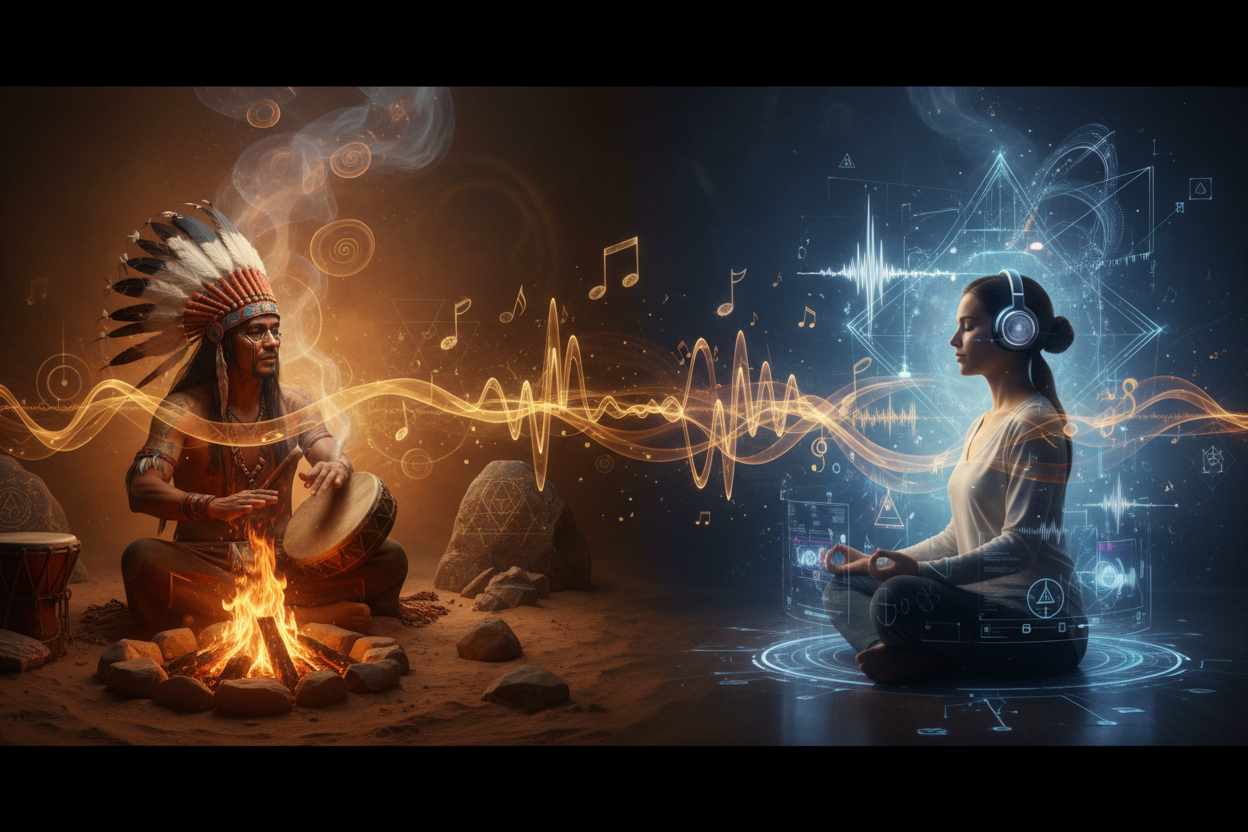
Sound healing and brainwave entrainment represent a fascinating intersection where ancient wisdom meets cutting-edge neuroscience. This journey through time reveals how our ancestors intuitively understood what modern research now confirms: specific frequencies and rhythmic patterns can synchronize brainwaves, induce altered states of consciousness, and promote healing on multiple levels.
Today, as we face unprecedented levels of stress and mental health challenges, these time-tested practices are experiencing a remarkable renaissance. Scientists, therapists, and wellness practitioners are rediscovering the therapeutic potential of sound frequencies, creating a bridge between traditional healing methods and evidence-based medicine.
Ancient Civilizations and Sacred Sound
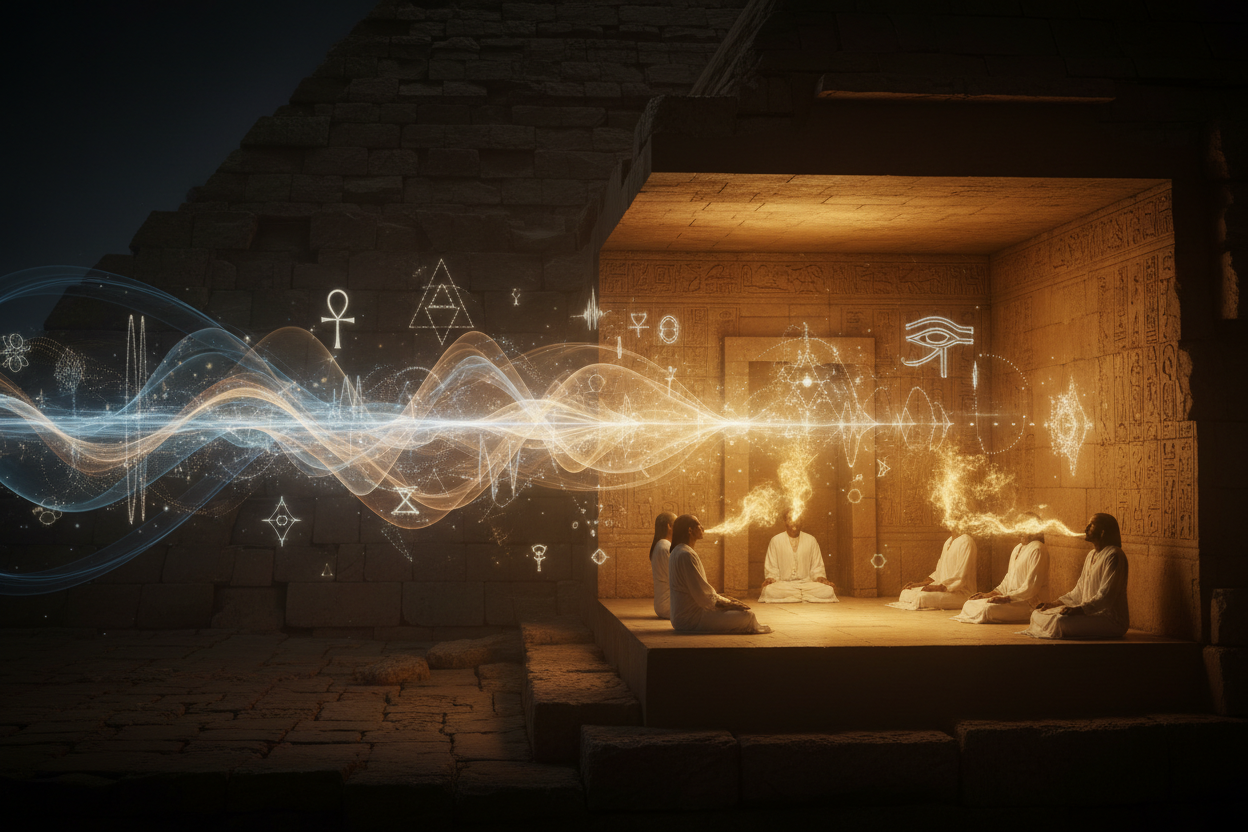
The story of sound healing begins in humanity’s earliest civilizations, where sound was considered sacred and transformative. Ancient Egyptians built their pyramids with specific acoustic properties, creating resonant chambers that amplified chanting and ceremonial music. Archaeological evidence suggests that the Great Pyramid’s King’s Chamber was designed to resonate at approximately 110 Hz, a frequency that modern research shows can induce meditative states and reduce anxiety.
In ancient Greece, Pythagoras – the same mathematician famous for his geometric theorem – developed the concept of “music as medicine.” He believed that specific musical intervals could restore harmony to both body and soul. Greek temples were constructed with precise acoustic calculations, and physicians prescribed specific musical modes to treat various ailments. This wasn’t merely philosophical speculation; they observed real therapeutic effects from organized sound.
The ancient Mesopotamians used tuning forks and singing bowls in healing rituals, while Celtic druids employed specific chants and instrumental frequencies during their ceremonies. These practices weren’t random traditions – they represented sophisticated understanding of how sound vibrations could influence human consciousness and physical wellbeing.
What’s remarkable is how consistently these ancient cultures arrived at similar conclusions about sound’s healing properties, despite having no contact with each other. This suggests that the relationship between sound and consciousness represents a fundamental aspect of human experience, one that transcends cultural boundaries.
Indigenous Traditions and Shamanic Sound Practices
Indigenous cultures worldwide have preserved some of the most profound sound healing traditions, many of which remain virtually unchanged for millennia. Shamanic drumming, found in cultures from Siberia to the Amazon, typically employs rhythmic patterns between 3-7 beats per second – frequencies that modern neuroscience confirms can induce theta brainwave states associated with deep meditation and healing.
Native American healing ceremonies often incorporate specific drum rhythms, rattles, and vocal tones believed to restore balance between physical, mental, and spiritual aspects of being. The Lakota tradition speaks of the drum as the “heartbeat of Mother Earth,” recognizing its power to synchronize human consciousness with natural rhythms.
Australian Aboriginal cultures have used the didgeridoo for over 40,000 years, making it one of the world’s oldest wind instruments. The deep, resonant tones produced by skilled didgeridoo players can induce trance-like states and are believed to facilitate communication with the spiritual realm. Modern sleep studies have shown that didgeridoo playing can actually reduce sleep apnea symptoms, demonstrating measurable physiological benefits.
Tibetan singing bowls, used in Himalayan cultures for centuries, produce complex harmonic overtones that research suggests can reduce stress hormones and promote cellular healing. These traditions understood intuitively what we’re now proving scientifically: that specific sound frequencies can literally reprogram our nervous system’s response patterns.
Eastern Philosophy and Sound Healing
Eastern philosophical traditions have long recognized sound as a fundamental creative force in the universe. Hindu cosmology describes creation itself beginning with the sacred sound “Om” (AUM), considered the primordial vibration from which all existence emerges. This isn’t merely metaphorical – practitioners report that chanting Om at its traditional frequency of 136.1 Hz can induce profound meditative states.
Sanskrit mantras, developed over thousands of years, represent perhaps the most sophisticated sound healing system ever created. Each mantra is designed to resonate with specific energy centers (chakras) in the body, using precise combinations of vowels and consonants to create therapeutic vibrations. Modern frequency analysis reveals that traditional mantras often incorporate mathematical relationships similar to those found in healing frequencies identified by contemporary research.
Buddhist meditation practices extensively use singing bowls, bells, and chanting to facilitate mindfulness and concentration. The Tibetan Buddhist tradition recognizes different bowl tones as corresponding to various aspects of consciousness and healing. Monasteries often own collections of bowls tuned to specific frequencies believed to balance different organ systems.
Traditional Chinese Medicine incorporates sound healing through practices like the “Six Healing Sounds” – specific vocal tones associated with different organ systems. Each sound is believed to regulate qi (life energy) flow and promote organ health. Interestingly, these traditional frequencies often align closely with resonant frequencies of the corresponding organs identified by modern medical research.
The Scientific Revolution: Understanding Brainwave Entrainment
The scientific understanding of how sound affects consciousness began emerging in the 19th century with the discovery of brainwaves. German physiologist Hans Berger’s invention of the electroencephalogram (EEG) in 1924 revealed that the brain produces measurable electrical activity in distinct frequency patterns.
Researchers identified four primary brainwave states: beta (14-30 Hz) associated with normal waking consciousness, alpha (8-14 Hz) linked to relaxed awareness, theta (4-8 Hz) connected to deep meditation and REM sleep, and delta (0.5-4 Hz) occurring during deep sleep and healing states. This discovery provided the scientific framework for understanding how ancient sound practices actually worked.
The concept of brainwave entrainment emerged from research showing that rhythmic stimuli could synchronize brainwave patterns. When exposed to specific frequencies, the brain tends to match its electrical activity to those external rhythms – a phenomenon called the “frequency following response.” This explained why drumming at 4-7 beats per second could reliably induce theta states, or why certain musical frequencies promoted relaxation.
Binaural beats, discovered by physicist Heinrich Dove in 1839, represent one of the most studied forms of brainwave entrainment. When slightly different frequencies are played in each ear, the brain perceives a third “phantom” frequency equal to the difference between them. A 440 Hz tone in one ear and 444 Hz in the other creates a perceived 4 Hz beat, potentially entraining theta brainwaves.
Modern neuroimaging techniques have revealed the precise mechanisms behind these effects. Sound-induced brainwave entrainment activates the thalamus, which acts as the brain’s “rhythm keeper,” coordinating activity across different brain regions. This synchronization can enhance cognitive function, reduce anxiety, and promote healing states.
Modern Applications and Therapeutic Uses
Contemporary sound healing has evolved far beyond its traditional roots, incorporating advanced technology while honoring ancient wisdom. Medical facilities increasingly use sound therapy for pain management, anxiety reduction, and recovery acceleration. Hospitals employ specific frequencies during surgery to reduce patient stress and promote faster healing.
Mental health practitioners integrate binaural beats and sound therapy into treatment protocols for depression, PTSD, and attention disorders. Studies show that regular exposure to specific frequencies can help regulate neurotransmitter production, potentially reducing the need for pharmaceutical interventions in some cases.
Sleep disorders represent another area where sound healing shows remarkable promise. White noise, pink noise, and specially designed sleep frequencies can help regulate circadian rhythms and improve sleep quality. Apps and devices now offer personalized soundscapes based on individual brainwave patterns and sleep needs.
Corporate wellness programs increasingly incorporate sound healing sessions to reduce employee stress and improve productivity. The measurable benefits – including reduced sick days, improved focus, and enhanced creativity – make sound therapy an attractive investment for forward-thinking organizations.
Athletes use specific frequencies to enhance performance, accelerate recovery, and improve mental focus. Sports psychologists employ binaural beats to help athletes achieve optimal performance states, while recovery protocols often include sound frequencies that promote cellular repair and reduce inflammation.
The Future of Sound Healing Technology
Emerging technologies are revolutionizing how we understand and apply sound healing. Artificial intelligence now analyzes individual brainwave patterns to create personalized frequency prescriptions. Wearable devices can monitor real-time brain activity and automatically adjust sound therapy protocols for optimal effectiveness.
Virtual and augmented reality platforms combine visual and auditory stimuli to create immersive healing environments. These systems can transport users to acoustically perfect spaces – from ancient temples to natural environments – while delivering precisely calibrated therapeutic frequencies.
Quantum resonance technology promises even more precise applications, potentially allowing practitioners to target specific cellular frequencies for healing. Research into cymatics – the study of visible sound vibrations – reveals how different frequencies create distinct geometric patterns, opening new possibilities for understanding sound’s effects on biological systems.
Integration with conventional medicine continues expanding, with sound therapy protocols being developed for specific conditions like Alzheimer’s disease, chronic pain, and autoimmune disorders. Clinical trials are establishing evidence-based guidelines for therapeutic frequency applications, legitimizing sound healing within mainstream healthcare.
Conclusion
The journey from ancient sound healing practices to modern brainwave entrainment technology reveals a profound truth: our ancestors possessed intuitive wisdom about consciousness and healing that science is only now beginning to fully understand. The consistent appearance of similar sound healing practices across diverse cultures suggests that these techniques tap into fundamental aspects of human neurology and consciousness.
Today’s renaissance in sound healing represents more than just alternative therapy – it’s a integration of timeless wisdom with cutting-edge science. As we face increasing mental health challenges and seek natural healing alternatives, sound therapy offers evidence-based solutions rooted in thousands of years of human experience.
The future holds tremendous promise for this field, with technology enabling increasingly sophisticated and personalized applications. However, the core principle remains unchanged: specific sounds and frequencies can profoundly influence our mental, physical, and spiritual wellbeing. Whether through ancient Tibetan singing bowls or modern binaural beat technology, we’re participating in humanity’s longest-running experiment in consciousness and healing.
As we continue exploring these sonic frontiers, we honor both our ancestral heritage and scientific progress, creating bridges between traditional wisdom and modern understanding that benefit all of humanity.
Frequently Asked Questions
What is brainwave entrainment and how does it work?
Brainwave entrainment is the process by which external rhythmic stimuli synchronize the brain’s electrical activity to specific frequencies. When exposed to consistent rhythmic input like binaural beats or drumming, the brain’s natural tendency is to match its brainwave patterns to those external rhythms, potentially inducing desired mental states like relaxation or focus.
Are there any scientific studies supporting sound healing effectiveness?
Yes, numerous peer-reviewed studies demonstrate sound healing’s therapeutic benefits. Research has shown that specific frequencies can reduce cortisol levels, improve sleep quality, decrease anxiety, and even accelerate physical healing. Studies on binaural beats, in particular, have documented measurable changes in brainwave patterns and associated psychological states.
How long does it typically take to experience effects from sound healing?
Effects can vary significantly between individuals and techniques. Some people report immediate relaxation from sound therapy sessions, while others may need several sessions to notice significant changes. Brainwave entrainment typically begins within 6-8 minutes of exposure, though deeper therapeutic effects often develop over weeks or months of regular practice.
Can sound healing replace conventional medical treatment?
Sound healing should complement, not replace, conventional medical care. While research supports its therapeutic benefits, it’s most effective when integrated with appropriate medical treatment. Always consult healthcare providers before using sound therapy as a primary treatment for serious medical conditions.
What’s the difference between ancient and modern sound healing approaches?
Ancient sound healing relied on intuitive understanding and traditional knowledge passed down through generations, using instruments like drums, bowls, and vocal techniques. Modern approaches incorporate scientific understanding of brainwave patterns and use technology like binaural beats, frequency generators, and monitoring devices to create more precise and measurable therapeutic interventions.
Are there any risks or side effects to sound healing?
Sound healing is generally considered safe for most people. However, individuals with certain conditions like epilepsy, severe mental illness, or hearing disorders should consult healthcare providers before participating. Some people may experience temporary discomfort, emotional releases, or headaches when first beginning sound therapy, which typically resolve with continued practice.