
The Future of Brainwave Technology: Emerging Trends and Applications
Table of Contents
1. Introduction to Brainwave Technology
2. Current State of Brainwave Technology
3. Revolutionary Medical Applications
4. Gaming and Entertainment Evolution
5. Workplace Productivity Enhancement
6. Educational Technology Transformation
7. Mental Health and Wellness Applications
8. Challenges and Ethical Considerations
9. Future Predictions and Market Outlook
10. Conclusion
11. Frequently Asked Questions
Introduction to Brainwave Technology
Imagine controlling your computer with just your thoughts, or having a device that can detect when you’re about to have a seizure before you even feel it coming. This isn’t science fiction anymore – it’s the rapidly evolving world of brainwave technology. As someone who has been following neurotechnology developments for years, I’m constantly amazed by how quickly this field is advancing and transforming our daily lives.
Brainwave technology, also known as electroencephalography (EEG) technology, measures and interprets the electrical activity in our brains. What started as a purely medical diagnostic tool has now expanded into numerous applications that are reshaping healthcare, entertainment, education, and workplace productivity. The global brain-computer interface market is projected to reach $5.5 billion by 2030, indicating just how significant this technology has become.
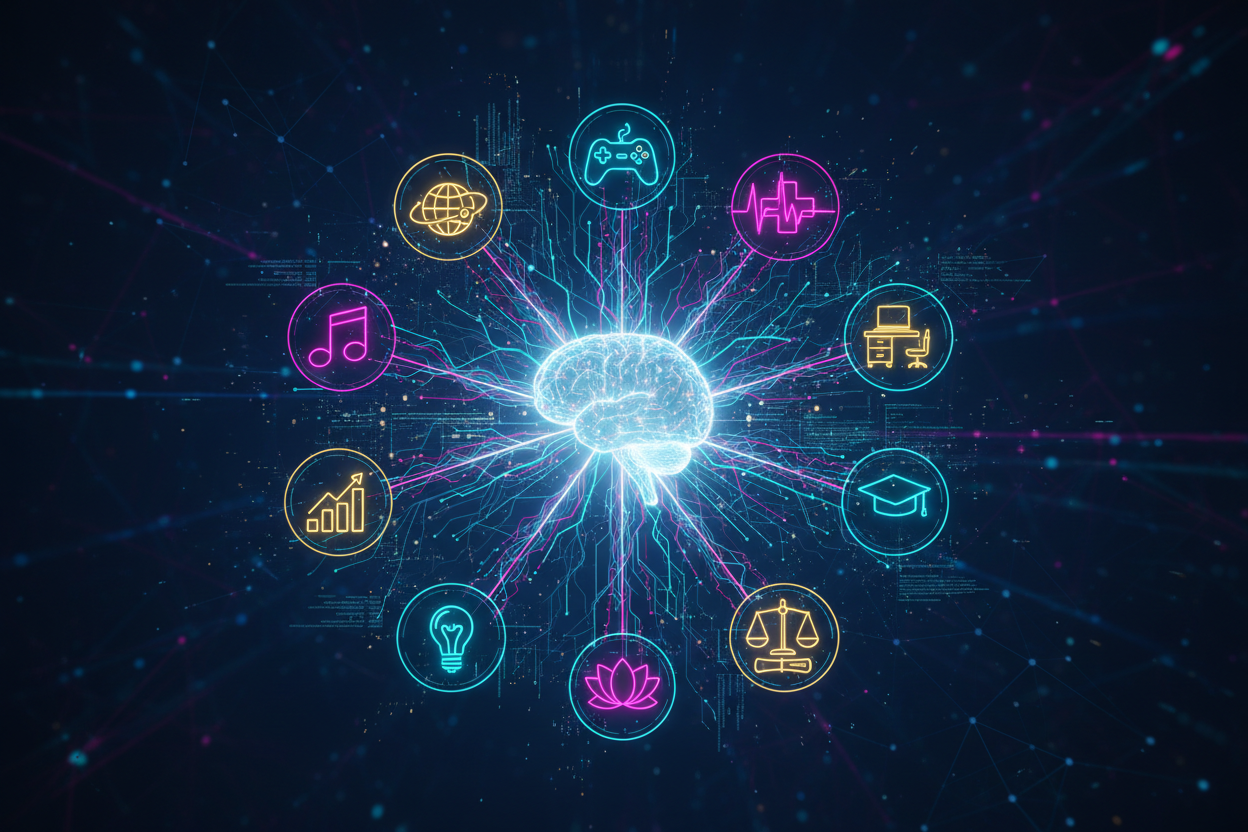
In this comprehensive exploration, we’ll dive deep into the emerging trends and applications that are defining the future of brainwave technology. From revolutionary medical breakthroughs to gaming innovations that will change how we interact with digital worlds, the possibilities seem endless.
Current State of Brainwave Technology
Before we look ahead, it’s important to understand where brainwave technology stands today. Modern EEG devices have become increasingly sophisticated, portable, and user-friendly. Companies like Emotiv, Muse, and NeuroSky have developed consumer-grade headsets that can monitor brain activity in real-time, making this technology accessible to researchers, developers, and curious individuals alike.
The technology works by detecting electrical impulses generated by neurons in the brain. These signals are then processed and interpreted using advanced algorithms and machine learning techniques. What’s particularly exciting is how artificial intelligence has enhanced our ability to decode these complex brain patterns, making real-time applications possible.
Current applications already include basic brain-computer interfaces for controlling prosthetic limbs, meditation and focus training apps, and preliminary diagnostic tools for neurological conditions. However, these are just the tip of the iceberg compared to what’s coming.
Revolutionary Medical Applications
The medical field is experiencing perhaps the most dramatic transformation from brainwave technology advancements. Neurological disorder treatment is being revolutionized through real-time brain monitoring and intervention systems. Epilepsy patients, for instance, can now use predictive seizure detection devices that analyze brainwave patterns to provide early warnings, sometimes hours before a seizure occurs.
Brain-controlled prosthetics represent another groundbreaking application. Recent developments have enabled paralyzed patients to control robotic arms and legs with remarkable precision simply by thinking about the desired movements. The technology has advanced to the point where users can perform complex tasks like typing, painting, and even playing musical instruments.
Mental health treatment is also being transformed through neurofeedback therapy. Patients with depression, anxiety, ADHD, and PTSD can now participate in targeted brain training sessions that help regulate their neural activity patterns. This approach offers a non-pharmaceutical alternative that many find appealing and effective.
Stroke rehabilitation has seen significant improvements through brainwave-guided therapy systems. These devices help patients retrain their brains to control affected limbs by providing real-time feedback on their neural activity, accelerating the recovery process significantly.
Gaming and Entertainment Evolution
The gaming industry is embracing brainwave technology with enthusiasm that’s reshaping how we think about interactive entertainment. Brain-controlled gaming is moving beyond simple on/off commands to sophisticated control schemes that respond to emotional states, attention levels, and even specific thoughts.
Virtual reality experiences are becoming more immersive through brainwave integration. Imagine VR environments that adapt to your emotional state in real-time, creating personalized experiences that respond to your subconscious reactions. Horror games could detect your fear levels and adjust the intensity accordingly, while relaxation apps could monitor your stress and modify the environment to optimize calming effects.
Competitive gaming is exploring brain-computer interfaces for enhanced performance. Some developers are experimenting with systems that allow players to execute commands through thought alone, potentially creating entirely new genres of competitive gaming where mental agility becomes as important as physical reflexes.
The entertainment industry is also developing passive brain-computer interfaces that can measure audience engagement in real-time. This technology helps content creators understand which moments in movies, shows, or games generate the strongest emotional responses, leading to more engaging content creation.
Workplace Productivity Enhancement
The modern workplace is beginning to integrate brainwave technology in ways that could fundamentally change how we approach productivity and employee wellness. Attention monitoring systems are being developed to help workers understand their focus patterns throughout the day, identifying optimal times for different types of tasks.
Cognitive load assessment tools are helping organizations design better work environments and processes. By monitoring when employees are experiencing mental overload, companies can adjust workloads, provide timely breaks, or modify task assignments to maintain optimal performance levels.
Safety applications in high-risk industries are particularly promising. Pilots, surgeons, and heavy machinery operators could benefit from real-time alertness monitoring systems that detect fatigue or distraction before they lead to accidents. These systems could automatically trigger alerts or even temporarily restrict certain operations when dangerous mental states are detected.
Team collaboration is being enhanced through shared brainwave monitoring during brainstorming sessions. Some research suggests that teams whose brainwaves synchronize during collaborative tasks tend to be more creative and productive, leading to the development of tools that help facilitate this synchronization.
Educational Technology Transformation
Education is experiencing a paradigm shift through brainwave technology integration. Personalized learning systems are being developed that adapt to individual students’ cognitive states in real-time. These systems can detect when a student is confused, bored, or fully engaged, automatically adjusting the pace and presentation style accordingly.
Attention training programs are helping students with focus issues develop better concentration skills. Rather than relying solely on behavioral interventions, educators can now use neurofeedback to help students learn to control their attention patterns directly.
Learning disability support has been enhanced through brain-computer interfaces that provide alternative communication methods for students with conditions like autism or cerebral palsy. These tools can translate thought patterns into text or speech, giving students new ways to participate in classroom activities.
Assessment methods are evolving beyond traditional testing. Brain-based evaluation systems can measure understanding and retention in real-time, providing more accurate and comprehensive assessments of student learning without the stress and limitations of conventional exams.
Mental Health and Wellness Applications
The mental health field is experiencing remarkable innovations through brainwave technology applications. Meditation and mindfulness training have been enhanced with real-time feedback systems that help practitioners achieve deeper states of relaxation and awareness more quickly than traditional methods alone.
Stress management tools are becoming increasingly sophisticated, providing personalized interventions based on individual brainwave patterns. These systems can detect early signs of stress and automatically suggest breathing exercises, meditation sessions, or other calming activities.
Sleep optimization technology is helping millions improve their rest quality. Brain-monitoring devices can track sleep stages throughout the night and provide insights into sleep patterns, while some advanced systems can even deliver targeted stimulation to enhance deep sleep phases.
Emotional regulation training is being revolutionized through neurofeedback systems that help individuals learn to control their emotional responses more effectively. This has shown particular promise for treating anxiety disorders, anger management issues, and emotional trauma.
Challenges and Ethical Considerations
Despite the exciting possibilities, brainwave technology faces significant challenges that must be addressed as the field advances. Privacy concerns top the list, as brain data represents perhaps the most intimate information about an individual. Questions about who owns this data, how it’s stored, and who has access to it remain largely unanswered.
Technical limitations still exist in current brainwave technology. Signal quality can be affected by movement, environmental interference, and individual biological differences. While improvements are being made constantly, achieving reliable performance in all conditions remains challenging.
Ethical implications around cognitive enhancement raise important questions about fairness and human identity. If brainwave technology can enhance memory, focus, or learning ability, how do we ensure equal access? What are the implications for competitive environments like education or employment?
Regulatory frameworks are struggling to keep pace with technological advancement. Current medical device regulations weren’t designed for consumer brain-computer interfaces, creating uncertainty about safety standards and approval processes.
Future Predictions and Market Outlook
Looking ahead, the brainwave technology landscape is poised for explosive growth. Industry experts predict that within the next decade, brain-computer interfaces will become as common as smartphones are today. The integration of artificial intelligence and machine learning will continue to improve the accuracy and responsiveness of these systems dramatically.
Miniaturization trends suggest that brainwave monitoring will eventually become invisible, integrated into everyday objects like glasses, headphones, or even contact lenses. This seamless integration will make continuous brain monitoring possible without the bulky equipment currently required.
Wireless and cloud-based processing will enable more sophisticated applications that can leverage vast amounts of data and processing power. This will allow for more accurate pattern recognition and personalized responses than current standalone devices can provide.
The convergence of brainwave technology with other emerging technologies like augmented reality, Internet of Things devices, and 5G networks will create entirely new application categories that we’re only beginning to imagine.
Conclusion
The future of brainwave technology is both thrilling and transformative. As we’ve explored throughout this comprehensive overview, the applications span virtually every aspect of human life, from healthcare and education to entertainment and workplace productivity. The technology that once seemed like pure science fiction is rapidly becoming an integral part of our daily reality.
What excites me most about this field is its potential to enhance human capabilities rather than replace them. Unlike many technologies that aim to automate human tasks, brainwave technology focuses on amplifying our natural abilities and providing new ways to interact with the world around us.
However, as we embrace these innovations, we must remain mindful of the ethical considerations and challenges that accompany such powerful technology. The decisions we make today about privacy, accessibility, and regulation will shape how brainwave technology develops and who benefits from its advances.
The next decade promises to be revolutionary for brainwave technology. Whether you’re a healthcare professional, educator, technologist, or simply someone curious about the future, staying informed about these developments will be increasingly important as they become more prevalent in our daily lives.
Frequently Asked Questions
Q: Is brainwave technology safe for everyday use?
A: Current consumer-grade brainwave devices use non-invasive EEG technology that is generally considered safe for regular use. These devices only read electrical signals from the brain and don’t send any signals back. However, as with any technology, it’s important to purchase devices from reputable manufacturers and follow usage guidelines.
Q: How accurate is current brainwave technology?
A: Accuracy varies significantly depending on the application and device quality. Medical-grade systems can achieve high accuracy for specific tasks, while consumer devices may be less precise but sufficient for general applications like meditation training or basic brain-computer interfaces. The technology is improving rapidly as algorithms become more sophisticated.
Q: Can brainwave technology read my thoughts?
A: No, current brainwave technology cannot read specific thoughts or access memories. It can detect general patterns of brain activity related to emotions, attention levels, and intended movements, but it cannot decode complex thoughts or access private mental content.
Q: How much do brainwave devices cost?
A: Consumer devices range from around $100 for basic meditation headbands to several thousand dollars for research-grade systems. Medical applications typically require more expensive, specialized equipment. As the technology matures, costs are expected to decrease significantly.
Q: Do I need special training to use brainwave technology?
A: Most consumer devices are designed to be user-friendly and require minimal training. However, getting optimal results often involves learning to control your mental states effectively, which can take practice. Professional applications may require more extensive training and expertise.
Q: What’s the biggest limitation of current brainwave technology?
A: The main limitations include signal interference from movement and environmental factors, individual variations in brain activity patterns, and the current inability to decode complex thoughts. Additionally, most systems require some form of calibration period to learn individual user patterns.