
DIY Brainwave Entrainment: Can You Create Your Own Binaural Beats?
Table of Contents
1. Introduction to Binaural Beats and Brainwave Entrainment
2. Understanding the Science Behind Binaural Beats
3. Essential Tools and Software for Creating Binaural Beats
4. Step-by-Step Guide to Making Your Own Binaural Beats
5. Choosing the Right Frequencies for Different Goals
6. Safety Considerations and Best Practices
7. Testing and Refining Your DIY Binaural Beats
8. Conclusion
9. Frequently Asked Questions
Introduction to Binaural Beats and Brainwave Entrainment
Have you ever wondered if you could hack your own brain waves? The fascinating world of binaural beats offers exactly that possibility. These audio phenomena have captured the attention of everyone from meditation enthusiasts to productivity hackers, promising everything from deeper relaxation to enhanced focus.
But here’s the thing that really got me curious: instead of purchasing expensive binaural beat recordings, what if you could create your own personalized brainwave entrainment sessions? After diving deep into this rabbit hole, I discovered that making your own binaural beats isn’t just possible – it’s surprisingly accessible and incredibly rewarding.
In this comprehensive guide, we’ll explore how you can become your own binaural beat producer, understanding both the science and the practical steps needed to create effective audio tracks tailored to your specific needs.
Understanding the Science Behind Binaural Beats
Before we jump into the creation process, let’s demystify what’s actually happening in your brain when you listen to binaural beats. The concept is elegantly simple yet scientifically fascinating.
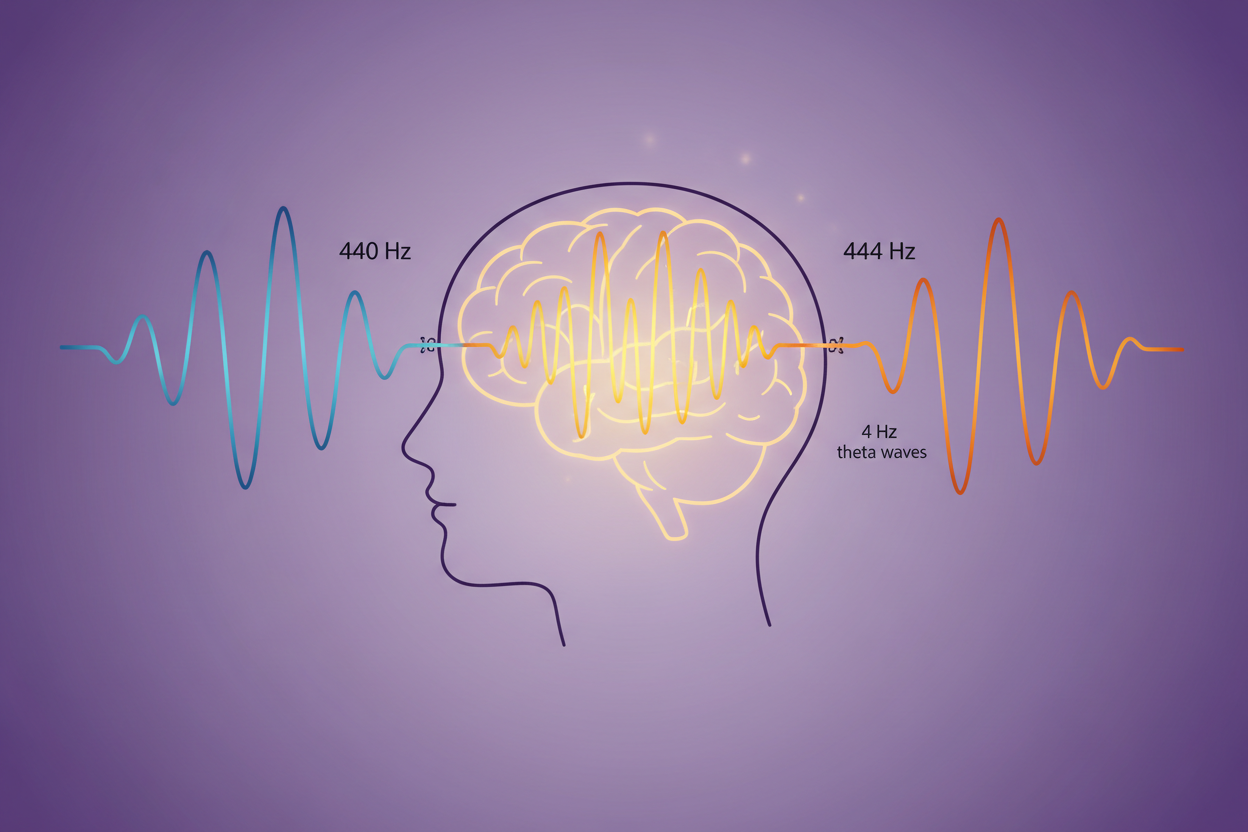
When you play two slightly different frequencies in each ear – say 440 Hz in your left ear and 444 Hz in your right ear – your brain doesn’t hear these frequencies separately. Instead, it creates a third “phantom” frequency equal to the difference between the two tones. In this example, you’d perceive a 4 Hz beat, which corresponds to the theta brainwave range associated with deep meditation and creativity.
This phenomenon occurs because your brain constantly tries to synchronize and make sense of the audio input it receives. Scientists call this process “frequency following response,” and it’s the foundation of brainwave entrainment.
Research has shown that different brainwave frequencies correspond to various mental states. Delta waves (0.5-4 Hz) are linked to deep sleep, theta waves (4-8 Hz) to meditation and creativity, alpha waves (8-13 Hz) to relaxed focus, beta waves (13-30 Hz) to active concentration, and gamma waves (30-100 Hz) to heightened awareness.
Essential Tools and Software for Creating Binaural Beats
The beauty of DIY binaural beat creation lies in its accessibility. You don’t need a professional recording studio or expensive equipment to get started. Here’s what you’ll need:
Free Software Options:
Audacity remains the go-to choice for beginners. This open-source audio editor is powerful, user-friendly, and completely free. It includes a built-in tone generator that makes creating binaural beats straightforward.
For those seeking more advanced features, Reaper offers a 60-day free trial and costs only $60 for a personal license. Its superior audio processing capabilities and plugin support make it excellent for more sophisticated projects.
Hardware Requirements:
Any decent computer can handle binaural beat creation. However, good-quality headphones are essential – the stereo separation needs to be clean for the effect to work properly. I recommend over-ear headphones with a flat frequency response for the most accurate results.
Optional Enhancements:
While not necessary, an audio interface can improve sound quality if you plan to incorporate natural sounds or other audio elements. A simple USB audio interface starting around $50 can make a noticeable difference in your final product.
Step-by-Step Guide to Making Your Own Binaural Beats
Now for the exciting part – let’s create your first binaural beat track. I’ll walk you through the process using Audacity, but the principles apply to any audio editing software.
Step 1: Generate Your Base Frequency
Open Audacity and navigate to Generate > Tone. For your first attempt, try creating a 200 Hz sine wave. Set the duration to your desired length (I recommend starting with 10 minutes). Make sure the amplitude is set to around 0.5 to avoid ear damage.
Step 2: Create the Binaural Effect
Duplicate this track, then modify the frequency of one channel. If you want a 10 Hz alpha wave beat for relaxed focus, change one track to 210 Hz (200 + 10). Pan one track completely left and the other completely right using the track dropdown menu.
Step 3: Fine-Tune Your Mix
The volume balance between channels is crucial. Both tones should be equally audible but not overwhelming. I typically set both tracks to about -20 dB to ensure comfortable listening levels.
Step 4: Add Enhancement Layers (Optional)
Many people find pure sine waves monotonous. Consider adding a gentle background – pink noise, nature sounds, or ambient music can make your binaural beats more pleasant without interfering with the entrainment effect.
Step 5: Export Your Creation
Export your file as a high-quality WAV or FLAC file to preserve audio fidelity. MP3 compression can sometimes interfere with the precise frequency relationships needed for effective binaural beats.
Choosing the Right Frequencies for Different Goals
The frequency you choose determines the mental state you’re targeting. Through my experimentation, I’ve found certain combinations work better than others for specific purposes.
For Deep Relaxation and Sleep:
Target delta frequencies between 0.5-4 Hz. I personally find 2 Hz particularly effective for winding down after stressful days. Use a carrier frequency around 100-200 Hz for comfort.
For Meditation and Creativity:
Theta frequencies (4-8 Hz) are your sweet spot. A 6 Hz binaural beat has consistently helped me access deeper meditative states. The 4-7 Hz range seems particularly effective for creative problem-solving.
For Focus and Study:
Alpha frequencies (8-13 Hz) promote relaxed concentration. I’ve had great success with 10 Hz beats during reading sessions. Some people prefer the lower beta range (13-15 Hz) for more intense focus work.
For Energy and Alertness:
Beta frequencies (13-30 Hz) can boost alertness, though be cautious with higher frequencies as they may cause anxiety in sensitive individuals. I find 15-20 Hz effective for morning motivation without being overwhelming.
Safety Considerations and Best Practices
Creating your own binaural beats comes with responsibility. Here are essential safety guidelines I’ve learned through research and personal experience:
Volume Control:
Never listen to binaural beats at high volumes. The effect works at barely audible levels, and loud tones can damage your hearing. I always test new tracks at low volumes first.
Duration Limits:
Start with shorter sessions (10-15 minutes) and gradually increase duration as you become accustomed to the effects. Some people experience headaches or discomfort with extended exposure.
Individual Sensitivity:
People respond differently to various frequencies. What works for me might not work for you. Keep a journal of your experiences to identify your optimal frequencies and durations.
Medical Considerations:
Individuals with epilepsy, heart conditions, or those taking psychoactive medications should consult healthcare providers before using binaural beats. The brain entrainment effects can potentially interact with certain medical conditions.
Testing and Refining Your DIY Binaural Beats
Creating effective binaural beats is part science, part art. Your first attempts might not produce the desired effects, and that’s completely normal. Here’s how to refine your creations:
Document Your Sessions:
Keep detailed notes about frequency combinations, session duration, and subjective effects. I maintain a simple spreadsheet tracking what works and what doesn’t.
Experiment with Carrier Frequencies:
The base frequency (carrier wave) can significantly impact comfort and effectiveness. Lower frequencies (80-200 Hz) tend to be more relaxing, while higher frequencies (200-500 Hz) may feel more energizing.
Test Different Environments:
Your listening environment affects the experience. I’ve found that binaural beats work best in quiet, comfortable settings with minimal distractions.
Gradual Frequency Changes:
Advanced creators often incorporate slowly shifting frequencies within a single track. This technique, called “frequency ramping,” can guide listeners through different brainwave states during one session.
Conclusion
Creating your own binaural beats opens up a world of personalized brainwave entrainment possibilities. While commercial recordings serve their purpose, nothing beats the satisfaction of crafting audio tools perfectly tailored to your unique needs and preferences.
The journey from curious beginner to confident creator doesn’t happen overnight. I encourage you to start simple, experiment safely, and gradually build your skills. Remember that the most effective binaural beats are often the simplest ones – clean sine waves with precise frequency relationships.
Whether you’re seeking better sleep, enhanced focus, or deeper meditation, the tools and knowledge to create your own binaural beats are now at your fingertips. The question isn’t whether you can create effective binaural beats yourself – it’s what amazing mental states you’ll discover along the way.
Frequently Asked Questions
Q: Do I need expensive headphones to create or listen to binaural beats?
A: While high-end headphones can improve the experience, any decent stereo headphones will work for both creation and listening. The key requirement is clear stereo separation – earbuds often work just as well as expensive over-ear models.
Q: How long does it take to feel the effects of binaural beats?
A: Most people begin noticing effects within 5-10 minutes of listening. However, some individuals may need 15-20 minutes to experience significant brainwave entrainment. Patience and consistency are key.
Q: Can I use speakers instead of headphones for binaural beats?
A: No, headphones are essential for binaural beats to work properly. The effect requires each ear to receive a different frequency, which isn’t possible with speakers due to sound mixing in the air.
Q: Is it safe to listen to binaural beats every day?
A: For most people, daily use at reasonable volumes and durations is safe. However, start gradually and pay attention to how your body responds. If you experience headaches or discomfort, reduce frequency or duration of use.
Q: Can I combine binaural beats with other audio like music or nature sounds?
A: Yes, you can layer binaural beats with other audio, but be careful not to mask the beats entirely. Keep the additional sounds at a lower volume than the binaural tones to maintain effectiveness.
Q: What’s the difference between binaural beats and isochronic tones?
A: Binaural beats require headphones and use two different frequencies to create a perceived beat. Isochronic tones are single-frequency pulses that can work through speakers and may be more effective for some people, though they’re less subtle than binaural beats.