
The History of Brainwave Research: From Discovery to Modern Applications
Table of Contents
1. Introduction
2. The Dawn of Brainwave Discovery
3. Early Pioneers and Breakthrough Moments
4. The Evolution of EEG Technology
5. Understanding Different Types of Brainwaves
6. Modern Applications in Medicine and Beyond
7. The Future of Brainwave Research
8. Conclusion
9. Frequently Asked Questions
Introduction
Imagine peering into the human mind, watching thoughts form and emotions surge through electrical patterns dancing across the brain. What sounds like science fiction has been reality for over a century, thanks to the fascinating field of brainwave research. From its humble beginnings in the 1800s to today’s cutting-edge neurofeedback therapies and brain-computer interfaces, the journey of understanding our brain’s electrical activity has been nothing short of extraordinary.
This exploration into brainwave research history reveals how curious scientists transformed our understanding of consciousness, sleep, mental health, and human potential. Whether you’re a neuroscience enthusiast, healthcare professional, or simply someone intrigued by the mysteries of the mind, this journey through time will illuminate how brainwave research has evolved from laboratory curiosity to life-changing medical applications.
The Dawn of Brainwave Discovery
The story of brainwave research begins in 1875 when British physician Richard Caton made a groundbreaking observation. While studying exposed animal brains, he noticed electrical activity fluctuating across the brain’s surface. Using a primitive galvanometer, Caton detected what he described as “feeble currents of varying direction” – the first recorded evidence of brain electricity.
This discovery challenged the prevailing belief that the brain was merely a mechanical organ. Instead, Caton’s work suggested something far more dynamic: the brain operated through electrical impulses, constantly generating and transmitting signals. His research laid the foundation for what would become one of neuroscience’s most important diagnostic tools.
The implications were staggering. If the brain generated electricity, could these patterns tell us about thoughts, emotions, or diseases? This question would drive researchers for generations, leading to discoveries that continue shaping modern medicine and our understanding of consciousness itself.
Early Pioneers and Breakthrough Moments
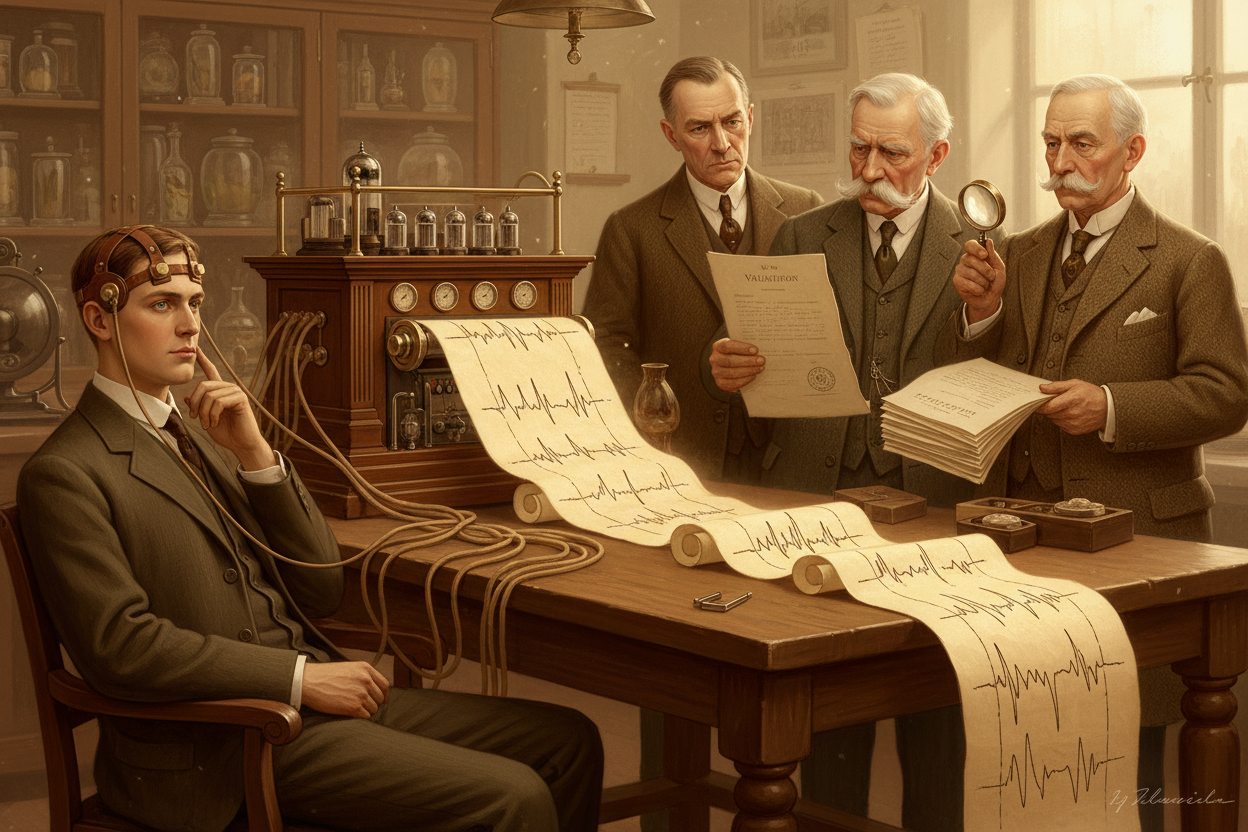
The early 20th century brought remarkable advances in brainwave research, thanks to several visionary scientists who refused to accept the limitations of their time. In 1924, German psychiatrist Hans Berger achieved what many considered impossible – recording human brain activity from outside the skull.
Berger’s first successful electroencephalogram (EEG) recording came from his son Klaus, using electrodes placed on the scalp. The resulting squiggly lines on paper represented the first glimpse into a living human brain’s electrical activity. Initially met with skepticism, Berger’s work gained credibility when British physiologists Edgar Adrian and Bryan Matthews confirmed his findings in 1934.
These early researchers identified distinct patterns in brain electricity. Berger discovered what he called “alpha waves” – rhythmic oscillations occurring when people closed their eyes and relaxed. He also observed faster “beta waves” during mental activity, establishing the foundation for categorizing different brainwave frequencies.
The period between 1930 and 1950 saw explosive growth in EEG research. Scientists began correlating specific brainwave patterns with various mental states, sleep stages, and neurological conditions. This era established EEG as a legitimate medical diagnostic tool, particularly for epilepsy detection.
The Evolution of EEG Technology
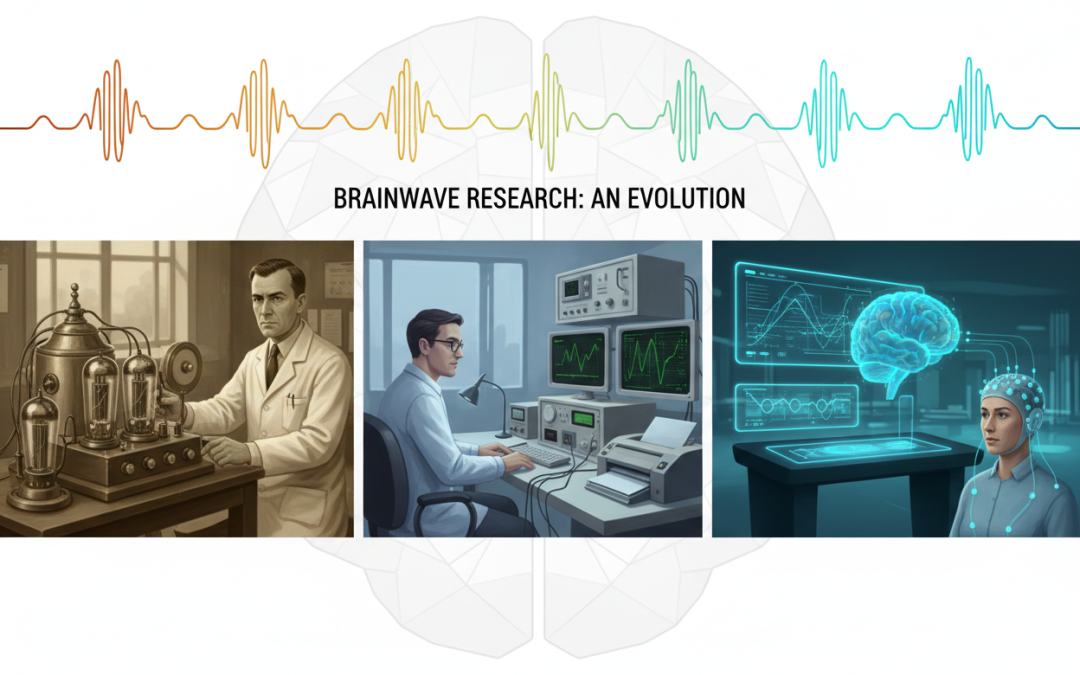
From Berger’s crude electrode setup to today’s sophisticated digital systems, EEG technology has undergone remarkable transformation. Early machines required subjects to remain perfectly still while massive, room-sized equipment amplified tiny electrical signals from the brain.
The 1960s brought significant improvements with the introduction of transistor-based amplifiers, making EEG machines smaller and more reliable. Digital computers revolutionized the field in the 1970s and 1980s, enabling researchers to analyze brainwave data with unprecedented precision and speed.
Modern EEG systems bear little resemblance to their ancestors. Today’s devices are portable, wireless, and capable of recording from hundreds of electrodes simultaneously. High-density EEG arrays provide detailed brain maps, while advanced algorithms can detect subtle patterns invisible to the human eye.
Perhaps most exciting is the emergence of consumer-grade EEG devices. What once required a hospital visit can now be done at home with headsets costing less than a smartphone. This democratization of brainwave monitoring has opened new possibilities for personal wellness, meditation training, and cognitive enhancement.
Understanding Different Types of Brainwaves
Decades of research have revealed that our brains produce distinct electrical frequencies, each associated with different mental states and functions. Understanding these brainwave categories has proven crucial for both medical diagnosis and therapeutic applications.
Delta waves (0.5-4 Hz) dominate during deep sleep and are essential for physical restoration and memory consolidation. Theta waves (4-8 Hz) appear during light sleep, deep meditation, and creative states. Many researchers believe theta activity facilitates learning and emotional processing.
Alpha waves (8-13 Hz), Berger’s original discovery, indicate relaxed awareness and are often called the “bridge” between conscious and subconscious states. Beta waves (13-30 Hz) characterize normal waking consciousness, with higher frequencies associated with intense focus or anxiety.
Gamma waves (30-100 Hz) represent the brain’s highest frequency activity, linked to heightened awareness, learning, and the binding of different brain regions during complex cognitive tasks. Recent research suggests gamma activity might be crucial for consciousness itself.
This frequency-based understanding has enabled targeted interventions. Neurofeedback therapy, for instance, trains people to modify specific brainwave patterns, offering treatment for conditions ranging from ADHD to depression without pharmaceutical intervention.
Modern Applications in Medicine and Beyond
Today’s brainwave research extends far beyond academic curiosity, driving innovations across medicine, technology, and human performance enhancement. In clinical settings, EEG remains indispensable for diagnosing epilepsy, sleep disorders, and brain injuries. Advanced techniques like quantitative EEG (qEEG) can detect subtle abnormalities invisible on standard recordings.
Mental health treatment has been revolutionized by brainwave-based interventions. Neurofeedback therapy helps patients with ADHD, anxiety, depression, and PTSD by teaching them to regulate their brain activity consciously. Unlike medication, these treatments address underlying neural patterns without side effects.
The technology sector has embraced brainwave research for developing brain-computer interfaces (BCIs). These systems allow direct communication between the brain and external devices, offering hope for paralyzed individuals to control computers, prosthetic limbs, or wheelchairs through thought alone.
Peak performance applications have gained popularity among athletes, executives, and students seeking cognitive enhancement. Brainwave training can improve focus, reduce stress, and optimize mental states for specific tasks. Professional sports teams increasingly use neurofeedback to enhance athlete performance and recovery.
Emerging applications include brainwave-controlled gaming, meditation apps that respond to mental states, and educational tools that adapt to students’ cognitive load in real-time. As technology becomes more accessible, these applications will likely become mainstream.
The Future of Brainwave Research
The future of brainwave research promises even more exciting developments as technology continues advancing at breakneck speed. Artificial intelligence and machine learning are revolutionizing how we analyze brain signals, detecting patterns too complex for human researchers to identify.
Wireless, implantable EEG devices are being developed for long-term brain monitoring, potentially enabling early detection of neurological diseases or seizures. These systems could alert medical professionals to problems before symptoms appear, dramatically improving treatment outcomes.
Virtual and augmented reality integration with brainwave monitoring opens possibilities for immersive therapeutic experiences. Imagine treating phobias by monitoring brain responses in virtual environments or enhancing learning through neurofeedback-guided educational simulations.
The convergence of brainwave research with other neurotechnologies like transcranial stimulation and optogenetics may enable precise, non-invasive brain interventions. These approaches could treat depression, enhance memory, or even modify personality traits through targeted neural stimulation.
As our understanding deepens, brainwave research may unlock fundamental questions about consciousness, free will, and the nature of human experience. We’re approaching an era where the boundary between mind and machine continues blurring, opening unprecedented possibilities for human enhancement and medical treatment.
Conclusion
From Richard Caton’s first detection of brain electricity to today’s sophisticated neurofeedback systems and brain-computer interfaces, brainwave research has transformed our understanding of the human mind. This remarkable journey spans nearly 150 years of scientific discovery, technological innovation, and medical breakthroughs that continue improving lives worldwide.
The evolution from crude galvanometers to wireless EEG headsets illustrates humanity’s relentless pursuit of knowledge about our most complex organ. What began as scientific curiosity has blossomed into practical applications treating mental health conditions, enhancing cognitive performance, and enabling direct brain-computer communication.
As we stand on the brink of even more revolutionary discoveries, brainwave research remains at the forefront of neuroscience innovation. The future promises personalized brain training, predictive mental health monitoring, and therapeutic interventions we can barely imagine today. The electrical symphony playing in our minds continues revealing its secrets, one brainwave at a time.
Frequently Asked Questions
What are brainwaves and how are they measured?
Brainwaves are electrical impulses generated by neurons communicating in the brain. They’re measured using electroencephalography (EEG), which detects electrical activity through electrodes placed on the scalp. The resulting patterns show different frequencies associated with various mental states and brain functions.
Who discovered brainwaves and when?
Richard Caton first discovered brain electrical activity in 1875 while studying animal brains. However, Hans Berger recorded the first human brainwaves in 1924, creating the foundation for modern EEG technology and brainwave research.
What are the main types of brainwaves?
The five main brainwave categories are: Delta (0.5-4 Hz) for deep sleep, Theta (4-8 Hz) for light sleep and meditation, Alpha (8-13 Hz) for relaxed awareness, Beta (13-30 Hz) for normal waking consciousness, and Gamma (30-100 Hz) for heightened awareness and complex cognitive tasks.
How is brainwave research used in modern medicine?
Modern medical applications include diagnosing epilepsy and sleep disorders, treating ADHD and depression through neurofeedback therapy, monitoring brain function during surgery, and developing brain-computer interfaces for paralyzed patients. EEG remains a crucial diagnostic tool in neurology and psychiatry.
Can brainwave training improve cognitive performance?
Yes, neurofeedback training can help improve focus, reduce anxiety, enhance memory, and optimize mental states for specific tasks. Many athletes, students, and professionals use brainwave training to enhance performance, though individual results may vary.
Are consumer EEG devices accurate?
Consumer EEG devices are generally less accurate than medical-grade equipment but can still provide useful information about general brainwave patterns. They’re suitable for meditation training, basic neurofeedback, and personal wellness applications, though they shouldn’t replace professional medical diagnosis.