
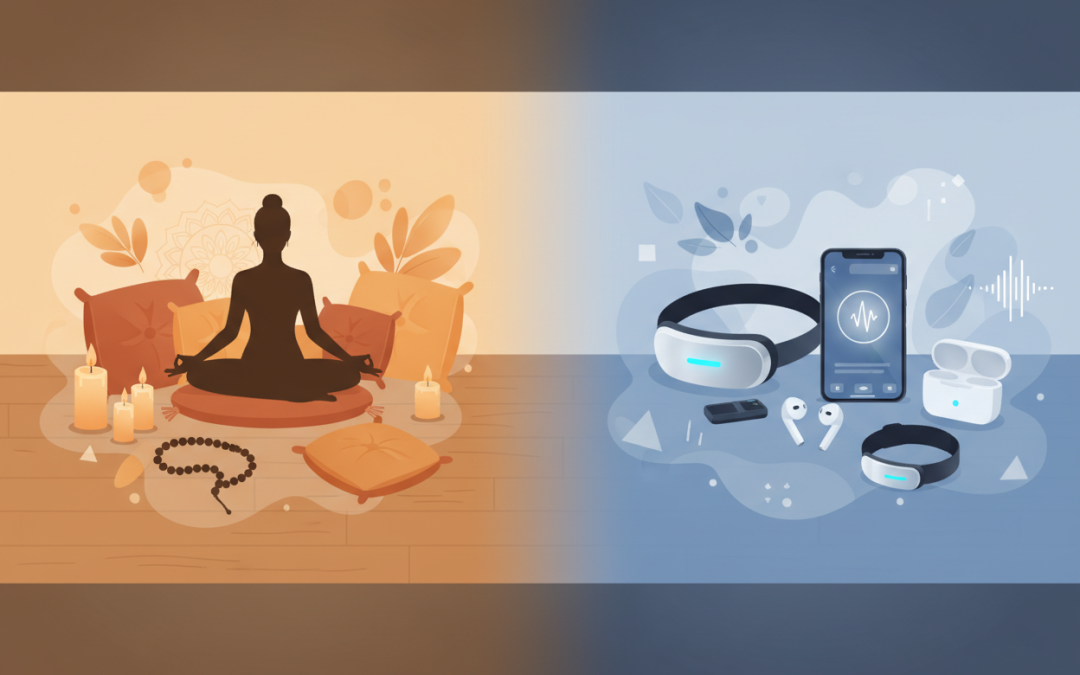
The Ultimate Comparison: Meditation Devices vs. Traditional Meditation Practices ????
Table of Contents
• Introduction: The Modern Meditation Dilemma
• Understanding Traditional Meditation Practices
• The Rise of Meditation Technology
• Popular Meditation Devices and Apps
• Benefits of Traditional Meditation Methods
• Advantages of Modern Meditation Technology
• Drawbacks of Each Approach
• Cost Comparison: Investment vs. Free Practice
• Which Approach Is Right for You?
• Creating a Balanced Meditation Practice
• Frequently Asked Questions
Introduction: The Modern Meditation Dilemma ?
Picture this: you’re sitting in your living room, deciding between downloading the latest meditation app or simply closing your eyes and breathing deeply in silence. Sound familiar? You’re not alone in this modern meditation dilemma that millions face daily.
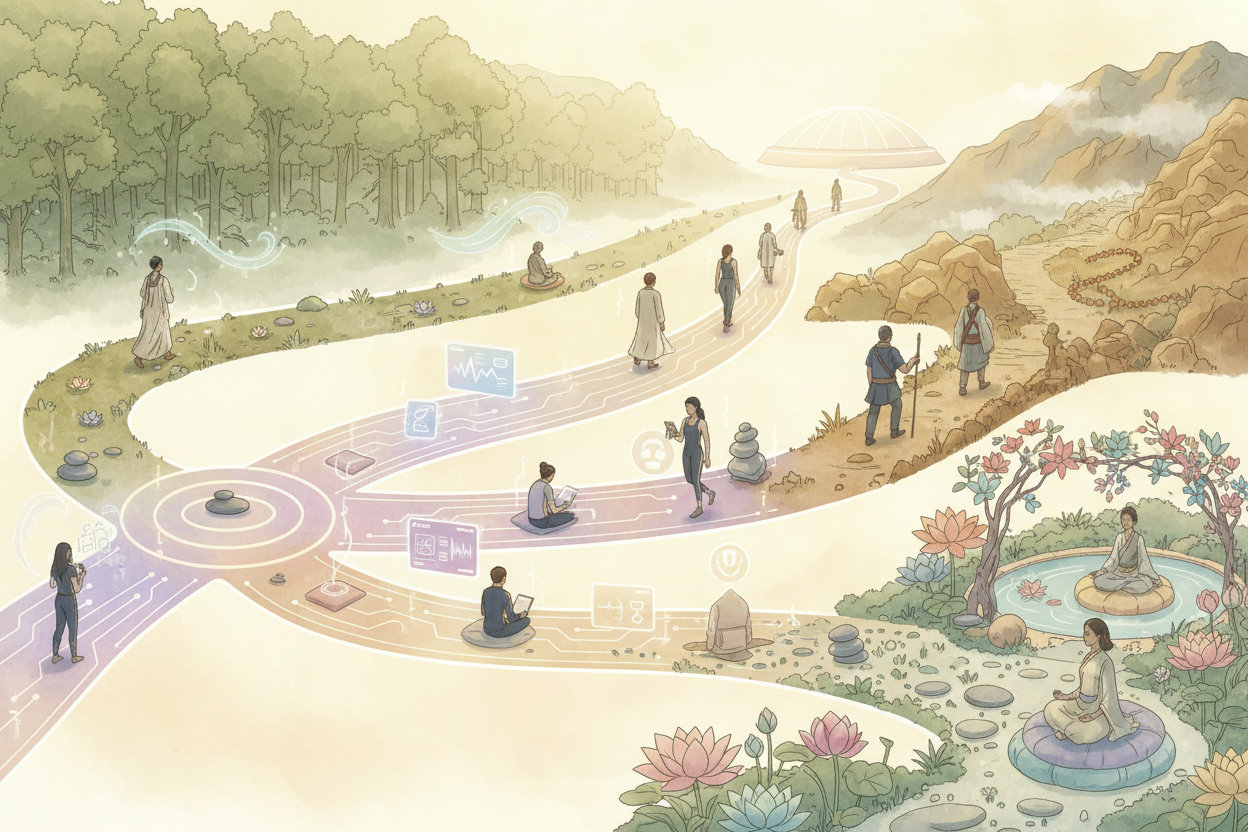
The ancient practice of meditation has undergone a remarkable transformation in our digital age. What once required nothing more than a quiet space and focused attention now competes with sophisticated apps, biofeedback devices, and AI-powered meditation coaches. But does newer necessarily mean better when it comes to finding inner peace?
As someone who’s explored both worlds extensively, I’ve witnessed firsthand how technology can both enhance and complicate our journey toward mindfulness. Today, we’ll dive deep into the ultimate comparison between meditation devices and traditional practices, helping you navigate this landscape with confidence and clarity.
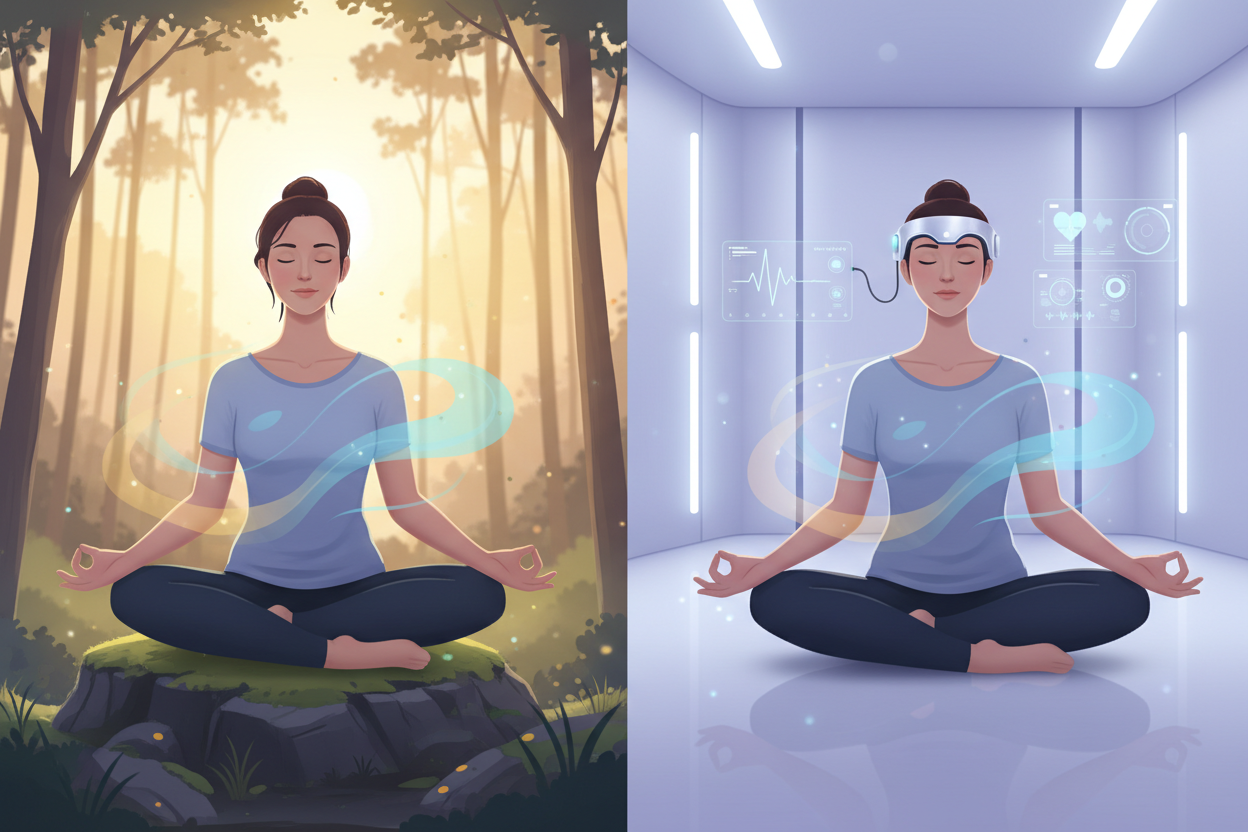
Understanding Traditional Meditation Practices ??
Traditional meditation has been humanity’s companion for over 5,000 years, originating in ancient India and spreading across cultures worldwide. At its core, traditional meditation requires nothing external – just you, your breath, and your awareness.
The beauty of traditional practices lies in their simplicity. Whether you’re practicing mindfulness meditation, focusing on your breath, or engaging in loving-kindness meditation, the fundamental approach remains unchanged: cultivating present-moment awareness through sustained attention and practice.
These time-tested methods include various forms such as Vipassana (insight meditation), Zen meditation, transcendental meditation, and walking meditation. Each tradition offers unique techniques, but they all share the common goal of developing mental clarity, emotional balance, and spiritual growth through direct experience.
What makes traditional meditation particularly powerful is its emphasis on developing internal resources. Practitioners learn to work with their minds directly, building resilience and self-awareness that extends far beyond meditation sessions into daily life.
The Rise of Meditation Technology ?
The meditation technology revolution began quietly in the early 2000s but exploded into mainstream consciousness around 2010. Today’s meditation tech market is valued at over $1.2 billion and continues growing rapidly, reflecting our society’s hunger for accessible mindfulness solutions.
This technological evolution wasn’t accidental. As our lives became increasingly busy and digitally connected, many people found it challenging to establish consistent meditation practices. Traditional methods, while effective, often felt intimidating or inaccessible to beginners who lacked guidance or community support.
Modern meditation technology addresses these barriers by offering structured programs, progress tracking, and personalized experiences. From smartphone apps that send gentle reminders to sophisticated biofeedback devices that monitor brain activity, technology has democratized access to meditation instruction and support.
The COVID-19 pandemic accelerated this trend dramatically, with meditation app downloads increasing by over 200% as people sought stress relief and mental health support from their homes.
Popular Meditation Devices and Apps ?
The meditation technology landscape offers diverse options for every preference and budget. Headspace and Calm dominate the app market, each boasting millions of users worldwide. These platforms provide guided meditations, sleep stories, and specialized programs for anxiety, focus, and personal growth.
Insight Timer takes a community-focused approach, offering both free and premium content alongside social features that connect practitioners globally. Ten Percent Happier appeals to skeptics with its practical, science-based approach to meditation instruction.
Hardware devices have also gained popularity. The Muse headband uses EEG technology to provide real-time feedback on brain activity during meditation, while devices like the Spire monitor breathing patterns throughout the day. Virtual reality platforms like Guided Meditation VR create immersive environments that transport users to peaceful settings.
Wearable technology has joined the meditation space too, with smartwatches offering breathing exercises and stress monitoring features. These devices integrate meditation seamlessly into daily routines, making mindfulness more accessible than ever before.
Benefits of Traditional Meditation Methods ?
Traditional meditation practices offer profound advantages that technology struggles to replicate. The most significant benefit is developing genuine self-reliance in your practice. When you learn to meditate without external aids, you can access peace and clarity anywhere, anytime – whether you’re stuck in traffic, facing a difficult conversation, or dealing with unexpected challenges.
There’s something irreplaceable about the simplicity and purity of traditional practice. Without screens, notifications, or technological distractions, you develop a more intimate relationship with your inner experience. This direct engagement often leads to deeper insights and more sustainable transformation.
Traditional methods also foster patience and discipline in ways that technology-assisted practices might not. The initial difficulty of sitting with an untrained mind, without immediate feedback or entertainment, builds mental resilience that serves practitioners throughout their lives.
Cost-effectiveness is another major advantage. Once you learn basic techniques, traditional meditation is completely free. You’re not dependent on subscriptions, device updates, or internet connectivity. This accessibility makes meditation truly democratic and sustainable long-term.
Finally, traditional practices connect you to thousands of years of wisdom and community. There’s profound meaning in knowing you’re engaging in the same fundamental practice as countless seekers throughout history.
Advantages of Modern Meditation Technology ?
Meditation technology excels in areas where traditional methods often struggle, particularly in accessibility and guidance. For beginners, apps provide structured learning paths that would otherwise require finding qualified teachers or spending years figuring out techniques independently.
Consistency is where technology truly shines. Reminder notifications, streak tracking, and progress visualization help maintain regular practice habits. Many users report that gamification elements and achievement badges motivate them to meditate daily when willpower alone wasn’t sufficient.
Personalization represents another significant advantage. Modern apps use algorithms to adapt content based on your preferences, stress levels, and progress. This customization can make meditation feel more relevant and engaging than generic traditional approaches.
Variety and convenience cannot be overstated. With thousands of guided meditations available instantly, you can find content specific to your current needs – whether that’s dealing with insomnia, preparing for a presentation, or working through grief. This flexibility accommodates busy schedules and varying life circumstances.
Biofeedback devices offer unique insights into your physiological responses during meditation, helping you understand when techniques are working effectively. This objective feedback can accelerate learning and build confidence in your practice.
Drawbacks of Each Approach ??
Traditional meditation isn’t without challenges. The learning curve can feel steep and frustrating, especially for people accustomed to immediate results. Without guidance, beginners often struggle with basic questions about posture, breathing, and handling distracting thoughts.
Isolation can be another barrier. Traditional solo practice lacks the community support and encouragement that many people need to maintain motivation. Finding qualified teachers or meditation groups isn’t always feasible, particularly in smaller communities.
Meditation technology faces different challenges. Device dependence is a real concern – some practitioners become so reliant on apps or gadgets that they can’t meditate effectively without them. This defeats one of meditation’s core purposes: developing inner resources and self-sufficiency.
The constant stream of new features, programs, and notifications can actually increase mental agitation rather than reduce it. Some apps prioritize engagement metrics over genuine well-being, leading to practices that feel more like entertainment than meaningful spiritual development.
Technical issues, subscription costs, and the eventual obsolescence of devices create practical barriers that don’t exist with traditional methods. There’s also the question of data privacy and how meditation apps use personal information about your mental and emotional states.
Cost Comparison: Investment vs. Free Practice ?
The financial aspect of meditation deserves careful consideration. Traditional meditation is essentially free once you learn basic techniques. You might invest in books, occasional workshops, or retreat experiences, but the core practice requires no ongoing expenses.
Meditation technology presents a different cost structure. Popular apps typically charge $60-100 annually for premium subscriptions. Hardware devices range from $100 for basic biofeedback tools to $500+ for advanced systems. Over time, these costs add up significantly.
However, this comparison isn’t entirely fair. Many meditation apps offer substantial free content, and the cost of premium subscriptions often equals just a few traditional meditation classes or workshops. For people who benefit from technological support, the investment may provide excellent value.
Consider also the hidden costs of each approach. Traditional meditation might require transportation to classes, retreat fees, or books and materials. Technology-based practice might need device upgrades, internet connectivity, and potential platform switching costs if your preferred app disappears.
The key is evaluating cost in relation to your personal needs, preferences, and the genuine value you receive from each approach.
Which Approach Is Right for You? ????
Choosing between meditation devices and traditional practices isn’t necessarily an either-or decision. The best approach depends on your personality, lifestyle, goals, and current life circumstances.
Traditional meditation might suit you better if you prefer simplicity, enjoy self-directed learning, have a naturally disciplined personality, or feel overwhelmed by technology. It’s also ideal if you’re drawn to the philosophical and spiritual aspects of meditation or have concerns about screen time and digital dependence.
Meditation technology could be your path if you’re a beginner seeking guidance, struggle with consistency, enjoy tracking progress, or have limited access to meditation teachers and communities. It’s particularly helpful for people with busy schedules who need flexibility and convenience.
Consider your learning style too. Visual learners might benefit from apps with progress charts and guided imagery, while kinesthetic learners might prefer biofeedback devices that provide physical sensations. Auditory learners often thrive with guided meditations and sound-based practices.
Your current stress levels and mental health status matter as well. During particularly challenging periods, the structure and support of meditation apps might be more beneficial than the potential frustration of learning traditional techniques independently.
Creating a Balanced Meditation Practice ?
The most effective approach often combines elements from both worlds. Many experienced practitioners use technology as a supplement to, rather than replacement for, traditional methods. This hybrid approach maximizes the benefits while minimizing the drawbacks of each.
You might start with meditation apps to learn basic techniques and build consistency, then gradually incorporate more traditional practice as your confidence grows. Alternatively, use technology for specific situations – like guided meditations during stressful periods – while maintaining a core traditional practice.
Consider creating different meditation “modes” for different circumstances. Use apps when traveling or in noisy environments, practice traditionally at home, and experiment with biofeedback devices when you want to deepen your understanding of your physiological responses.
The key is maintaining flexibility and avoiding rigid adherence to any single approach. Your meditation needs will evolve over time, and your practice should adapt accordingly. What matters most is consistent engagement with mindfulness and self-awareness, regardless of the specific methods you choose.
Conclusion: Finding Your Perfect Meditation Path ??
The debate between meditation devices and traditional practices ultimately misses the point. Both approaches serve the same fundamental goal: cultivating awareness, reducing suffering, and developing wisdom and compassion. The best meditation practice is the one you’ll actually do consistently.
Rather than viewing technology and tradition as competitors, consider them complementary tools in your mindfulness toolkit. Traditional methods offer depth, simplicity, and connection to ancient wisdom. Modern technology provides accessibility, guidance, and personalization that can support and enhance your journey.
Your meditation path is uniquely yours. Experiment with different approaches, stay curious about what works for you, and remember that your needs may change over time. Whether you find peace through a simple breathing practice or a sophisticated biofeedback device, what matters most is your commitment to showing up for yourself with kindness and consistency.
The ultimate comparison isn’t about which approach is superior – it’s about which combination of methods best supports your individual journey toward greater awareness, peace, and well-being. Start where you are, use what resonates, and trust your experience to guide you forward. ?
Frequently Asked Questions
Q: Can meditation apps really replace traditional meditation instruction?
A: While apps provide excellent guidance and structure, they can’t fully replace the personalized feedback and deeper teachings available from experienced human instructors. However, they’re valuable supplements and can be particularly helpful for beginners or those without access to qualified teachers.
Q: Are biofeedback meditation devices worth the investment?
A: Biofeedback devices can be helpful for understanding your physiological responses and building confidence in your practice. However, they’re not necessary for effective meditation. Consider them useful tools rather than essential equipment, and only invest if the features genuinely support your specific goals.
Q: How long should I try each approach before deciding what works?
A: Give any new meditation approach at least 2-4 weeks of consistent practice before evaluating its effectiveness. This allows time to move past initial resistance and experience genuine benefits. Remember that meditation is a skill that develops gradually over time.
Q: Is it okay to switch between different meditation methods?
A: Absolutely! Flexibility in your meditation practice is healthy and natural. Different methods serve different purposes and may be more appropriate at different times in your life. The key is maintaining some consistency within whatever approach you’re currently exploring.
Q: Do I need to meditate for long periods to see benefits?
A: Research shows that even short meditation sessions (5-10 minutes) can provide measurable benefits when practiced consistently. Both traditional and technology-assisted approaches can be effective with brief daily practice. Quality and consistency matter more than duration, especially when starting out.
Roshiwave Meditation Mind Machine
Add CTA sections description.