

How Brainwave Entrainment Can Transform Your Sleep Quality
Table of Contents
1. What is Brainwave Entrainment?
2. The Science Behind Sleep and Brainwaves
3. How Brainwave Entrainment Works for Better Sleep
4. Types of Brainwave Entrainment for Sleep Enhancement
5. Real Benefits You Can Expect
6. Getting Started: Practical Tips for Beginners
7. Common Mistakes to Avoid
8. Frequently Asked Questions
Introduction
If you’ve ever found yourself staring at the ceiling at 2 AM, desperately wishing for sleep to come, you’re not alone. Millions of people struggle with sleep issues, from difficulty falling asleep to staying asleep throughout the night. While there are countless sleep aids and remedies on the market, one fascinating approach that’s gaining scientific backing is brainwave entrainment.

This natural, non-invasive technique works with your brain’s natural rhythms to guide you into deeper, more restorative sleep. Unlike sleeping pills or other artificial interventions, brainwave entrainment helps your brain do what it’s designed to do – just more effectively. Let’s explore how this remarkable technology can revolutionize your nightly rest and transform your overall well-being.
What is Brainwave Entrainment?
Brainwave entrainment is a method that uses rhythmic stimuli – typically sound, light, or electromagnetic pulses – to synchronize your brainwaves with a desired frequency. Think of it as a gentle nudge that helps your brain shift into the optimal state for whatever you’re trying to achieve, whether that’s deep sleep, focused concentration, or relaxed meditation.
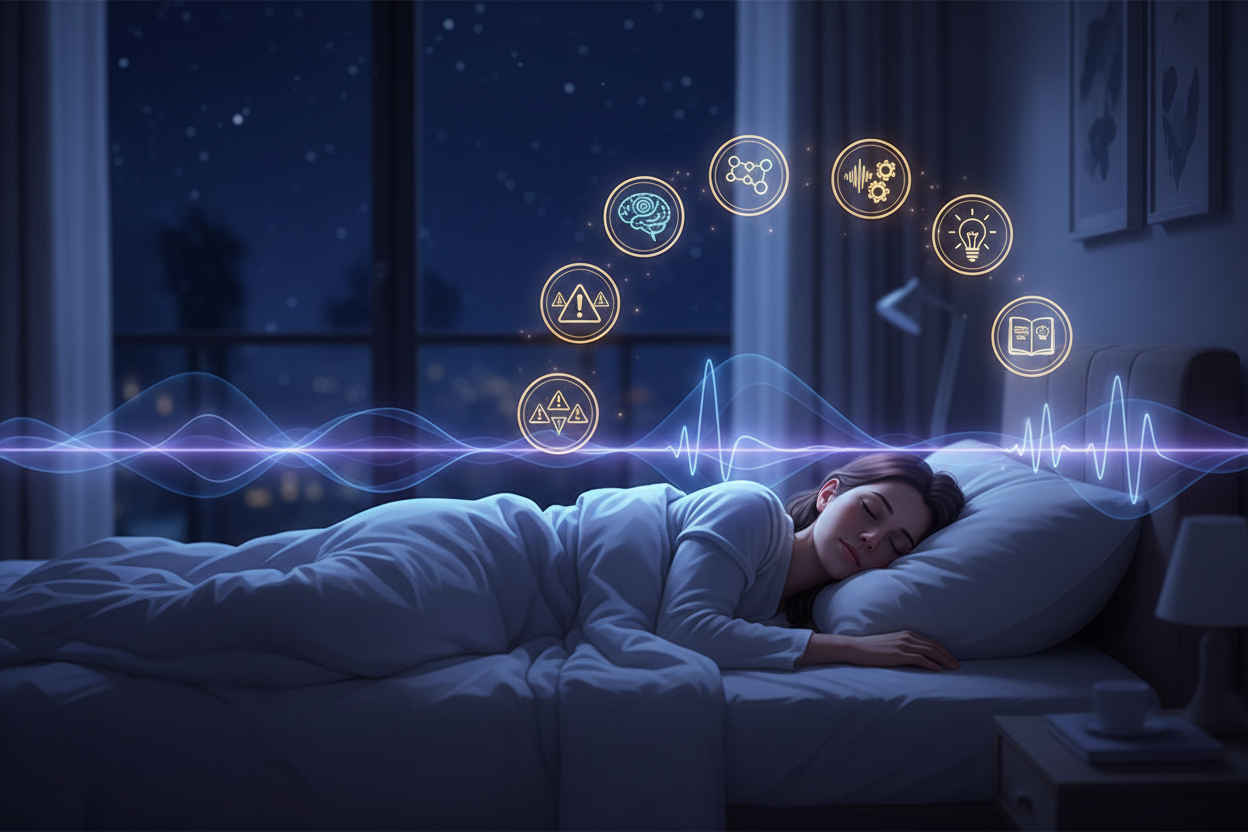
Your brain naturally produces electrical activity that can be measured in different frequency ranges. These brainwaves correspond to different states of consciousness. When you’re wide awake and alert, your brain produces beta waves. As you relax, alpha waves take over. During deep sleep, your brain shifts into delta wave patterns.
The beauty of brainwave entrainment lies in its simplicity. By exposing your brain to specific frequencies through audio or visual stimuli, you can encourage it to match those patterns. It’s similar to how your heart rate might synchronize with music you’re listening to, except we’re working with your brain’s electrical activity instead.
The Science Behind Sleep and Brainwaves
Understanding how sleep works at a neurological level helps explain why brainwave entrainment can be so effective. Your sleep cycle consists of several stages, each characterized by distinct brainwave patterns.
During light sleep (Stage 1), your brain transitions from alpha waves (8-12 Hz) to theta waves (4-8 Hz). As you move into deeper sleep stages, delta waves (0.5-4 Hz) become dominant. These slow, powerful waves are associated with the most restorative aspects of sleep – physical healing, memory consolidation, and cellular repair.
Research published in neuroscience journals has shown that people with sleep disorders often have irregular or insufficient delta wave activity. This is where brainwave entrainment comes in. By using audio frequencies that correspond to these natural sleep patterns, you can help guide your brain into the appropriate state more easily and consistently.
Studies have demonstrated that participants using brainwave entrainment techniques showed improved sleep onset time, increased deep sleep duration, and better overall sleep quality compared to control groups. The technology essentially acts as training wheels for your brain, helping it remember how to achieve optimal sleep states naturally.
How Brainwave Entrainment Works for Better Sleep
The process of using brainwave entrainment for sleep is surprisingly straightforward, yet the mechanisms behind it are quite sophisticated. When you listen to specially designed audio tracks before bedtime, your brain begins to synchronize with the embedded frequencies through a process called the “frequency following response.”
Most sleep-focused brainwave entrainment programs start with frequencies that match your current state – perhaps alpha waves if you’re relaxed but still awake. The audio then gradually transitions to theta and delta frequencies, gently guiding your brain through the natural progression toward deep sleep.
This gradual transition is crucial because it mimics your brain’s natural sleep process while making it more efficient. Instead of lying awake as your mind races or struggles to slow down, the entrainment helps facilitate this transition smoothly and predictably.
Many people report that they fall asleep faster when using these techniques, often within 10-15 minutes compared to their usual 30-60 minutes. Even more importantly, they tend to experience more time in deep sleep stages, which is when your body does its most important restorative work.
Types of Brainwave Entrainment for Sleep Enhancement
There are several different approaches to brainwave entrainment, each with its own advantages and applications for sleep improvement.
Binaural Beats are perhaps the most well-known form of brainwave entrainment. This technique plays slightly different frequencies in each ear – for example, 100 Hz in the left ear and 104 Hz in the right ear. Your brain perceives the difference (4 Hz in this case) as a rhythmic beating sound, which it then begins to synchronize with.
Monaural Beats work similarly but combine the two frequencies before they reach your ears, creating an actual rhythmic pulse in the audio. This can be more effective for some people because it doesn’t require headphones and may produce stronger entrainment effects.
Isochronic Tones use evenly spaced pulses of sound that turn on and off rapidly. These create very clear, distinct rhythmic patterns that many people find particularly effective for sleep induction.
Pink Noise and Brown Noise combined with entrainment frequencies can mask environmental sounds while providing the benefits of brainwave synchronization. These are especially helpful if you live in a noisy environment or are sensitive to sudden sounds during sleep.
Real Benefits You Can Expect
The benefits of incorporating brainwave entrainment into your sleep routine extend far beyond just falling asleep faster. Users consistently report improvements across multiple aspects of their sleep experience and daytime functioning.
Most people notice they fall asleep more quickly, often cutting their sleep onset time in half. This alone can be life-changing if you’re used to lying awake for extended periods. But the benefits don’t stop there – many users report sleeping more deeply and waking up feeling more refreshed, even if they get the same amount of total sleep time.
The quality of sleep often improves dramatically. Because brainwave entrainment can help you spend more time in deep sleep stages, your body has more opportunity for physical restoration, immune system strengthening, and memory consolidation. This translates to better physical health, improved cognitive function, and enhanced emotional regulation during the day.
Perhaps surprisingly, many people find that their sleep becomes more consistent. Instead of having good nights and bad nights seemingly at random, brainwave entrainment can help establish more predictable sleep patterns. This consistency is incredibly valuable for maintaining healthy circadian rhythms and overall well-being.
Some users also report reduced anxiety around bedtime. If you’ve developed a pattern of worry about whether you’ll be able to sleep, having a reliable tool can break that cycle and restore confidence in your ability to get good rest.
Getting Started: Practical Tips for Beginners
Starting with brainwave entrainment doesn’t require expensive equipment or complicated setups. A good pair of headphones and access to quality audio tracks are often all you need to begin experiencing benefits.
Begin with sessions of 20-30 minutes, starting about an hour before your intended bedtime. This gives your brain time to begin the entrainment process without rushing into sleep mode too quickly. Create a comfortable environment – dim lighting, comfortable temperature, and minimal distractions work best.
Consistency is key when you’re first starting out. Try to use brainwave entrainment at the same time each night for at least two weeks. This helps establish the practice as part of your bedtime routine and allows your brain to become more responsive to the entrainment effects.
Don’t expect dramatic results on the first night, though some people do experience immediate benefits. For most users, the effects build over time as the brain becomes more accustomed to the entrainment process. Keep a simple sleep journal to track your progress – note how long it takes you to fall asleep, how you feel upon waking, and any changes in sleep quality.
Experiment with different types of entrainment to find what works best for you. Some people respond better to binaural beats, while others prefer isochronic tones or nature sounds combined with entrainment frequencies.
Common Mistakes to Avoid
While brainwave entrainment is generally safe and straightforward, there are some common pitfalls that can reduce its effectiveness or create frustration for new users.
One of the biggest mistakes is expecting immediate, dramatic results. While some people do experience significant improvements right away, for many others, the benefits develop gradually over several days or weeks of consistent use. Patience and persistence are essential.
Using poor-quality audio or inadequate headphones can significantly impact results. The frequencies used in brainwave entrainment need to be reproduced accurately, so invest in decent headphones or speakers. You don’t need audiophile-grade equipment, but earbuds that came with your phone probably won’t cut it.
Another common error is using brainwave entrainment at the wrong time. These techniques are designed to promote relaxation and sleep, so using them when you need to be alert – like before driving or during work – is counterproductive and potentially dangerous.
Some people make the mistake of setting the volume too high, thinking it will be more effective. In reality, the volume should be comfortable and not distracting. The entrainment effect doesn’t depend on loudness but on the consistency and accuracy of the frequencies.
Finally, don’t abandon other good sleep hygiene practices. Brainwave entrainment works best as part of a comprehensive approach to better sleep that includes maintaining regular sleep schedules, creating a comfortable sleep environment, and managing stress levels.
Conclusion
Brainwave entrainment represents a fascinating intersection of ancient wisdom about the power of rhythm and modern neuroscience. By working with your brain’s natural electrical patterns, this technology offers a gentle, non-invasive way to improve sleep quality and overall well-being.
The beauty of this approach lies in its simplicity and accessibility. You don’t need prescriptions, expensive equipment, or complicated procedures. With nothing more than quality audio tracks and consistent practice, you can begin training your brain to achieve deeper, more restorative sleep.
While individual results vary, the growing body of research and countless user testimonials suggest that brainwave entrainment can be a powerful tool for anyone struggling with sleep issues. Whether you have occasional insomnia or chronic sleep problems, this technology offers hope for better nights and more energetic days.
Remember that good sleep is not a luxury – it’s a fundamental requirement for physical health, mental clarity, and emotional well-being. If traditional approaches haven’t worked for you, brainwave entrainment might be the missing piece in your sleep optimization puzzle. Give it a try, be patient with the process, and prepare to discover what truly restorative sleep can do for your life.
Frequently Asked Questions
Q: Is brainwave entrainment safe for everyone?
A: Brainwave entrainment is generally considered safe for most people. However, individuals with epilepsy, seizure disorders, or certain psychiatric conditions should consult with a healthcare provider before using these techniques. Pregnant women should also seek medical advice before starting any new sleep intervention.
Q: How long does it take to see results from brainwave entrainment?
A: Results vary significantly between individuals. Some people notice improvements in sleep quality within the first few sessions, while others may need 2-4 weeks of consistent use to experience significant benefits. The key is regular, consistent practice.
Q: Do I need special headphones for brainwave entrainment?
A: While you don’t need expensive audiophile headphones, you do need headphones or speakers that can accurately reproduce the frequencies used in entrainment. Good quality over-ear headphones or earbuds that provide clear sound across a wide frequency range work well. For binaural beats, stereo headphones are essential.
Q: Can I use brainwave entrainment every night?
A: Yes, brainwave entrainment can be used nightly and is often most effective when used consistently. Unlike sleep medications, there’s no risk of dependency, and the benefits typically improve with regular use.
Q: Will brainwave entrainment work if I have severe insomnia?
A: While brainwave entrainment can be helpful for many people with sleep difficulties, severe insomnia often requires comprehensive treatment. It’s best used as part of a broader sleep improvement strategy that may include medical evaluation, sleep hygiene improvements, and potentially other interventions recommended by healthcare professionals.
Q: What’s the difference between brainwave entrainment and meditation music?
A: While both can be relaxing, brainwave entrainment specifically uses precise frequencies designed to synchronize with your brain’s natural rhythms. Regular meditation or relaxation music may be soothing but doesn’t necessarily include the specific frequencies needed for brainwave synchronization.