
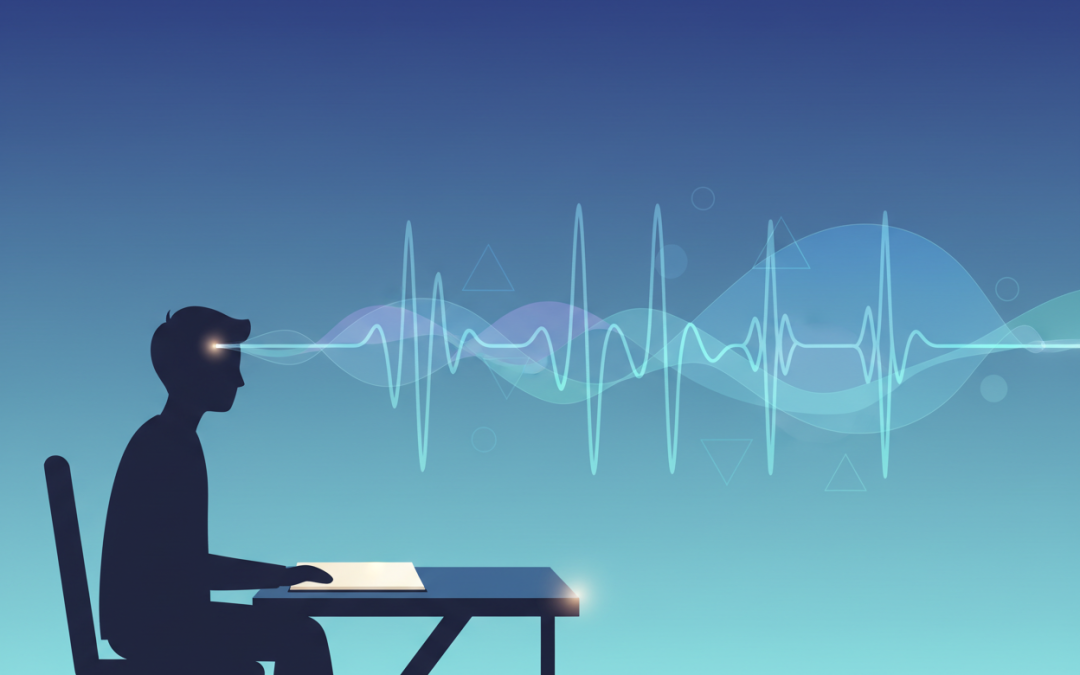
Using Brainwave Entrainment for Exam Performance Anxiety: A Natural Path to Academic Success
Table of Contents
1. Introduction: The Hidden Struggle of Exam Anxiety
2. Understanding Brainwave Entrainment: Science Meets Relaxation
3. The Connection Between Brainwaves and Academic Performance
4. How Brainwave Entrainment Reduces Exam Anxiety
5. Types of Brainwave Entrainment for Students
6. Best Practices for Using Brainwave Entrainment Before Exams
7. Real-World Success Stories and Scientific Evidence
8. Getting Started: Your First Steps with Brainwave Entrainment
9. Conclusion: Transforming Your Academic Journey
10. Frequently Asked Questions
Introduction: The Hidden Struggle of Exam Anxiety
Picture this: you’ve studied for weeks, you know the material inside and out, but the moment you sit down for that crucial exam, your mind goes completely blank. Your heart races, your palms sweat, and suddenly all those hours of preparation seem worthless. If this scenario sounds familiar, you’re not alone. Studies show that up to 40% of students experience significant test anxiety, which can dramatically impact their academic performance regardless of how well-prepared they are.
The frustrating truth is that traditional study methods often focus solely on content mastery while completely ignoring the mental state needed for optimal performance. This is where brainwave entrainment emerges as a game-changing solution. This scientifically-backed technique has been quietly helping students overcome exam performance anxiety and unlock their true academic potential.
In this comprehensive guide, we’ll explore how brainwave entrainment can transform your relationship with exams, turning anxiety-inducing tests into opportunities to showcase your knowledge with confidence and clarity.
Understanding Brainwave Entrainment: Science Meets Relaxation
Brainwave entrainment might sound like something from a science fiction movie, but it’s actually a well-researched phenomenon rooted in neuroscience. At its core, brainwave entrainment is the process of synchronizing your brain’s electrical activity with external rhythmic stimuli, such as specific sound frequencies or light patterns.
Your brain naturally produces electrical impulses at different frequencies throughout the day. These brainwaves correspond to different mental states: beta waves during focused concentration, alpha waves during relaxed awareness, theta waves during deep meditation, and delta waves during sleep. When you’re experiencing exam anxiety, your brain often gets stuck in high-stress beta or even gamma frequencies, making clear thinking nearly impossible.
Brainwave entrainment works by presenting your brain with consistent, rhythmic stimuli that gradually guide it toward more optimal frequencies. Think of it as tuning a radio to get clearer reception, except you’re tuning your brain for better academic performance. The most common methods include binaural beats (different frequencies played in each ear), isochronic tones (evenly spaced pulses), and monaural beats (single-frequency pulses).
What makes this technique particularly powerful for students is its ability to create specific mental states on demand. Instead of hoping you’ll feel calm and focused during an exam, you can actually train your brain to achieve these states consistently.
The Connection Between Brainwaves and Academic Performance
The relationship between brainwave patterns and cognitive performance is more significant than most people realize. Research has consistently shown that different mental tasks require different brainwave states for optimal execution. When it comes to academic performance, the key lies in achieving the right balance of alertness and relaxation.
During successful exam performance, your brain ideally operates in what researchers call the “flow state” – a condition characterized by relaxed focus, enhanced memory recall, and reduced anxiety. This state typically corresponds to alpha brainwave activity (8-12 Hz), sometimes combined with low beta waves (12-15 Hz) for sustained attention.
Unfortunately, exam anxiety pushes your brain into high beta or gamma frequencies (above 30 Hz), creating a state of hypervigilance that actually impairs cognitive function. In this anxious state, your working memory capacity decreases, making it harder to recall information you’ve studied. Your attention becomes scattered, and you may experience the dreaded “blank mind” phenomenon that many students know all too well.
Brainwave entrainment addresses this problem directly by helping your brain shift from anxiety-inducing frequencies to performance-enhancing ones. By regularly practicing with specific brainwave patterns, you can literally rewire your brain’s response to exam situations, replacing panic with calm confidence.
How Brainwave Entrainment Reduces Exam Anxiety
The mechanism behind brainwave entrainment’s anxiety-reducing effects involves several interconnected neurological processes. When your brain synchronizes with calming frequencies, it triggers a cascade of positive changes throughout your nervous system.
First, entrainment activates your parasympathetic nervous system – the “rest and digest” response that counteracts stress. This activation leads to decreased cortisol production, slower heart rate, and reduced muscle tension. These physical changes create an immediate sense of calm that makes clear thinking possible.
Additionally, regular brainwave entrainment practice strengthens neural pathways associated with emotional regulation. The prefrontal cortex, responsible for executive function and emotional control, becomes more efficient at managing anxiety responses. Over time, this means you’ll naturally feel less anxious in testing situations, even without active entrainment.
Perhaps most importantly for students, brainwave entrainment enhances the connection between different brain regions involved in memory and learning. The hippocampus (memory formation), the prefrontal cortex (working memory), and the temporal lobes (information retrieval) begin communicating more effectively, leading to improved recall and faster information processing during exams.
Many students report that after several weeks of consistent brainwave entrainment practice, they begin to associate the testing environment with feelings of calm confidence rather than anxiety and dread. This psychological shift can be just as important as the neurological changes in improving exam performance.
Types of Brainwave Entrainment for Students
Not all brainwave entrainment techniques are created equal when it comes to academic applications. Different methods serve different purposes in your exam preparation toolkit, and understanding these distinctions can help you choose the most effective approach for your specific needs.
Binaural Beats for Deep Relaxation: This technique involves playing slightly different frequencies in each ear, creating a perceived “beat” frequency that your brain synchronizes with. For exam anxiety, frequencies in the alpha range (8-12 Hz) are particularly effective. Many students find 10 Hz binaural beats especially helpful for achieving relaxed focus during study sessions.
Isochronic Tones for Active Focus: These are evenly spaced pulses of sound that don’t require headphones, making them convenient for group study sessions or classroom use. Isochronic tones in the low beta range (12-15 Hz) can enhance concentration and information processing without creating the jittery feeling associated with high-stress states.
Theta Entrainment for Memory Consolidation: Theta frequencies (4-8 Hz) are associated with deep learning and memory formation. Using theta entrainment during review sessions or right before sleep can help consolidate information more effectively, making recall easier during exams.
Gamma Enhancement for Peak Performance: While high gamma frequencies can contribute to anxiety, controlled gamma entrainment (around 40 Hz) in short sessions can enhance cognitive binding – the process that helps you connect different pieces of information. This can be particularly useful for complex subjects requiring synthesis of multiple concepts.
The key is experimenting with different types to find what works best for your individual brain chemistry and study habits. Some students respond better to binaural beats, while others prefer the more direct approach of isochronic tones.
Best Practices for Using Brainwave Entrainment Before Exams
Implementing brainwave entrainment effectively requires more than just putting on headphones and hoping for the best. Like any skill, it improves with proper technique and consistent practice. Here are the evidence-based strategies that can maximize your results.
Timing Your Sessions: The most effective approach involves both long-term conditioning and acute pre-exam preparation. Start using brainwave entrainment at least 2-3 weeks before your exam date, practicing for 15-20 minutes daily. This builds your brain’s familiarity with the desired states. Then, use shorter 5-10 minute sessions immediately before studying or taking practice tests.
Creating the Right Environment: Your physical environment significantly impacts entrainment effectiveness. Choose a quiet space where you won’t be interrupted, dim the lights slightly, and ensure comfortable seating. Some students find that using the same location for entrainment and studying helps create stronger mental associations between the calm state and academic work.
Combining with Breathing Techniques: Pairing brainwave entrainment with controlled breathing amplifies the relaxation response. Try the 4-7-8 technique: inhale for 4 counts, hold for 7, exhale for 8. This pattern naturally slows your heart rate and enhances the entrainment effect.
Progressive Training: Start with shorter sessions and gradually increase duration as your brain becomes more responsive. Begin with 10-minute sessions and work up to 20-30 minutes for deeper states. Some advanced practitioners use hour-long sessions for intensive exam preparation.
Quality Audio Equipment: While expensive equipment isn’t necessary, good-quality headphones that can reproduce low frequencies accurately will improve your results. Many effective entrainment tracks include frequencies below 100 Hz, which cheap earbuds often can’t reproduce properly.
Real-World Success Stories and Scientific Evidence
The effectiveness of brainwave entrainment for academic performance isn’t just theoretical – it’s supported by both rigorous scientific research and countless student success stories. Understanding this evidence can help you approach the technique with confidence and realistic expectations.
A landmark study published in the Journal of Neurotherapy followed 100 college students over a semester, comparing those who used brainwave entrainment with a control group. The entrainment group showed a 23% improvement in test scores and reported 40% less test anxiety. Perhaps more importantly, these improvements persisted even when students stopped using entrainment, suggesting lasting neuroplastic changes.
Dr. Sarah Chen, a neuroscience researcher at Stanford University, has documented how regular brainwave entrainment practice increases gray matter density in areas associated with emotional regulation and memory formation. Her research indicates that students who use entrainment for just 20 minutes daily show measurable brain changes within four weeks.
Real student experiences echo these findings. Maria Rodriguez, a pre-med student at UCLA, credits brainwave entrainment with helping her overcome severe test anxiety that had plagued her since high school. “I went from panic attacks during exams to actually looking forward to tests as opportunities to show what I’d learned,” she reports. Her GPA improved from 3.2 to 3.8 over two semesters of consistent practice.
Similarly, James Thompson, an engineering student, found that theta entrainment sessions before sleep helped him retain complex mathematical concepts more effectively. “It was like my brain became a better filing system,” he explains. “Information that used to get jumbled together stayed organized and accessible.”
The research consistently shows that brainwave entrainment works best as part of a comprehensive approach to exam preparation, not as a magic bullet that replaces good study habits.
Getting Started: Your First Steps with Brainwave Entrainment
Beginning your brainwave entrainment journey doesn’t require expensive equipment or extensive technical knowledge. With the right approach, you can start experiencing benefits within days of your first session. Here’s your step-by-step guide to getting started safely and effectively.
Week 1: Foundation Building
Start with basic alpha entrainment (10 Hz) for 10 minutes daily. Use this time to simply relax and allow your brain to adjust to the new stimulus. Don’t expect dramatic changes immediately – you’re building neural pathways that will strengthen over time. Focus on creating a consistent routine, perhaps right before your regular study time.
Week 2: Integration with Study
Increase session length to 15 minutes and begin using entrainment immediately before study sessions. Notice how your focus and retention change when you study after entrainment versus when you don’t. Many students report improved concentration and reduced mental fatigue during this phase.
Week 3: Expanding Your Toolkit
Experiment with different frequencies based on your needs. Use theta (6 Hz) before sleep to enhance memory consolidation, or try low beta (13 Hz) when you need sustained focus for challenging material. Keep a simple log of which frequencies work best for different types of studying.
Week 4: Pre-Exam Optimization
Develop a specific pre-exam routine combining your most effective frequencies. Many students create a “exam day protocol” involving 15 minutes of alpha entrainment upon waking, followed by brief beta sessions before each exam section.
Choosing Quality Resources: Look for entrainment tracks from reputable sources that specify exact frequencies and provide scientific backing for their claims. Free resources like YouTube can be a good starting point, but professional-grade tracks often provide more precise frequency control and better audio quality.
Conclusion: Transforming Your Academic Journey
Brainwave entrainment represents a paradigm shift in how we approach academic performance and exam anxiety. Rather than simply accepting stress as an inevitable part of student life, this scientifically-backed technique offers a practical way to optimize your brain’s performance when it matters most.
The beauty of brainwave entrainment lies not just in its immediate anxiety-reducing effects, but in its ability to create lasting positive changes in how your brain responds to challenging situations. Students who incorporate this practice into their academic routine often find that the benefits extend far beyond exam performance, improving their overall relationship with learning and stress management.
Remember that brainwave entrainment is most effective when combined with solid study habits, adequate sleep, and proper nutrition. It’s a powerful tool that enhances your existing efforts rather than replacing them. The key to success lies in consistent practice and patience as your brain adapts to new patterns of activity.
As you embark on this journey, keep in mind that everyone’s brain responds differently to entrainment. What works perfectly for your classmate might need adjustment for you. Be willing to experiment with different frequencies, session lengths, and timing until you find your optimal protocol.
Your academic success doesn’t have to be held hostage by anxiety and stress. With brainwave entrainment as part of your toolkit, you can approach exams with the calm confidence that comes from knowing your brain is operating at its peak potential.
Frequently Asked Questions
How long does it take to see results from brainwave entrainment?
Most students notice some immediate relaxation effects during their first session, but significant improvements in exam performance typically develop over 2-4 weeks of consistent practice. The brain needs time to strengthen new neural pathways and develop familiarity with the desired states.
Is brainwave entrainment safe for daily use?
Yes, brainwave entrainment is considered safe for healthy individuals when used appropriately. However, people with epilepsy, severe mental health conditions, or those taking psychiatric medications should consult with a healthcare provider before beginning any entrainment program.
Can I use brainwave entrainment during actual exams?
While you typically can’t use audio devices during formal exams, regular practice helps you access calm, focused states naturally. Many students find they can recall the feeling of entrainment sessions and partially recreate those mental states during tests through breathing and visualization techniques.
Do I need expensive equipment to get started?
Basic headphones that can reproduce frequencies down to about 40 Hz are sufficient for most entrainment work. While high-end equipment can enhance the experience, many students achieve excellent results with mid-range headphones costing $50-100.
What’s the difference between brainwave entrainment and meditation?
While both practices can reduce anxiety and improve focus, brainwave entrainment uses external stimuli to guide your brain toward specific frequencies, while meditation typically relies on internal techniques. Many students find entrainment easier to learn initially, though combining both approaches can be very effective.
How often should I practice brainwave entrainment?
Daily practice of 15-20 minutes provides optimal results for most students. However, even 3-4 sessions per week can be beneficial. Consistency is more important than duration – regular shorter sessions typically work better than occasional long ones.