
The Science of Brainwave Entrainment and Pain Perception: Unlocking Natural Pain Relief
Table of Contents
1. Introduction to Brainwave Entrainment and Pain
2. Understanding Brainwave Patterns and Their Role in Pain Processing
3. How Brainwave Entrainment Works in the Brain
4. The Connection Between Brainwaves and Pain Perception
5. Types of Brainwave Entrainment for Pain Management
6. Scientific Evidence Supporting Brainwave Entrainment for Pain Relief
7. Practical Applications and Benefits
8. Getting Started with Brainwave Entrainment
9. Conclusion
10. Frequently Asked Questions
Pain is a universal human experience that affects millions of people worldwide. While traditional pain management methods rely heavily on medications and invasive procedures, an emerging field of research is revealing the powerful potential of brainwave entrainment as a natural, non-invasive approach to pain relief. This fascinating intersection of neuroscience and sound therapy is opening new doors for those seeking alternative pain management solutions.
Brainwave entrainment represents a cutting-edge approach to influencing our brain’s electrical activity through external stimuli, particularly sound frequencies. As we delve deeper into understanding how our brains process pain signals, researchers are discovering that specific brainwave patterns can significantly impact our perception of discomfort and our body’s natural healing responses.
Understanding Brainwave Patterns and Their Role in Pain Processing
Our brains are constantly generating electrical activity in the form of brainwaves, which scientists measure in cycles per second called Hertz (Hz). These rhythmic patterns of neural activity play crucial roles in everything from our sleep cycles to our emotional states, and importantly, how we perceive and process pain.
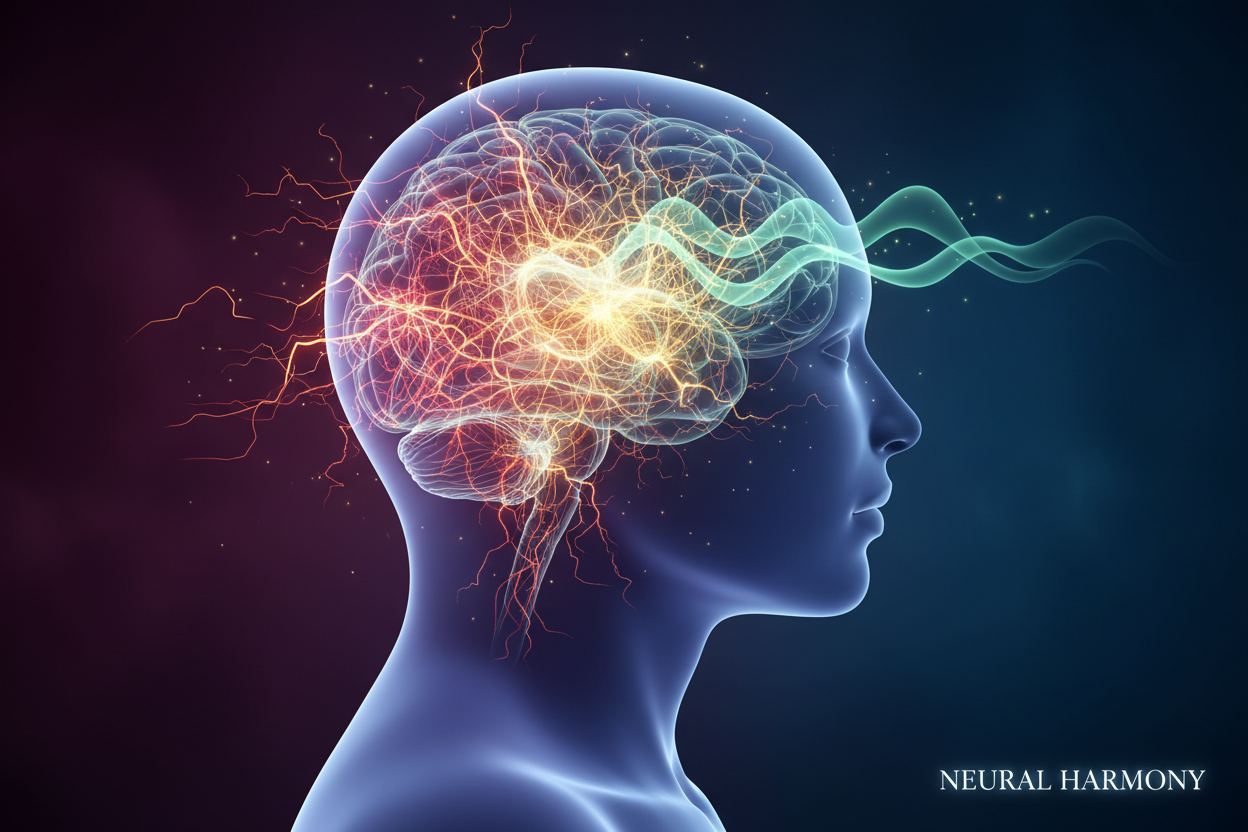
The five primary brainwave frequencies each serve distinct functions in our neurological landscape. Delta waves (0.5-4 Hz) dominate during deep sleep and are associated with healing and regeneration. Theta waves (4-8 Hz) emerge during meditation and deep relaxation states, often linked to reduced pain sensitivity. Alpha waves (8-13 Hz) appear during calm, relaxed awareness and have been shown to promote natural pain relief mechanisms.
Beta waves (13-30 Hz) characterize our normal waking consciousness but can become problematic when excessive, as heightened beta activity often correlates with increased pain perception and anxiety. Gamma waves (30-100 Hz) represent the highest frequency brainwaves and are associated with peak cognitive function and consciousness integration.
Understanding these natural rhythms provides the foundation for comprehending how brainwave entrainment can be strategically used to shift our neurological state toward patterns that naturally reduce pain perception and enhance our body’s healing capabilities.
How Brainwave Entrainment Works in the Brain
Brainwave entrainment operates on a fundamental principle of neuroscience called the frequency following response (FFR). This remarkable phenomenon occurs when the brain naturally synchronizes its electrical activity to match external rhythmic stimuli, such as specific sound frequencies or visual patterns.
When we expose our brains to consistent rhythmic input, our neural networks begin to resonate at the same frequency as the external stimulus. This process isn’t just theoretical – it’s a measurable, reproducible neurological response that researchers have documented extensively through EEG studies and brain imaging technology.
The mechanisms behind this synchronization involve several key brain structures. The thalamus, often called the brain’s relay station, plays a central role in processing sensory information and coordinating brainwave patterns. The auditory cortex processes sound-based entrainment stimuli, while the visual cortex responds to light-based entrainment methods.
What makes this process particularly relevant for pain management is how brainwave entrainment can influence the brain’s pain processing networks. By guiding the brain into specific frequency ranges, we can potentially modulate the activity in regions like the anterior cingulate cortex and the insula, both crucial areas for pain perception and emotional response to discomfort.
The Connection Between Brainwaves and Pain Perception
The relationship between brainwave patterns and pain perception is both complex and fascinating. Research has consistently shown that different brainwave states can dramatically alter how we experience physical discomfort, offering insights into why some people seem more resilient to pain than others.
When we’re in heightened states of stress or anxiety, characterized by excessive beta wave activity, our pain perception typically intensifies. This occurs because stress hormones like cortisol can amplify pain signals, while the brain’s heightened arousal state makes us more sensitive to uncomfortable sensations.
Conversely, slower brainwave patterns associated with relaxation and meditation have been shown to activate the brain’s natural pain suppression systems. Alpha and theta states promote the release of endorphins – our body’s natural painkillers – while simultaneously reducing the activity in brain regions responsible for pain processing.
One particularly interesting aspect of this relationship involves the brain’s default mode network (DMN), which becomes active during rest and introspection. When pain becomes chronic, the DMN often shows altered patterns that can perpetuate the pain experience. Brainwave entrainment techniques that promote alpha and theta states can help normalize DMN activity, potentially breaking cycles of chronic pain.
The gate control theory of pain also provides insight into how brainwave entrainment might work. This theory suggests that non-painful sensory input can close neural “gates” that would otherwise allow pain signals to reach the brain. Sound-based entrainment may activate these gating mechanisms, providing a neurological explanation for its pain-relieving effects.
Types of Brainwave Entrainment for Pain Management
Several distinct methods of brainwave entrainment have shown promise for pain management, each utilizing different sensory pathways to achieve neural synchronization. Understanding these various approaches can help individuals choose the most suitable method for their specific needs and preferences.
Binaural beats represent perhaps the most well-known form of auditory brainwave entrainment. This technique involves playing slightly different frequencies in each ear – for example, 200 Hz in the left ear and 210 Hz in the right ear. The brain perceives the mathematical difference (10 Hz in this case) as a rhythmic beating pattern, which can guide brainwave activity into the desired frequency range.
Isochronic tones offer another powerful auditory approach, using evenly spaced pulses of sound to create entrainment effects. Unlike binaural beats, isochronic tones don’t require headphones and can be more effective for some individuals. These tones can be embedded in pleasant background music or nature sounds, making them more enjoyable for extended listening sessions.
Monaural beats combine two frequencies into a single audio track, creating a beating pattern that both ears hear simultaneously. This method can be particularly effective for pain management because it doesn’t require the precise stereo separation needed for binaural beats, making it more accessible for people with hearing differences between ears.
Light-based entrainment, often called photobiomodulation, uses specific frequencies of light to influence brainwave patterns. This approach can be particularly beneficial for individuals who prefer visual stimulation or have auditory sensitivities that make sound-based methods uncomfortable.
Scientific Evidence Supporting Brainwave Entrainment for Pain Relief
The scientific foundation supporting brainwave entrainment for pain management continues to grow, with numerous peer-reviewed studies demonstrating its effectiveness across various pain conditions. This research spans multiple disciplines, from neuroscience and psychology to clinical medicine and rehabilitation therapy.
A landmark study published in the Journal of Music Therapy found that participants who listened to binaural beats in the alpha frequency range (8-13 Hz) experienced significant reductions in both acute and chronic pain levels. The researchers noted that these effects were accompanied by measurable changes in brainwave patterns, providing direct evidence of the entrainment process.
Research focusing on fibromyalgia patients has shown particularly promising results. A controlled trial involving 50 participants found that regular use of theta-frequency brainwave entrainment (6 Hz) led to substantial improvements in pain scores, sleep quality, and overall quality of life measures. The study’s six-month follow-up revealed that benefits persisted even after the active treatment period ended.
Neuroimaging studies using fMRI technology have provided insights into the brain mechanisms underlying these pain-relieving effects. Researchers have observed that brainwave entrainment can reduce activity in the anterior cingulate cortex and insula – key brain regions involved in pain processing – while simultaneously increasing activity in areas associated with relaxation and emotional regulation.
Clinical trials examining post-surgical pain management have also yielded encouraging results. Patients who used brainwave entrainment protocols during recovery required significantly less pain medication and reported faster return to normal activities compared to control groups receiving standard care alone.
Practical Applications and Benefits
The practical applications of brainwave entrainment for pain management extend far beyond simple symptom relief, offering a holistic approach that addresses multiple aspects of the pain experience. This versatility makes it an attractive option for individuals dealing with various types of discomfort, from acute injuries to chronic conditions.
For chronic pain sufferers, regular brainwave entrainment sessions can help break the cycle of pain-related stress and anxiety that often exacerbates symptoms. Many users report that consistent practice not only reduces their pain levels but also improves their sleep quality, emotional stability, and overall sense of well-being.
Healthcare professionals are increasingly incorporating brainwave entrainment into comprehensive pain management programs. Physical therapists use it to help patients relax during treatment sessions, while psychologists employ it as part of cognitive-behavioral therapy approaches for chronic pain. Some hospitals now offer brainwave entrainment as a complementary therapy for post-operative patients.
The accessibility of brainwave entrainment technology makes it particularly valuable for home-based pain management. Unlike many medical interventions, brainwave entrainment requires no special equipment beyond a smartphone or computer and a pair of headphones. This convenience allows individuals to access pain relief whenever and wherever they need it.
Athletes and active individuals have found brainwave entrainment beneficial for managing exercise-related discomfort and accelerating recovery from training sessions. The technique’s ability to promote relaxation while potentially enhancing the body’s natural healing processes makes it an ideal complement to physical rehabilitation programs.
Getting Started with Brainwave Entrainment
Beginning a brainwave entrainment practice for pain management doesn’t require extensive preparation, but understanding some basic principles can help maximize its effectiveness. The key is to approach it with realistic expectations and a commitment to consistent practice.
Start with short sessions of 10-15 minutes to allow your brain to adapt to the entrainment process. Many people find that morning or evening sessions work best, as these times naturally align with the brain’s circadian rhythms. Choose a quiet, comfortable environment where you won’t be interrupted, and consider dimming the lights to enhance relaxation.
For pain management specifically, alpha and theta frequency ranges (8-13 Hz and 4-8 Hz respectively) tend to be most effective. Begin with alpha frequencies, as they’re generally easier to entrain and provide a good introduction to the process. As you become more experienced, you can experiment with theta frequencies for deeper relaxation and pain relief.
Quality matters when selecting brainwave entrainment audio. Look for professionally produced tracks that use precise frequencies and high-quality audio engineering. Many reputable sources offer specific programs designed for pain management, often incorporating pleasant background sounds or music to enhance the listening experience.
Keep a simple journal to track your progress, noting pain levels before and after sessions, as well as any changes in sleep, mood, or overall well-being. This documentation can help you identify the most effective frequencies and session lengths for your individual needs.
Conclusion
The science of brainwave entrainment and pain perception represents a remarkable convergence of ancient wisdom and modern neuroscience. As our understanding of the brain’s electrical activity continues to evolve, we’re discovering that the rhythmic patterns governing our consciousness can be harnessed as powerful tools for natural pain relief.
This emerging field offers hope for millions of people seeking alternatives to traditional pain management approaches. By working with the brain’s natural tendency to synchronize with external rhythms, brainwave entrainment provides a non-invasive, accessible method for influencing pain perception and promoting healing.
While brainwave entrainment shouldn’t replace appropriate medical care for serious conditions, it represents a valuable complement to comprehensive pain management strategies. As research continues to validate its effectiveness and refine our understanding of optimal protocols, this technology promises to play an increasingly important role in how we approach pain relief and overall wellness.
The journey toward better pain management often requires exploring multiple approaches, and brainwave entrainment offers a scientifically-backed option that empowers individuals to take an active role in their healing process. With its combination of accessibility, safety, and growing evidence base, this fascinating application of neuroscience continues to open new possibilities for those seeking natural, effective pain relief.
Frequently Asked Questions
How long does it take to experience pain relief from brainwave entrainment?
Many people report some degree of relaxation and pain reduction within the first few sessions, often within 10-20 minutes of listening. However, more substantial and lasting benefits typically develop with consistent practice over several weeks. Individual responses vary based on factors like pain severity, overall health, and consistency of use.
Is brainwave entrainment safe for everyone to use?
Brainwave entrainment is generally considered safe for most people. However, individuals with epilepsy, seizure disorders, or certain psychiatric conditions should consult with healthcare providers before use. Pregnant women and people with pacemakers should also seek medical advice before beginning brainwave entrainment practices.
Can brainwave entrainment replace pain medications?
While brainwave entrainment can be highly effective for pain management, it should not be used as a replacement for prescribed medications without consulting healthcare providers. Many people find it works well as a complementary therapy that may help reduce their reliance on pain medications over time.
What equipment do I need to start brainwave entrainment?
The basic requirements are minimal: a device capable of playing audio (smartphone, tablet, or computer) and a good pair of headphones or earbuds. For binaural beats, stereo headphones are essential, while other forms of entrainment can work with speakers, though headphones generally provide better results.
How often should I practice brainwave entrainment for pain relief?
Most experts recommend daily sessions of 15-30 minutes for optimal results. Consistency is more important than duration, so shorter daily sessions are generally more effective than longer, infrequent ones. Some people benefit from multiple shorter sessions throughout the day, especially during pain flare-ups.