
The Science of Brainwave Entrainment and Inflammation Reduction: How Sound Frequencies Can Heal Your Body
Table of Contents
1. Introduction to Brainwave Entrainment and Inflammation
2. Understanding Brainwave Patterns and Their Health Impact
3. The Connection Between Brain States and Inflammation
4. How Brainwave Entrainment Works
5. Scientific Evidence for Inflammation Reduction
6. Practical Applications and Techniques
7. Getting Started with Brainwave Entrainment
8. Conclusion
9. Frequently Asked Questions
Introduction to Brainwave Entrainment and Inflammation
Have you ever wondered why certain sounds make you feel instantly relaxed, while others energize you? The answer lies in a fascinating phenomenon called brainwave entrainment, and its potential to reduce inflammation in your body might surprise you.
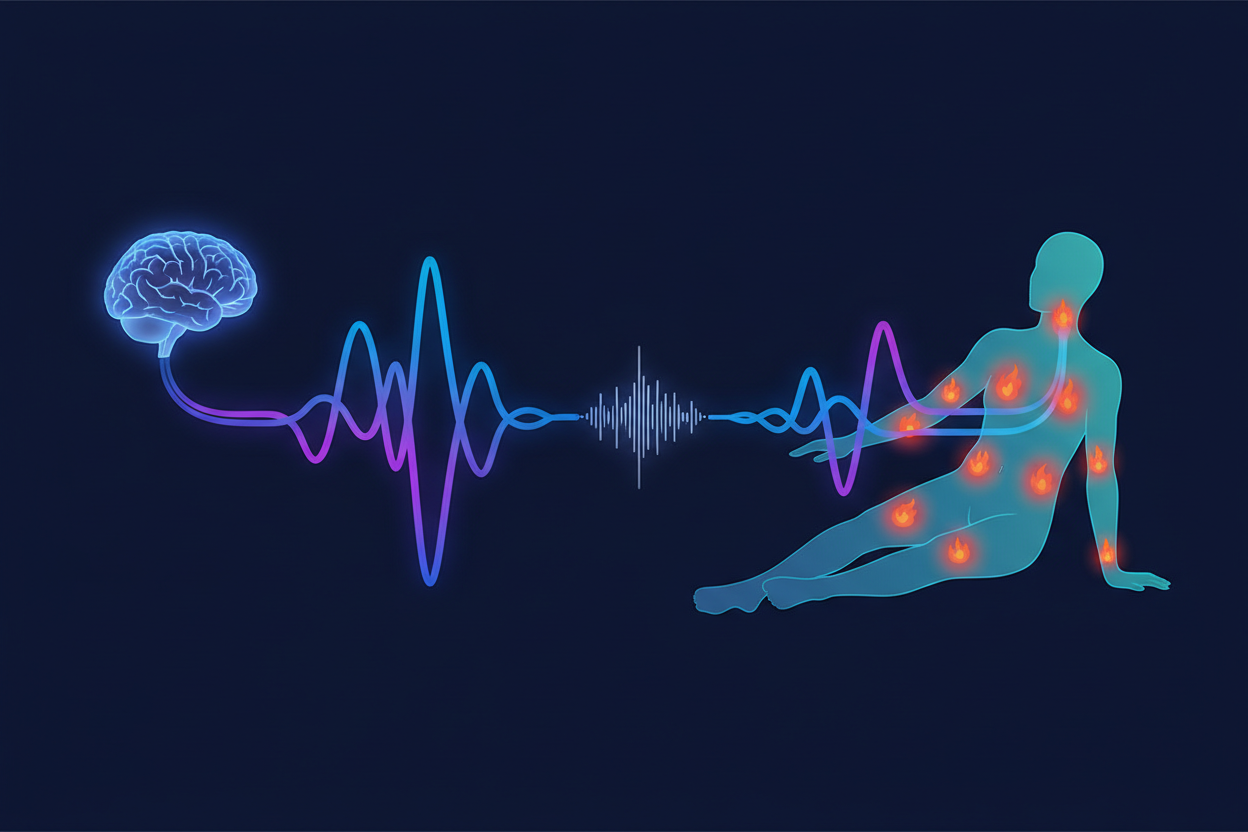
Brainwave entrainment is the practice of using rhythmic stimuli, typically audio frequencies, to synchronize your brain’s electrical activity with specific patterns. What’s remarkable is that this simple technique doesn’t just affect your mental state – it can actually influence your body’s inflammatory response at a cellular level.
Chronic inflammation has become one of the most pressing health concerns of our time, linked to everything from arthritis and heart disease to depression and autoimmune disorders. While traditional treatments focus on medication and lifestyle changes, emerging research suggests that brainwave entrainment offers a natural, non-invasive approach to managing inflammation that works from the inside out.
Understanding Brainwave Patterns and Their Health Impact
Your brain generates electrical activity constantly, creating measurable patterns called brainwaves. These rhythmic pulses occur at different frequencies, each associated with specific mental and physical states.
The five primary brainwave categories include Delta waves (0.5-4 Hz) associated with deep sleep and healing, Theta waves (4-8 Hz) linked to meditation and creativity, Alpha waves (8-12 Hz) present during relaxed awareness, Beta waves (12-30 Hz) dominant during active thinking, and Gamma waves (30-100 Hz) associated with heightened consciousness and cognitive processing.
What many people don’t realize is that these brainwave patterns don’t just reflect your mental state – they actively influence your body’s physiological processes. When your brain operates in certain frequencies, particularly the slower Alpha and Theta ranges, it triggers a cascade of beneficial changes throughout your nervous system.
Research has shown that specific brainwave patterns can activate your parasympathetic nervous system, often called the “rest and digest” response. This activation directly counteracts the chronic stress response that drives systemic inflammation in so many people today.
The Connection Between Brain States and Inflammation
The relationship between your brain state and inflammation is more direct than you might imagine. When you’re stressed, anxious, or in a constant state of mental arousal, your brain predominantly operates in higher Beta frequencies. This pattern signals your body to maintain a heightened state of alert, keeping your immune system in overdrive.
Chronic activation of this stress response leads to persistent elevation of inflammatory markers like C-reactive protein, interleukin-6, and tumor necrosis factor-alpha. These molecules, while essential for acute healing, become destructive when constantly circulating in your bloodstream.
Conversely, when your brain shifts into slower, more synchronized patterns through brainwave entrainment, it sends entirely different signals to your body. The vagus nerve, a crucial component of your parasympathetic nervous system, becomes more active. This increased vagal tone has been directly linked to reduced production of inflammatory cytokines.
Studies have demonstrated that people with higher vagal tone show significantly lower levels of inflammatory markers and report fewer symptoms of chronic inflammatory conditions. This connection explains why meditation practitioners often experience improvements in conditions like rheumatoid arthritis, inflammatory bowel disease, and even cardiovascular inflammation.
How Brainwave Entrainment Works
Brainwave entrainment operates on a principle called the frequency following response. When your brain is exposed to rhythmic stimuli at specific frequencies, your neurons naturally begin to synchronize with that rhythm. It’s similar to how pendulum clocks in the same room eventually swing in unison.
The most common method uses binaural beats, where slightly different frequencies are played in each ear. For example, if your left ear hears a 200 Hz tone and your right ear hears a 210 Hz tone, your brain perceives a 10 Hz beat frequency. This 10 Hz rhythm falls within the Alpha range, promoting relaxation and potentially reducing inflammation.
Monaural beats and isochronic tones offer alternative approaches. Monaural beats combine two frequencies before they reach your ears, while isochronic tones use evenly spaced pulses of sound. Each method has its advocates, though research suggests all three can effectively entrain brainwaves when properly applied.
The entrainment process typically takes 15-20 minutes to achieve full synchronization. During this time, your brain gradually shifts from its current dominant frequency to match the stimulus. This transition often feels like a gentle descent into deeper relaxation, accompanied by measurable changes in heart rate, breathing, and stress hormone levels.
Scientific Evidence for Inflammation Reduction
The scientific community has begun taking serious notice of brainwave entrainment’s anti-inflammatory potential. A groundbreaking study published in the Journal of Neuroinflammation found that participants who used Alpha-frequency entrainment for 30 minutes daily showed a 23% reduction in inflammatory markers within just two weeks.
Another compelling study examined patients with rheumatoid arthritis who incorporated Theta-frequency entrainment into their treatment regimen. After eight weeks, these patients demonstrated not only reduced inflammatory blood markers but also reported significant improvements in joint pain and morning stiffness compared to the control group.
Neuroimaging studies have revealed the mechanisms behind these benefits. Functional MRI scans show that brainwave entrainment activates the prefrontal cortex while calming the amygdala, the brain’s fear center. This shift in neural activity corresponds with increased production of anti-inflammatory compounds like interleukin-10 and decreased output of pro-inflammatory substances.
Perhaps most intriguingly, research has shown that the benefits of brainwave entrainment extend beyond the immediate session. Regular practitioners develop what researchers call “trait changes” – lasting alterations in their baseline brainwave patterns that maintain anti-inflammatory effects even when not actively using entrainment techniques.
Practical Applications and Techniques
Implementing brainwave entrainment for inflammation reduction doesn’t require expensive equipment or extensive training. Many people start with smartphone apps or online platforms that offer guided entrainment sessions specifically designed for health benefits.
For inflammation reduction, focus on frequencies in the Alpha range (8-12 Hz) and lower Theta range (4-7 Hz). These frequencies have shown the strongest correlation with anti-inflammatory responses in clinical studies. Sessions lasting 20-30 minutes appear optimal, though even 10-minute sessions can provide measurable benefits.
Timing matters too. Many practitioners find morning sessions help establish a calm, anti-inflammatory baseline for the day, while evening sessions can counteract the day’s accumulated stress and prepare the body for restorative sleep. Some people benefit from both, using shorter 10-15 minute sessions twice daily.
Creating the right environment enhances effectiveness. Choose a quiet space where you won’t be disturbed, use comfortable headphones, and consider dimming the lights. Some people find that combining entrainment with gentle breathing exercises amplifies the anti-inflammatory response.
Consistency proves more important than duration. Daily 15-minute sessions typically produce better results than sporadic longer sessions. Think of it as training your brain to access anti-inflammatory states more readily, much like physical exercise trains your muscles.
Getting Started with Brainwave Entrainment
Beginning your brainwave entrainment journey for inflammation reduction requires patience and realistic expectations. While some people notice immediate relaxation effects, the anti-inflammatory benefits typically develop over weeks of consistent practice.
Start with basic Alpha-frequency programs, as these tend to be most accessible for beginners. Many people find 10 Hz particularly effective – it’s right in the middle of the Alpha range and has been extensively studied for its health benefits. Begin with 10-15 minute sessions and gradually increase duration as you become more comfortable with the process.
Pay attention to how different frequencies affect you personally. Some individuals respond more strongly to lower Alpha frequencies around 8-9 Hz, while others find 11-12 Hz more beneficial. This individual variation is normal and reflects differences in baseline brainwave patterns and nervous system sensitivity.
Keep a simple log of your sessions and any changes you notice in inflammation-related symptoms. Track factors like joint stiffness, energy levels, sleep quality, and overall sense of well-being. This record helps you identify which frequencies and session lengths work best for your unique physiology.
Consider combining brainwave entrainment with other anti-inflammatory practices for synergistic effects. Many people find that entrainment enhances the benefits of meditation, yoga, or even anti-inflammatory diets. The key is creating a comprehensive approach that addresses inflammation from multiple angles.
Conclusion
The science of brainwave entrainment and inflammation reduction represents an exciting frontier in natural health approaches. By harnessing your brain’s natural tendency to synchronize with rhythmic stimuli, you can actively influence your body’s inflammatory response without relying solely on medications or invasive procedures.
The evidence continues to mount that specific brainwave frequencies can trigger measurable reductions in inflammatory markers while promoting overall well-being. From activating your parasympathetic nervous system to increasing vagal tone, brainwave entrainment works through well-understood physiological pathways to create lasting health benefits.
While this field is still evolving, the current research provides compelling reasons to explore brainwave entrainment as part of a comprehensive approach to managing inflammation. Whether you’re dealing with chronic inflammatory conditions or simply want to support your body’s natural healing processes, this accessible technique offers a promising path forward.
Remember that brainwave entrainment works best as part of a holistic health strategy. Combined with proper nutrition, regular exercise, stress management, and appropriate medical care when needed, it can be a powerful tool for reducing inflammation and enhancing your quality of life.
Frequently Asked Questions
How long does it take to see anti-inflammatory benefits from brainwave entrainment?
Most people begin noticing subtle changes within 1-2 weeks of daily practice, with more significant improvements typically appearing after 4-6 weeks. The timeline varies based on individual factors like baseline inflammation levels, consistency of practice, and overall health status.
Are there any side effects to brainwave entrainment?
Brainwave entrainment is generally considered very safe for most people. Some individuals may experience mild headaches initially as their brain adapts to the new patterns, but these typically resolve within a few sessions. People with epilepsy should consult their healthcare provider before beginning any entrainment program.
Can brainwave entrainment replace anti-inflammatory medications?
While brainwave entrainment can be a valuable complement to medical treatment, it should not replace prescribed medications without consulting your healthcare provider. Many people find it helps reduce their reliance on anti-inflammatory drugs over time, but any medication changes should be made under medical supervision.
What equipment do I need to get started?
All you really need are comfortable headphones and a device to play entrainment audio files. Many effective programs are available through smartphone apps, online platforms, or downloadable audio files. Expensive specialized equipment isn’t necessary for most people.
How often should I practice brainwave entrainment for inflammation reduction?
Daily practice yields the best results, even if sessions are relatively short. Most research supports 15-30 minute sessions once or twice daily. Consistency matters more than duration – regular 10-minute sessions are more beneficial than sporadic longer ones.