
The Science Behind Schumann Resonance and Earth’s Brainwaves: Understanding Our Planet’s Natural Frequency
Table of Contents
1. Introduction to Schumann Resonance
2. The Discovery and Scientific Foundation
3. How Schumann Resonance Works: The Physics Behind Earth’s Heartbeat
4. The Connection Between Earth’s Frequency and Human Biology
5. Modern Research and Health Implications
6. Environmental Factors Affecting Schumann Resonance
7. Practical Applications and Future Research
8. Conclusion
9. Frequently Asked Questions
Introduction to Schumann Resonance
Have you ever wondered if Earth has its own natural rhythm, much like a heartbeat? Well, it turns out our planet does indeed pulse with a measurable electromagnetic frequency that scientists call the Schumann Resonance. This fascinating phenomenon has captured the attention of researchers worldwide, not just for its impressive physics, but for its potential connections to human health and consciousness.
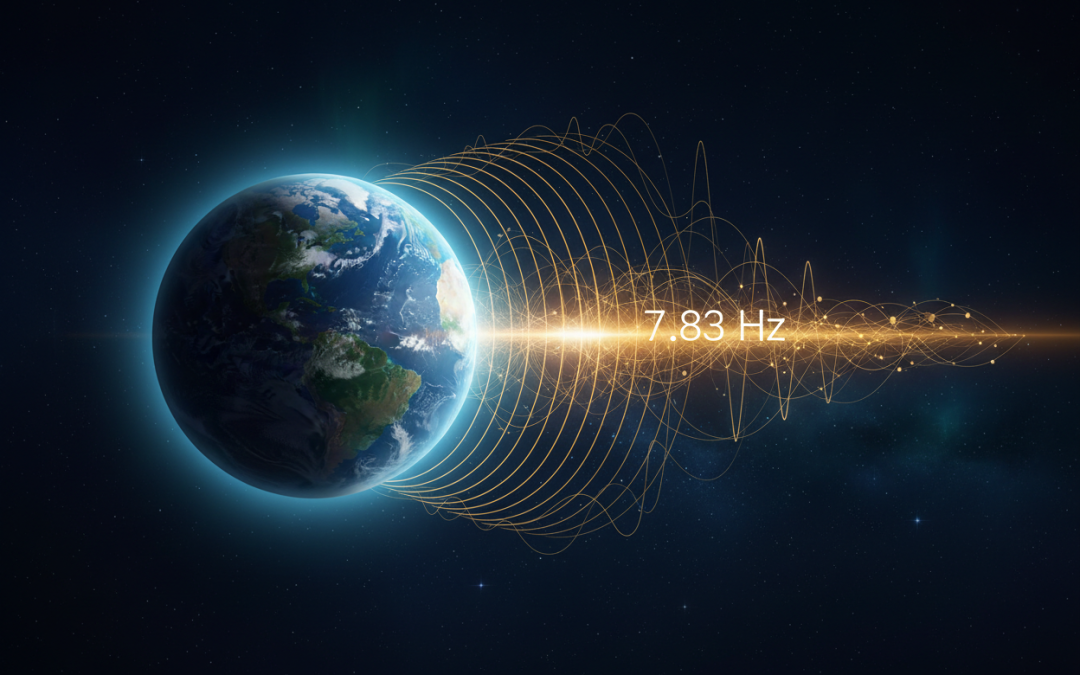
Named after German physicist Winfried Otto Schumann, who first predicted its existence in 1952, the Schumann Resonance represents the electromagnetic waves that continuously circle our globe. What makes this discovery particularly intriguing is that the primary frequency of these waves—approximately 7.83 Hz—falls remarkably close to the frequency range of human brainwaves during relaxed, meditative states.
This isn’t just a curious coincidence. As we’ll explore throughout this article, the relationship between Earth’s natural frequency and human biology opens up fascinating questions about our connection to the planet we call home. From potential health benefits to implications for space travel, the science behind Schumann Resonance continues to reveal new layers of complexity and wonder.
The Discovery and Scientific Foundation
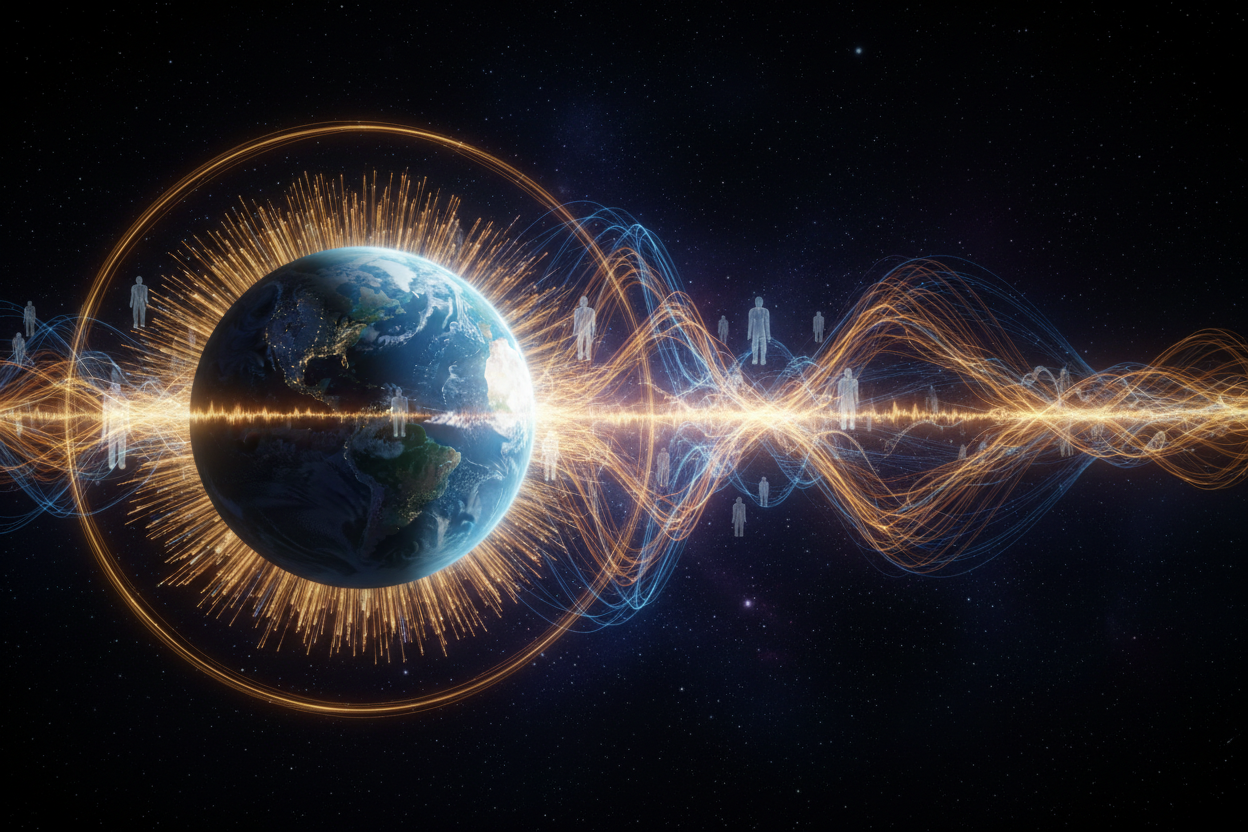
The story of Schumann Resonance begins in the 1950s when physicist Winfried Otto Schumann was working at the Technical University of Munich. While studying the electrical properties of Earth’s atmosphere, he theorized that electromagnetic waves could propagate around the globe, trapped between the Earth’s surface and the ionosphere—a layer of the atmosphere filled with charged particles.
Schumann’s calculations suggested that these waves would resonate at specific frequencies, with the fundamental frequency being around 8 Hz. His prediction was later confirmed through direct measurements, validating what would become known as Schumann Resonance. The discovery wasn’t just an academic exercise; it represented a breakthrough in understanding how our planet functions as a massive electromagnetic system.
The scientific foundation of Schumann Resonance lies in the concept of a spherical waveguide. Picture Earth as a giant sphere surrounded by the conductive ionosphere, creating a cavity where electromagnetic waves can bounce back and forth. Lightning strikes around the world act as the primary source of these electromagnetic waves, generating approximately 50 lightning discharges per second globally.
These lightning strikes create electromagnetic pulses that travel around the Earth at the speed of light. When these waves complete their journey around the globe, they interfere with themselves, creating standing wave patterns at specific frequencies. The fundamental frequency occurs at approximately 7.83 Hz, with additional harmonics at 14.3, 20.8, 27.3, and 33.8 Hz.
How Schumann Resonance Works: The Physics Behind Earth’s Heartbeat
Understanding how Schumann Resonance works requires us to think of Earth as a massive electrical circuit. The planet’s surface acts as one conductor, while the ionosphere—located roughly 60 kilometers above us—serves as another conductor. Between these two layers lies our atmosphere, which normally acts as an insulator but becomes conductive during thunderstorms.
Lightning strikes are the key drivers of this system. Every second, approximately 50 to 100 lightning bolts strike somewhere on Earth, each one sending electromagnetic waves racing around the planet. These waves travel at nearly the speed of light, completing their global journey in about 0.13 seconds. The magic happens when these waves encounter themselves after circling the globe.
When electromagnetic waves of the same frequency meet, they can either amplify each other (constructive interference) or cancel each other out (destructive interference). At certain specific frequencies, the waves align perfectly to create constructive interference, resulting in resonance. This is why we observe distinct peaks in the electromagnetic spectrum at 7.83 Hz and its harmonics.
The intensity and exact frequency of Schumann Resonance aren’t constant. They fluctuate based on various factors including global lightning activity, solar activity, and seasonal changes. During periods of high solar activity, for instance, the ionosphere becomes more ionized, slightly altering the cavity dimensions and affecting the resonance frequencies.
The Connection Between Earth’s Frequency and Human Biology
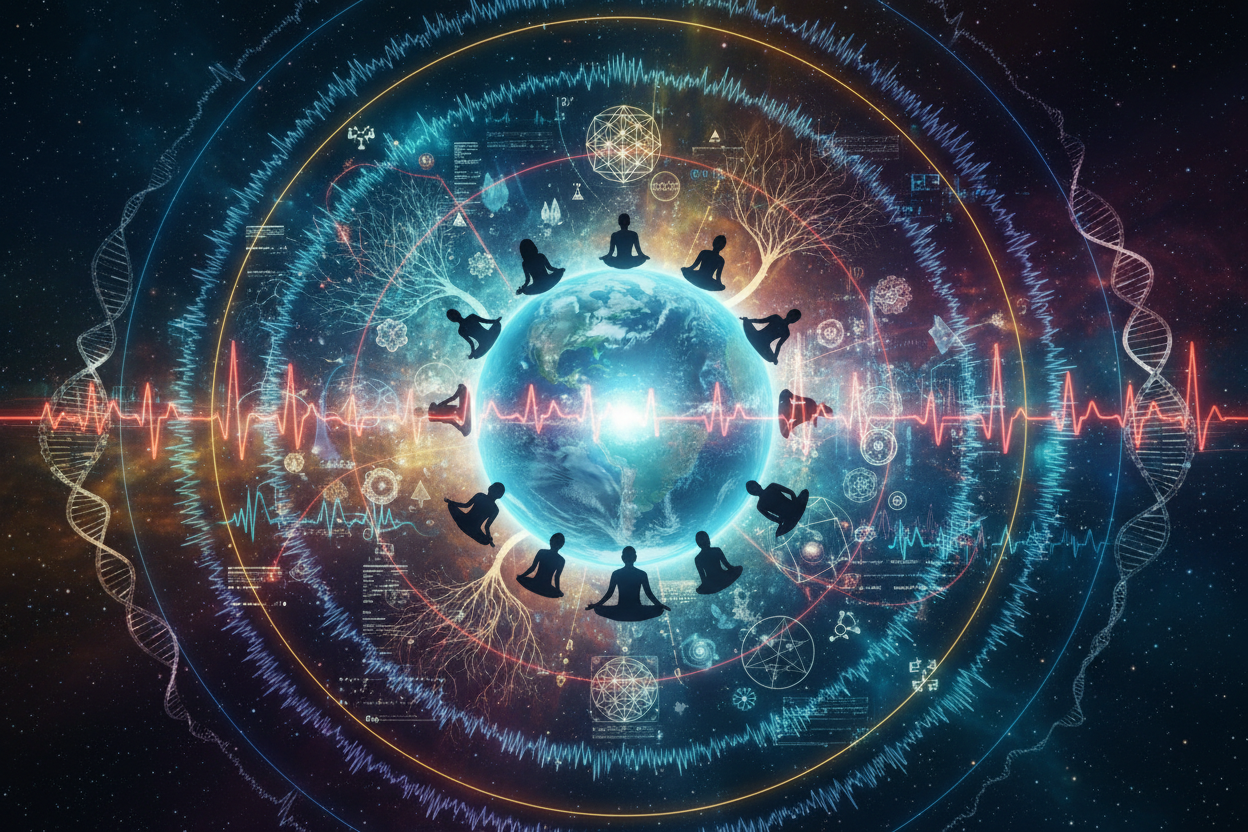
Perhaps the most intriguing aspect of Schumann Resonance is its apparent connection to human biology. The fundamental frequency of 7.83 Hz falls squarely within the alpha brainwave range, which is associated with relaxed awareness, creativity, and meditative states. This remarkable coincidence has sparked decades of research into whether this similarity is merely chance or represents something more profound.
Human brainwaves operate across several frequency ranges: delta waves (0.5-4 Hz) during deep sleep, theta waves (4-8 Hz) during light sleep and deep meditation, alpha waves (8-12 Hz) during relaxed awareness, beta waves (12-30 Hz) during active thinking, and gamma waves (30-100 Hz) during high-level cognitive processing. The overlap between Schumann Resonance and the theta-alpha boundary is striking.
Some researchers propose that humans evolved in synchronization with Earth’s electromagnetic field, developing biological rhythms that naturally align with the planet’s frequency. This theory suggests that our circadian rhythms, hormone production, and even consciousness itself might be influenced by these natural electromagnetic oscillations.
Anecdotal evidence from astronauts provides another fascinating piece of the puzzle. Early space missions reported that astronauts experienced fatigue, disorientation, and other health issues that improved when artificial Schumann Resonance generators were installed in spacecraft. While this correlation doesn’t prove causation, it has encouraged further investigation into the relationship between Earth’s frequency and human wellbeing.
Modern Research and Health Implications
Contemporary research into Schumann Resonance and its potential health effects has produced mixed but intriguing results. Several studies have investigated whether exposure to 7.83 Hz electromagnetic fields can influence human physiology, with some showing promising outcomes for stress reduction, improved sleep quality, and enhanced cognitive function.
One area of particular interest is the potential impact on circadian rhythms. Our internal biological clocks are incredibly sensitive to environmental cues, and some researchers theorize that Schumann Resonance might serve as a natural timing signal for these rhythms. Studies have shown that people living in electromagnetically shielded environments sometimes experience disrupted sleep patterns and altered hormone production.
Research has also explored the potential therapeutic applications of artificial Schumann Resonance generators. Some studies suggest that exposure to 7.83 Hz frequencies might help reduce stress hormones like cortisol while promoting the production of beneficial neurotransmitters. However, it’s important to note that this field of research is still in its early stages, and many findings require replication and further validation.
The medical community remains cautiously optimistic about these findings. While the correlations are intriguing, establishing direct causal relationships between Schumann Resonance exposure and health benefits requires rigorous scientific investigation. Current research focuses on understanding the mechanisms by which extremely low-frequency electromagnetic fields might influence biological systems.
Environmental Factors Affecting Schumann Resonance
Schumann Resonance isn’t a static phenomenon—it fluctuates based on various environmental factors that affect either the source of electromagnetic waves or the characteristics of the Earth-ionosphere cavity. Understanding these variations helps scientists better comprehend both the resonance itself and its potential biological effects.
Solar activity represents one of the most significant influences on Schumann Resonance. During solar flares and coronal mass ejections, increased solar radiation ionizes more particles in the ionosphere, effectively lowering its altitude and changing the dimensions of the Earth-ionosphere cavity. These changes can shift the resonance frequencies and alter their intensity.
Seasonal variations also play a role in Schumann Resonance patterns. During different times of the year, the distribution of lightning activity changes as storm patterns shift around the globe. The Northern Hemisphere’s summer months typically see increased thunderstorm activity, which can intensify certain harmonics of the Schumann Resonance.
Human activities increasingly affect Schumann Resonance as well. The proliferation of electronic devices, power transmission lines, and wireless communications creates electromagnetic noise that can interfere with natural resonance patterns. This electromagnetic pollution doesn’t eliminate Schumann Resonance, but it can mask its detection and potentially alter the quality of the natural signal that biological systems might rely upon.
Climate change also introduces new variables into the equation. As global weather patterns shift and extreme weather events become more frequent, the distribution and intensity of lightning strikes change accordingly. These modifications could potentially alter the long-term characteristics of Schumann Resonance, though the full implications of these changes remain under investigation.
Practical Applications and Future Research
The study of Schumann Resonance has evolved from purely academic interest to practical applications across multiple fields. One of the most immediate applications involves space exploration, where understanding Earth’s natural electromagnetic environment helps engineers design better life support systems for long-duration missions.
NASA and other space agencies have incorporated Schumann Resonance generators into spacecraft and space stations, based on observations that astronauts perform better when exposed to Earth-like electromagnetic conditions. While the mechanisms aren’t fully understood, this practical application demonstrates the potential importance of maintaining connection to Earth’s natural frequency patterns.
In the realm of health and wellness, researchers are exploring therapeutic applications of artificially generated Schumann Resonance frequencies. Some preliminary studies suggest potential benefits for stress reduction, improved sleep quality, and enhanced cognitive performance, though much more research is needed to establish definitive therapeutic protocols.
The field of consciousness research has also embraced Schumann Resonance as a potential factor in human awareness and perception. Some researchers investigate whether variations in Earth’s electromagnetic field might influence collective human behavior, creativity, or even psychic phenomena, though these areas remain highly speculative and require rigorous scientific validation.
Future research directions include developing more sophisticated measurement techniques to better understand regional variations in Schumann Resonance, investigating the biological mechanisms by which extremely low-frequency electromagnetic fields might influence living systems, and exploring potential applications in medicine, psychology, and human performance enhancement.
Conclusion
The science behind Schumann Resonance reveals Earth as far more than a passive rock floating through space—our planet pulses with its own electromagnetic heartbeat, creating a natural frequency that may have profound connections to life itself. From its discovery by Winfried Otto Schumann to modern research into its potential health implications, this phenomenon continues to challenge our understanding of the relationship between Earth and its inhabitants.
While many questions remain unanswered, the evidence suggests that Schumann Resonance represents more than just an interesting physical phenomenon. The correlation between Earth’s natural frequency and human brainwave patterns, combined with anecdotal reports from astronauts and preliminary research into health effects, points toward a deeper connection between planetary and biological rhythms than previously imagined.
As our technology advances and our understanding deepens, Schumann Resonance research may unlock new insights into human health, consciousness, and our fundamental relationship with the planet we call home. Whether you’re a scientist, a health enthusiast, or simply someone curious about the hidden connections in our world, the study of Earth’s brainwaves offers a fascinating glimpse into the intricate dance between physics and biology that shapes our existence.
The journey of discovery continues, and as we learn more about Schumann Resonance, we may find that staying connected to Earth’s natural rhythms isn’t just poetic—it might be essential for our wellbeing in ways we’re only beginning to understand.
Frequently Asked Questions
What exactly is Schumann Resonance?
Schumann Resonance refers to the electromagnetic waves that continuously circle Earth, trapped between the planet’s surface and the ionosphere. These waves resonate at specific frequencies, with the fundamental frequency being approximately 7.83 Hz, created primarily by global lightning activity.
How was Schumann Resonance discovered?
German physicist Winfried Otto Schumann first predicted the existence of these electromagnetic resonances in 1952 through theoretical calculations. His predictions were later confirmed through direct measurements, validating the existence of what became known as Schumann Resonance.
Why is Schumann Resonance sometimes called Earth’s heartbeat?
The term “Earth’s heartbeat” is a metaphorical description of Schumann Resonance because it represents a regular, measurable electromagnetic pulse that emanates from our planet, similar to how a heartbeat represents the regular rhythm of a living organism.
Can humans actually sense Schumann Resonance?
While humans cannot consciously perceive Schumann Resonance, some research suggests that our biological systems might be influenced by these electromagnetic fields. The evidence includes anecdotal reports from astronauts and preliminary studies on circadian rhythms and stress responses.
Does Schumann Resonance affect human health?
Research into the health effects of Schumann Resonance is ongoing and shows mixed results. Some studies suggest potential benefits for stress reduction and sleep quality, but the scientific community requires more rigorous research to establish definitive health connections.
How do lightning strikes create Schumann Resonance?
Lightning strikes generate electromagnetic pulses that travel around Earth at the speed of light. When these waves complete their global journey and encounter themselves, they create interference patterns. At specific frequencies, constructive interference occurs, resulting in the resonance effect.
Can Schumann Resonance be artificially generated?
Yes, scientists and engineers have developed devices that can generate electromagnetic fields at Schumann Resonance frequencies. These artificial generators have been used in spacecraft and are being investigated for potential therapeutic applications.
Does Schumann Resonance vary over time?
Yes, Schumann Resonance fluctuates based on various factors including global lightning activity, solar activity, seasonal changes, and human-generated electromagnetic interference. These variations can affect both the frequency and intensity of the resonance.