
The Role of Brainwaves in Flow States and Peak Performance: Unlocking Your Mental Potential
Table of Contents
1. Introduction to Brainwaves and Flow States
2. Understanding the Science Behind Brainwaves
3. What Are Flow States and Why Do They Matter?
4. The Brainwave Patterns of Peak Performance
5. How Different Brainwave States Affect Performance
6. Training Your Brain for Optimal Flow States
7. Real-World Applications and Success Stories
8. Common Obstacles to Achieving Flow States
9. Conclusion
10. Frequently Asked Questions
Introduction to Brainwaves and Flow States
Have you ever experienced those magical moments when everything just clicks? When time seems to disappear, and you’re completely absorbed in what you’re doing? Athletes call it “being in the zone,” musicians describe it as “losing themselves in the music,” and psychologists have given it a name: flow state.
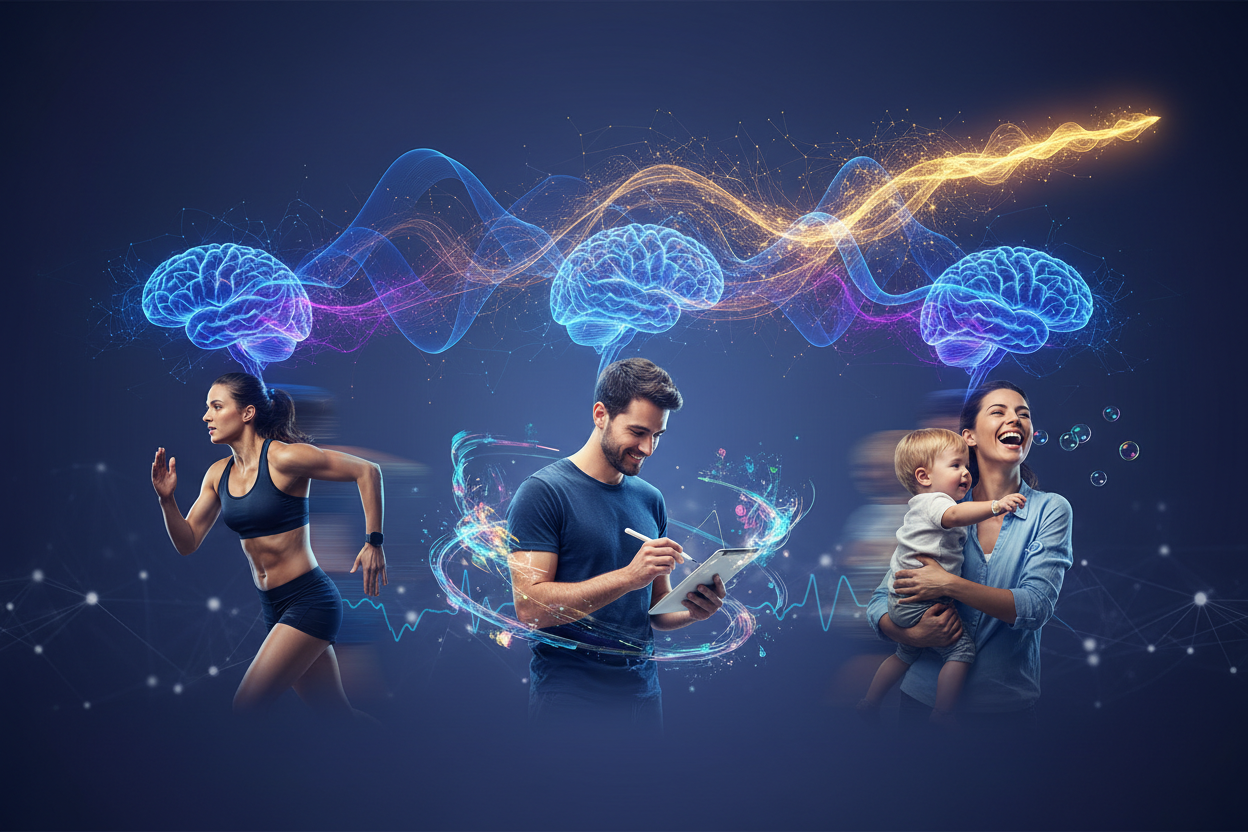
What’s fascinating is that these peak performance moments aren’t just psychological phenomena – they have a distinct neurological signature. Your brain produces specific patterns of electrical activity, known as brainwaves, that correlate directly with these heightened states of consciousness and performance.
Understanding the relationship between brainwaves and flow states isn’t just academic curiosity. It’s the key to unlocking your full potential, whether you’re an entrepreneur trying to boost creativity, an athlete seeking that competitive edge, or simply someone who wants to experience more fulfilling, productive moments in daily life.

Understanding the Science Behind Brainwaves
Before diving into flow states, let’s establish what brainwaves actually are. Think of your brain as an incredibly sophisticated electrical system. Every thought, emotion, and action creates electrical impulses that travel between neurons. When measured by an EEG (electroencephalogram), these impulses create wave-like patterns that scientists categorize into five main types:
Gamma waves (30-100 Hz) represent our highest level of cognitive functioning. They’re associated with moments of insight, heightened awareness, and what researchers call “binding consciousness” – the ability to tie together information from different parts of the brain.
Beta waves (13-30 Hz) dominate our normal waking consciousness. They’re present when we’re alert, focused on problem-solving, or engaged in analytical thinking. However, too much beta activity can lead to anxiety and overthinking.
Alpha waves (8-13 Hz) emerge when we’re relaxed but alert. This is the bridge between conscious and subconscious mind, often called the “learning state” because it’s optimal for absorbing new information.
Theta waves (4-8 Hz) are linked to deep meditation, creativity, and REM sleep. In this state, the conscious mind quiets down, allowing deeper insights to emerge.
Delta waves (0.5-4 Hz) are the slowest brainwaves, primarily occurring during deep, dreamless sleep and associated with healing and regeneration.
What Are Flow States and Why Do They Matter?
Flow state, first identified by psychologist Mihaly Csikszentmihalyi, represents the optimal experience of human consciousness. It’s characterized by complete absorption in an activity, where self-consciousness disappears, time perception alters, and performance reaches extraordinary levels.
During flow, people report feeling effortlessly focused, intrinsically motivated, and capable of performing at their absolute best. This isn’t just subjective experience – measurable improvements occur in creativity, learning speed, problem-solving ability, and overall performance metrics.
What makes flow states particularly valuable is their accessibility. Unlike talent or intelligence, which seem relatively fixed, flow states can be cultivated and trained. The key lies in understanding and optimizing the underlying brainwave patterns that support these experiences.
Research shows that individuals who regularly access flow states report higher levels of life satisfaction, increased resilience to stress, and enhanced overall well-being. In professional contexts, teams that achieve collective flow states demonstrate significantly improved collaboration, innovation, and productivity.
The Brainwave Patterns of Peak Performance
When neuroscientists study the brains of people in flow states, they discover a fascinating phenomenon called “transient hypofrontality.” This temporary downregulation of the prefrontal cortex – the brain region responsible for self-criticism, time perception, and conscious control – creates the perfect neurological environment for peak performance.
The signature brainwave pattern of flow states typically involves a combination of alpha and theta waves, with occasional bursts of gamma activity. This unique blend creates what researchers describe as a “sweet spot” of consciousness – relaxed enough to access creative insights, yet focused enough to execute complex tasks with precision.
Alpha waves provide the relaxed awareness that allows information to flow freely between different brain regions. Meanwhile, theta waves enable access to subconscious processing power and intuitive insights. The intermittent gamma bursts represent those “aha moments” when disparate pieces of information suddenly connect in novel ways.
Interestingly, the specific brainwave patterns can vary slightly depending on the type of activity. Musicians in flow might show more right-brain theta activity, while mathematicians might display different patterns of gamma synchronization. However, the underlying principle remains consistent: optimal performance emerges when the brain finds the right balance between relaxation and focus.
How Different Brainwave States Affect Performance
Each brainwave state offers unique advantages and limitations for different types of performance. Understanding these relationships allows you to intentionally cultivate the most appropriate mental state for specific tasks.
High Beta Dominance often occurs under stress or pressure. While this can provide intense focus for short periods, it typically leads to tunnel vision, decreased creativity, and eventual mental fatigue. Many people get stuck in chronic high beta states, which explains why they feel constantly stressed and struggle to access flow.
Alpha-Theta Combinations represent the sweet spot for most flow activities. This state combines relaxed awareness with access to subconscious processing, enabling both creative insights and skilled execution. Athletes often train specifically to maintain this state during competition.
Gamma Synchronization appears during moments of peak insight and heightened awareness. While brief, these gamma bursts often coincide with breakthrough moments in problem-solving, artistic creation, or athletic performance.
The key insight is that peak performance isn’t about maximizing any single brainwave frequency, but rather about achieving the right balance for the specific demands of your activity. A surgeon needs different brainwave patterns than a jazz musician, even though both might be in flow states.
Training Your Brain for Optimal Flow States
The exciting news is that brainwave patterns aren’t fixed – they can be trained and optimized through various techniques. Neurofeedback training, meditation practices, and specific mental exercises can all help you develop greater control over your brainwave states.
Meditation and Mindfulness remain among the most effective methods for training beneficial brainwave patterns. Regular meditation practice increases alpha wave production and improves the ability to shift between different brainwave states as needed. Even short daily sessions can produce measurable changes in brain activity patterns.
Binaural Beats use slightly different frequencies played in each ear to encourage the brain to synchronize at specific frequencies. While the research is still emerging, many people report that binaural beats help them access desired brainwave states more easily.
Neurofeedback Training provides real-time information about your brainwave activity, allowing you to learn conscious control over these typically unconscious processes. Elite athletes and performers increasingly use neurofeedback to optimize their mental states for competition.
Environmental Design can also influence brainwave patterns. Factors like lighting, sound, temperature, and even color can subtly shift your brain toward more optimal states. Creating the right environment for your specific type of flow activity can significantly improve your ability to access these states consistently.
Real-World Applications and Success Stories
The practical applications of brainwave optimization extend far beyond laboratory settings. Professional athletes use EEG monitoring to identify their personal flow signatures and train to reproduce these states during competition. Google and other tech companies have invested heavily in meditation and mindfulness programs specifically to help employees access flow states more regularly.
In the medical field, surgeons are beginning to use brainwave monitoring to ensure they maintain optimal mental states during complex procedures. The stakes couldn’t be higher, and the results speak for themselves – surgeons who maintain appropriate brainwave patterns show improved precision and reduced error rates.
Creative professionals, from writers to designers, are discovering that understanding their brainwave patterns helps them optimize their work schedules and environments for peak creative output. Instead of waiting for inspiration to strike randomly, they can create conditions that reliably produce creative flow states.
Even in education, teachers are beginning to understand how brainwave states affect learning. Classrooms designed to promote alpha wave activity show improved student engagement and information retention. This represents a fundamental shift from traditional education models that often inadvertently promote stress-inducing beta states.
Common Obstacles to Achieving Flow States
Despite the clear benefits, many people struggle to access flow states consistently. Understanding common obstacles can help you identify and overcome the barriers preventing you from reaching peak performance.
Chronic Stress and Overthinking keep many people trapped in high beta states. The modern world’s constant demands and distractions make it increasingly difficult to downshift into the relaxed awareness necessary for flow. Learning stress management techniques becomes essential for accessing optimal brainwave patterns.
Perfectionism and Self-Judgment activate the prefrontal cortex in ways that inhibit flow states. The internal critic that demands flawless performance actually prevents the very states that enable peak performance. Developing self-compassion and accepting imperfection paradoxically leads to better outcomes.
Environmental Distractions constantly pull the brain back into reactive beta states. Smartphones, notifications, and multitasking fragment attention and prevent the sustained focus necessary for flow. Creating distraction-free environments becomes crucial for maintaining optimal brainwave patterns.
Lack of Challenge-Skill Balance can prevent flow regardless of brainwave optimization. If a task is too easy, boredom prevents engagement. If it’s too difficult, anxiety disrupts optimal brain states. Finding the right level of challenge for your current skill level remains fundamental to accessing flow.
Conclusion
The relationship between brainwaves and flow states represents one of the most exciting frontiers in understanding human potential. We’re no longer limited to hoping that peak performance moments will occur randomly – we can actively cultivate the neurological conditions that support these extraordinary states of consciousness.
The science is clear: specific brainwave patterns correlate with enhanced creativity, improved focus, and peak performance across virtually every domain of human activity. More importantly, these patterns can be trained and optimized through deliberate practice and environmental design.
As our understanding of neuroscience continues to evolve, we’re likely to discover even more sophisticated methods for accessing and maintaining optimal brain states. The future of human performance isn’t just about working harder – it’s about working in harmony with our brain’s natural capacity for excellence.
Whether you’re an athlete seeking that competitive edge, a creative professional looking to unlock your full potential, or simply someone who wants to experience more fulfilling moments in daily life, understanding brainwaves and flow states offers a scientifically grounded path to peak performance. The question isn’t whether you can access these states – it’s whether you’re willing to invest in learning how.
Frequently Asked Questions
Q: How long does it take to train your brainwaves for better flow states?
A: Most people begin noticing changes within 2-4 weeks of consistent practice, though significant improvements typically develop over 2-3 months. The key is regular, daily practice rather than intensive but sporadic efforts.
Q: Can anyone learn to access flow states, or is it a natural talent?
A: Flow states are accessible to everyone, though some people may have natural advantages due to their baseline brainwave patterns or personality traits. With proper training and understanding, virtually anyone can learn to access these states more consistently.
Q: Are there any risks associated with brainwave training?
A: When done properly, brainwave training is generally safe. However, people with certain neurological conditions should consult healthcare providers before beginning intensive neurofeedback training. Standard meditation and mindfulness practices are safe for most people.
Q: Do I need expensive equipment to monitor and train my brainwaves?
A: While professional EEG equipment provides the most detailed feedback, many benefits can be achieved through meditation, mindfulness practices, and consumer-grade devices. The most important factor is consistent practice rather than expensive technology.
Q: How do I know if I’m actually in a flow state versus just focused?
A: True flow states involve several distinctive characteristics: time distortion, effortless concentration, intrinsic motivation, and a sense of merging with the activity. Regular focused work, while valuable, typically maintains more self-awareness and doesn’t involve the same depth of absorption.