

The Role of Brainwaves in Decision Making: How Your Brain’s Electrical Activity Shapes Every Choice
Table of Contents
1. Introduction: The Hidden Orchestra in Your Mind
2. Understanding Brainwaves: The Electrical Symphony of Thought
3. The Five Types of Brainwaves and Their Decision-Making Roles
4. How Brainwaves Influence Different Types of Decisions
5. The Neuroscience Behind Brainwave-Driven Decision Making
6. Optimizing Your Brainwaves for Better Decision Making
7. Real-World Applications and Case Studies
8. The Future of Brainwave Research in Decision Science
9. Conclusion: Harnessing Your Brain’s Natural Rhythms
10. Frequently Asked Questions
Introduction: The Hidden Orchestra in Your Mind
Every second of every day, your brain conducts an intricate electrical symphony that influences every decision you make. From choosing what to have for breakfast to making life-altering career moves, the rhythmic patterns of electrical activity in your brain—known as brainwaves—play a crucial role in shaping your thought processes and decision-making abilities.
You might not realize it, but as you’re reading this very sentence, billions of neurons in your brain are firing in synchronized patterns, creating measurable electrical frequencies that scientists can detect and analyze. These brainwaves aren’t just random electrical noise; they’re the fundamental building blocks of consciousness, cognition, and yes, decision making.
Understanding how brainwaves influence our choices opens up fascinating possibilities for improving our decision-making skills, enhancing our cognitive performance, and gaining deeper insights into the mysterious workings of the human mind.
Understanding Brainwaves: The Electrical Symphony of Thought
Brainwaves are essentially the electrical impulses generated by the mass action of neurons communicating with each other. Think of them as the brain’s natural rhythm section, keeping time for all the complex cognitive processes happening simultaneously in your head.
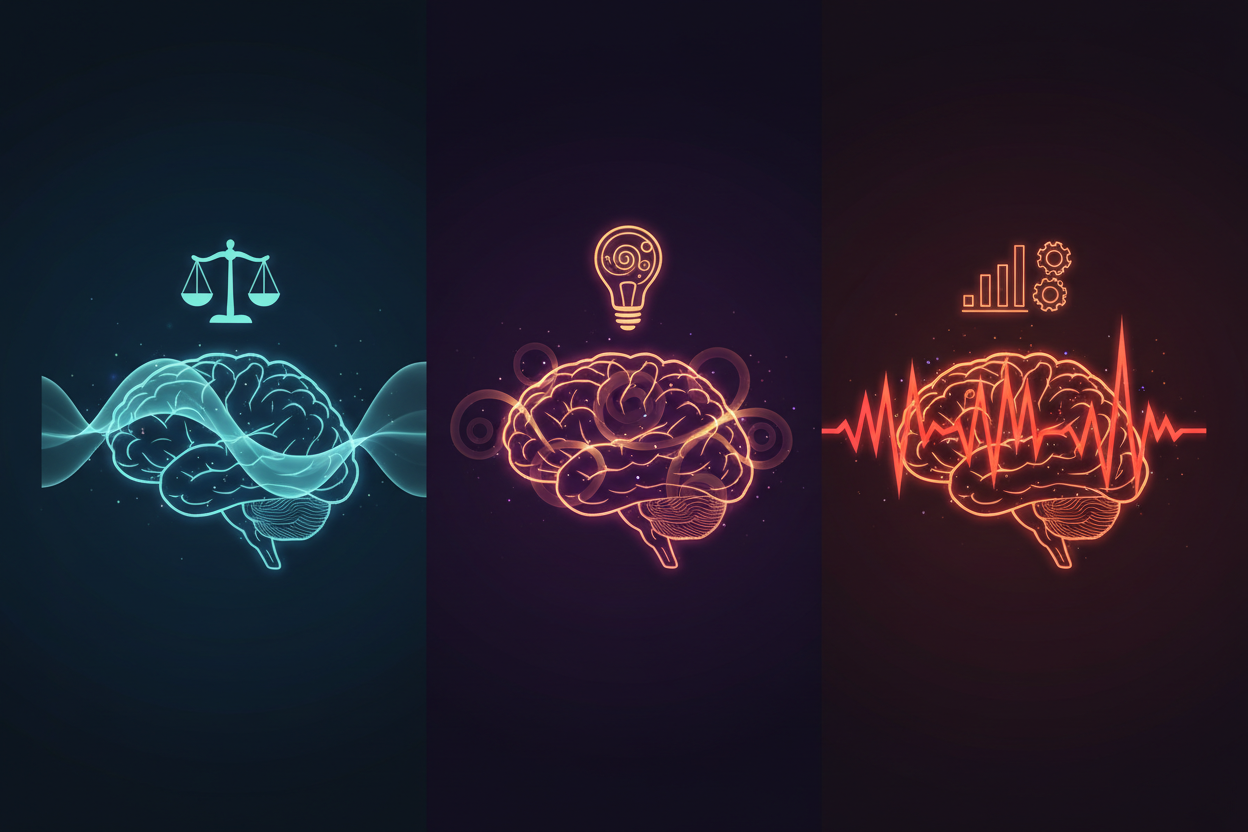
These electrical patterns were first discovered in 1924 by German neurologist Hans Berger, who used the first electroencephalogram (EEG) to record human brain activity. What he found was remarkable: the brain produces consistent, measurable electrical patterns that correspond to different states of consciousness and mental activity.
Modern neuroscience has revealed that these brainwave patterns are far from random. They represent coordinated neural networks working together to process information, form memories, solve problems, and make decisions. The frequency and amplitude of these waves provide valuable insights into what’s happening in our minds at any given moment.
The Five Types of Brainwaves and Their Decision-Making Roles
Scientists have identified five primary types of brainwaves, each associated with different mental states and decision-making processes:
Delta Waves (0.5-4 Hz): The Foundation of Intuitive Decisions
Delta waves are the slowest brainwaves, primarily associated with deep sleep and unconscious processing. However, recent research suggests that delta activity during waking hours may contribute to intuitive decision making and accessing deeply stored memories that inform our choices.
Theta Waves (4-8 Hz): Creative Problem Solving and Insight
Theta waves emerge during states of deep meditation, creative flow, and moments of insight. When you’re in a theta state, your brain is particularly adept at making connections between seemingly unrelated concepts, leading to innovative solutions and creative decision making.
Alpha Waves (8-13 Hz): Relaxed Awareness and Balanced Thinking
Alpha waves represent a state of relaxed alertness—that sweet spot where you’re calm but focused. This brainwave pattern is optimal for thoughtful, balanced decision making without the interference of stress or anxiety.
Beta Waves (13-30 Hz): Analytical and Logical Processing
Beta waves dominate during normal waking consciousness and are essential for analytical thinking, problem-solving, and logical decision making. However, excessive beta activity can lead to overthinking and decision paralysis.
Gamma Waves (30-100 Hz): High-Level Cognitive Integration
Gamma waves are the fastest brainwaves and are associated with moments of peak cognitive performance, binding different pieces of information together, and achieving sudden insights that can dramatically influence decision outcomes.
How Brainwaves Influence Different Types of Decisions
The type of decision you’re making often determines which brainwave patterns become dominant in your neural activity. Understanding this relationship can help you recognize when your brain is in the optimal state for different kinds of choices.
Quick, Intuitive Decisions
When you need to make rapid decisions based on gut instinct, your brain often shifts into theta and alpha states. These frequencies allow for quick access to stored experiences and emotional memories that inform split-second choices. Think about a professional athlete making a game-changing play or a parent instinctively knowing their child needs comfort.
Complex Analytical Decisions
For decisions requiring careful analysis of multiple variables, beta wave activity typically increases. This is your brain’s way of engaging its analytical machinery to weigh pros and cons, consider consequences, and work through logical sequences. Financial planning, medical diagnoses, and strategic business decisions all benefit from sustained beta wave activity.
Creative and Innovative Decisions
Breakthrough decisions that require thinking outside the box often emerge when theta and gamma waves work in harmony. This combination allows for both creative insight and the high-level integration needed to implement novel solutions effectively.
The Neuroscience Behind Brainwave-Driven Decision Making
The relationship between brainwaves and decision making involves several key brain regions working in concert. The prefrontal cortex, often called the brain’s CEO, orchestrates much of our decision-making activity and shows distinct brainwave patterns depending on the type of choice being made.
Research using advanced neuroimaging techniques has revealed that successful decision making involves synchronized brainwave activity across multiple brain regions. The anterior cingulate cortex monitors conflicts between different options, while the limbic system contributes emotional input through its own characteristic wave patterns.
What’s particularly fascinating is how brainwaves can predict decision outcomes before we’re consciously aware we’ve made a choice. Studies have shown that specific brainwave patterns can indicate a person’s decision up to several seconds before they report being aware of their choice, suggesting that our unconscious neural activity plays a much larger role in decision making than we typically realize.
Optimizing Your Brainwaves for Better Decision Making
Understanding brainwaves isn’t just academically interesting—it’s practically useful. There are several evidence-based techniques you can use to optimize your brainwave patterns for different types of decisions.
Meditation and Mindfulness Practices
Regular meditation has been shown to increase alpha wave activity and improve overall brain coherence. Even just 10 minutes of daily mindfulness practice can enhance your ability to access calm, focused states when important decisions arise.
Strategic Breaks and Mental Rest
Sometimes the best decision-making strategy is to step away from the problem entirely. Taking breaks allows your brain to shift into different wave patterns, often leading to insights that weren’t available during focused analytical thinking.
Physical Exercise and Movement
Physical activity naturally alters brainwave patterns and can help reset your neural state when you’re stuck in unproductive thinking loops. A brief walk or light exercise session can shift your brain into more optimal frequencies for clear thinking.
Environmental Optimization
Your surroundings significantly impact your brainwave patterns. Reducing distractions, optimizing lighting, and creating calm environments can help maintain the brainwave states most conducive to good decision making.
Real-World Applications and Case Studies
The practical applications of brainwave research in decision making extend far beyond academic curiosity. Medical professionals are using EEG feedback to help patients with decision-making difficulties, while business leaders are incorporating brainwave awareness into their strategic planning processes.
Professional traders, for instance, have found that monitoring their brainwave states can help them make more rational investment decisions by avoiding the high-stress beta states that often lead to emotional trading mistakes. Similarly, surgeons have reported better outcomes when they consciously cultivate alpha wave states before complex procedures.
In the corporate world, some companies are experimenting with brainwave monitoring to optimize team decision-making processes, identifying when groups are in states most conducive to creative problem-solving versus analytical evaluation.
The Future of Brainwave Research in Decision Science
As our understanding of brainwaves and decision making continues to evolve, we’re on the cusp of revolutionary developments in neurotechnology. Brain-computer interfaces are becoming increasingly sophisticated, potentially allowing for real-time optimization of cognitive states for enhanced decision making.
Artificial intelligence systems are being developed that can analyze brainwave patterns and provide personalized recommendations for optimal decision-making states. This technology could eventually help individuals recognize when they’re in suboptimal mental states for important choices and suggest interventions to improve their cognitive performance.
The integration of brainwave research with other emerging fields like precision medicine and personalized psychology promises to create highly individualized approaches to cognitive enhancement and decision support.
Conclusion: Harnessing Your Brain’s Natural Rhythms
The role of brainwaves in decision making represents one of the most fascinating frontiers in neuroscience. By understanding how these electrical patterns influence our choices, we gain powerful insights into optimizing our cognitive performance and making better decisions across all areas of life.
The key takeaway isn’t that you need expensive equipment or complex interventions to improve your decision making. Instead, the research suggests that simple awareness of your mental state, combined with basic techniques like meditation, strategic breaks, and environmental optimization, can significantly enhance your ability to make clear, effective choices.
As we continue to unlock the mysteries of the brain’s electrical activity, one thing becomes increasingly clear: our decision-making abilities aren’t fixed traits but dynamic processes that we can understand, influence, and improve. By learning to work with our brain’s natural rhythms rather than against them, we can tap into our full cognitive potential and make decisions that truly serve our goals and values.
The next time you face an important decision, take a moment to consider what state your brain is in. Are you stressed and stuck in high beta frequencies, or are you calm and centered in alpha waves? This simple awareness might just be the key to unlocking better choices and a more fulfilling life.
Frequently Asked Questions
Can I measure my own brainwaves at home?
Yes, consumer-grade EEG devices are now available that can provide basic brainwave measurements. While these aren’t as precise as medical-grade equipment, they can give you useful insights into your general brainwave patterns and help you learn to recognize different mental states.
How long does it take to change brainwave patterns?
Brainwave patterns can shift within seconds to minutes depending on the technique used. Simple breathing exercises might create changes in 30-60 seconds, while developing consistent, long-term improvements in brainwave patterns typically requires weeks or months of regular practice.
Are certain brainwave patterns better for decision making than others?
It depends on the type of decision. Alpha waves are generally optimal for balanced, thoughtful decisions, while theta waves support creative insights, and beta waves are necessary for analytical thinking. The key is matching your brainwave state to the type of decision you need to make.
Can stress affect brainwave patterns and decision making?
Absolutely. Chronic stress tends to increase high-frequency beta activity and can impair the brain’s ability to access other beneficial wave patterns. This often results in rushed, anxiety-driven decisions rather than thoughtful, well-considered choices.
Is there scientific evidence supporting brainwave-based decision making techniques?
Yes, there’s substantial research supporting the relationship between brainwaves and cognitive performance. Studies have shown that specific brainwave patterns correlate with better decision outcomes, and interventions that optimize these patterns can improve cognitive function.