
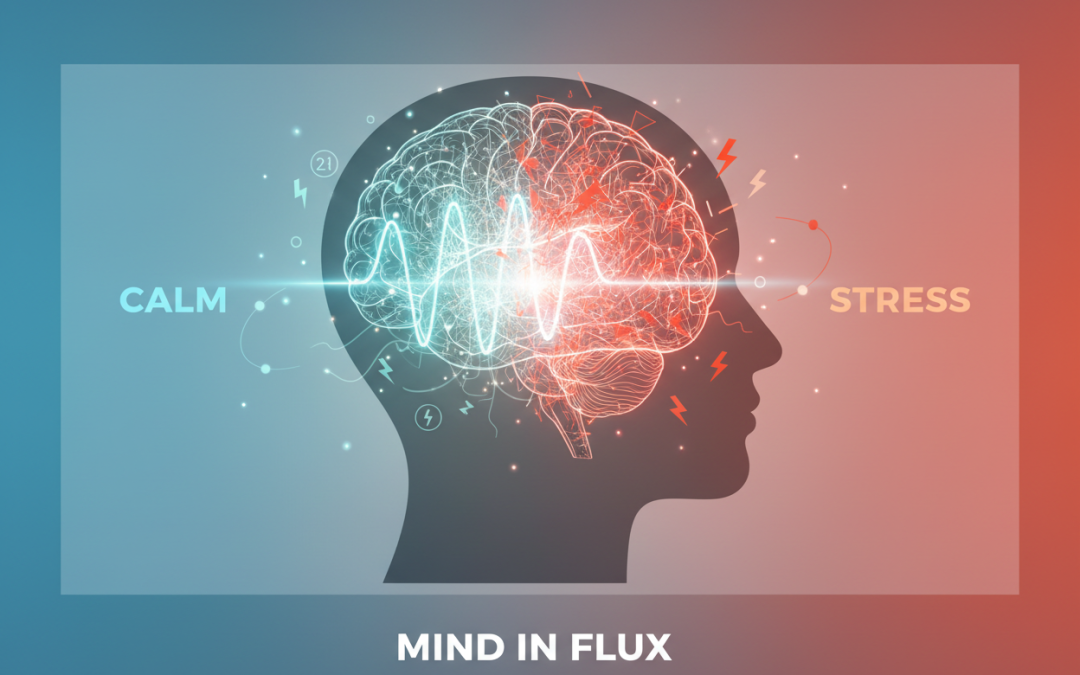
The Impact of Stress on Brainwave Patterns: Understanding Your Mind Under Pressure
Table of Contents
1. Introduction
2. Understanding Brainwave Patterns
3. The Science Behind Stress and Brain Activity
4. How Stress Disrupts Normal Brainwave Patterns
5. Short-Term vs. Long-Term Effects of Stress on the Brain
6. Measuring Brainwave Changes During Stress
7. Recovery and Restoration of Healthy Brainwave Patterns
8. Practical Strategies for Managing Stress-Induced Brainwave Disruption
9. Conclusion
10. Frequently Asked Questions
Introduction
Have you ever noticed how your thinking becomes scattered during stressful moments? Maybe you’ve experienced that foggy feeling after a particularly challenging day, or found yourself unable to concentrate when deadlines are looming. What you’re experiencing isn’t just in your head – it’s actually a measurable change in your brain’s electrical activity.
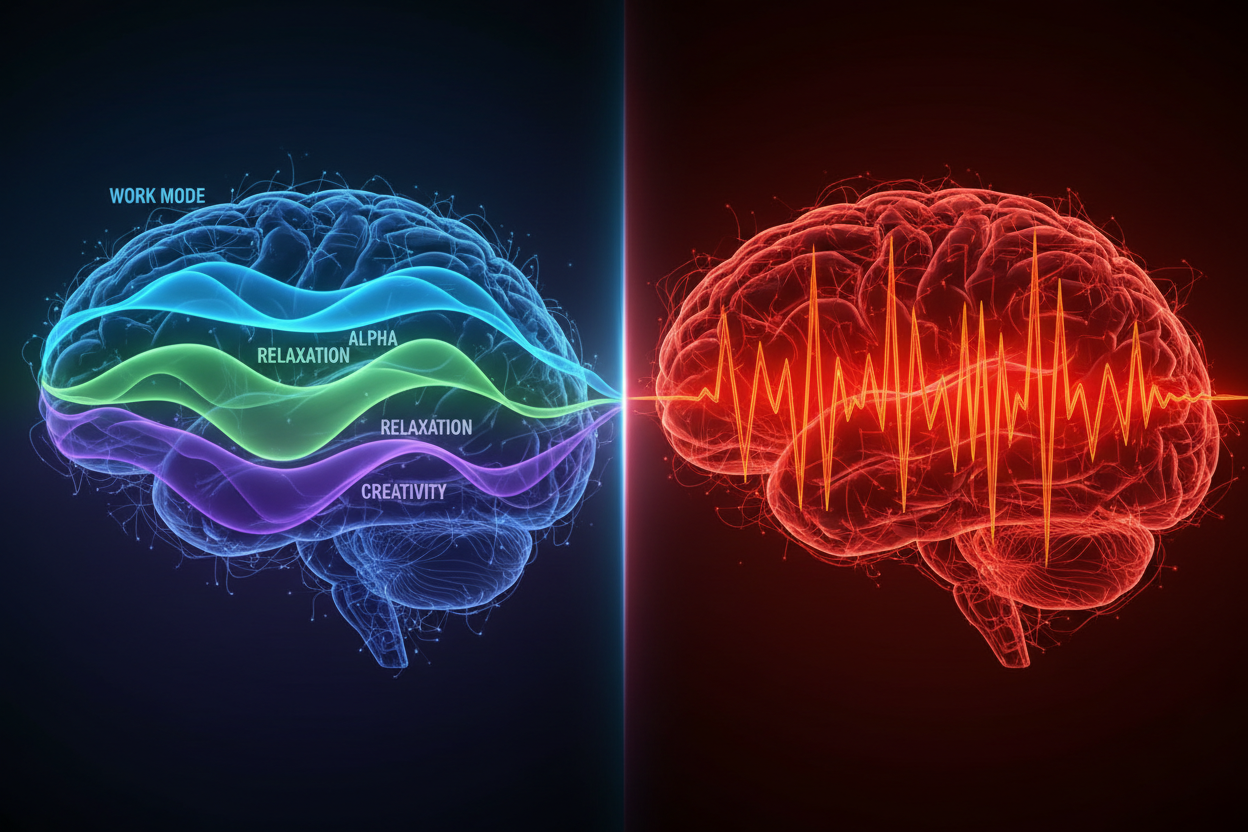
Stress doesn’t just affect how we feel emotionally; it fundamentally alters the way our brains function at the most basic level. Through sophisticated brainwave monitoring technology, researchers have discovered fascinating connections between our stress levels and the electrical patterns our brains produce. These findings offer valuable insights into why stress affects our thinking, memory, and decision-making abilities so profoundly.
Understanding the relationship between stress and brainwave patterns isn’t just academic curiosity – it’s practical knowledge that can help us better manage our mental health and cognitive performance. Let’s explore how stress reshapes our brain’s electrical landscape and what we can do about it.
Understanding Brainwave Patterns
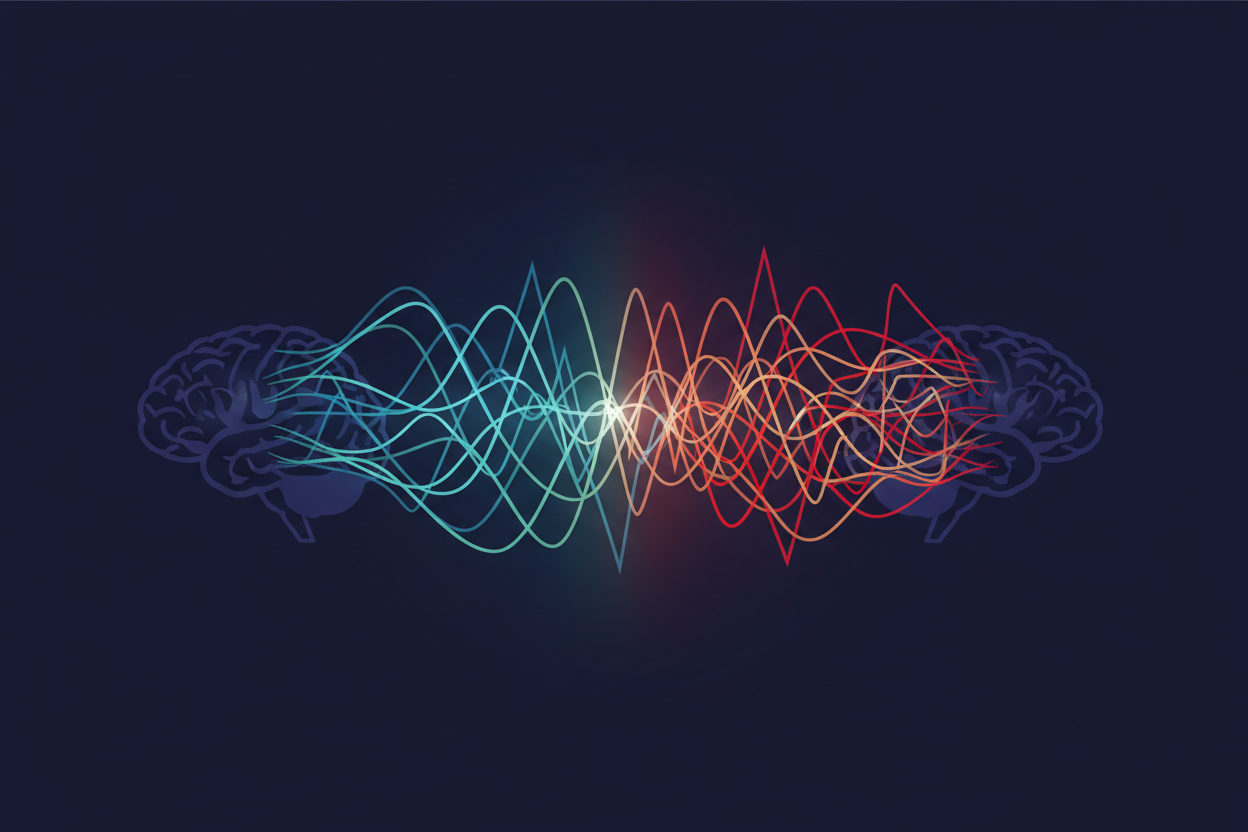
Before diving into stress’s impact, we need to understand what brainwaves actually are. Think of your brain as an incredibly complex electrical network with billions of neurons constantly communicating through electrical impulses. When these neurons fire together in synchronized patterns, they create measurable electrical waves that we call brainwaves.
Scientists have identified five primary types of brainwaves, each associated with different mental states. Delta waves (0.5-4 Hz) dominate during deep sleep, while theta waves (4-8 Hz) appear during light sleep and deep meditation. Alpha waves (8-13 Hz) emerge when we’re relaxed but alert, often described as the “flow state.” Beta waves (13-30 Hz) characterize our normal waking consciousness and active thinking, and gamma waves (30-100 Hz) occur during intense focus and heightened awareness.
In a healthy, unstressed brain, these different wave patterns flow smoothly from one to another depending on what we’re doing. During a typical day, you might cycle through beta waves while working, alpha waves during a peaceful lunch break, and theta waves as you drift off to sleep. This natural rhythm represents optimal brain function.
The Science Behind Stress and Brain Activity
When we encounter stress, our brains don’t just register it as an emotion – they launch a complex biological response that affects every aspect of neural functioning. The stress response begins in the amygdala, our brain’s alarm system, which quickly signals the hypothalamus to release stress hormones like cortisol and adrenaline.
These stress hormones don’t just circulate harmlessly through our system; they actively change how neurons communicate with each other. Cortisol, in particular, affects the hippocampus (crucial for memory formation) and the prefrontal cortex (responsible for executive functions like decision-making and attention). This biochemical cascade creates measurable changes in the brain’s electrical activity.
Research using EEG technology has shown that stress consistently alters brainwave patterns in predictable ways. The brain’s electrical signature during stress looks distinctly different from its relaxed state, with specific changes in wave frequency, amplitude, and coherence between different brain regions.
How Stress Disrupts Normal Brainwave Patterns
Acute stress typically pushes the brain into a hyperactive beta state, characterized by rapid, somewhat chaotic brainwave activity. Instead of the smooth, organized beta waves we see during normal focused attention, stressed brains often produce what researchers call “high beta” activity – fast, irregular waves that reflect the mind’s racing, anxious state.
This disruption doesn’t happen uniformly across the brain. Stress particularly affects the frontal regions responsible for executive functioning, often reducing the coherent alpha waves associated with calm focus. Meanwhile, the limbic system becomes hyperactive, producing irregular patterns that interfere with the brain’s natural rhythm.
One of the most significant changes occurs in the brain’s ability to shift between different wave states. A healthy brain smoothly transitions between beta during work, alpha during relaxation, and theta during creative thinking. Stress creates a kind of “stuck” pattern where the brain remains locked in high beta, making it difficult to access the calmer, more creative states associated with alpha and theta waves.
The temporal lobes, crucial for memory processing, also show distinct changes during stress. The normal theta rhythms that facilitate memory consolidation become disrupted, which explains why we often have trouble remembering details clearly when we’re stressed or why stressful events can create fragmented memories.
Short-Term vs. Long-Term Effects of Stress on the Brain
The brain’s response to stress varies dramatically depending on whether we’re dealing with acute, short-term stress or chronic, ongoing pressure. Short-term stress actually serves an important evolutionary purpose – it sharpens focus and prepares us for immediate action. During brief stressful episodes, the increase in beta activity can enhance certain types of performance, particularly tasks requiring quick reactions or intense concentration.
However, chronic stress tells a completely different story. When stress hormones remain elevated for weeks or months, they begin to cause structural changes in the brain that reflect in altered brainwave patterns. The hippocampus, constantly bathed in cortisol, may actually shrink, leading to persistent disruptions in theta wave production and memory formation.
Long-term stress also affects the brain’s default mode network – the neural circuits active when we’re not focused on specific tasks. Normally, this network produces organized alpha waves during rest. In chronically stressed individuals, this network becomes hyperactive and disorganized, contributing to the racing thoughts and inability to “turn off” that many people experience.
Perhaps most concerning, chronic stress can lead to what researchers call “neural inflexibility.” The brain becomes less able to shift between different brainwave states, remaining stuck in patterns that were once adaptive but become problematic when sustained over time.
Measuring Brainwave Changes During Stress
Modern neuroscience has given us sophisticated tools to observe these stress-related changes in real-time. EEG (electroencephalography) remains the gold standard for measuring brainwave activity, using electrodes placed on the scalp to detect the brain’s electrical signals. When researchers expose participants to controlled stressors in laboratory settings, they can watch brainwave patterns change within seconds.
These measurements have revealed consistent patterns across different types of stress. Whether someone is dealing with work pressure, relationship conflicts, or financial worries, the brain’s electrical response follows similar patterns – increased high-frequency beta activity, decreased alpha coherence, and disrupted transitions between different wave states.
Advanced techniques like quantitative EEG (qEEG) can create detailed maps showing exactly which brain regions are most affected by stress. These “brain maps” often reveal that stress doesn’t just increase overall brain activity randomly – it creates specific patterns of hyperactivity in some areas while suppressing activity in others.
Interestingly, researchers have found that individuals with better stress management skills show different brainwave responses to stressors. Their brains still react to stress, but they recover more quickly to baseline patterns and maintain better overall coherence even during challenging situations.
Recovery and Restoration of Healthy Brainwave Patterns
The encouraging news is that brainwave patterns aren’t permanently fixed by stress exposure. The brain’s neuroplasticity – its ability to reorganize and adapt – means that healthy patterns can be restored with appropriate interventions. However, recovery time depends on several factors, including the duration and intensity of stress exposure, individual resilience factors, and the specific recovery strategies employed.
Natural recovery begins as soon as stress levels decrease. Within minutes of stress reduction, many people show a gradual return toward more organized brainwave patterns. Alpha waves begin to reappear as the nervous system shifts from fight-or-flight mode back toward rest-and-digest functioning. The transition from chaotic high beta back to organized beta, alpha, and theta patterns can take anywhere from minutes to hours, depending on the individual and the stressor.
Sleep plays a crucial role in brainwave recovery. During different sleep stages, the brain cycles through delta and theta waves that help restore normal functioning and clear stress-related neurochemical buildup. People who maintain good sleep hygiene during stressful periods typically show better brainwave resilience and faster recovery.
However, after chronic stress, recovery may require more active intervention. The brain may need help “remembering” how to access calmer states that have been suppressed for extended periods. This is where targeted techniques become valuable for actively promoting healthy brainwave patterns.
Practical Strategies for Managing Stress-Induced Brainwave Disruption
Understanding how stress affects brainwaves opens up specific strategies for managing these changes. Meditation has been extensively studied for its effects on brainwave patterns, with research showing that regular practice increases alpha wave activity and improves the brain’s ability to shift between different states. Even brief meditation sessions can help restore more organized brainwave patterns after stressful events.
Deep breathing exercises offer another evidence-based approach. Slow, rhythmic breathing naturally encourages alpha wave production and helps shift the brain out of the high beta state associated with stress. The 4-7-8 breathing technique (inhaling for 4 counts, holding for 7, exhaling for 8) has been shown to promote calmer brainwave patterns within minutes.
Physical exercise provides a unique benefit for brainwave health. While intense exercise initially increases beta activity, the post-exercise period often shows enhanced alpha waves and improved overall brainwave coherence. Regular aerobic exercise appears to build resilience against stress-induced brainwave disruption.
Music and sound therapy can directly influence brainwave patterns through a process called “entrainment.” Listening to music with specific rhythms can encourage the brain to synchronize its electrical activity to those rhythms. Binaural beats – slightly different tones played in each ear – have shown promise for promoting specific brainwave states, though individual responses vary.
Neurofeedback training represents a more targeted approach, using real-time brainwave monitoring to help individuals learn to consciously influence their brain patterns. While this requires specialized equipment and training, many people find it helpful for developing better control over stress-related brainwave changes.
Environmental factors also matter. Spending time in nature has been shown to promote alpha wave activity and reduce the high beta patterns associated with stress. Even brief exposure to natural settings can help restore more balanced brainwave patterns after stressful experiences.
Conclusion
The relationship between stress and brainwave patterns reveals just how intimately connected our mental and physical experiences really are. When we feel stressed, overwhelmed, or mentally foggy, these aren’t just subjective experiences – they reflect measurable changes in our brain’s electrical activity that affect everything from memory formation to creative thinking.
This understanding empowers us to take a more scientific approach to stress management. Instead of simply trying to “think positive” or “just relax,” we can use specific techniques that directly influence brainwave patterns and promote healthier neural functioning. Whether through meditation, breathing exercises, physical activity, or other interventions, we have concrete tools for helping our brains recover from stress-induced disruption.
The key insight is that brainwave patterns aren’t fixed – they’re dynamic and responsive to our actions and environment. While stress inevitably affects our brain’s electrical activity, we’re not helpless victims of these changes. By understanding how stress impacts our brainwaves and actively working to restore healthy patterns, we can maintain better cognitive function and emotional resilience even during challenging times.
As research in this field continues to evolve, we’re likely to discover even more precise ways to monitor and influence brainwave patterns for optimal mental health. For now, the evidence clearly shows that taking care of our brainwave health is an essential component of overall wellness and stress management.
Frequently Asked Questions
How quickly do brainwaves change when experiencing stress?
Brainwave patterns can change within seconds of encountering a stressor. EEG studies show measurable shifts from organized alpha or beta waves to more chaotic high beta patterns almost immediately when stress occurs. However, the intensity and duration of these changes vary based on the individual and the type of stressor.
Can chronic stress permanently damage brainwave patterns?
While chronic stress can create persistent changes in brainwave patterns, these changes aren’t necessarily permanent. The brain’s neuroplasticity allows for recovery, though it may take time and targeted interventions. Some structural changes from chronic stress may require months of consistent stress management to fully resolve.
Do different types of stress affect brainwaves differently?
Research suggests that while all stress tends to increase high beta activity, different stressors may affect specific brain regions differently. Emotional stress might more strongly impact limbic system brainwaves, while cognitive stress might primarily affect frontal lobe patterns. However, there’s significant individual variation in these responses.
How can I tell if my brainwaves are being affected by stress?
Without specialized equipment, you can’t directly measure brainwaves, but you can notice symptoms that suggest disrupted patterns: difficulty concentrating, racing thoughts, problems switching between tasks, memory issues, or feeling mentally “stuck.” These often reflect the brainwave disruptions associated with stress.
Are there any risks to trying to change brainwave patterns?
Most natural methods for promoting healthy brainwave patterns (meditation, exercise, breathing techniques) are generally safe for healthy individuals. However, people with seizure disorders or certain psychiatric conditions should consult healthcare providers before trying techniques like binaural beats or intensive meditation practices.
How long does it take to see improvements in brainwave patterns with stress management techniques?
Some techniques can produce immediate changes – deep breathing or brief meditation might restore calmer brainwave patterns within minutes. However, building long-term resilience and recovering from chronic stress-related changes typically requires consistent practice over weeks or months to see lasting improvements.