
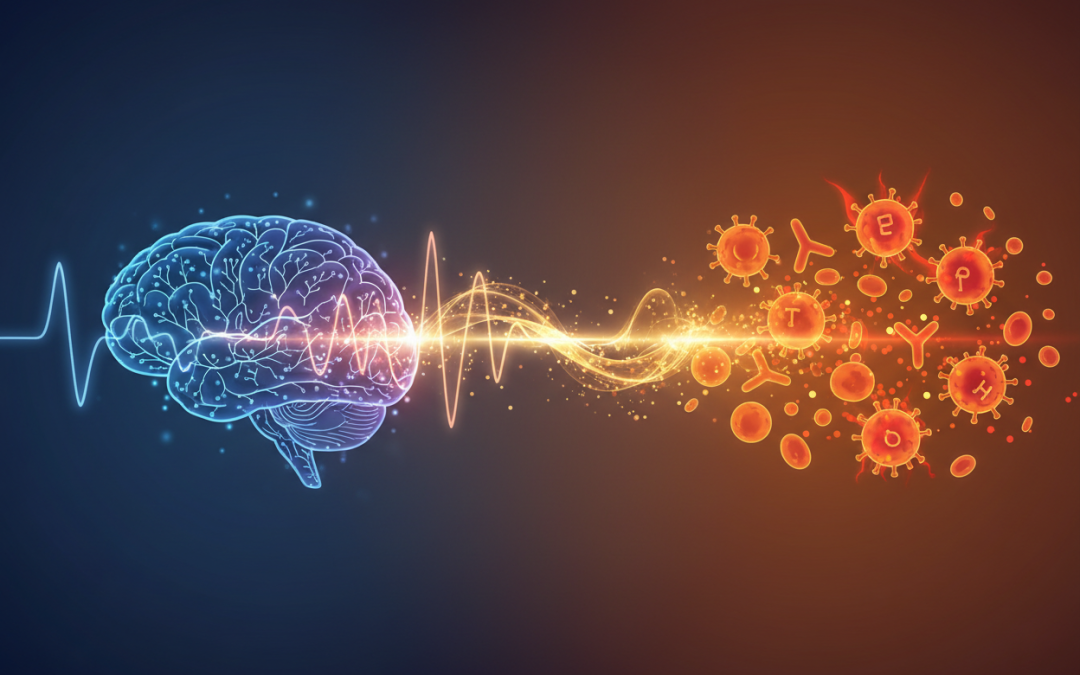
The Hidden Connection Between Brainwave Entrainment and Autoimmune Disorders
Table of Contents
1. Understanding Brainwave Entrainment
2. The Science Behind Autoimmune Disorders
3. The Stress-Immune System Connection
4. How Brainwave Entrainment Influences Immune Function
5. Research Findings on Brainwave Therapy for Autoimmune Conditions
6. Practical Applications and Treatment Approaches
7. Safety Considerations and Limitations
8. Future Implications and Research Directions
9. Frequently Asked Questions
When I first stumbled upon the concept of brainwave entrainment several years ago, I never imagined it would lead me down a fascinating rabbit hole connecting neuroscience to immune system dysfunction. What started as curiosity about meditation and brain states has evolved into a deep appreciation for how our minds and bodies communicate in ways we’re only beginning to understand.
The relationship between brainwave entrainment and autoimmune disorders represents one of the most intriguing frontiers in integrative medicine. While traditional treatments focus primarily on suppressing immune responses, emerging research suggests that training our brains to produce specific wave patterns might offer a complementary approach to managing these complex conditions.
Understanding Brainwave Entrainment
Brainwave entrainment is essentially the practice of synchronizing your brain’s electrical activity to external stimuli, typically through rhythmic sounds, lights, or electromagnetic fields. Think of it as tuning your brain like a radio to a specific frequency station.
Our brains naturally produce different types of electrical waves depending on our state of consciousness. Delta waves (0.5-4 Hz) dominate during deep sleep, theta waves (4-8 Hz) appear during meditation and creativity, alpha waves (8-13 Hz) characterize relaxed awareness, and beta waves (13-30 Hz) are associated with active thinking and concentration.
The beauty of brainwave entrainment lies in its ability to guide the brain toward desired states. When you listen to binaural beats at 10 Hz, for instance, your brain gradually begins producing more alpha waves, potentially inducing a calm, focused state. This isn’t just theoretical—EEG studies consistently demonstrate measurable changes in brain activity following entrainment sessions.
The Science Behind Autoimmune Disorders
Autoimmune disorders occur when our immune system mistakenly attacks healthy tissue, treating our own cells as foreign invaders. Conditions like rheumatoid arthritis, multiple sclerosis, lupus, and inflammatory bowel disease affect millions worldwide, often causing chronic pain, fatigue, and progressive tissue damage.
What makes these conditions particularly challenging is their multifactorial nature. Genetics certainly play a role, but environmental triggers, chronic stress, and lifestyle factors significantly influence disease progression. The immune system doesn’t operate in isolation—it’s intimately connected to our nervous system, endocrine system, and even our gut microbiome.
Recent research has revealed that autoimmune disorders often involve dysregulated communication between the brain and immune system. This bidirectional relationship means that psychological stress can worsen autoimmune symptoms, while chronic inflammation can affect mood and cognitive function. Understanding this connection opens new therapeutic possibilities.
The Stress-Immune System Connection
Chronic stress acts like gasoline on the fire of autoimmune inflammation. When we’re stressed, our bodies release cortisol and other stress hormones that initially suppress immune function. However, with prolonged stress, this system becomes dysregulated, potentially triggering autoimmune responses.
The vagus nerve, our longest cranial nerve, serves as a crucial communication highway between the brain and immune system. When functioning optimally, it helps maintain immune balance through what researchers call the “cholinergic anti-inflammatory pathway.” This natural mechanism can reduce inflammatory cytokine production and promote healing.
Here’s where brainwave entrainment becomes particularly interesting. Specific brainwave patterns, especially those in the alpha and theta ranges, are associated with increased vagal tone and parasympathetic nervous system activation. This suggests that training our brains to produce these patterns might help restore healthy immune function.
How Brainwave Entrainment Influences Immune Function
The mechanism by which brainwave entrainment affects immune function involves several interconnected pathways. When we achieve states of deep relaxation through entrainment, several beneficial changes occur simultaneously.
First, stress hormone levels decrease. Cortisol, which can suppress beneficial immune responses while promoting inflammation when chronically elevated, begins to normalize. This creates a more favorable environment for immune system balance.
Second, brainwave entrainment appears to enhance vagal tone. A well-functioning vagus nerve helps coordinate the body’s rest-and-digest response, promoting tissue repair and reducing systemic inflammation. Studies using heart rate variability measurements have shown improved vagal function following regular entrainment practice.
Third, certain brainwave patterns may directly influence immune cell behavior. Research suggests that alpha and theta waves can affect the production of various immune signaling molecules, potentially shifting the balance away from pro-inflammatory responses toward more balanced immune function.
Research Findings on Brainwave Therapy for Autoimmune Conditions
While research in this area is still emerging, several studies have produced promising results. A 2019 study published in the Journal of Neurotherapy found that participants with rheumatoid arthritis who underwent eight weeks of alpha-theta brainwave training showed significant reductions in inflammatory markers and pain scores compared to controls.
Another fascinating study examined the effects of gamma wave entrainment (40 Hz) on multiple sclerosis patients. Researchers found improvements in cognitive function and reductions in fatigue, though the sample size was small and results require replication.
Perhaps most intriguingly, a pilot study on inflammatory bowel disease patients found that those who practiced theta wave entrainment showed measurable changes in gut microbiome composition, with increases in beneficial bacteria associated with reduced inflammation. This suggests that brainwave entrainment might influence autoimmune conditions through multiple pathways simultaneously.
It’s important to note that these studies, while encouraging, are preliminary. The field needs larger, well-controlled trials to establish definitive therapeutic protocols and understand which patients might benefit most from these approaches.
Practical Applications and Treatment Approaches
For individuals interested in exploring brainwave entrainment as a complementary approach to autoimmune disorder management, several practical options exist. Binaural beats, available through various apps and audio programs, offer an accessible starting point. These typically involve listening to slightly different frequencies in each ear, creating a perceived beat frequency that can influence brainwave patterns.
Neurofeedback represents a more sophisticated approach, using real-time EEG monitoring to help individuals learn to produce specific brainwave patterns consciously. While more expensive and requiring professional guidance, neurofeedback allows for personalized protocols based on individual brain patterns and symptoms.
Light therapy devices that pulse at specific frequencies offer another entrainment method. Some individuals find visual entrainment more effective than auditory approaches, though personal preferences vary significantly.
The key to success appears to be consistency rather than intensity. Most research suggests that regular, moderate sessions (20-30 minutes daily) produce better results than occasional longer sessions. Starting slowly and gradually increasing session duration helps prevent any potential side effects.
Safety Considerations and Limitations
While generally considered safe for most people, brainwave entrainment isn’t appropriate for everyone. Individuals with epilepsy or seizure disorders should avoid light-based entrainment and consult healthcare providers before trying any form of brainwave therapy.
Some people experience headaches, dizziness, or mood changes when first beginning entrainment practice. These effects typically diminish with regular use, but anyone experiencing persistent discomfort should discontinue use and seek professional guidance.
It’s crucial to understand that brainwave entrainment should complement, not replace, conventional medical treatment for autoimmune disorders. These conditions can be serious and potentially life-threatening without proper medical management. Always work with qualified healthcare providers when exploring integrative approaches.
Additionally, individual responses to entrainment vary significantly. What works wonderfully for one person might have minimal effect on another. This variability likely reflects differences in brain structure, genetics, disease severity, and other factors we don’t yet fully understand.
Future Implications and Research Directions
The intersection of neuroscience and immunology represents one of medicine’s most exciting frontiers. As our understanding of brain-immune communication deepens, we’re likely to see more sophisticated approaches to treating autoimmune disorders that address both neurological and immunological components.
Emerging technologies like transcranial stimulation and advanced neurofeedback systems may offer more precise ways to influence brainwave patterns. Researchers are also investigating whether combining brainwave entrainment with other interventions—such as specific dietary approaches or targeted supplements—might produce synergistic effects.
Personalized medicine approaches may eventually allow us to tailor brainwave entrainment protocols to individual genetic profiles, brain patterns, and specific autoimmune conditions. This could maximize therapeutic benefits while minimizing the trial-and-error process many people currently experience.
The potential implications extend beyond autoimmune disorders. If we can reliably influence immune function through brainwave manipulation, this might have applications for cancer treatment, infectious disease management, and even aging-related immune decline.
The hidden connection between brainwave entrainment and autoimmune disorders illuminates the profound interconnectedness of our minds and bodies. While we’re still in the early stages of understanding these relationships, the research suggests promising possibilities for complementary therapeutic approaches.
What excites me most about this field is its potential to empower individuals with chronic conditions. Rather than being passive recipients of treatment, people might learn to actively participate in their healing through practices that influence their brain states and, consequently, their immune function.
However, it’s essential to approach this area with both optimism and caution. The science is promising but incomplete, and individual results vary significantly. Anyone considering brainwave entrainment for autoimmune conditions should work closely with healthcare providers to ensure safe, appropriate integration with conventional treatments.
As research continues to unveil the mysteries of brain-immune communication, we may discover that training our minds to produce specific electrical patterns represents a powerful tool in the quest for better health. The journey from curiosity about meditation to understanding complex neuroimmunomodulation has been fascinating, and I suspect we’ve only scratched the surface of what’s possible.
Frequently Asked Questions
Q: How long does it take to see results from brainwave entrainment for autoimmune conditions?
A: Results vary significantly between individuals. Some people report feeling more relaxed and experiencing reduced pain within days or weeks, while measurable immune changes may take several months of consistent practice. Most research studies showing significant benefits involved 8-12 weeks of regular sessions.
Q: Can brainwave entrainment replace my current autoimmune medications?
A: No, brainwave entrainment should never replace prescribed medications without explicit guidance from your healthcare provider. It’s best used as a complementary therapy alongside conventional treatment, not as a replacement.
Q: What frequency ranges are most beneficial for autoimmune conditions?
A: Research suggests that alpha (8-13 Hz) and theta (4-8 Hz) frequencies may be most beneficial for reducing inflammation and promoting immune balance. However, individual responses vary, and some studies have shown benefits from other frequencies as well.
Q: Are there any side effects from brainwave entrainment?
A: Most people experience no significant side effects. Some individuals may initially experience mild headaches, dizziness, or mood changes. People with epilepsy or seizure disorders should avoid certain types of entrainment, particularly light-based methods.
Q: How often should I practice brainwave entrainment?
A: Most research suggests daily sessions of 20-30 minutes produce the best results. Consistency appears more important than session length, so regular shorter sessions typically work better than occasional longer ones.
Q: Is professional supervision necessary for brainwave entrainment?
A: While simple binaural beat audio programs can be used safely by most people, more advanced techniques like neurofeedback require professional guidance. Anyone with serious health conditions should consult their healthcare provider before beginning any entrainment program.