
The Connection Between Brainwaves and Artistic Expression: How Your Mind Creates Art
Table of Contents
1. Introduction: The Science Behind Creative Flow
2. Understanding Brainwaves: The Electrical Symphony of Your Mind
3. Alpha Waves: The Gateway to Creative Flow
4. Theta Waves: Deep Creativity and Artistic Inspiration
5. Beta Waves: Focused Artistic Execution
6. Gamma Waves: The Moment of Creative Breakthrough
7. How Different Art Forms Influence Brainwave Patterns
8. Practical Ways to Optimize Your Brainwaves for Artistic Expression
9. The Future of Neuroscience and Art
10. Conclusion: Harmonizing Mind and Art
11. Frequently Asked Questions
Introduction: The Science Behind Creative Flow
Have you ever wondered what happens inside your brain when you’re completely absorbed in creating art? That moment when time seems to disappear, your hand moves effortlessly across the canvas, and ideas flow like water – there’s actually a fascinating neurological explanation for this phenomenon.
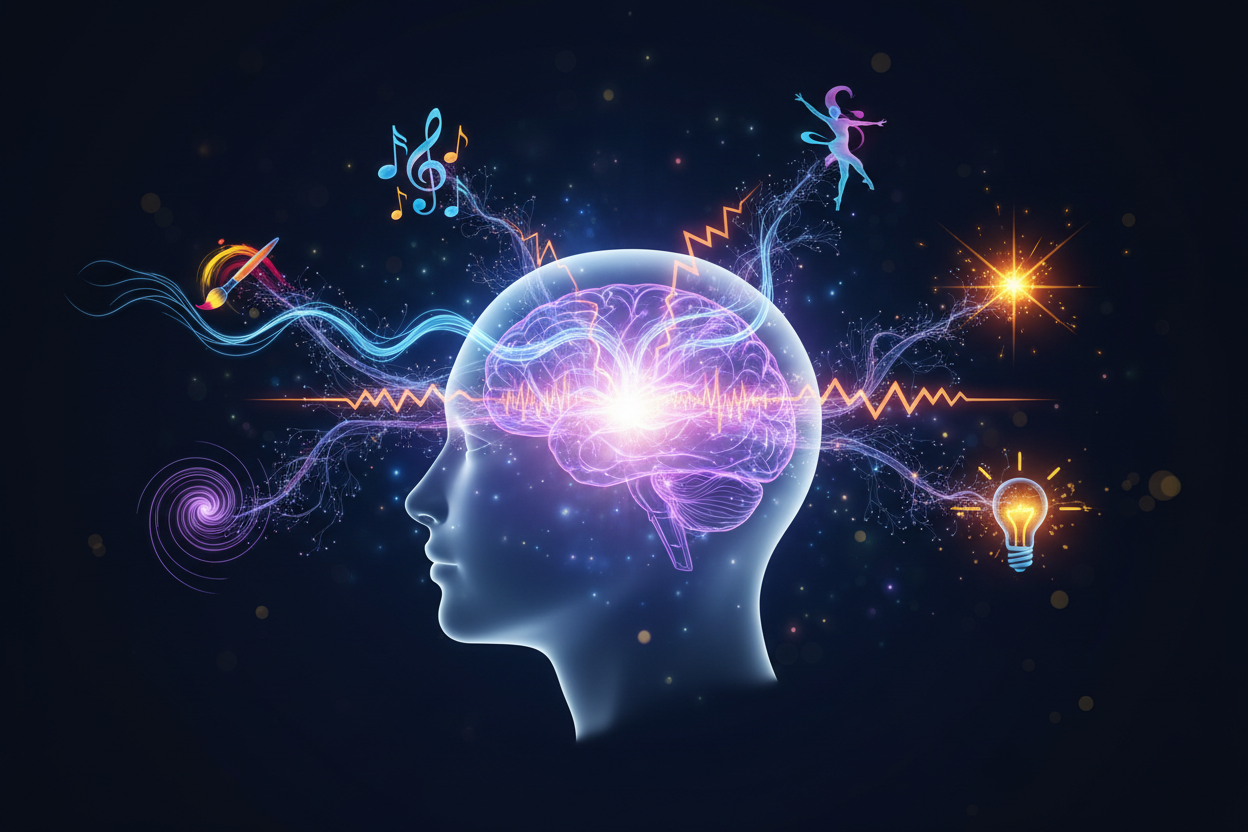
The connection between brainwaves and artistic expression has captivated neuroscientists and artists alike for decades. Our brains produce distinct electrical patterns that correspond to different states of consciousness, and these patterns play a crucial role in how we create, perceive, and experience art.
Understanding this relationship isn’t just academic curiosity – it’s a practical tool that can help artists, musicians, writers, and creative individuals optimize their mental state for peak artistic performance. Whether you’re a professional artist or someone who enjoys creative hobbies, exploring the science behind your creative process can unlock new levels of artistic expression.
Understanding Brainwaves: The Electrical Symphony of Your Mind
Before diving into how brainwaves influence artistic expression, it’s essential to understand what brainwaves actually are. Your brain contains approximately 86 billion neurons that communicate through electrical impulses. When groups of neurons fire together, they create rhythmic patterns of electrical activity that we can measure as brainwaves.
These brainwaves are categorized by their frequency, measured in hertz (Hz), and each type is associated with different mental states and cognitive functions. The main categories include:
Delta waves (0.5-4 Hz) occur during deep sleep and are rarely relevant to conscious artistic creation. Beta waves (13-30 Hz) dominate our normal waking consciousness and focused attention. Alpha waves (8-13 Hz) emerge during relaxed awareness and creative states. Theta waves (4-8 Hz) appear during deep meditation and creative insight. Gamma waves (30-100 Hz) are linked to moments of heightened awareness and creative breakthroughs.
Each of these brainwave states contributes differently to the artistic process, and understanding their unique characteristics can help artists harness their creative potential more effectively.
Alpha Waves: The Gateway to Creative Flow
Alpha waves represent perhaps the most important brainwave frequency for artistic expression. These waves emerge when we’re in a relaxed yet alert state – the perfect mental environment for creativity to flourish. Think about those moments when you’re daydreaming, taking a leisurely walk, or sitting quietly before beginning a creative project. Your brain is likely producing strong alpha waves during these times.
Research has shown that artists often exhibit increased alpha wave activity in their brains compared to non-artists. This makes perfect sense when you consider that alpha states are characterized by reduced analytical thinking and increased access to the subconscious mind – exactly what’s needed for creative expression.
During alpha states, the brain’s default mode network becomes more active, allowing for free-flowing associations and novel connections between seemingly unrelated ideas. This is why many artists report their best ideas come when they’re not actively trying to be creative – while showering, walking, or engaged in other relaxed activities.
Professional artists often develop techniques to access alpha states more readily. Some use meditation, others prefer listening to certain types of music, and many have specific rituals or environments that help them shift into this optimal creative frequency.
Theta Waves: Deep Creativity and Artistic Inspiration
Theta waves represent an even deeper level of creative consciousness. These slower frequencies are associated with profound insights, spiritual experiences, and what many artists describe as divine inspiration. When theta waves dominate, the conscious mind steps back, allowing deeper layers of creativity to emerge.
Many renowned artists throughout history have described experiences that align perfectly with theta states. Salvador Dalí famously used a technique called “microsleep” to access these deeper creative states. He would hold a key while dozing in a chair, and when he began to fall into deeper sleep (theta territory), the key would drop and wake him, allowing him to capture the surreal imagery from these liminal states.
Theta waves are particularly important for artists working in abstract or conceptual mediums. The reduced logical processing that occurs during theta states allows for more intuitive and emotionally-driven artistic expression. Musicians often report that their most moving compositions emerge from these deeper states of consciousness.
Accessing theta states requires more intentional practice than alpha states. Deep meditation, certain breathing techniques, and specific types of music can help induce theta activity. Some artists use binaural beats or other audio technologies designed to encourage theta brainwave production.
Beta Waves: Focused Artistic Execution
While alpha and theta waves are crucial for creative inspiration, beta waves play an equally important role in artistic expression – they’re essential for the execution phase of creativity. When you need to focus intently on technical aspects of your art, whether it’s precise brushwork, complex musical passages, or detailed writing, beta waves help maintain the concentration necessary for skilled performance.
Beta waves are divided into different ranges, each serving specific functions in the artistic process. Low beta (13-15 Hz) provides relaxed focus, perfect for activities like sketching or improvisation. Mid beta (15-20 Hz) offers more intense concentration, ideal for detailed work or learning new techniques. High beta (20-30 Hz) can be useful for analytical aspects of art, though too much high beta can lead to anxiety and creative blocks.
The key for artists is learning to balance beta activity with other brainwave states. Pure beta dominance can lead to overly analytical thinking that stifles creativity, while insufficient beta activity can result in inspired ideas that lack the focused execution needed to bring them to life.
Successful artists often develop the ability to shift fluidly between different brainwave states throughout their creative process – using alpha or theta for inspiration and ideation, then shifting to beta for focused implementation and refinement.
Gamma Waves: The Moment of Creative Breakthrough
Gamma waves represent the highest frequency brainwaves and are associated with moments of sudden insight, creative breakthroughs, and what researchers call “aha moments.” These brief bursts of high-frequency activity often occur when disparate pieces of information suddenly come together to form a new creative solution or artistic vision.
Gamma activity is particularly fascinating because it appears to coordinate activity across different regions of the brain simultaneously. This whole-brain synchronization may explain why creative breakthroughs often feel so profound and complete – multiple brain networks are literally working in harmony to produce the insight.
Artists often describe gamma-like experiences as moments when everything suddenly “clicks.” A painter might suddenly see exactly how to complete a challenging composition, or a musician might hear the perfect melody line that ties an entire piece together. These moments are typically brief but incredibly powerful in their impact on the creative work.
While gamma waves can’t be easily induced on command, certain practices may increase their likelihood. Intense focus followed by relaxation, exposure to novel experiences, and practices that challenge conventional thinking patterns can all potentially trigger gamma activity.
How Different Art Forms Influence Brainwave Patterns
Different artistic mediums appear to influence brainwave patterns in unique ways, suggesting that the type of art you create or consume can actually reshape your brain’s electrical activity. This fascinating relationship works in both directions – your brainwave state influences your artistic expression, and engaging with different art forms can modify your brainwave patterns.
Visual arts, particularly painting and drawing, tend to increase alpha wave activity, especially in the brain’s right hemisphere. This makes sense given that visual-spatial processing is largely right-brain dominant, and alpha waves facilitate the relaxed awareness needed for artistic creation. Interestingly, viewing art also increases alpha activity, suggesting that both creating and appreciating visual art share similar neurological pathways.
Music has perhaps the most dramatic effect on brainwave patterns of any art form. Different musical elements influence brainwaves in specific ways – rhythm tends to entrain brainwaves to match its tempo, while harmony and melody can induce alpha and theta states. Musicians often show unique brainwave patterns, with increased connectivity between brain hemispheres and enhanced ability to shift between different frequency states.
Writing and poetry engage different brainwave patterns depending on the type of writing. Creative writing tends to increase alpha and theta activity, while technical or analytical writing maintains higher beta frequencies. The rhythmic nature of poetry can create entrainment effects similar to music, potentially explaining why many cultures have traditionally used rhythmic speech for inducing altered states of consciousness.
Practical Ways to Optimize Your Brainwaves for Artistic Expression
Understanding the relationship between brainwaves and creativity is only valuable if you can apply this knowledge to enhance your own artistic practice. Fortunately, there are numerous practical techniques that artists can use to optimize their brainwave states for peak creative performance.
Meditation remains one of the most effective methods for developing brainwave control. Regular meditation practice increases alpha wave production and helps develop the ability to shift between different mental states at will. Even brief 10-15 minute meditation sessions before creative work can significantly enhance artistic flow states.
Environmental factors play a crucial role in brainwave optimization. Natural settings tend to promote alpha wave activity, which is why many artists find inspiration outdoors. If outdoor access is limited, incorporating natural elements like plants, natural light, or nature sounds can help create a more conducive environment for creative brainwave states.
Binaural beats and other forms of brainwave entrainment technology offer a more direct approach to influencing brain frequencies. These audio technologies use specific frequency combinations to encourage the brain to match desired brainwave patterns. While not a magic solution, many artists find these tools helpful for accessing specific creative states more reliably.
Physical practices like yoga, tai chi, or even simple stretching can help shift brainwave patterns toward more creative frequencies. The combination of movement, breath awareness, and present-moment focus naturally promotes alpha and theta states while reducing excessive beta activity that can block creativity.
The Future of Neuroscience and Art
The intersection of neuroscience and art continues to evolve rapidly, with new discoveries regularly reshaping our understanding of creativity and consciousness. Emerging technologies are beginning to offer unprecedented insights into the creative process and may soon provide artists with powerful new tools for enhancing their work.
Brain-computer interfaces represent one of the most exciting frontiers in this field. Researchers are developing systems that can translate brainwave patterns directly into visual or auditory art, potentially allowing for new forms of expression that bypass traditional physical limitations. While still in early stages, these technologies hint at a future where the boundary between thought and artistic creation becomes increasingly blurred.
Neurofeedback training is becoming more accessible and sophisticated, allowing artists to develop greater conscious control over their brainwave states. Real-time monitoring of brain activity can help artists learn to access optimal creative states more reliably and maintain them for longer periods.
Virtual and augmented reality technologies are also being explored as tools for enhancing creative brainwave states. Immersive environments designed specifically to promote alpha, theta, or gamma activity could provide artists with powerful new spaces for creative exploration.
Conclusion: Harmonizing Mind and Art
The connection between brainwaves and artistic expression reveals that creativity is far more than just inspiration or talent – it’s a complex neurological process that can be understood, influenced, and optimized. By recognizing how different brainwave states contribute to various aspects of the creative process, artists can develop more intentional approaches to their practice.
The journey of artistic creation involves a delicate dance between different states of consciousness. Alpha waves provide the relaxed awareness needed for creative flow, theta waves offer access to deeper inspiration and insight, beta waves enable focused execution and technical skill, and gamma waves deliver those precious moments of breakthrough and synthesis.
Perhaps most importantly, this understanding reminds us that creativity is a natural human capacity that we all possess. The same brainwave patterns that enable great artists to create masterpieces are available to anyone willing to cultivate and develop them. Whether you’re a professional artist or someone who simply enjoys creative expression, exploring the relationship between your mind and your art can open new doorways to creative fulfillment.
As neuroscience continues to unveil the mysteries of consciousness and creativity, we’re likely to discover even more profound connections between brain function and artistic expression. For now, the key is to approach your creative practice with both scientific curiosity and artistic intuition, allowing the natural rhythms of your mind to guide and enhance your artistic journey.
Frequently Asked Questions
Can anyone learn to control their brainwaves for better artistic expression?
Yes, with practice, most people can develop some degree of conscious influence over their brainwave patterns. Techniques like meditation, biofeedback training, and environmental optimization can help anyone access more creative brainwave states. However, the degree of control varies between individuals, and consistent practice is key to developing this skill.
How long does it take to see improvements in creativity through brainwave training?
Many people notice some benefits within a few weeks of regular practice, but significant improvements typically develop over several months. The timeline varies depending on the specific techniques used, individual differences, and the consistency of practice. Even small changes in brainwave patterns can have noticeable effects on creative flow and artistic expression.
Are there any risks associated with trying to alter brainwave patterns?
Generally, natural methods like meditation, environmental changes, and lifestyle modifications are very safe. However, people with epilepsy or other neurological conditions should consult with healthcare providers before using binaural beats or other brainwave entrainment technologies. It’s always wise to start gradually with any new practice.
Do professional artists naturally have different brainwave patterns than non-artists?
Research suggests that experienced artists often show increased alpha wave activity and greater connectivity between brain hemispheres compared to non-artists. However, it’s unclear whether these differences are innate or develop through artistic practice. The evidence suggests that regular creative practice can actually reshape brain patterns over time.
Can brainwave optimization replace natural talent or artistic training?
No, brainwave optimization should be viewed as a complement to, not a replacement for, traditional artistic development. Technical skills, cultural knowledge, and aesthetic sensibility all remain crucial components of artistic expression. Brainwave training can enhance these existing capabilities but cannot substitute for fundamental artistic education and practice.