
The Art of Layering: Combining Multiple Brainwave Frequencies for Enhanced Mental Performance
Table of Contents
1. Introduction to Brainwave Frequency Layering
2. Understanding the Science Behind Brainwave Entrainment
3. The Five Primary Brainwave Frequencies
4. Benefits of Combining Multiple Brainwave Frequencies
5. Popular Layering Techniques and Combinations
6. How to Get Started with Brainwave Frequency Layering
7. Common Mistakes to Avoid
8. Real-World Applications and Success Stories
9. Conclusion
10. Frequently Asked Questions
Introduction to Brainwave Frequency Layering
Have you ever wondered why some meditation sessions leave you feeling more balanced than others? Or why certain binaural beats seem to work better for focus while others excel at relaxation? The answer might lie in the fascinating world of brainwave frequency layering – a sophisticated technique that combines multiple brainwave frequencies to create more comprehensive and effective mental states.
Brainwave frequency layering represents the cutting edge of neurofeedback and brainwave entrainment technology. Rather than targeting just one specific brainwave frequency, this approach strategically combines different frequencies to create a more holistic experience that can address multiple aspects of mental performance simultaneously.
In this comprehensive guide, we’ll explore the art and science behind layering brainwave frequencies, examining how this technique can enhance your meditation practice, boost cognitive performance, and help you achieve more balanced mental states than traditional single-frequency approaches.
Understanding the Science Behind Brainwave Entrainment
Before diving into the complexities of layering, it’s essential to understand how brainwave entrainment works. Our brains naturally produce electrical activity that can be measured in waves, with different frequencies corresponding to various mental states and cognitive functions.
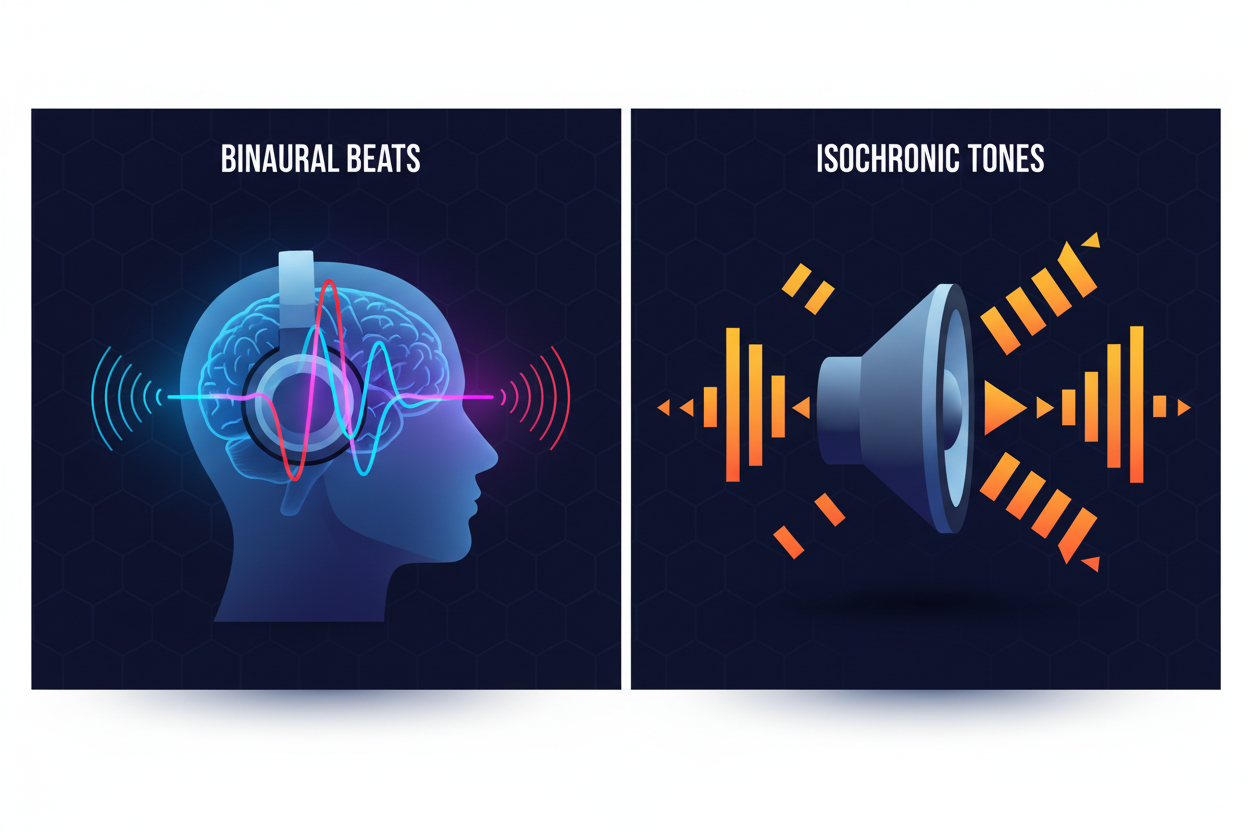
Brainwave entrainment leverages a neurological phenomenon called the frequency following response, where the brain naturally synchronizes its electrical activity to external rhythmic stimuli. When you listen to binaural beats or isochronic tones, your brain gradually adjusts its dominant frequency to match the audio stimulus.
The magic of layering comes from the understanding that our brains don’t operate on just one frequency at a time. In reality, multiple brainwave frequencies are always present simultaneously, with different regions of the brain operating at different frequencies depending on the tasks they’re performing.
Modern neuroscience has revealed that optimal mental states often involve a complex interplay of multiple frequencies working together harmoniously. This discovery has led researchers and practitioners to develop layering techniques that mirror these natural patterns more accurately than single-frequency approaches.
The Five Primary Brainwave Frequencies
To master the art of layering, you need to understand each brainwave frequency and its unique characteristics:
Delta Waves (0.5-4 Hz): These are the slowest brainwaves, primarily associated with deep sleep, healing, and regeneration. Delta frequencies play crucial roles in immune system function and physical recovery. In layering applications, delta waves often serve as a foundation frequency for deep relaxation and restorative practices.
Theta Waves (4-8 Hz): Theta frequencies bridge the gap between conscious and unconscious states. They’re prominent during REM sleep, deep meditation, and creative inspiration. Many practitioners find theta waves particularly useful for accessing intuitive insights and emotional healing when combined with other frequencies.
Alpha Waves (8-12 Hz): Often called the “relaxed awareness” frequency, alpha waves dominate when we’re calm but alert. They’re associated with light meditation, creative flow states, and the ability to absorb information effortlessly. Alpha frequencies serve as excellent bridge frequencies in layered compositions.
Beta Waves (12-30 Hz): Beta frequencies govern our normal waking consciousness, logical thinking, and problem-solving abilities. While higher beta frequencies can indicate stress or anxiety, lower beta ranges support focused attention and analytical thinking. In layering, beta waves help maintain cognitive clarity while exploring other states.
Gamma Waves (30-100 Hz): The fastest brainwaves, gamma frequencies are associated with heightened awareness, peak cognitive performance, and moments of insight. Recent research suggests gamma waves play crucial roles in consciousness itself and are often incorporated into advanced layering techniques for enhanced mental clarity.
Benefits of Combining Multiple Brainwave Frequencies
The advantages of frequency layering extend far beyond what single-frequency entrainment can achieve. When done correctly, layering creates a more natural and comprehensive brain state that mirrors how our minds actually function.
One of the primary benefits is enhanced stability. Single frequencies can sometimes feel artificial or create mental resistance, especially in beginners. Layered frequencies create a more organic experience that the brain accepts more readily, leading to deeper and more sustained entrainment effects.
Layering also allows for simultaneous multi-state experiences. For instance, you might combine alpha waves for relaxed awareness with low beta frequencies for maintained focus, creating an ideal state for learning or creative work. This combination would be impossible to achieve with single-frequency approaches.
Another significant advantage is the reduced adaptation effect. When exposed to the same single frequency repeatedly, the brain can become habituated and less responsive over time. Layered frequencies provide more complexity and variation, maintaining the brain’s interest and responsiveness to the entrainment process.
Many users report that layered frequencies produce more profound and lasting effects. The complex interplay of multiple frequencies seems to create deeper neuroplasticity changes, leading to improvements that persist even when not actively using brainwave entrainment.
Popular Layering Techniques and Combinations
Several effective layering approaches have emerged through research and practical application. The harmonic layering technique uses frequencies that are mathematically related, such as combining 10 Hz alpha with 20 Hz beta (a 2:1 ratio). This creates natural harmonics that the brain finds particularly entraining.
Progressive layering involves gradually introducing different frequencies over time. A session might begin with delta waves for deep relaxation, slowly introduce theta for meditative states, then add alpha for awareness, creating a journey through different consciousness levels.
The complementary pairing approach combines frequencies that naturally work well together. Popular combinations include theta and alpha for enhanced creativity, alpha and low beta for focused learning, or gamma and alpha for peak performance states.
Some practitioners use what’s called “frequency sandwiching,” where a primary frequency is surrounded by supporting frequencies. For example, a 10 Hz alpha wave might be supported by 8 Hz and 12 Hz tones, creating a rich, full spectrum around the target frequency.
Advanced practitioners sometimes employ dynamic layering, where the relationships between frequencies change throughout a session. This might involve frequencies that start in harmony and gradually separate, or patterns that cycle through different combinations to prevent habituation.
How to Get Started with Brainwave Frequency Layering
Beginning your journey with frequency layering requires patience and systematic experimentation. Start with simple two-frequency combinations before progressing to more complex arrangements. A good beginner combination is 8 Hz theta with 10 Hz alpha, which creates a relaxed yet aware state perfect for meditation.
Invest in quality audio equipment, as the precision required for effective layering demands good frequency response and minimal distortion. Closed-back headphones are generally preferred for binaural beat applications, while speakers can work well for isochronic tones.
Begin with shorter sessions of 15-20 minutes to allow your brain to adapt gradually. Pay attention to how different combinations affect your mental state, energy levels, and overall well-being. Keep a journal to track which combinations work best for different goals and times of day.
Consider working with professionally designed layered tracks before attempting to create your own. Many experienced practitioners and researchers have developed sophisticated combinations that have been tested and refined over time.
Remember that individual responses to frequency combinations can vary significantly. What works wonderfully for one person might feel uncomfortable or ineffective for another. Be prepared to experiment and find the combinations that resonate best with your unique brain patterns.
Common Mistakes to Avoid
One of the most frequent errors in frequency layering is using too many frequencies simultaneously. While it might seem logical that more frequencies would create better results, the opposite is often true. Overly complex combinations can confuse the brain and reduce entrainment effectiveness.
Another common mistake is ignoring volume relationships between layered frequencies. Each frequency should be carefully balanced to create the desired effect. Having one frequency significantly louder than others can dominate the experience and negate the benefits of layering.
Many beginners make the error of jumping into advanced combinations too quickly. Like learning a musical instrument, mastering frequency layering requires building skills progressively. Start with simple combinations and gradually increase complexity as your brain adapts.
Timing is another crucial factor often overlooked. Some practitioners attempt to layer frequencies with incompatible rhythms or beat patterns, creating chaotic rather than harmonious experiences. Understanding how different frequencies interact rhythmically is essential for effective layering.
Finally, neglecting the importance of intention and mindset can significantly impact results. Frequency layering works best when combined with appropriate mental preparation and clear intentions for the session.
Real-World Applications and Success Stories
The practical applications of frequency layering span numerous fields and personal development goals. Students have reported improved learning outcomes when using alpha-beta combinations during study sessions, with enhanced information retention and reduced mental fatigue.
Creative professionals often gravitate toward theta-alpha layering for brainstorming and artistic work. Musicians, writers, and designers frequently report breakthrough moments and enhanced creative flow when using these combinations during their creative processes.
In the corporate world, executives and entrepreneurs are discovering that gamma-alpha combinations can enhance decision-making abilities and strategic thinking. These frequencies seem particularly effective for complex problem-solving and innovative thinking.
Sleep optimization represents another growing application area. Delta-theta layering has helped many individuals achieve deeper, more restorative sleep, while also enhancing dream recall and lucid dreaming experiences.
Athletes and fitness enthusiasts are exploring how different frequency combinations can enhance training focus, recovery, and mental resilience. Some report improved mind-muscle connection and enhanced motivation when using specific layered frequencies during workouts.
Conclusion
The art of layering brainwave frequencies represents a sophisticated evolution in consciousness enhancement technology. By understanding how different frequencies interact and complement each other, practitioners can create more effective, natural, and comprehensive experiences than single-frequency approaches allow.
Success with frequency layering requires patience, experimentation, and a willingness to learn from both successes and failures. As our understanding of neuroscience continues to advance, the techniques and applications for frequency layering will undoubtedly become even more refined and effective.
Whether you’re seeking enhanced creativity, improved focus, deeper relaxation, or peak performance states, the strategic combination of multiple brainwave frequencies offers a powerful tool for optimizing your mental capabilities. Start simple, be consistent, and allow yourself to discover the unique combinations that work best for your individual brain patterns and goals.
The journey into frequency layering is deeply personal and endlessly fascinating. As you develop your skills and understanding, you’ll likely find that this sophisticated approach to brainwave entrainment opens doors to mental states and capabilities you never thought possible.
Frequently Asked Questions
Q: How long does it take to notice effects from layered brainwave frequencies?
A: Most people notice immediate effects within 10-15 minutes of starting a session, but deeper entrainment typically develops after 20-30 minutes. Long-term benefits often become apparent after 2-4 weeks of regular practice.
Q: Is it safe to use multiple brainwave frequencies simultaneously?
A: Yes, when used properly, layered frequencies are generally safe for healthy individuals. However, people with epilepsy, seizure disorders, or other neurological conditions should consult healthcare providers before using any brainwave entrainment.
Q: Can I create my own layered frequency combinations?
A: Absolutely, though it requires understanding of frequency relationships and audio production techniques. Many practitioners start with existing combinations and gradually develop their own as they gain experience.
Q: What’s the difference between binaural beats and isochronic tones for layering?
A: Binaural beats require headphones and create the frequency difference in your brain, while isochronic tones are actual pulsed frequencies that work through speakers. Both can be layered, but isochronic tones often provide more precise control.
Q: How many frequencies can be layered effectively?
A: Most effective combinations use 2-4 frequencies. While technically more can be layered, complexity beyond this often reduces rather than enhances the entrainment effect.
Q: Should I use layered frequencies every day?
A: Daily use can be beneficial, but many practitioners find that 3-5 sessions per week provide optimal results while allowing the brain time to integrate the experiences between sessions.