
The Ancient Art of Sound Bowls vs. Modern Binaural Beat Technology: A Journey Through Sound Healing
Table of Contents
1. Introduction: The Timeless Quest for Sound Healing
2. Understanding Sound Bowl Therapy: Ancient Wisdom in Modern Times
3. The Science Behind Binaural Beat Technology
4. How Sound Bowls Work: Vibrations That Heal
5. Binaural Beats Explained: Digital Frequencies for Mental Wellness
6. Comparing Effectiveness: Traditional vs. Digital Sound Therapy
7. Cost and Accessibility: Which Option Fits Your Lifestyle?
8. Choosing the Right Sound Healing Method for You
9. Conclusion: Harmonizing Ancient and Modern Approaches
10. Frequently Asked Questions
Introduction: The Timeless Quest for Sound Healing
Have you ever felt instantly calmer when listening to ocean waves or found yourself mesmerized by the gentle hum of a singing bowl? You’re not alone. Throughout human history, we’ve instinctively understood that sound possesses remarkable healing properties. Today, we find ourselves at a fascinating crossroads where ancient sound healing traditions meet cutting-edge digital technology.
On one side, we have the time-honored practice of sound bowl therapy, with roots stretching back thousands of years across various cultures. On the other, we have binaural beat technology, a modern innovation that uses precisely calibrated audio frequencies to influence our brainwaves. Both approaches promise stress relief, improved focus, and enhanced well-being, but they couldn’t be more different in their methods.
As someone who’s personally explored both paths in my wellness journey, I’ve discovered that understanding these two approaches isn’t just about choosing between old and new. It’s about finding the right tool for your unique needs, lifestyle, and preferences. Let’s dive deep into this fascinating comparison and help you discover which sound healing method might resonate with your life.
Understanding Sound Bowl Therapy: Ancient Wisdom in Modern Times
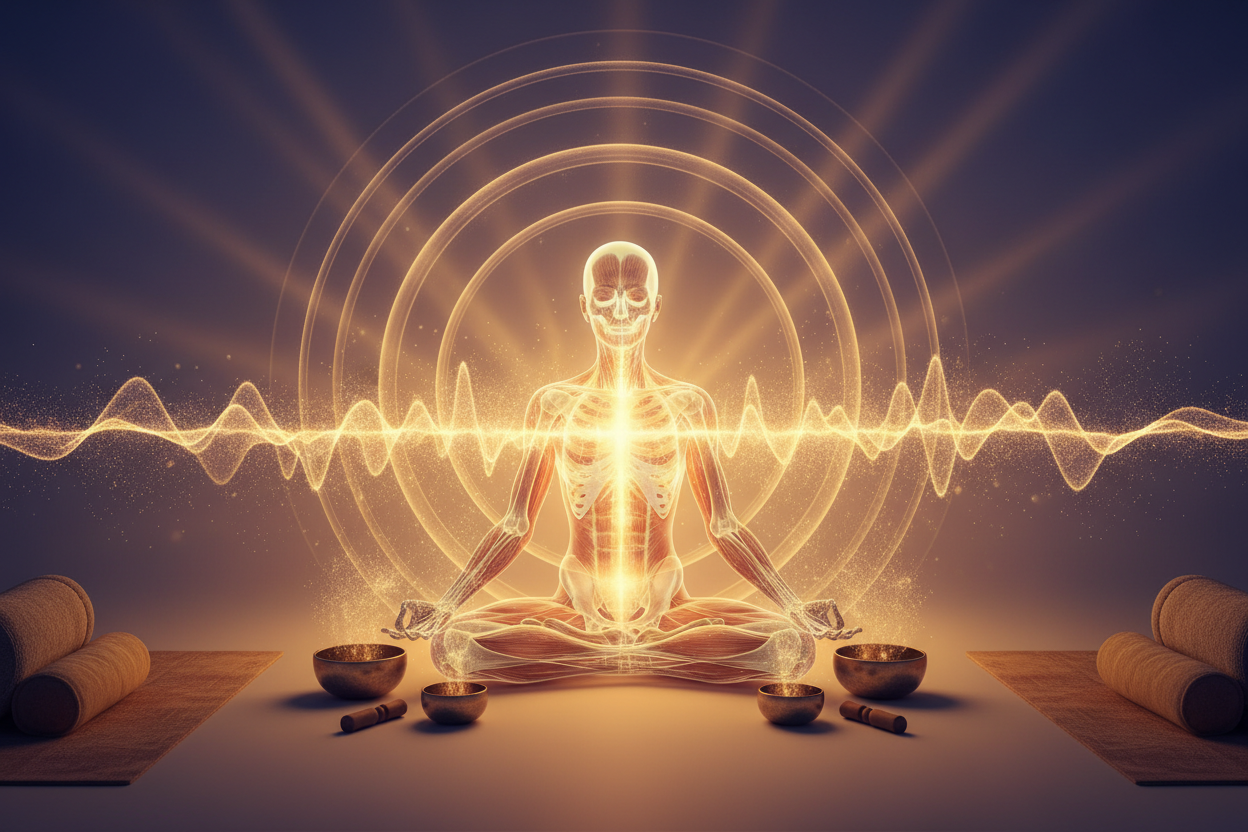
Sound bowl therapy represents one of humanity’s oldest healing practices, with archaeological evidence suggesting their use in Tibet, Nepal, and India dating back over 3,000 years. These remarkable instruments, traditionally crafted from seven sacred metals, create rich, complex tones that seem to penetrate every cell in your body.
What makes sound bowls so special isn’t just their beautiful appearance or mystical origins. When struck or played with a mallet, they produce what acousticians call “complex harmonic overtones.” These aren’t simple, single-frequency sounds like you’d hear from a tuning fork. Instead, they create layers of interconnected frequencies that create a symphony of vibrations.
Modern practitioners have embraced this ancient art, integrating it into meditation sessions, yoga classes, and dedicated sound healing therapies. The experience is deeply tactile and immersive. You don’t just hear the sound; you feel it resonating through your bones, muscles, and organs. Many people describe the sensation as being “bathed in sound” or feeling like the vibrations are “massaging them from the inside out.”
The therapeutic applications are remarkably diverse. Sound bowl sessions are commonly used for stress reduction, anxiety management, pain relief, and sleep improvement. Some practitioners even report success in helping clients process emotional trauma and achieve deeper states of meditation than traditional silent practices allow.
The Science Behind Binaural Beat Technology
While sound bowls rely on ancient wisdom and intuitive understanding, binaural beat technology emerges from rigorous scientific research into how our brains process sound. The concept was first discovered by German physicist Heinrich Wilhelm Dove in 1839, but it wasn’t until the 1970s that researchers began seriously investigating its therapeutic potential.
Here’s how it works: when you listen to two slightly different frequencies in each ear through headphones, your brain creates a third “phantom” frequency equal to the mathematical difference between the two. For example, if your left ear hears 440 Hz and your right ear hears 444 Hz, your brain generates a 4 Hz binaural beat.
This neurological phenomenon is called “frequency following response,” and it’s measurable using EEG technology. Researchers have discovered that different binaural beat frequencies can encourage specific brainwave states. Delta waves (0.5-4 Hz) promote deep sleep, theta waves (4-8 Hz) enhance creativity and meditation, alpha waves (8-13 Hz) foster relaxation and focus, and beta waves (13-30 Hz) support alertness and concentration.
What’s particularly compelling about binaural beats is their precision and reproducibility. Unlike the organic, flowing nature of sound bowls, binaural beats can target specific mental states with scientific accuracy. This has made them popular among researchers studying consciousness, meditation, and cognitive enhancement.
How Sound Bowls Work: Vibrations That Heal
The healing mechanism of sound bowls operates on multiple levels, combining physical vibration, psychological relaxation, and what many practitioners describe as energetic balancing. When a skilled practitioner plays a sound bowl, the resulting vibrations create what’s known as “entrainment” – a process where your body’s natural rhythms begin to synchronize with the bowl’s frequencies.
From a purely physical perspective, sound bowl vibrations can stimulate the vagus nerve, which plays a crucial role in our parasympathetic nervous system. This activation triggers our body’s “rest and digest” response, naturally lowering heart rate, reducing blood pressure, and promoting healing. The vibrations also create gentle micro-massage effects throughout the body, potentially improving circulation and reducing muscle tension.
The psychological impact is equally significant. The rich, enveloping tones create what psychologists call a “flow state” – that wonderful condition where time seems to slow down and worries fade away. Many people find that sound bowl sessions help them access deeper levels of consciousness and self-awareness than they can achieve through traditional meditation alone.
There’s also the ritual aspect to consider. The ceremony of a sound bowl session – the intentional setting, the practitioner’s presence, the tactile experience of feeling vibrations – creates a powerful context for healing. This holistic approach addresses not just symptoms but the whole person, including their emotional and spiritual well-being.
Binaural Beats Explained: Digital Frequencies for Mental Wellness
Binaural beat technology takes a remarkably different approach to sound healing, focusing on precise neurological intervention rather than holistic experience. The beauty of this method lies in its accessibility and customization. With nothing more than a smartphone and quality headphones, you can access scientifically designed audio programs targeting specific mental states.
The technology has evolved significantly since its early days. Modern binaural beat applications incorporate sophisticated audio engineering, including isochronic tones, nature sounds, and ambient music to create more pleasant and effective listening experiences. Some programs even use “binaural beat sweeps” that gradually shift frequencies to guide listeners through different brainwave states during a single session.
Research supports many of the claimed benefits. Studies have shown that binaural beats can reduce anxiety, improve focus, enhance memory consolidation during sleep, and even help with pain management. The effects are often immediate and measurable, making this technology particularly appealing to people who prefer evidence-based approaches to wellness.
One of the most significant advantages of binaural beats is their specificity. Feeling scattered and need to focus? There’s a beta-wave program for that. Struggling with insomnia? Delta-wave sessions can help guide your brain into sleep-ready states. This targeted approach allows users to address specific challenges with precision that would be difficult to achieve with traditional sound healing methods.
Comparing Effectiveness: Traditional vs. Digital Sound Therapy
When it comes to effectiveness, both sound bowls and binaural beats have their strengths, and the “better” choice often depends on individual preferences, specific goals, and personal circumstances. Let me share some insights from both research and personal experience with both methods.
Sound bowl therapy excels in creating profound, full-body relaxation experiences. The physical vibrations provide a multi-sensory healing experience that many people find more satisfying and complete than purely auditory interventions. The ritual and ceremonial aspects also contribute to its effectiveness, as the intentional setting and practitioner guidance can enhance the therapeutic impact.
However, sound bowl sessions require more time, planning, and often financial investment. You typically need to book appointments, travel to practitioners, or invest in learning the techniques yourself. The effects, while often profound, can be less predictable and harder to target for specific outcomes.
Binaural beats, on the other hand, offer convenience and precision that’s hard to match. You can access targeted sessions anytime, anywhere, making them ideal for busy lifestyles. The scientific backing provides confidence for skeptics, and the ability to customize sessions for specific needs is invaluable.
The limitation of binaural beats lies in their purely auditory nature. While effective for brainwave entrainment, they don’t provide the physical, tactile healing experience that many people crave. Some users also find the technology less emotionally satisfying than traditional healing practices.
Cost and Accessibility: Which Option Fits Your Lifestyle?
The financial and practical considerations between these two approaches are quite different, and understanding them can help you make a more informed decision about which path to explore.
Sound bowl therapy typically involves higher upfront costs if you’re purchasing your own instruments. Quality singing bowls range from $50 for basic models to several hundred dollars for handcrafted, traditional pieces. Professional sound healing sessions usually cost between $60-120 per hour, depending on your location and the practitioner’s experience.
However, once you own sound bowls, the ongoing costs are minimal. Many people find that even a single, well-chosen bowl can provide years of therapeutic benefit. The learning curve is relatively gentle – while mastering the techniques takes time, you can begin experiencing benefits almost immediately.
Binaural beat technology presents a very different cost structure. High-quality programs and apps typically range from $5-30 per month for subscription services, or $20-100 for comprehensive downloadable programs. The initial investment is much lower, but ongoing costs can add up over time.
The accessibility factor strongly favors binaural beats. You can access sessions instantly, anywhere you have headphones and a device. This makes them ideal for people with busy schedules, mobility limitations, or those living in areas without access to sound healing practitioners.
Choosing the Right Sound Healing Method for You
After exploring both approaches extensively, I’ve learned that the choice between sound bowls and binaural beats isn’t necessarily an either-or decision. Many people find value in incorporating both methods into their wellness routines, using each for different purposes and situations.
Consider sound bowl therapy if you’re drawn to traditional healing practices, enjoy ritual and ceremony, prefer tactile experiences, or are dealing with physical tension and stress that might benefit from vibrational healing. Sound bowls are also excellent for group meditation sessions and creating sacred spaces in your home.
Binaural beats might be your better choice if you prefer scientifically-backed approaches, need convenient access to stress relief, want to target specific mental states with precision, or are working on cognitive enhancement goals like improved focus or better sleep quality.
Your personality and lifestyle preferences matter too. Are you someone who values the human connection and guidance of working with a practitioner? Sound bowls might resonate more deeply. Do you prefer self-directed, private wellness practices that you can access on your own schedule? Binaural beats could be the perfect fit.
Consider starting with whichever approach feels more appealing to you initially, then experimenting with the other once you’ve established a regular practice. Many people discover that combining both methods creates a more comprehensive and satisfying sound healing experience.
Conclusion: Harmonizing Ancient and Modern Approaches
The journey through sound healing doesn’t require choosing sides in some imaginary battle between ancient wisdom and modern technology. Both sound bowls and binaural beats offer genuine benefits, supported by centuries of traditional use and growing scientific research respectively.
What I’ve discovered through my own exploration is that these approaches complement each other beautifully. Sound bowls provide the deep, embodied healing experience that connects us to our physical selves and to healing traditions that have sustained humans for millennia. Binaural beats offer the precision and accessibility that fits our modern lives while leveraging our growing understanding of neuroscience and consciousness.
The most important factor in your choice isn’t which method is “better” in some objective sense, but which one resonates with your personal needs, preferences, and circumstances. Some days you might crave the ritual and physical presence of a sound bowl session. Other times, you might need the quick accessibility and targeted effects of a binaural beat program.
As we continue advancing our understanding of sound healing, I suspect we’ll see even more innovative combinations of traditional and technological approaches. The future of sound therapy likely lies not in replacing ancient wisdom with modern technology, but in thoughtfully integrating both to create more effective, accessible, and personalized healing experiences.
Whether you choose the ancient path of sound bowls, the modern route of binaural beats, or some combination of both, you’re participating in humanity’s ongoing exploration of sound as a healing force. Trust your intuition, experiment with different approaches, and remember that the best sound healing method is the one that brings you genuine peace, healing, and joy.
Frequently Asked Questions
Q: Can I use sound bowls and binaural beats together in the same session?
A: While it’s technically possible, it’s generally not recommended. Both methods work by entraining your brainwaves, and combining them might create conflicting signals that reduce effectiveness. It’s better to use them in separate sessions or alternate between methods.
Q: How long does it take to see benefits from sound healing?
A: Many people experience immediate relaxation and stress relief from both methods. For deeper, lasting benefits like improved sleep patterns or reduced anxiety, consistent practice over 2-4 weeks typically produces noticeable changes.
Q: Are there any safety concerns with sound bowl therapy or binaural beats?
A: Both methods are generally very safe. However, people with hearing conditions, epilepsy, or pacemakers should consult healthcare providers before using binaural beats. Sound bowl therapy is extremely safe, though the vibrations might be uncomfortable for some people with certain medical conditions.
Q: Do I need expensive equipment to get started with either method?
A: Not necessarily. You can start with binaural beats using any decent headphones and free apps, though quality improves with better equipment. For sound bowls, even a single, modestly-priced bowl can provide significant benefits, though the experience deepens with higher-quality instruments.
Q: Which method is better for beginners to meditation and sound healing?
A: Binaural beats often provide an easier entry point because they require less technique and provide more predictable results. However, some people find sound bowls more engaging and easier to focus on. Consider your personal preferences and try both if possible.