
How to Use Brainwave Entrainment for Pre-Competition Nerves: A Complete Guide to Peak Performance
Table of Contents
1. Introduction
2. Understanding Pre-Competition Nerves
3. What is Brainwave Entrainment?
4. The Science Behind Brainwave Entrainment for Athletes
5. Types of Brainwave Entrainment Techniques
6. How to Use Brainwave Entrainment Before Competition
7. Best Practices and Timing
8. Common Mistakes to Avoid
9. Equipment and Tools You’ll Need
10. Conclusion
11. Frequently Asked Questions
Introduction
Picture this: you’re standing at the starting line, your heart pounding so hard you can hear it in your ears. Your palms are sweaty, your mind is racing, and suddenly you’re questioning everything you’ve trained for. Sound familiar? Pre-competition nerves affect athletes at every level, from weekend warriors to Olympic champions.
What if I told you there’s a scientifically-backed method that could help you transform those jittery nerves into focused energy? Enter brainwave entrainment – a powerful technique that’s revolutionizing how athletes prepare mentally for competition. This isn’t some new-age mumbo jumbo; it’s real neuroscience that you can harness to optimize your mental state when it matters most.
In this comprehensive guide, we’ll explore how brainwave entrainment can become your secret weapon against pre-competition anxiety, helping you achieve that coveted “flow state” where peak performance becomes second nature.
Understanding Pre-Competition Nerves
Before diving into solutions, let’s acknowledge what you’re really dealing with. Pre-competition nerves aren’t a sign of weakness – they’re actually your body’s natural response to perceived challenges. When your brain anticipates a high-stakes situation, it triggers the sympathetic nervous system, flooding your body with stress hormones like cortisol and adrenaline.
While a small amount of nervous energy can sharpen focus and boost performance, excessive anxiety often leads to muscle tension, scattered thoughts, and impaired decision-making. Many athletes describe feeling like they’re “in their head too much” or experiencing what sports psychologists call “paralysis by analysis.”
The key isn’t eliminating nerves entirely – it’s learning to channel that energy productively. This is where brainwave entrainment becomes invaluable, offering a direct pathway to regulate your mental state and optimize brain function for competition.
What is Brainwave Entrainment?
Brainwave entrainment is the practice of using external stimuli to synchronize your brainwaves to specific frequencies associated with desired mental states. Think of it as tuning your brain like a radio to the exact frequency you need for optimal performance.
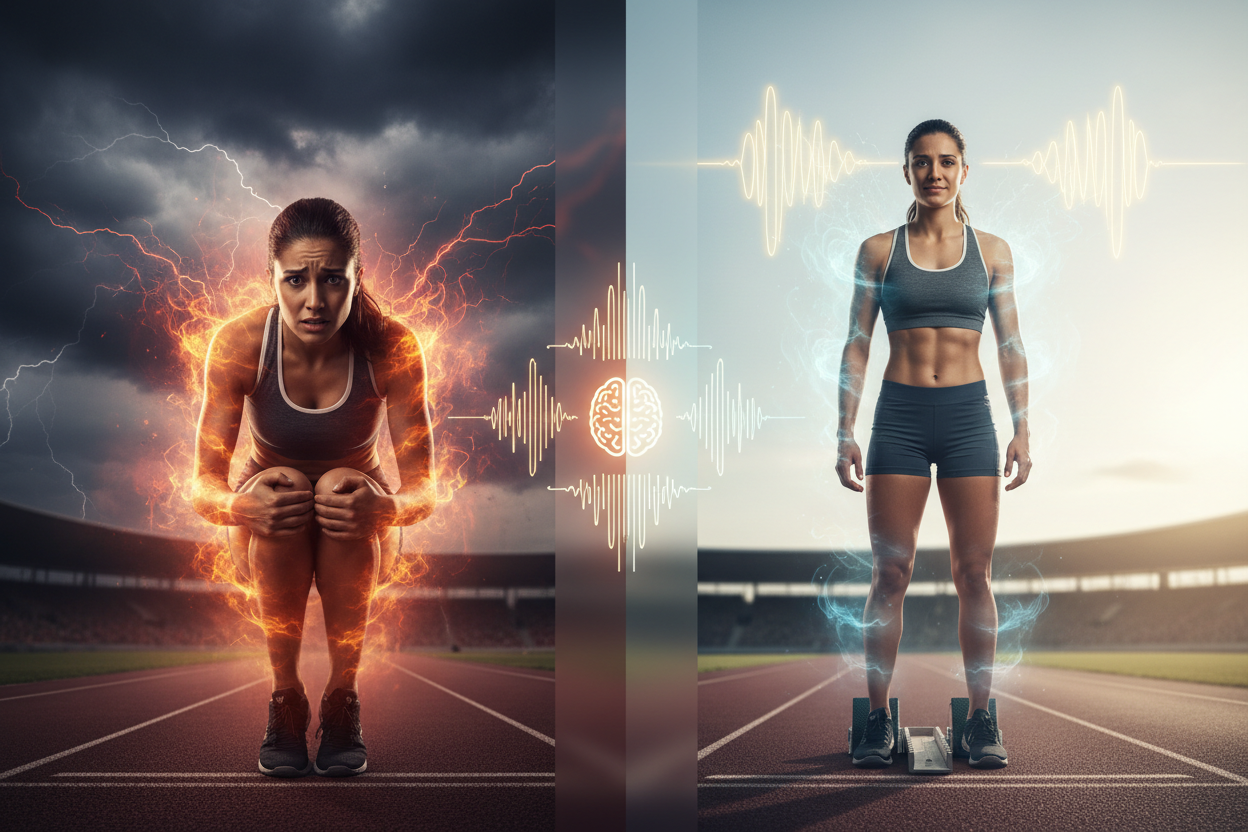
Your brain naturally produces electrical activity in the form of brainwaves, which scientists measure in Hertz (Hz). Different frequencies correspond to different states of consciousness. For instance, when you’re deeply relaxed, your brain produces alpha waves (8-12 Hz), while intense focus generates beta waves (13-30 Hz).
Through carefully designed audio or visual stimuli, brainwave entrainment can guide your brain toward specific frequency ranges. This process, known as the “frequency following response,” allows you to consciously influence your mental state rather than leaving it to chance.
The Science Behind Brainwave Entrainment for Athletes
Research in sports psychology has consistently shown that mental preparation is just as crucial as physical training. A 2019 study published in the Journal of Sports Sciences found that athletes who used brainwave entrainment techniques showed significant improvements in focus, reduced anxiety levels, and enhanced performance metrics compared to control groups.
The magic happens in your brain’s neural networks. When you listen to binaural beats or watch specific light patterns, your neurons begin to fire in sync with these external rhythms. This synchronization can shift you from an anxious beta state (associated with overthinking) to a calm-alert alpha state or even deeper theta frequencies that promote visualization and intuitive decision-making.
Professional athletes across various sports have reported remarkable results. Tennis players describe improved reaction times, golfers mention enhanced concentration during crucial putts, and runners talk about achieving that elusive “runner’s high” more consistently. The beauty of brainwave entrainment lies in its ability to create these optimal states on demand.
Types of Brainwave Entrainment Techniques
Binaural Beats are perhaps the most popular form of brainwave entrainment. By playing slightly different frequencies in each ear (for example, 440 Hz in the left ear and 450 Hz in the right), your brain perceives a third “phantom” frequency – in this case, 10 Hz. This technique requires headphones and can be incredibly effective for achieving specific mental states.
Isochronic Tones use evenly spaced pulses of sound to create entrainment effects. Unlike binaural beats, these don’t require headphones and can be more accessible for athletes who prefer not to wear ear gear during their pre-competition routine.
Light and Sound Machines combine visual and auditory stimulation through specialized devices that flash lights at specific frequencies while playing corresponding audio tones. These tend to be more intensive and can produce faster results, though they require dedicated equipment.
Guided Meditation with Entrainment incorporates brainwave entrainment into traditional meditation practices, combining the benefits of mindfulness with targeted frequency work. This approach often feels more natural to beginners and can be easily integrated into existing mental training routines.
How to Use Brainwave Entrainment Before Competition
The key to successful pre-competition brainwave entrainment lies in understanding which frequencies serve your specific needs. For most athletes, the goal is achieving a state of “relaxed alertness” – calm enough to avoid anxiety but alert enough for peak performance.
Alpha waves (8-12 Hz) are your sweet spot for pre-competition preparation. This frequency range promotes relaxation while maintaining mental clarity. Start your session in this range to calm pre-competition jitters while keeping your mind sharp and focused.
Low Beta waves (13-15 Hz) can help transition from relaxation to active focus. As competition time approaches, gradually shifting to this frequency can help you maintain the calm-alert state while preparing for action.
Begin your entrainment session 30-60 minutes before your event. Find a quiet space where you won’t be interrupted, put on comfortable headphones, and select an appropriate audio track. Close your eyes and focus on your breathing while allowing the entrainment frequencies to work their magic.
Many athletes combine brainwave entrainment with visualization techniques, mentally rehearsing their performance while their brain is in an optimal state. This combination can be particularly powerful, as the entrained brainwaves enhance your ability to create vivid, effective mental imagery.
Best Practices and Timing
Timing is everything when it comes to pre-competition brainwave entrainment. Starting too early might cause the effects to wear off, while beginning too late may not allow sufficient time for your brain to achieve the desired state.
Most athletes find success with a 15-20 minute entrainment session beginning 45-60 minutes before their event. This provides enough time for the brain to synchronize with the target frequencies while ensuring the effects remain strong during competition.
Consistency is crucial for maximizing benefits. Your brain becomes more responsive to entrainment with regular practice, so consider incorporating these techniques into your daily training routine. Even 10-15 minutes of daily brainwave entrainment can improve your baseline stress resilience and make pre-competition sessions more effective.
Pay attention to your individual response patterns. Some athletes are naturally more sensitive to entrainment effects and may need shorter sessions or different frequencies. Keep a training log noting which approaches work best for your specific sport and competition scenarios.
Common Mistakes to Avoid
One of the biggest mistakes athletes make is waiting until competition day to try brainwave entrainment for the first time. Like any performance tool, entrainment requires practice to be effective. Your brain needs time to learn how to respond to these frequencies, so start incorporating these techniques into your training routine well before important competitions.
Another common error is using frequencies that are too low or too high for pre-competition preparation. While deep theta waves (4-7 Hz) might feel relaxing, they can leave you feeling too drowsy for peak performance. Conversely, high beta frequencies (above 20 Hz) might increase anxiety rather than reduce it.
Don’t make the mistake of relying solely on brainwave entrainment while neglecting other aspects of mental preparation. These techniques work best as part of a comprehensive approach that includes proper warm-up, visualization, breathing exercises, and positive self-talk.
Finally, avoid using entrainment sessions that are too long right before competition. Extended sessions can sometimes create a “rebound effect” where your brain swings too far in the opposite direction, potentially leaving you feeling unfocused or agitated.
Equipment and Tools You’ll Need
Getting started with brainwave entrainment doesn’t require a massive investment. A good pair of headphones is essential for binaural beats – they don’t need to be expensive, but they should provide clear, balanced sound reproduction across different frequencies.
Smartphone apps offer the most accessible entry point into brainwave entrainment. Popular options include Brain.fm, Noisli, and various binaural beat generators available on both iOS and Android platforms. Many of these apps allow you to customize session length and frequency ranges to match your specific needs.
For more serious practitioners, dedicated brainwave entrainment devices like the Mind Alive David series or Kasina systems offer more sophisticated programming options and combined audio-visual stimulation. These devices typically range from $200-$500 but provide more precise control over entrainment parameters.
Consider investing in a good meditation cushion or comfortable chair for your entrainment sessions. Physical comfort enhances the effectiveness of mental training, and having a dedicated space for these practices can help establish consistent routines.
Conclusion
Brainwave entrainment offers athletes a scientifically-grounded approach to managing pre-competition nerves and optimizing mental performance. By learning to consciously influence your brainwave patterns, you can transform anxiety into focused energy and achieve more consistent peak performance states.
Remember that like any skill, mastering brainwave entrainment takes time and practice. Start incorporating these techniques into your regular training routine, experiment with different frequencies and session lengths, and pay attention to what works best for your unique needs and competition schedule.
The mental game often determines the difference between good and great athletes. By adding brainwave entrainment to your performance toolkit, you’re taking a proactive approach to mental training that can provide a significant competitive advantage. Your future self – standing confidently at that starting line with calm focus instead of jangled nerves – will thank you for making this investment in your mental performance.
Frequently Asked Questions
Q: How long does it take to see results from brainwave entrainment?
A: Many athletes notice immediate effects during their first session, such as feeling more relaxed or focused. However, the most significant benefits typically develop over 2-4 weeks of regular practice as your brain becomes more responsive to entrainment frequencies.
Q: Is brainwave entrainment safe for all athletes?
A: Brainwave entrainment is generally safe for healthy individuals. However, athletes with epilepsy, seizure disorders, or certain neurological conditions should consult with a healthcare provider before using these techniques, especially those involving flashing lights.
Q: Can I use brainwave entrainment during competition?
A: While some athletes use subtle entrainment during warm-ups, it’s generally most effective as a pre-competition preparation tool. The goal is to achieve an optimal mental state that carries over into your performance rather than relying on external stimulation during the event itself.
Q: What’s the difference between brainwave entrainment and regular meditation?
A: Traditional meditation relies on mental techniques to achieve desired states, while brainwave entrainment uses external stimuli to guide your brain toward specific frequencies. Many athletes find entrainment easier to use consistently and more effective for achieving targeted mental states quickly.
Q: Do I need expensive equipment to get started?
A: Not at all. You can begin with free smartphone apps and basic headphones. As you become more experienced and committed to the practice, you might choose to invest in specialized equipment, but it’s not necessary for getting significant benefits from brainwave entrainment techniques.