
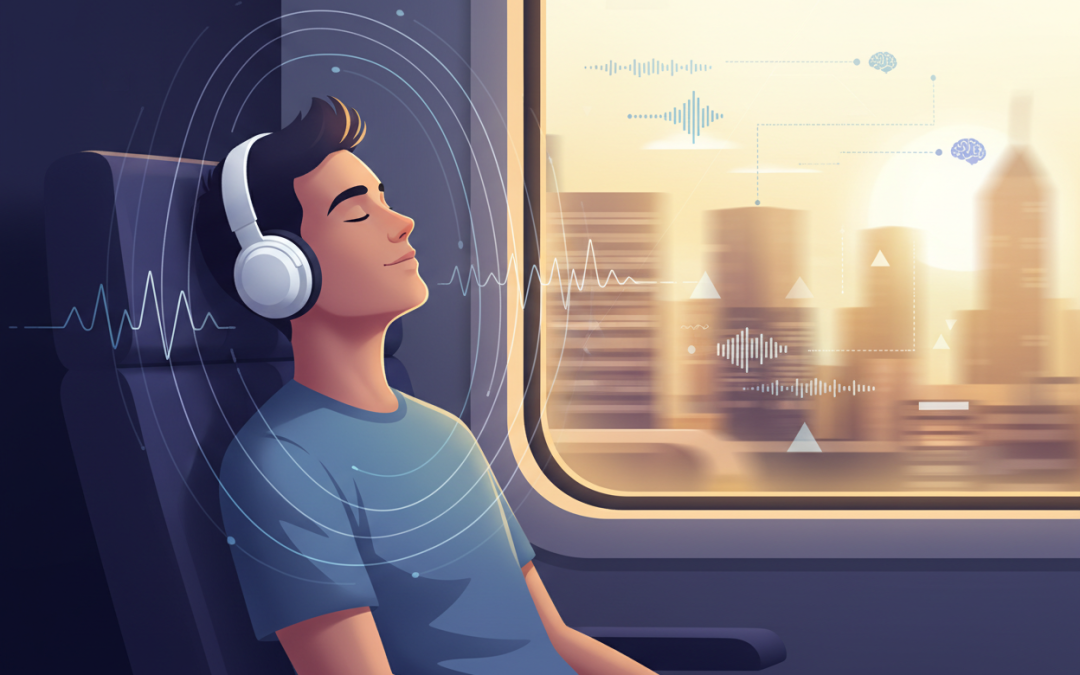
How to Use Brainwave Entrainment During Commuting: Transform Your Daily Travel Time
Table of Contents
1. What Is Brainwave Entrainment?
2. The Science Behind Brainwave Entrainment
3. Benefits of Using Brainwave Entrainment While Commuting
4. Best Types of Brainwave Entrainment for Different Commute Goals
5. How to Get Started: Equipment and Setup
6. Safety Considerations for Commuter Brainwave Entrainment
7. Creating Your Perfect Commuting Routine
8. Troubleshooting Common Issues
9. Frequently Asked Questions
Your daily commute doesn’t have to be dead time. Whether you’re spending 30 minutes on the subway or an hour stuck in traffic as a passenger, you can transform this routine journey into a powerful opportunity for mental enhancement. Brainwave entrainment offers a scientifically-backed method to optimize your brain state during travel, helping you arrive at your destination feeling more focused, relaxed, or energized than when you left.
I’ve personally discovered that my morning train ride became significantly more valuable once I started incorporating brainwave entrainment into my routine. Instead of mindlessly scrolling through social media, I now use this time to prepare my mind for the day ahead or unwind after a stressful workday.
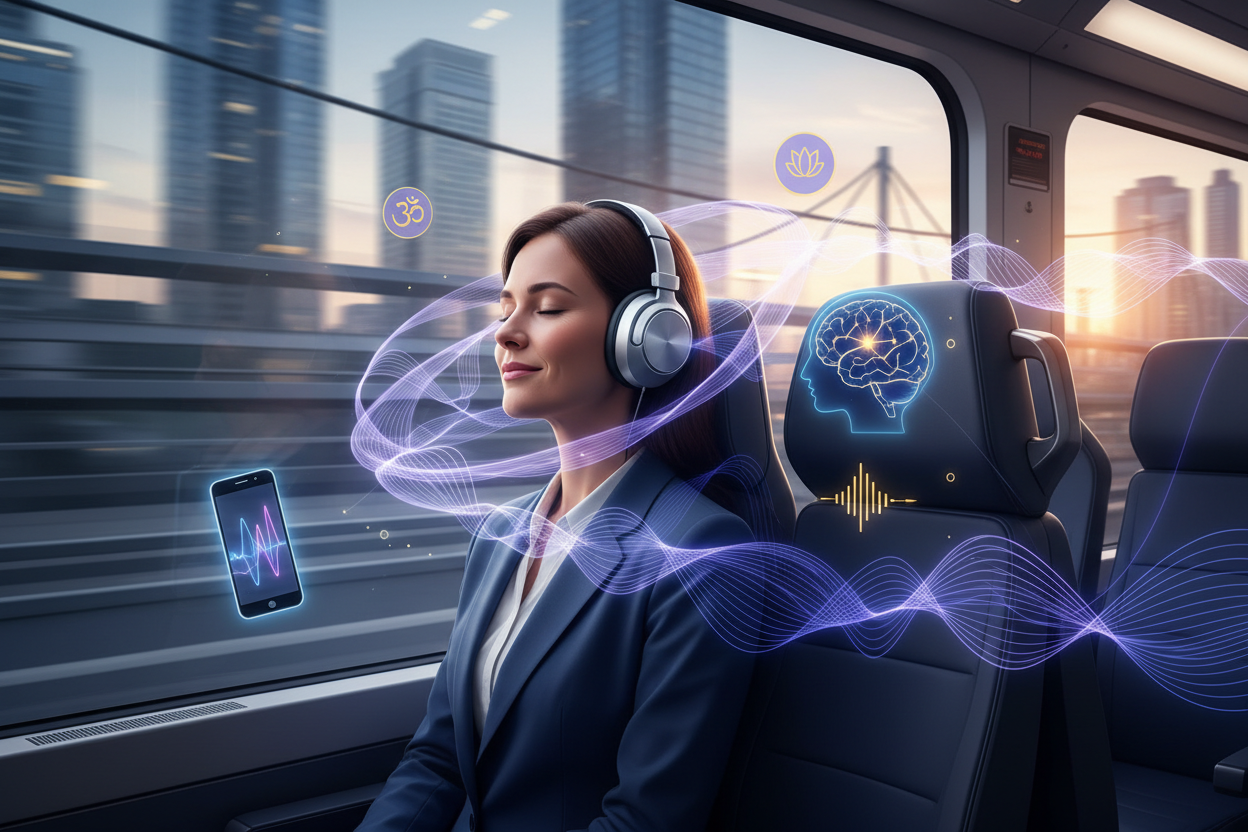
What Is Brainwave Entrainment?
Brainwave entrainment is a method of stimulating the brain to enter specific states by using rhythmic stimuli such as sound, light, or electromagnetic fields. This technique leverages the brain’s natural tendency to synchronize its electrical activity with external rhythmic patterns, a phenomenon known as the frequency following response.

Think of your brain as a sophisticated orchestra. Just as musicians tune their instruments to create harmony, brainwave entrainment helps synchronize your neural oscillations to achieve desired mental states. When you listen to specific frequencies, your brainwaves gradually align with those patterns, potentially inducing states of relaxation, focus, creativity, or alertness.
The most common forms of brainwave entrainment include binaural beats, isochronic tones, and monaural beats. Each method works slightly differently but aims to guide your brain toward optimal functioning for your specific goals.
The Science Behind Brainwave Entrainment
Research in neuroscience has shown that our brains operate at different frequencies depending on our mental state. Beta waves (13-30 Hz) are associated with active thinking and concentration, alpha waves (8-13 Hz) with relaxed awareness, theta waves (4-8 Hz) with deep meditation and creativity, and delta waves (0.5-4 Hz) with deep sleep.
Studies published in journals like Neuroscience Letters and the Journal of Neurotherapy have demonstrated that brainwave entrainment can effectively influence these neural patterns. A 2017 study found that participants who used binaural beats showed measurable changes in their EEG patterns, with corresponding improvements in attention and mood.
The beauty of this science lies in its accessibility. You don’t need expensive equipment or years of meditation practice to benefit from brainwave entrainment. Your smartphone and a decent pair of headphones are often sufficient to begin experiencing these neurological benefits during your daily commute.
Benefits of Using Brainwave Entrainment While Commuting
Incorporating brainwave entrainment into your commute offers numerous advantages that extend far beyond the journey itself. Many commuters report feeling more prepared for their workday when they use morning sessions to enhance focus and alertness.
Stress reduction represents one of the most significant benefits. Commuting, especially in heavy traffic or crowded public transportation, naturally elevates stress hormones. Brainwave entrainment can counteract this by promoting relaxation and helping maintain emotional equilibrium throughout your journey.
Time optimization becomes another major advantage. Instead of viewing your commute as lost time, you can use it productively for mental conditioning. Whether you’re preparing for an important presentation or decompressing after a challenging day, brainwave entrainment transforms travel time into valuable personal development opportunities.
Many users also experience improved sleep quality when they use specific frequencies during evening commutes. By beginning the relaxation process during your journey home, you create a smoother transition into your evening routine and better prepare your mind for restorative sleep.
Best Types of Brainwave Entrainment for Different Commute Goals
Morning commuters seeking enhanced focus and productivity should consider beta wave entrainment in the 15-20 Hz range. These frequencies promote alertness and cognitive performance, helping you arrive at work mentally sharp and ready to tackle challenging tasks.
For stress management during particularly challenging commutes, alpha wave entrainment (8-12 Hz) provides excellent results. This frequency range promotes calm alertness while maintaining enough awareness for safe travel. Many commuters find this particularly helpful when dealing with delays or crowded conditions.
Creative professionals often benefit from theta wave entrainment (4-8 Hz) during longer commutes. This frequency range is associated with enhanced creativity, problem-solving abilities, and innovative thinking. Use this when you want to arrive at work with fresh perspectives on ongoing projects.
Evening commuters looking to decompress and transition from work mode can benefit from a combination of alpha and theta frequencies. Starting with alpha waves and gradually moving toward theta creates a natural progression toward relaxation and mental clarity.
How to Get Started: Equipment and Setup
Beginning your brainwave entrainment journey requires minimal investment in equipment. High-quality headphones or earbuds are essential, as they ensure proper delivery of the specific frequencies needed for effective entrainment. While expensive audiophile equipment isn’t necessary, avoid extremely cheap options that might distort the crucial frequency patterns.
Your smartphone serves as an excellent playback device, with numerous apps available for brainwave entrainment. Popular options include Brain.fm, Noisli, and various binaural beat generators. Many of these apps offer free trials, allowing you to experiment with different approaches before committing to a subscription.
Consider your commuting environment when selecting content. If you’re on noisy public transportation, you might need noise-canceling headphones or apps that incorporate background sounds to mask environmental distractions. For quieter environments like carpools or less crowded trains, standard headphones often suffice.
Start with sessions lasting 10-15 minutes to allow your brain time to adjust to the new stimuli. Gradually increase session length as you become more comfortable with the practice and better understand how different frequencies affect your mental state.
Safety Considerations for Commuter Brainwave Entrainment
Safety must remain your top priority when using brainwave entrainment during commutes. Never use these techniques while driving, as altered brain states can impair reaction times and decision-making abilities. Brainwave entrainment is strictly for passengers only.
Be aware of your surroundings, especially when using public transportation. While brainwave entrainment can be deeply relaxing, maintain enough awareness to notice your stop, respond to announcements, and stay alert to potential safety concerns.
Individuals with epilepsy or other neurological conditions should consult healthcare providers before using brainwave entrainment. Certain frequencies might trigger seizures or other adverse reactions in susceptible individuals.
Start conservatively with volume levels and frequency intensities. Some people experience headaches or dizziness when first using brainwave entrainment, particularly with binaural beats. If you experience any discomfort, reduce the intensity or discontinue use.
Creating Your Perfect Commuting Routine
Developing an effective brainwave entrainment routine requires understanding your personal goals and commuting patterns. Begin by identifying what you want to achieve: increased focus, stress reduction, creative enhancement, or relaxation.
Morning routines might start with gentle alpha waves for the first few minutes of your commute, gradually transitioning to beta frequencies as you approach your destination. This progression helps ease your brain from its natural morning state into heightened alertness for the workday.
Evening routines often work best in reverse, beginning with whatever frequency matches your current mental state and gradually moving toward more relaxing alpha or theta waves. This approach helps process the day’s stress while preparing your mind for evening activities and eventual sleep.
Consistency proves crucial for maximizing benefits. Try to use brainwave entrainment at the same time during each commute, as your brain will begin anticipating and responding more readily to the routine. Track your experiences in a simple journal to identify which frequencies and timing work best for your specific needs.
Troubleshooting Common Issues
Many beginners experience difficulty noticing immediate effects from brainwave entrainment. This is completely normal, as the brain needs time to develop sensitivity to these subtle frequency changes. Continue regular practice for at least two weeks before evaluating effectiveness.
If you find certain frequencies uncomfortable or ineffective, experiment with different types of entrainment. Some people respond better to isochronic tones than binaural beats, while others prefer nature sounds combined with embedded frequencies.
Environmental noise can interfere with brainwave entrainment effectiveness. If your commute involves significant background noise, consider apps that layer entrainment frequencies beneath masking sounds like rain, ocean waves, or white noise.
Timing issues often arise when commute lengths vary unpredictably. Prepare sessions of different lengths, or use apps that allow you to pause and resume sessions. Some advanced apps even adjust automatically based on your typical commute patterns.
Conclusion
Transforming your commute through brainwave entrainment represents a simple yet powerful way to enhance your daily life. By understanding the science behind neural synchronization and applying appropriate techniques safely, you can turn routine travel time into valuable opportunities for mental optimization.
The key lies in starting slowly, maintaining consistency, and adjusting your approach based on personal experience and goals. Whether you’re seeking enhanced productivity, stress relief, or creative inspiration, brainwave entrainment offers a scientifically-supported method for achieving these outcomes during time you’re already spending in transit.
Remember that individual responses vary, and finding your optimal routine may take some experimentation. Be patient with the process, prioritize safety, and enjoy discovering how this fascinating technology can enhance your daily journey and overall well-being.
Frequently Asked Questions
Can I use brainwave entrainment while driving?
No, never use brainwave entrainment while driving. These techniques can alter your mental state and potentially impair your reaction times and decision-making abilities, creating dangerous driving conditions.
How long does it take to notice effects from brainwave entrainment?
Some people notice subtle effects within the first few sessions, while others may need 1-2 weeks of consistent use. The brain needs time to develop sensitivity to frequency patterns, so patience and consistency are important.
Do I need expensive headphones for brainwave entrainment?
While high-quality headphones improve the experience, expensive audiophile equipment isn’t necessary. Focus on headphones that provide clear sound reproduction and comfortable fit for your commute duration.
Is brainwave entrainment safe for everyone?
Most people can safely use brainwave entrainment, but individuals with epilepsy, seizure disorders, or other neurological conditions should consult healthcare providers before starting. Pregnant women should also seek medical advice first.
Can I use brainwave entrainment on public transportation?
Yes, public transportation is an excellent environment for brainwave entrainment as a passenger. Just maintain enough awareness of your surroundings for safety and to notice your stop.
What’s the difference between binaural beats and isochronic tones?
Binaural beats require stereo headphones and present different frequencies to each ear, while isochronic tones use rhythmic pulses that can work through speakers or mono audio. Some people respond better to one type than the other.