
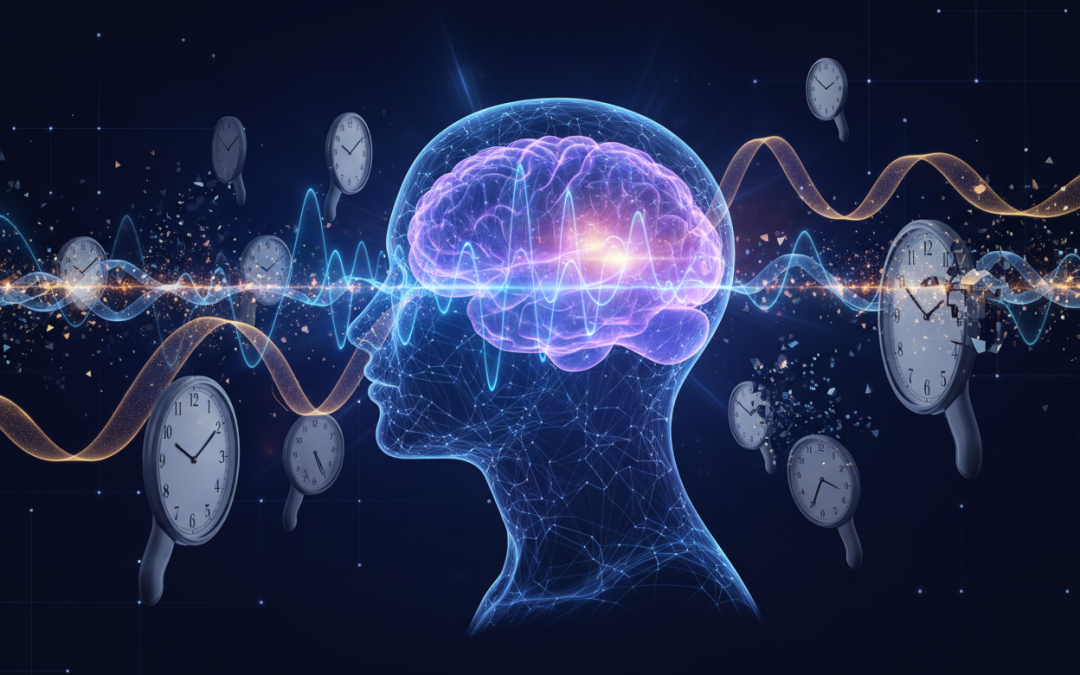
How Brainwave Entrainment Affects Your Sense of Time Perception
Table of Contents
1. Introduction to Brainwave Entrainment and Time Perception
2. Understanding the Science Behind Brainwave Entrainment
3. The Connection Between Brain States and Time Awareness
4. How Different Brainwave Frequencies Alter Time Perception
5. Real-World Applications and Personal Experiences
6. The Neurological Mechanisms at Play
7. Practical Ways to Experience Time Dilation Through Entrainment
8. Conclusion
9. Frequently Asked Questions
Introduction to Brainwave Entrainment and Time Perception
Have you ever noticed how time seems to crawl during a boring meeting, yet flies by when you’re deeply absorbed in something you love? This fascinating phenomenon becomes even more intriguing when we explore how brainwave entrainment can deliberately manipulate our perception of time’s passage.
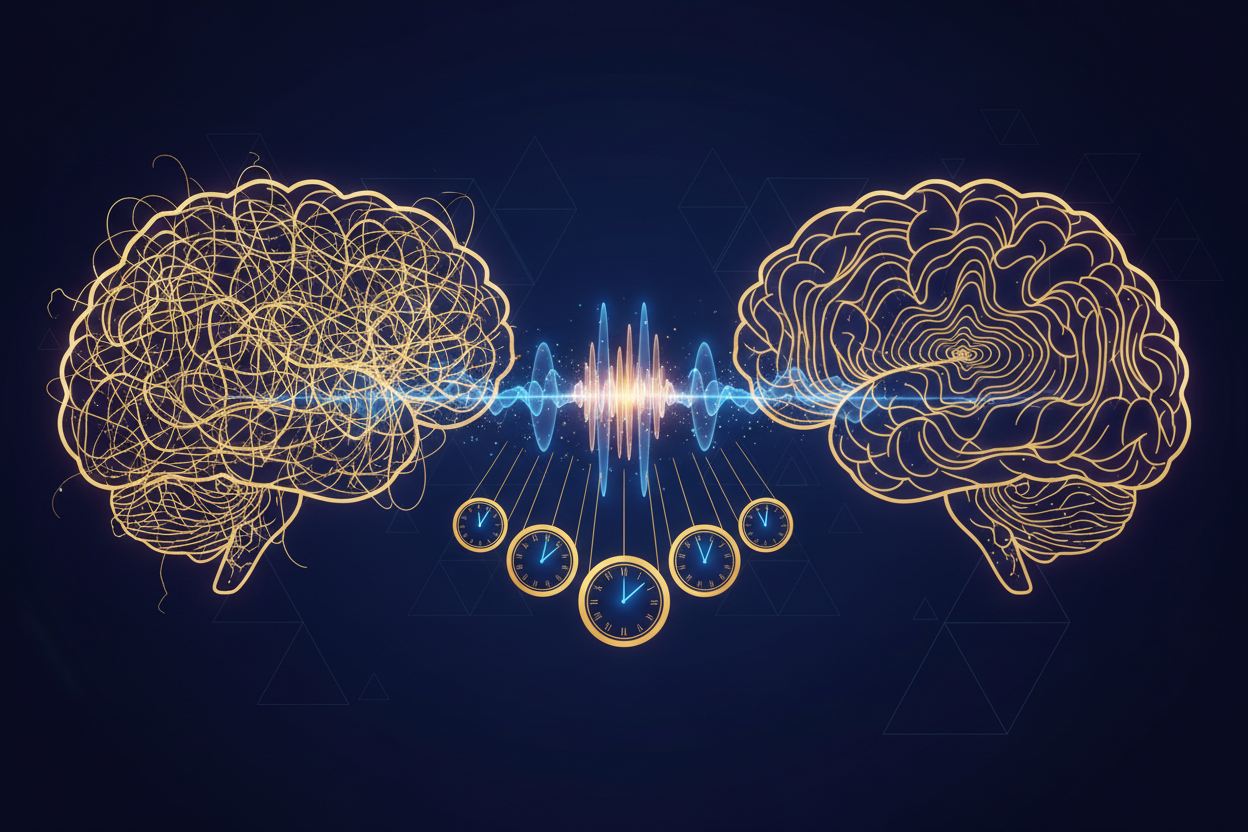
Brainwave entrainment, the process of synchronizing our brain’s electrical activity to external rhythmic stimuli, has been quietly revolutionizing how we understand consciousness and temporal awareness. When we expose our brains to specific frequencies through audio, visual, or electromagnetic means, something remarkable happens – our subjective experience of time begins to shift in predictable ways.
This isn’t just theoretical neuroscience anymore. Thousands of people worldwide are discovering that by influencing their brainwave patterns, they can stretch moments of creativity, compress tedious waiting periods, or enter flow states where hours feel like minutes. The implications stretch far beyond mere curiosity, touching everything from meditation practices to productivity enhancement and therapeutic applications.
Understanding the Science Behind Brainwave Entrainment
Our brains naturally operate through rhythmic electrical patterns, much like a complex orchestra where different sections play at varying tempos. These brainwave frequencies, measured in Hertz (Hz), correspond to different states of consciousness and, as research increasingly shows, different experiences of time itself.
The entrainment process works through a phenomenon called the “frequency following response.” When your brain encounters a consistent external rhythm – whether it’s binaural beats, flashing lights, or electromagnetic pulses – it gradually begins to synchronize its own electrical activity to match that frequency. It’s similar to how pendulum clocks in the same room eventually swing in unison, except we’re dealing with the delicate neural networks that shape our reality.
What makes this particularly fascinating is that time perception isn’t controlled by a single brain region. Instead, it emerges from the complex interplay between multiple neural networks, including the prefrontal cortex, cerebellum, and various limbic structures. When brainwave entrainment influences these networks simultaneously, it creates a cascade of changes that can dramatically alter how we experience temporal flow.
The Connection Between Brain States and Time Awareness
Think about the last time you were completely absorbed in a creative project or lost in a great book. That sense of time disappearing isn’t accidental – it corresponds to specific brainwave patterns that naturally occur during deep focus states. When we understand these patterns, we can begin to recreate them intentionally through entrainment techniques.
Different levels of consciousness produce distinctly different time experiences. During high-stress situations, when our brains are flooded with fast beta waves, seconds can feel like minutes as our temporal resolution increases. Conversely, in deeply relaxed theta states, hours might pass unnoticed as our awareness shifts away from linear time tracking toward more expansive, present-moment consciousness.
Research has shown that our brains contain what neuroscientists call “internal clocks” – neural mechanisms that help us estimate durations and maintain temporal awareness. These biological timepieces are surprisingly malleable, influenced by everything from neurotransmitter levels to the specific frequency patterns of our brainwaves. This malleability is precisely what makes brainwave entrainment such a powerful tool for time perception modification.
How Different Brainwave Frequencies Alter Time Perception
Each brainwave frequency band creates its own unique temporal landscape. Understanding these relationships helps explain why certain entrainment sessions can make time seem to stretch or compress in specific ways.
Beta waves (13-30 Hz) typically correlate with our normal waking consciousness and linear time awareness. However, when beta activity becomes excessive, time perception often becomes hyper-acute. Many people report that high-beta entrainment sessions make them acutely aware of each passing moment, sometimes to an uncomfortable degree. This heightened temporal sensitivity can be useful for tasks requiring precise timing but may feel oppressive during relaxation attempts.
Alpha waves (8-13 Hz) create what many describe as a “timeless” quality of awareness. During alpha entrainment, people frequently report losing track of time in the most pleasant way possible. This frequency range seems to quiet the brain’s internal timekeeping mechanisms while maintaining enough alertness for conscious experience. It’s no wonder that many meditation traditions naturally cultivate alpha states.
Theta waves (4-8 Hz) produce perhaps the most dramatic alterations in time perception. During theta entrainment, minutes can feel like hours, or conversely, extended periods might pass completely unnoticed. This frequency band is associated with deep meditation, REM sleep, and profound creative insights – all states where conventional time awareness dissolves.
Delta waves (0.5-4 Hz), while primarily associated with deep sleep, can create interesting time distortions when experienced consciously through entrainment. Some practitioners report that delta sessions feel simultaneously eternal and instantaneous, as if they’ve accessed a realm where time operates by entirely different rules.
Real-World Applications and Personal Experiences
The practical applications of time perception manipulation through brainwave entrainment are surprisingly diverse. Students use alpha entrainment to make study sessions feel less tedious, while creative professionals employ theta frequencies to access extended periods of inspiration without the usual mental fatigue.
I’ve personally experimented with various entrainment protocols and consistently found that 10 Hz alpha entrainment makes routine tasks feel effortless and timeless. What normally feels like a tedious hour of administrative work transforms into a flowing, almost meditative experience where productivity increases while stress decreases.
Healthcare practitioners are beginning to explore these techniques for pain management, recognizing that chronic pain often involves distorted time perception. When patients can shift into alpha or theta states through entrainment, they frequently report that painful periods feel shorter and more manageable.
Athletes and performers use entrainment to access flow states where peak performance feels effortless and time seems to slow down during critical moments. Professional musicians, in particular, have found that pre-performance entrainment sessions help them enter that coveted zone where technical complexity becomes intuitive and stage time passes in a blur of focused excellence.
The Neurological Mechanisms at Play
The neurological basis for these time perception changes involves several interconnected brain systems. The suprachiasmatic nucleus, our master biological clock, maintains circadian rhythms but has limited influence over moment-to-moment time perception. Instead, that function relies heavily on dopamine pathways, particularly in the basal ganglia, which act as internal interval timers.
When brainwave entrainment influences these dopaminergic circuits, it directly affects how we estimate durations and experience temporal flow. Higher frequency entrainment often increases dopamine activity, leading to more precise but sometimes anxious time awareness. Lower frequencies tend to reduce this activity, creating the expanded, flowing time sense characteristic of meditative states.
The prefrontal cortex also plays a crucial role, particularly in what researchers call “prospective timing” – our ability to estimate how much time will be needed for future tasks. Entrainment that enhances prefrontal activity often improves time estimation accuracy, while protocols that quiet this region can create the timeless absorption states valued by meditators and artists.
Recent neuroimaging studies have revealed that different aspects of time perception activate distinct neural networks. Duration estimation primarily involves the right hemisphere, while sequence processing relies more heavily on left-brain structures. Effective entrainment protocols often influence both hemispheres, creating comprehensive shifts in temporal experience.
Practical Ways to Experience Time Dilation Through Entrainment
Getting started with brainwave entrainment for time perception modification doesn’t require expensive equipment or extensive training. Many effective techniques use simple audio tools that you probably already have access to.
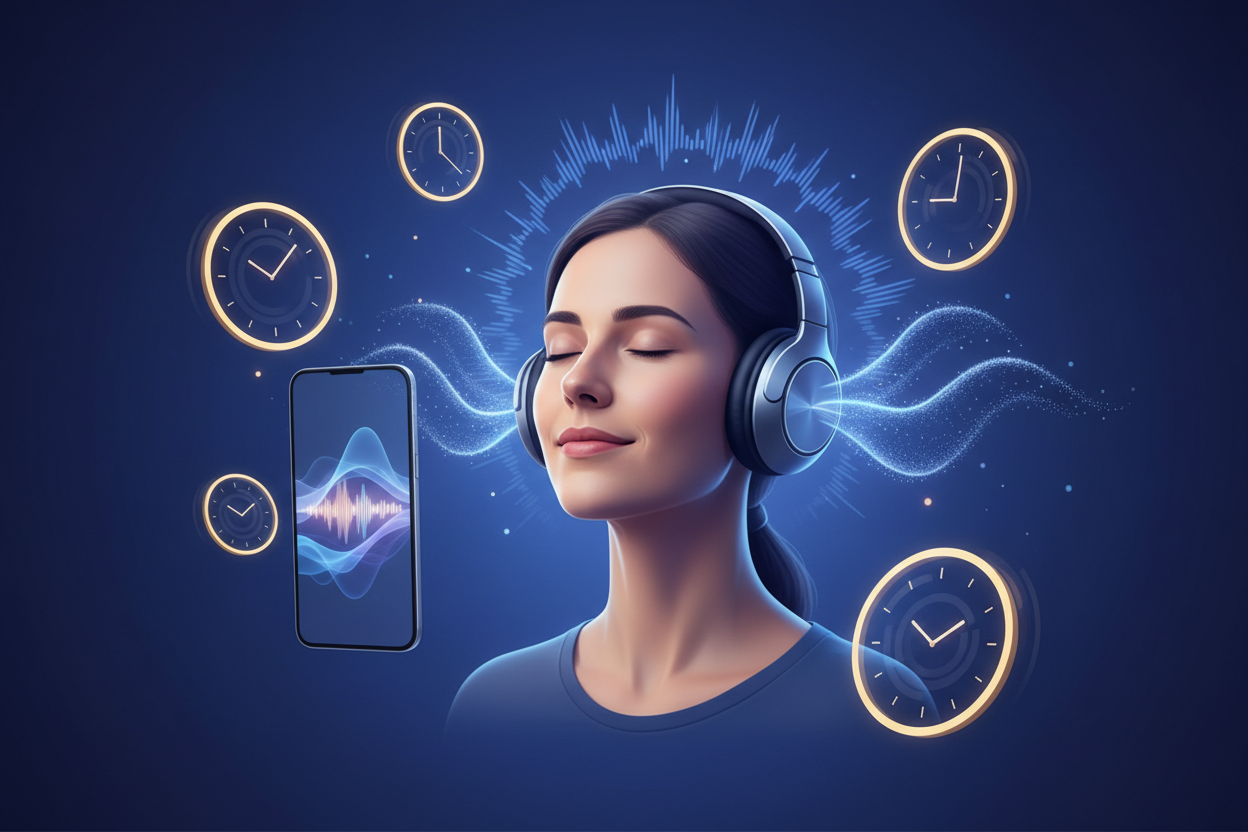
Binaural beats represent the most accessible entry point. By playing slightly different frequencies in each ear (for example, 200 Hz in the left ear and 210 Hz in the right), your brain perceives a 10 Hz “beat” that can entrain your brainwaves to alpha frequency. Start with 15-20 minute sessions using quality headphones in a quiet environment.
Isochronic tones offer another effective approach, using rhythmic pulses rather than frequency differences to create entrainment. These work well for people who find binaural beats ineffective or uncomfortable. Many practitioners prefer isochronic tones for theta entrainment, as the distinct pulses seem to facilitate deeper states more reliably.
Light-based entrainment, using LED goggles or smartphone apps that create rhythmic flashing, can be particularly powerful for time perception work. The visual cortex has strong connections to temporal processing regions, making light entrainment an effective way to influence time awareness. However, people with photosensitivity or epilepsy should avoid these techniques.
For the most profound time perception effects, consider combining multiple entrainment modalities. Audio-visual entrainment devices that synchronize sound and light can create deeper, more stable entrainment than either modality alone. Many users report that these combined approaches produce the most dramatic and lasting changes in time perception.
Conclusion
The relationship between brainwave entrainment and time perception opens fascinating doorways into the malleable nature of human consciousness. What we once considered a fixed aspect of reality – the steady march of time – reveals itself as surprisingly flexible when we learn to influence our brain’s electrical patterns.
This isn’t merely an academic curiosity. As our understanding deepens, we’re discovering practical applications that can enhance productivity, reduce stress, improve creative output, and even help manage pain and anxiety. The ability to consciously shift our temporal experience represents a powerful tool for improving quality of life across numerous domains.
The field continues evolving rapidly, with new research regularly revealing additional mechanisms and applications. As entrainment technology becomes more sophisticated and accessible, we can expect even more precise control over these temporal experiences. Whether you’re seeking to enhance meditation practice, improve work efficiency, or simply explore the fascinating frontiers of consciousness, brainwave entrainment offers a scientifically-grounded path toward mastering your subjective experience of time.
The next time you find yourself wishing you could slow down a precious moment or speed through a tedious task, remember that your brain’s electrical patterns hold the key. With the right knowledge and tools, you can begin to shape time itself – at least as your consciousness experiences it.
Frequently Asked Questions
How long does it take to notice changes in time perception with brainwave entrainment?
Most people begin noticing subtle shifts within the first few sessions, typically within 10-15 minutes of starting an entrainment protocol. However, more dramatic and lasting changes usually develop over several weeks of regular practice. Individual sensitivity varies considerably, with some people experiencing immediate effects while others need more time to develop responsiveness.
Are there any risks or side effects to using brainwave entrainment for time perception modification?
Brainwave entrainment is generally safe for healthy individuals when used appropriately. However, people with epilepsy, seizure disorders, or certain psychiatric conditions should consult healthcare providers before trying these techniques. Some users report mild headaches or disorientation initially, which typically resolve as the brain adapts to the practice.
Can brainwave entrainment permanently change how I perceive time?
Regular practice can create lasting improvements in time awareness and management skills, but the dramatic time distortions typically occur only during and shortly after entrainment sessions. Think of it like physical exercise – consistent practice builds capacity and skill, but you need ongoing engagement to maintain peak effects.
Which brainwave frequency is best for making time feel like it’s moving faster?
Alpha frequencies (8-13 Hz) are generally most effective for creating the “flow state” where time passes quickly without notice. Many people find 10 Hz particularly effective for making routine tasks feel effortless and time-efficient. Beta frequencies can make you more aware of time’s passage but don’t typically create the desired time-compression effect.
Do I need special equipment to try brainwave entrainment for time perception?
Basic binaural beat applications work with any decent pair of headphones and a smartphone or computer. While specialized entrainment devices can be more effective, they’re not necessary for beginners. Many free apps and audio tracks are available online, making this an accessible practice for anyone interested in exploring time perception modification.