
Combining Brainwave Entrainment with Yoga and Mindfulness: A Revolutionary Approach to Mental Wellness
Table of Contents
1. Introduction to Brainwave Entrainment and Mind-Body Practices
2. Understanding Brainwave Entrainment Technology
3. The Science Behind Yoga and Mindfulness
4. How Brainwave Entrainment Enhances Yoga Practice
5. Integrating Mindfulness with Audio Brainwave Technology
6. Practical Applications and Techniques
7. Benefits of the Combined Approach
8. Getting Started: A Beginner’s Guide
9. Frequently Asked Questions
10. Conclusion
Introduction to Brainwave Entrainment and Mind-Body Practices
In our fast-paced world, finding effective ways to achieve deep relaxation and mental clarity has become more crucial than ever. While ancient practices like yoga and mindfulness have stood the test of time, modern technology offers fascinating new possibilities to enhance these traditional approaches. One particularly intriguing development is the combination of brainwave entrainment with yoga and mindfulness practices.
This innovative fusion represents a meeting point between cutting-edge neuroscience and time-tested wisdom. By understanding how our brains respond to specific audio frequencies, we can potentially amplify the benefits of our meditation and yoga sessions, creating a more profound and accessible path to inner peace and mental wellness.
Whether you’re a seasoned practitioner looking to deepen your practice or someone just beginning their journey into mindfulness, this comprehensive guide will explore how brainwave entrainment can transform your approach to mental and physical well-being.
Understanding Brainwave Entrainment Technology
Brainwave entrainment, also known as neural entrainment, is a fascinating phenomenon where the brain naturally synchronizes its electrical activity to external rhythmic stimuli. This process occurs when we expose ourselves to specific frequencies through audio tones, visual patterns, or tactile vibrations.
Our brains naturally produce different types of brainwaves depending on our mental state. Delta waves (0.5-4 Hz) occur during deep sleep, theta waves (4-8 Hz) are associated with deep meditation and creativity, alpha waves (8-13 Hz) represent relaxed awareness, and beta waves (13-30 Hz) dominate during active, focused thinking. Gamma waves (30+ Hz) are linked to heightened awareness and cognitive processing.
The technology behind brainwave entrainment typically uses binaural beats, where slightly different frequencies are played in each ear, causing the brain to perceive a third frequency that equals the mathematical difference between the two. For instance, if one ear receives 440 Hz and the other 444 Hz, the brain perceives a 4 Hz theta wave, potentially inducing a meditative state.
Research has shown that this synchronization effect can help guide the brain into specific states of consciousness, making it easier to achieve deep relaxation, enhanced focus, or improved sleep quality. The beauty of this technology lies in its ability to provide a gentle, non-invasive pathway to altered states of consciousness that might otherwise require years of meditation practice to achieve.
The Science Behind Yoga and Mindfulness
Yoga and mindfulness practices have been extensively studied by neuroscientists and psychologists, revealing remarkable effects on brain structure and function. Regular yoga practice has been shown to increase gray matter density in areas associated with learning, memory, and emotional regulation while reducing activity in the amygdala, the brain’s fear center.
Mindfulness meditation creates similar neuroplastic changes, strengthening the prefrontal cortex responsible for executive function and attention regulation. These practices also activate the parasympathetic nervous system, triggering the body’s relaxation response and reducing stress hormones like cortisol.
The combination of physical movement, breath control, and mental focus in yoga creates a unique neurological environment. The synchronized breathing patterns naturally alter brainwave activity, while the physical postures require present-moment awareness that mirrors the goals of mindfulness meditation.
What’s particularly interesting is how these ancient practices naturally encourage the brain states that brainwave entrainment technology aims to achieve. This natural synergy suggests that combining these approaches could create a more powerful and efficient pathway to mental wellness than using either method alone.
How Brainwave Entrainment Enhances Yoga Practice
When we integrate brainwave entrainment technology with yoga practice, we create an environment where the mind can more easily settle into the desired state for each phase of the session. During the initial warm-up and flowing sequences, alpha wave entrainment can help practitioners maintain relaxed focus while staying present with their movements.
For deeper poses and longer holds, theta wave frequencies can facilitate the meditative aspect of yoga, helping practitioners access that space between effort and ease that yoga philosophy describes as the sweet spot of practice. Many yoga instructors have noticed that students using brainwave entrainment audio report feeling more connected to their breath and less distracted by wandering thoughts.
The technology can also support the natural progression of a yoga session. Beginning with beta frequencies during warm-up movements, gradually shifting to alpha during flowing sequences, and finally settling into theta or even delta frequencies during savasana (final relaxation) creates a guided journey for the nervous system.
Personal experience and student feedback suggest that this combination can be particularly beneficial for those who struggle with the mental aspects of yoga. While the physical postures might come naturally, the meditative component often proves challenging for beginners. Brainwave entrainment provides a gentle scaffold that supports the development of these mental skills.
Integrating Mindfulness with Audio Brainwave Technology
Mindfulness meditation, with its emphasis on present-moment awareness and non-judgmental observation, pairs beautifully with brainwave entrainment technology. The audio frequencies can help quiet the mental chatter that often interferes with meditation practice, creating a more conducive environment for developing mindful awareness.
One effective approach is to use theta wave entrainment during sitting meditation sessions. The 4-8 Hz frequency range naturally encourages the relaxed yet alert state that experienced meditators cultivate. This can be particularly helpful for beginners who struggle with restlessness or excessive thinking during meditation.
For walking meditation or mindful movement practices, alpha wave frequencies can maintain the balance between relaxation and awareness needed for these activities. The gentle guidance of the audio helps practitioners stay present with their sensory experience rather than getting caught up in mental narratives.
Advanced practitioners often find that brainwave entrainment can help them access deeper states of consciousness more quickly than traditional methods alone. However, it’s important to view the technology as a support tool rather than a replacement for developing natural mindfulness skills.
Practical Applications and Techniques
Getting started with combining brainwave entrainment and mind-body practices doesn’t require expensive equipment or complicated setups. A good pair of stereo headphones and access to quality brainwave entrainment audio tracks are the basic requirements.
For yoga practice, consider creating a playlist that matches the natural arc of your session. Begin with 10-12 Hz alpha waves during warm-up, maintain this frequency through flowing sequences, then transition to 6-8 Hz theta waves for deeper poses and meditation. End with 4-6 Hz theta or even 2-4 Hz delta waves during final relaxation.
Timing is crucial when integrating these technologies. Allow at least 5-10 minutes for your brain to begin synchronizing with the audio frequencies. This means starting the brainwave entrainment audio before beginning your physical practice or meditation session.
Volume should be kept at a comfortable level where the tones are clearly audible but not overwhelming. The goal is to create a subtle background that supports your practice without becoming a distraction. Many practitioners find that nature sounds or ambient music layered with the binaural beats creates a more pleasant listening experience.
Experiment with different frequencies to find what works best for your individual nervous system. Some people respond more readily to certain frequency ranges, and what works for one person may not be optimal for another. Keep a practice journal to track which combinations feel most effective.
Benefits of the Combined Approach
The integration of brainwave entrainment with yoga and mindfulness offers several compelling advantages over practicing these modalities separately. First and foremost, many practitioners report achieving deeper states of relaxation and meditation more quickly than with traditional methods alone.
Stress reduction appears to be enhanced when these approaches are combined. The physiological relaxation response triggered by yoga and mindfulness is amplified by the brainwave entrainment, creating a more profound shift in the nervous system. This can be particularly beneficial for individuals dealing with chronic stress, anxiety, or sleep disorders.
Focus and concentration often improve significantly with this combined approach. The audio guidance helps anchor attention, reducing the mental wandering that commonly interferes with meditation and yoga practice. Students frequently report feeling more present and engaged throughout their sessions.
For those struggling with consistency in their practice, brainwave entrainment can provide additional motivation. The immediate and noticeable effects of the audio technology can help maintain interest and commitment to regular practice, especially during the initial stages when traditional benefits may take longer to manifest.
Sleep quality often improves as a secondary benefit. Regular practice of this combined approach can help regulate circadian rhythms and improve the ability to transition into restful sleep. Many practitioners use delta wave entrainment specifically for bedtime meditation sessions.
Getting Started: A Beginner’s Guide
If you’re new to either brainwave entrainment or mind-body practices, starting slowly is essential. Begin with short 10-15 minute sessions using alpha wave frequencies (8-12 Hz) during simple breathing exercises or gentle stretching. This allows your nervous system to gradually adapt to the technology while building a foundation for more advanced practices.
Choose high-quality brainwave entrainment audio from reputable sources. Look for tracks that use pure binaural beats or isochronic tones rather than complex musical compositions that might interfere with the entrainment effect. Many apps and websites offer free samples that allow you to test different styles and frequencies.
Create a consistent practice environment free from distractions. While brainwave entrainment can help with focus, external interruptions can still disrupt the process. Turn off phones, inform family members of your practice time, and choose a space where you feel comfortable and safe.
Start with basic yoga poses or simple mindfulness exercises before progressing to more complex sequences. The combination of new technology with challenging physical or mental practices can be overwhelming initially. Allow yourself time to become comfortable with each element before combining them.
Listen to your body and mind throughout the process. Some people experience mild headaches or unusual sensations when first using brainwave entrainment. These typically subside as the nervous system adapts, but it’s important to proceed gradually and discontinue use if any concerning symptoms persist.
Frequently Asked Questions
Is brainwave entrainment safe to use with yoga and meditation?
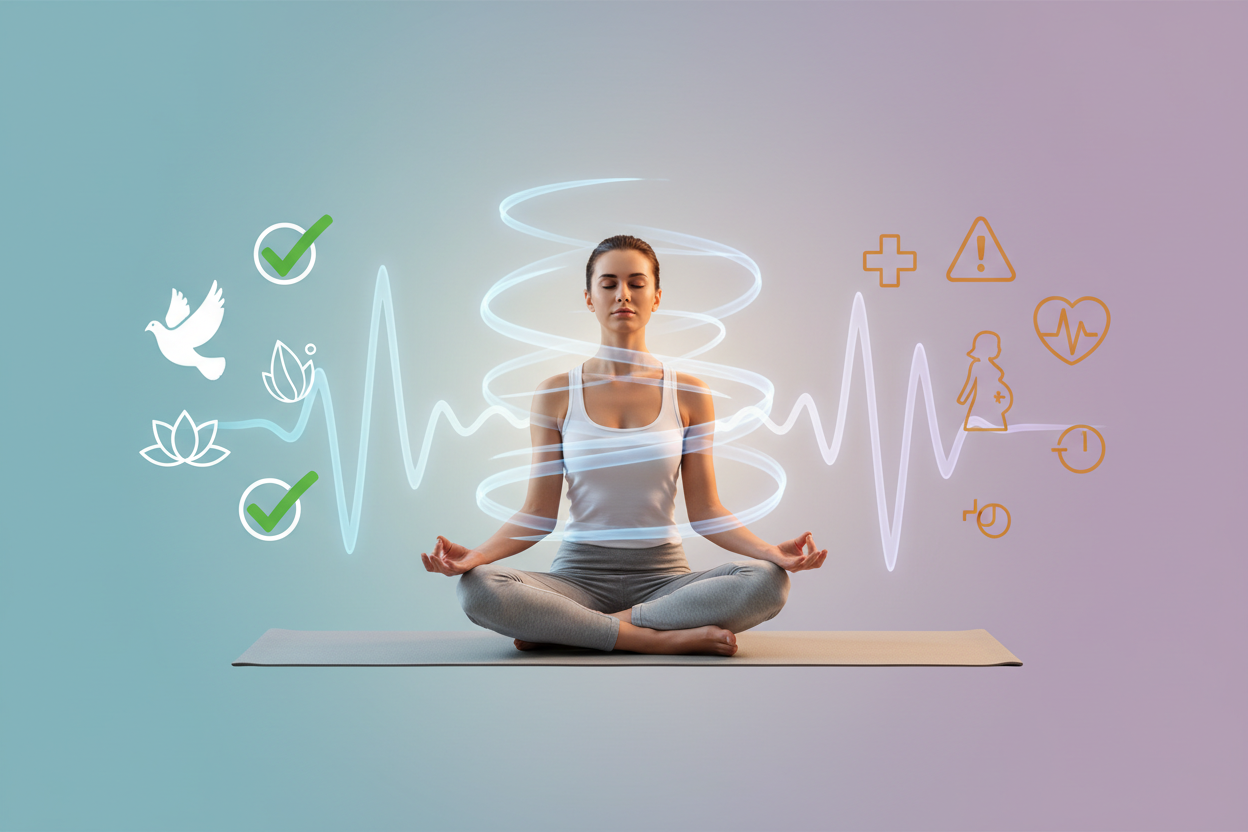
Yes, brainwave entrainment is generally considered safe for healthy individuals when used appropriately. However, people with epilepsy, seizure disorders, or certain neurological conditions should consult with a healthcare provider before use. Pregnant women and individuals with pacemakers should also seek medical advice before beginning brainwave entrainment practices.
How long does it take to notice benefits from combining these practices?
Many people report immediate effects such as increased relaxation and improved focus during their first session. However, the cumulative benefits of regular practice, such as reduced anxiety and better sleep, typically develop over several weeks of consistent use. Individual responses vary significantly based on factors like previous meditation experience and overall health.
Can I use brainwave entrainment without headphones?
While headphones are recommended for binaural beats to ensure each ear receives the correct frequency, isochronic tones can be effective through speakers. However, the entrainment effect is generally stronger and more precise with good quality stereo headphones that provide clear separation between left and right audio channels.
What’s the difference between binaural beats and isochronic tones?
Binaural beats require headphones and work by playing slightly different frequencies in each ear, causing the brain to perceive a third frequency. Isochronic tones are single-frequency pulses that can work through speakers and don’t require stereo separation. Both can be effective for brainwave entrainment, though individual preferences vary.
Should I use brainwave entrainment for every yoga or meditation session?
This depends on your goals and preferences. Some practitioners use it regularly as a support tool, while others reserve it for times when they need extra help focusing or relaxing. It’s beneficial to occasionally practice without the technology to develop natural meditation and mindfulness skills independently.
Can children use brainwave entrainment with mindfulness practices?
While brainwave entrainment can be safe for children, it’s important to use age-appropriate frequencies and durations. Children’s brains are still developing, so shorter sessions with milder frequencies are recommended. Always supervise children during these practices and consult with a pediatrician if you have concerns.
Conclusion
The combination of brainwave entrainment with yoga and mindfulness represents an exciting frontier in wellness practices, offering a bridge between ancient wisdom and modern neuroscience. This integrated approach provides accessible pathways to deeper states of consciousness and enhanced well-being that might otherwise require years of dedicated practice to achieve.
While the technology should be viewed as a supportive tool rather than a replacement for developing natural mindfulness and body awareness skills, the evidence suggests that this combination can significantly accelerate progress and deepen the benefits of traditional mind-body practices. The key lies in approaching this integration mindfully, starting slowly, and maintaining consistency in practice.
As our understanding of neuroscience continues to evolve, we can expect even more sophisticated applications of brainwave entrainment technology. However, the fundamental principles of yoga and mindfulness remain timeless, and their combination with modern audio technology offers a promising path for anyone seeking to enhance their mental and physical well-being.
Whether you’re dealing with stress, seeking deeper meditation experiences, or simply curious about optimizing your wellness routine, exploring the synergy between brainwave entrainment and mind-body practices could open new dimensions in your journey toward greater peace, clarity, and overall health. Remember that like any wellness practice, consistency and patience are key to experiencing the full benefits of this powerful combination.