
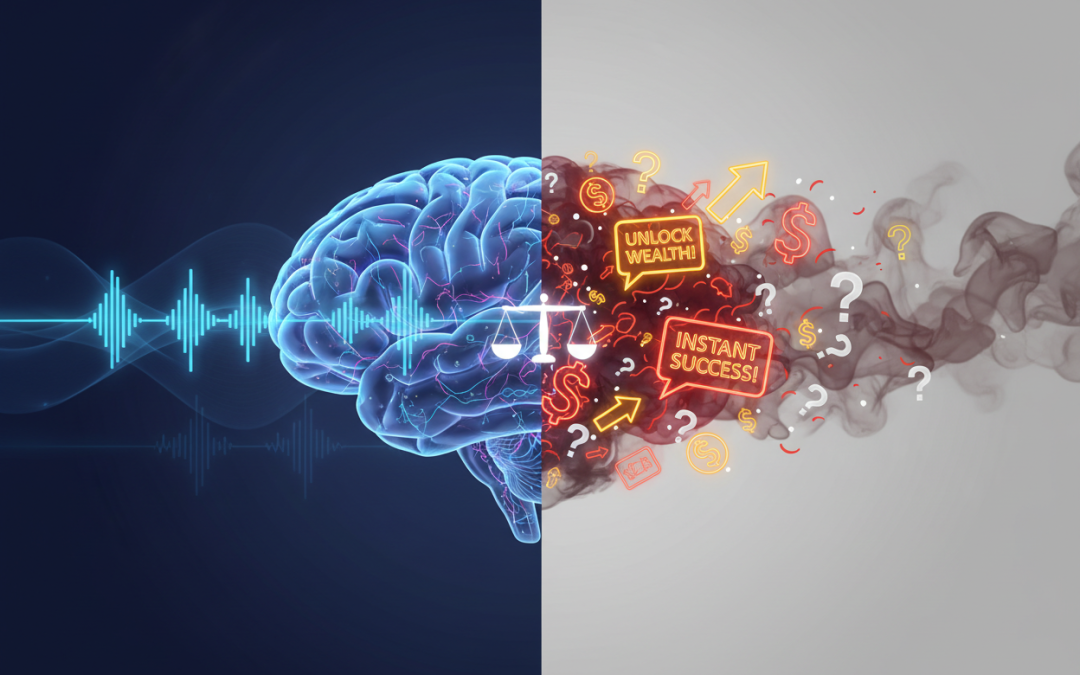
Brainwave Entrainment Myths: Separating Truth from Marketing Hype
Table of Contents
1. Introduction to Brainwave Entrainment
2. What is Brainwave Entrainment Really?
3. The Science Behind Brainwave Synchronization
4. Common Myths About Brainwave Entrainment
5. Evidence-Based Benefits vs Marketing Claims
6. Red Flags in Brainwave Entrainment Marketing
7. How to Choose Legitimate Brainwave Entrainment Products
8. The Future of Brainwave Research
9. Conclusion
10. Frequently Asked Questions
Introduction to Brainwave Entrainment
Walk into any wellness store or browse online meditation apps, and you’ll likely encounter bold claims about brainwave entrainment. Promises of instant relaxation, enhanced focus, better sleep, and even increased intelligence flood the market. But here’s the thing – while brainwave entrainment is a legitimate scientific phenomenon, the marketing surrounding it often stretches the truth beyond recognition.
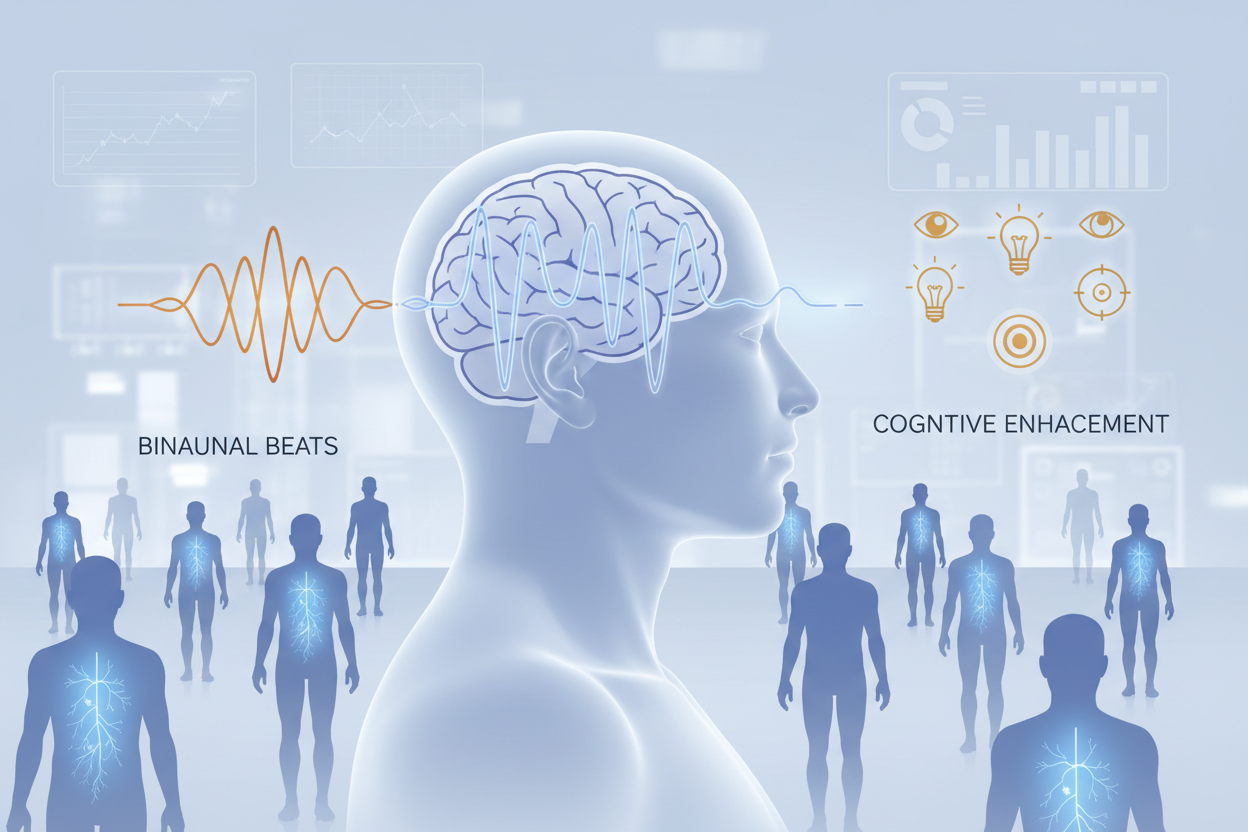
As someone who’s spent years researching neuroscience and consumer wellness trends, I’ve watched this field evolve from legitimate scientific study into a playground for exaggerated marketing claims. The challenge isn’t that brainwave entrainment doesn’t work – it’s that separating genuine benefits from wishful thinking has become increasingly difficult.
This comprehensive guide will help you navigate the murky waters of brainwave entrainment marketing, understand what the science actually says, and make informed decisions about products that claim to alter your brain states.
What is Brainwave Entrainment Really?
Before diving into the myths, let’s establish what brainwave entrainment actually means. At its core, brainwave entrainment refers to the brain’s tendency to synchronize its electrical activity with external rhythmic stimuli. Think of it like your brain “tuning in” to repetitive sounds, lights, or vibrations.
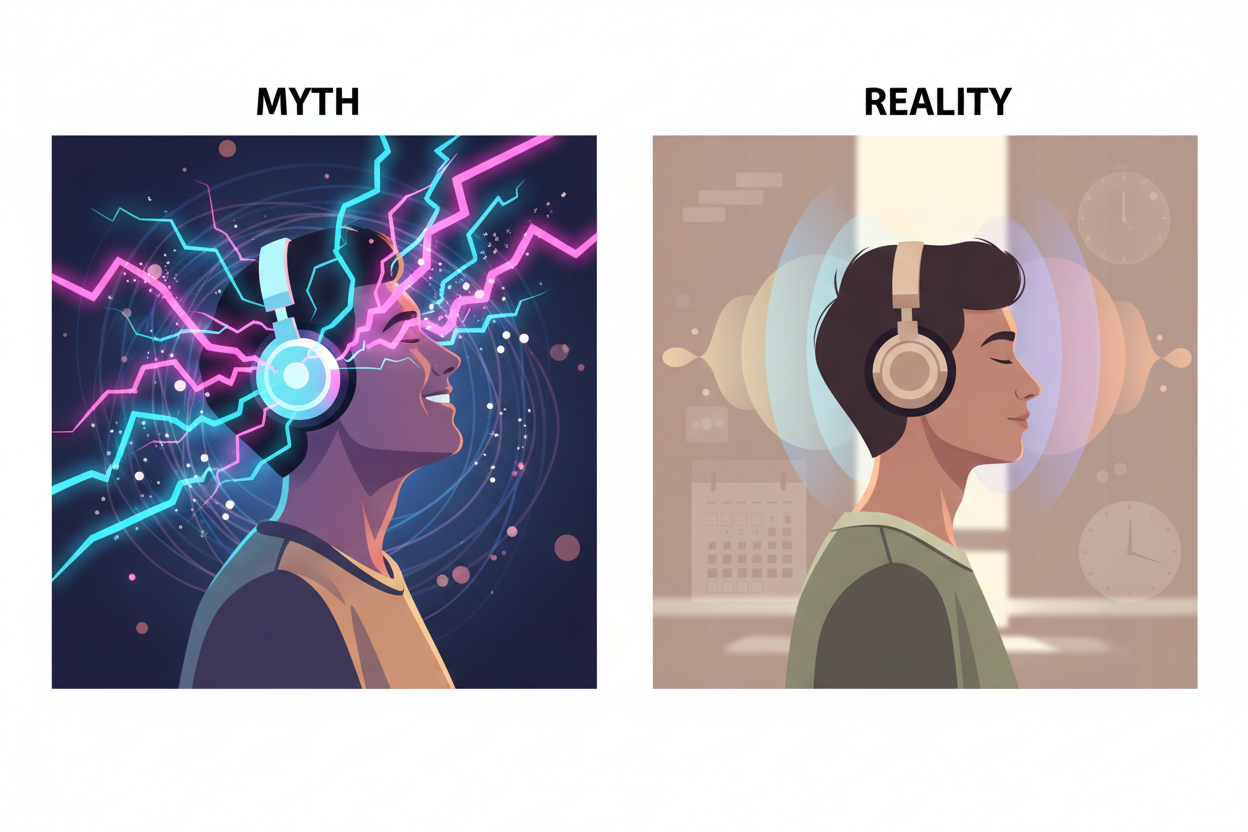
Your brain naturally produces electrical patterns called brainwaves, which scientists measure in hertz (Hz). These include delta waves (0.5-4 Hz) associated with deep sleep, theta waves (4-8 Hz) linked to meditation and creativity, alpha waves (8-13 Hz) connected to relaxed awareness, beta waves (13-30 Hz) related to active thinking, and gamma waves (30+ Hz) associated with heightened consciousness.
The entrainment process typically uses binaural beats, isochronic tones, or visual stimulation to encourage the brain to match these frequencies. However – and this is crucial – the brain doesn’t simply become a passive receiver of these signals. The process is far more complex than most marketing materials suggest.
The Science Behind Brainwave Synchronization
Legitimate research on brainwave entrainment dates back decades. Studies have shown that rhythmic stimulation can indeed influence brainwave patterns, but the effects are often subtle, temporary, and highly individual. The frequency-following response, as scientists call it, is real but limited.
A 2008 study published in the journal Consciousness and Cognition found that binaural beats could modestly influence attention and arousal. However, the researchers emphasized that effects were small and varied significantly between participants. Similarly, research from 2017 in Frontiers in Human Neuroscience showed that while brainwave entrainment could influence certain cognitive states, the changes were often temporary and required consistent exposure.
What’s particularly important to understand is that brainwave patterns don’t directly cause mental states – they’re associated with them. Just because you can temporarily shift someone’s brainwaves toward alpha frequencies doesn’t guarantee they’ll feel relaxed. The relationship between brainwaves and consciousness is correlational, not causal.
Common Myths About Brainwave Entrainment
Myth 1: Instant Brain State Changes
Perhaps the most pervasive myth is that brainwave entrainment products can instantly shift your mental state. Marketing often promises immediate relaxation, focus, or creativity with just minutes of listening. The reality? While some people may experience subtle effects relatively quickly, meaningful changes typically require consistent practice over weeks or months.
Myth 2: One-Size-Fits-All Solutions
Many products claim their specific frequencies work for everyone. However, individual brain anatomy, hearing sensitivity, and neurological differences mean that what works for one person may be completely ineffective for another. Your brain’s baseline activity, age, and even your caffeine intake can influence how you respond to entrainment attempts.
Myth 3: Permanent Cognitive Enhancement
Some of the most egregious claims suggest that brainwave entrainment can permanently increase intelligence, enhance memory, or cure learning disabilities. Current research shows no evidence for lasting cognitive improvements from passive listening to audio tracks. Any benefits typically fade shortly after the session ends.
Myth 4: Replacement for Medical Treatment
Marketing often positions brainwave entrainment as an alternative to medication or therapy for conditions like anxiety, depression, or ADHD. While some studies suggest modest benefits for certain symptoms, no reputable research supports replacing evidence-based treatments with audio tracks.
Evidence-Based Benefits vs Marketing Claims
Despite the hype, legitimate research has identified some genuine benefits of brainwave entrainment, though they’re typically more modest than advertised. Studies suggest possible improvements in relaxation response, with some participants reporting reduced anxiety after consistent binaural beat sessions. Sleep quality may also benefit, particularly when entrainment is combined with good sleep hygiene practices.
Pain management represents another area where research shows promise. A 2016 study in the European Journal of Pain found that certain frequencies might help reduce chronic pain perception, though the mechanisms remain unclear. Meditation enhancement is another legitimate application – some practitioners find that rhythmic audio helps maintain focus during mindfulness sessions.
However, it’s crucial to understand that these benefits often require weeks of consistent use, work best when combined with other practices, and vary dramatically between individuals. The dramatic before-and-after testimonials you see in marketing materials are rarely representative of typical experiences.
Red Flags in Brainwave Entrainment Marketing
Learning to spot questionable marketing claims can save you money and disappointment. Be wary of products that promise immediate results, use phrases like “scientifically proven” without citing specific studies, or claim to treat serious medical conditions. Testimonials featuring dramatic life changes after short periods should raise suspicion.
Another red flag is the use of proprietary frequency combinations that supposedly unlock secret brain potentials. Legitimate researchers freely share their frequency protocols because science advances through transparency, not secrecy. Marketing that relies heavily on complex-sounding but meaningless terms like “quantum resonance” or “neural optimization algorithms” often masks a lack of real scientific backing.
Price can also be an indicator. While expensive doesn’t always mean ineffective, products charging hundreds of dollars for simple audio files are often overpriced. The technology behind basic binaural beats is straightforward and doesn’t justify premium pricing in most cases.
How to Choose Legitimate Brainwave Entrainment Products
If you’re interested in exploring brainwave entrainment, focus on products that make modest, realistic claims. Look for companies that cite peer-reviewed research and explain their methods transparently. Free or low-cost options often work just as well as expensive alternatives, since the underlying technology is relatively simple.
Consider starting with established apps that offer various frequency options and track your responses over time. Many legitimate products allow you to experiment with different approaches to find what works for your individual neurology. Remember that brainwave entrainment works best as part of a broader wellness routine, not as a standalone solution.
Pay attention to your own responses rather than expecting predetermined outcomes. Some people are naturally more sensitive to auditory entrainment, while others may respond better to visual or tactile stimulation. Your experience may differ significantly from marketing promises or other users’ testimonials.
The Future of Brainwave Research
Current neuroscience research is moving toward more sophisticated understanding of how external stimulation affects brain function. Advanced neuroimaging techniques are revealing the complex networks involved in entrainment responses, moving beyond simple frequency matching to explore how different brain regions interact during stimulation.
Personalized approaches based on individual brain mapping may eventually replace one-size-fits-all products. Researchers are also investigating how factors like genetics, age, and neurological conditions influence entrainment effectiveness. This could lead to more targeted, evidence-based applications in the future.
However, these advances will likely reveal that brainwave entrainment’s effects are more nuanced and limited than current marketing suggests. The future probably holds better understanding of who benefits from which approaches, rather than universal solutions for cognitive enhancement.
Conclusion
Brainwave entrainment sits at the intersection of legitimate science and aggressive marketing, making it challenging for consumers to separate fact from fiction. While research supports some modest benefits for relaxation, sleep, and meditation enhancement, the dramatic claims flooding the market often exceed scientific evidence.
The key is approaching brainwave entrainment with realistic expectations and healthy skepticism. It’s not a magic bullet for cognitive enhancement or a replacement for proven medical treatments. However, for some people, it can be a useful tool within a broader approach to wellness and mental training.
As research continues to evolve, we’ll likely develop better understanding of how and why brainwave entrainment works for some people but not others. Until then, the best approach is to remain curious but critical, try affordable options if you’re interested, and always prioritize evidence-based treatments for serious health concerns.
Remember, your brain is remarkably complex and individual. What matters most isn’t whether a product works for others, but whether it provides genuine benefit for you – and that’s something only careful, honest self-observation can determine.
Frequently Asked Questions
Q: Can brainwave entrainment actually change my brainwaves?
A: Yes, research shows that rhythmic stimulation can temporarily influence brainwave patterns in some people. However, these changes are typically modest, temporary, and don’t guarantee corresponding changes in mental state or cognitive ability.
Q: How long does it take to see results from brainwave entrainment?
A: Individual responses vary dramatically. Some people report subtle effects within minutes, while others may need weeks of consistent use. Many people experience no noticeable effects at all, which is completely normal.
Q: Are expensive brainwave entrainment products better than free ones?
A: Not necessarily. The basic technology behind binaural beats and isochronic tones is straightforward. Expensive products may offer better audio quality or more options, but price doesn’t correlate with effectiveness for most users.
Q: Can brainwave entrainment replace medication or therapy?
A: No. While some studies suggest modest benefits for certain symptoms, brainwave entrainment should never replace evidence-based medical treatments. Always consult healthcare providers for serious mental health concerns.
Q: Why do some people respond to brainwave entrainment while others don’t?
A: Individual differences in brain anatomy, hearing sensitivity, baseline brainwave patterns, and neurological factors all influence responses. There’s no way to predict who will be sensitive to entrainment without trying it.
Q: Are there any risks to using brainwave entrainment?
A: For most people, brainwave entrainment is safe. However, individuals with epilepsy should avoid flashing lights or certain frequencies that might trigger seizures. Some people may experience headaches or dizziness from binaural beats.