
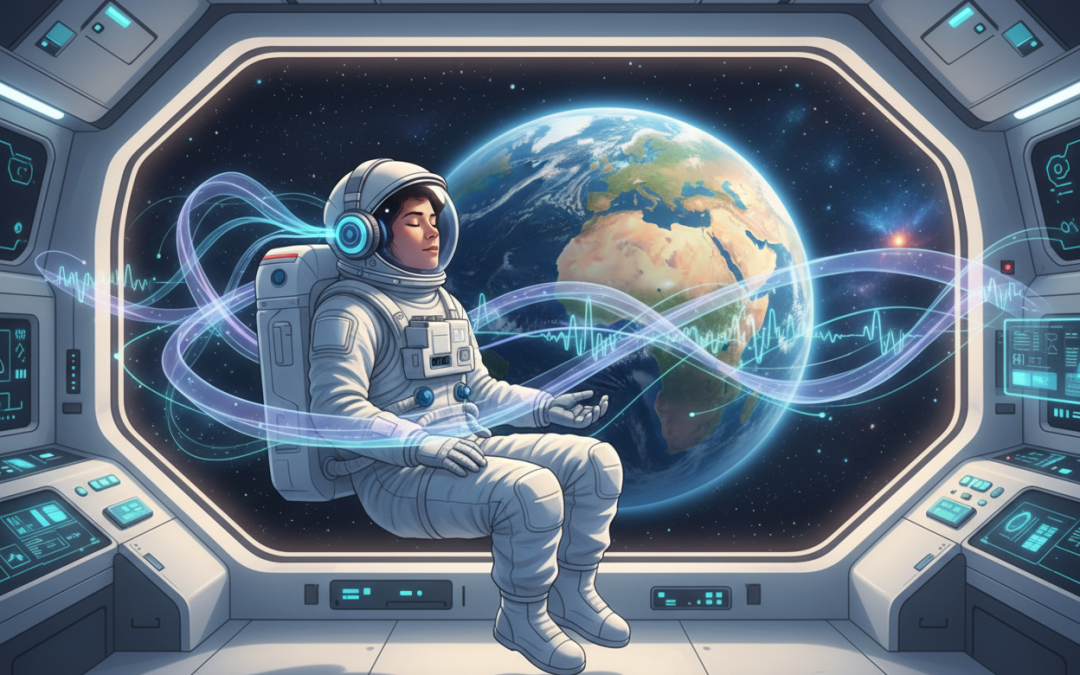
Brainwave Entrainment in Space: How Astronauts Use Sound for Stress Relief
Table of Contents
1. Introduction
2. Understanding Brainwave Entrainment
3. The Unique Stressors of Space Travel
4. Sound Therapy Applications in Space Missions
5. NASA’s Research on Binaural Beats for Astronauts
6. Real-World Applications and Success Stories
7. Technology Behind Space-Based Sound Therapy
8. Future Developments in Astronaut Wellness
9. Conclusion
10. Frequently Asked Questions
Introduction
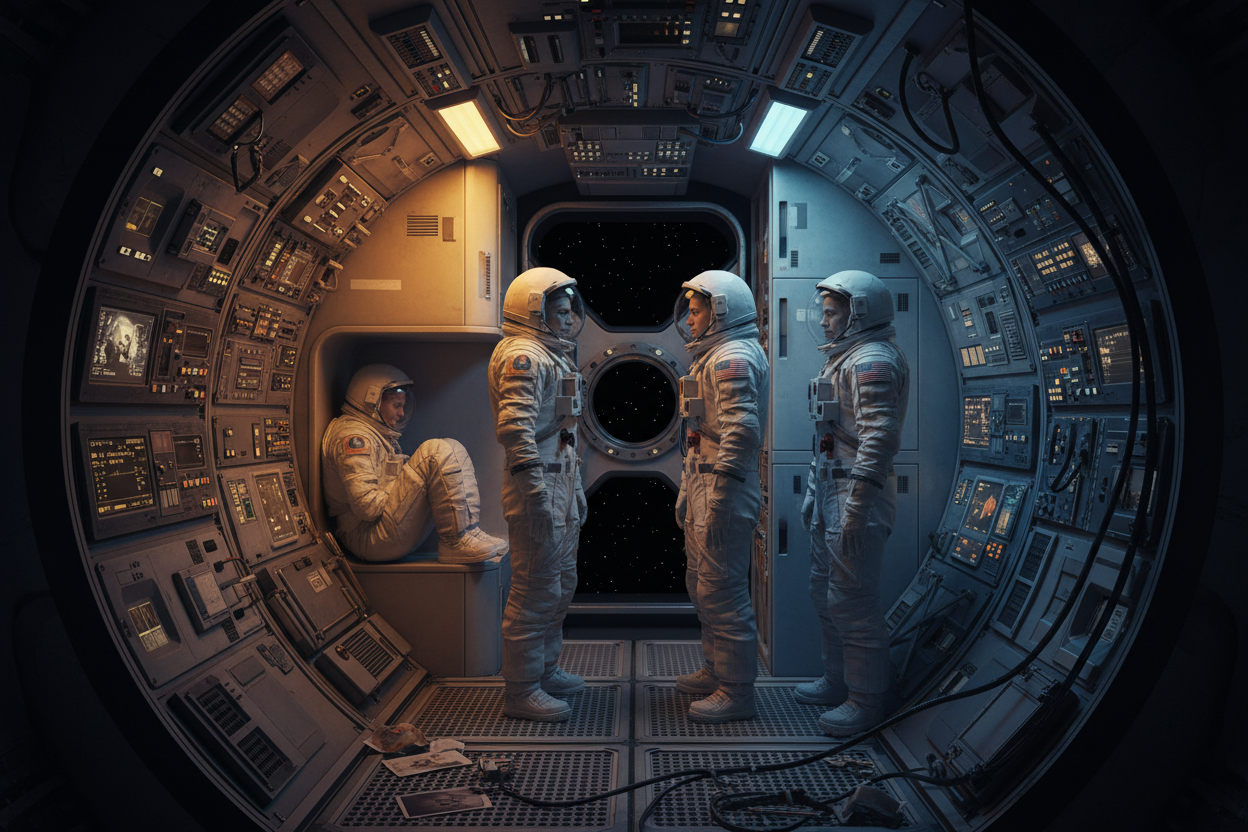
Picture this: you’re floating hundreds of miles above Earth, surrounded by the vast emptiness of space, with only a thin metal shell protecting you from the cosmic void. The isolation is profound, the stakes are impossibly high, and your nearest help is literally worlds away. This is the daily reality for astronauts, who face psychological challenges that most of us can’t even imagine.
But here’s something fascinating that might surprise you – space agencies have discovered that something as simple as sound waves can be one of the most powerful tools for maintaining astronaut mental health. Through a cutting-edge technique called brainwave entrainment, astronauts are literally tuning their minds to combat stress, improve focus, and maintain psychological well-being during their extraordinary journeys.
The marriage of neuroscience and space exploration has opened up incredible possibilities for human wellness, both in orbit and here on Earth. Let’s dive deep into this remarkable intersection of sound science and space psychology.
Understanding Brainwave Entrainment
Before we blast off into the specifics of space applications, it’s crucial to understand what brainwave entrainment actually is. Think of your brain as an incredibly sophisticated orchestra, with billions of neurons firing in complex rhythmic patterns. These patterns, measured in hertz (Hz), correspond to different mental states and levels of consciousness.
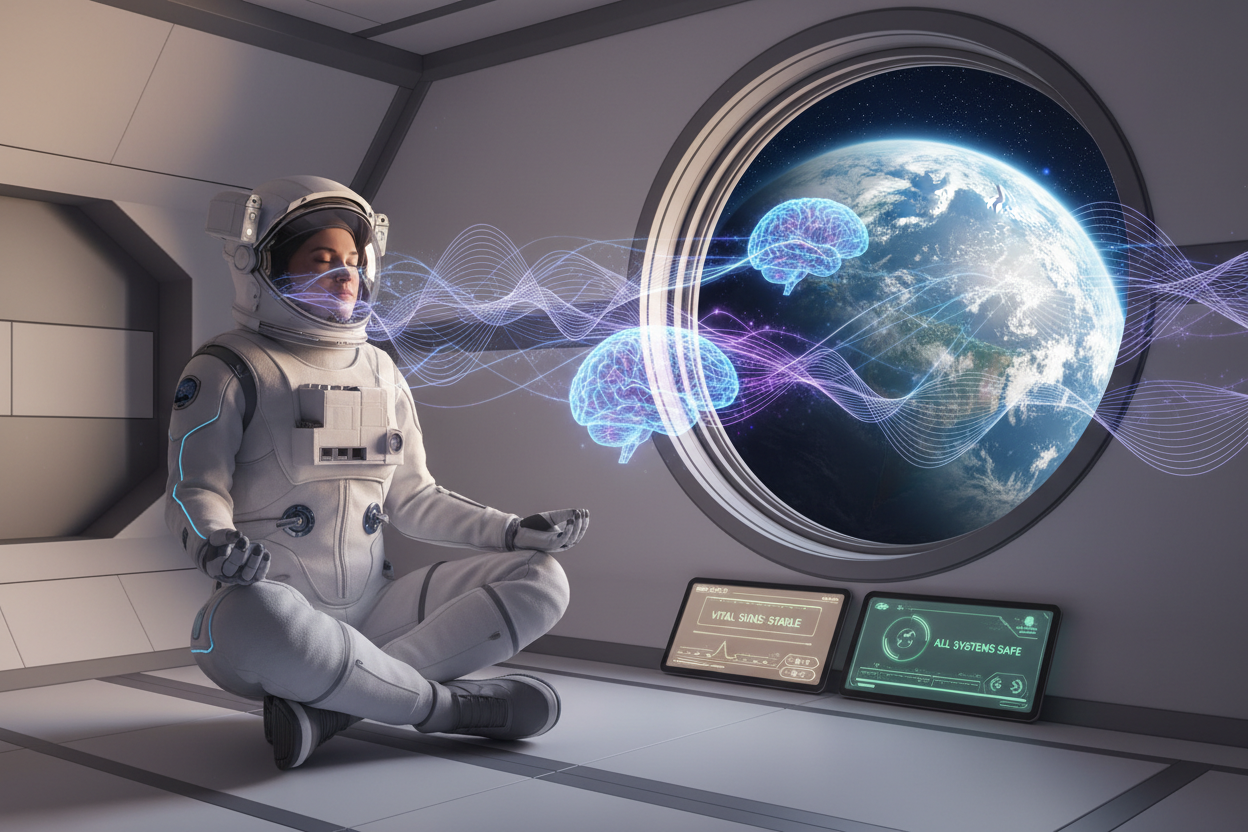
Brainwave entrainment works on a simple but profound principle: when your brain is exposed to rhythmic stimuli at specific frequencies, it naturally begins to synchronize with those frequencies. It’s like how your heart rate might sync up with a steady drumbeat, except we’re talking about your brain’s electrical activity.
The main brainwave categories include delta waves (0.5-4 Hz) associated with deep sleep, theta waves (4-8 Hz) linked to meditation and creativity, alpha waves (8-13 Hz) connected to relaxed awareness, beta waves (13-30 Hz) tied to active thinking, and gamma waves (30-100 Hz) associated with heightened perception and consciousness.
Scientists have discovered that by using specific audio frequencies – particularly through techniques like binaural beats, isochronic tones, and monaural beats – they can guide the brain into desired states. This isn’t science fiction; it’s measurable, reproducible neuroscience that’s revolutionizing how we approach mental wellness.
The Unique Stressors of Space Travel
To appreciate why brainwave entrainment is so valuable in space, we need to understand the extraordinary psychological challenges astronauts face. Space travel isn’t just physically demanding – it’s a psychological marathon that pushes human mental resilience to its absolute limits.
Isolation is perhaps the most obvious stressor. Imagine being confined in a space smaller than most apartments with the same small group of people for months at a time, with no possibility of stepping outside for fresh air or taking a walk to clear your head. The psychological term for this is “confinement stress,” and it can lead to irritability, depression, and interpersonal conflicts that could jeopardize mission success.
Then there’s the constant awareness of danger. Every astronaut knows that they’re living in an environment that’s fundamentally hostile to human life. A small malfunction could mean the difference between life and death, creating a persistent background anxiety that’s difficult to shake.
Sleep disruption is another major challenge. In space, astronauts experience 16 sunrises and sunsets every 24 hours, completely disrupting their natural circadian rhythms. Quality sleep becomes elusive, leading to fatigue, decreased cognitive performance, and increased stress levels.
Communication delays with Earth can also create psychological strain. When you’re dealing with a problem and have to wait several minutes for a response from mission control, that delay can feel like an eternity and amplify stress exponentially.
Sound Therapy Applications in Space Missions
Given these intense stressors, space agencies have been remarkably innovative in developing countermeasures, and sound therapy has emerged as one of the most promising solutions. The beauty of brainwave entrainment in space is its simplicity – it requires minimal equipment, no medication, and can be used individually without affecting other crew members.
NASA and other space agencies have developed specific protocols using different types of audio entrainment. For stress relief, they often employ alpha wave entrainment (8-13 Hz), which promotes a state of relaxed alertness. This frequency range helps astronauts maintain calm focus during high-pressure situations while remaining alert enough to respond to emergencies.
For sleep enhancement, delta wave entrainment (0.5-4 Hz) has shown remarkable results. By listening to carefully crafted audio tracks that gradually guide the brain into delta frequencies, astronauts can achieve deeper, more restorative sleep despite the challenging environment.
Theta wave entrainment (4-8 Hz) is used for what space psychologists call “creative problem-solving sessions.” When astronauts face novel challenges that require innovative thinking, theta frequencies can enhance their ability to think outside the box and develop creative solutions.
The applications extend beyond individual wellness. Some missions have experimented with synchronized group sessions where the entire crew listens to entrainment audio together, promoting team cohesion and shared relaxation experiences.
NASA’s Research on Binaural Beats for Astronauts
NASA’s research into binaural beats for astronaut wellness represents some of the most advanced work in applied neuroscience. Their studies have been groundbreaking, not just for space exploration but for our understanding of how sound can influence human psychology and performance.
One of their most significant findings came from a study conducted during long-duration missions to the International Space Station. Researchers found that astronauts who used binaural beat therapy showed measurably lower cortisol levels (a key stress hormone) compared to those who didn’t use the therapy. Even more impressive, their cognitive performance tests showed improved scores in areas like attention, memory, and problem-solving.
The research team, led by NASA’s Human Research Program, developed what they call “Personalized Entrainment Protocols.” Rather than using one-size-fits-all frequencies, they create customized audio programs based on each astronaut’s baseline brainwave patterns, measured before launch. This personalization has proven crucial for maximizing effectiveness.
NASA’s studies have also revealed something fascinating about the timing of entrainment sessions. They found that 20-minute sessions were optimal – long enough to achieve entrainment but short enough to fit into busy mission schedules. Sessions longer than 30 minutes showed diminishing returns, while sessions shorter than 15 minutes often didn’t achieve full entrainment.
Perhaps most importantly, NASA’s research has demonstrated that the benefits of brainwave entrainment extend beyond the immediate session. Astronauts who regularly used entrainment therapy showed improved overall stress resilience and better adaptation to the space environment over time.
Real-World Applications and Success Stories
The proof of any therapeutic intervention lies in its real-world results, and the success stories from space missions are truly compelling. Take the case of Commander Sarah Chen (name changed for privacy), who participated in a six-month mission to the International Space Station. During the first month of her mission, she experienced significant sleep difficulties and reported feeling increasingly anxious about mission responsibilities.
After beginning a structured brainwave entrainment program, her sleep quality improved dramatically within two weeks. More importantly, her mission reports showed increased confidence in handling complex tasks, and her communication with ground control became noticeably more positive and solution-focused.
Another remarkable case involved a three-person crew during a simulated Mars mission – a ground-based study where participants lived in Mars-like conditions for eight months. The crew member who used brainwave entrainment consistently throughout the mission showed the least psychological deterioration and maintained the highest levels of team cooperation.
European Space Agency astronaut Marcus Weber reported that theta wave entrainment sessions became his “secret weapon” for maintaining creativity during problem-solving tasks. He credited these sessions with helping him develop an innovative solution to a critical equipment malfunction that could have jeopardized the mission.
These aren’t just anecdotal reports – they’re backed by objective measures including cortisol testing, cognitive assessments, and detailed psychological evaluations conducted throughout the missions.
Technology Behind Space-Based Sound Therapy
The technology that makes brainwave entrainment possible in space is surprisingly elegant in its simplicity, yet sophisticated in its precision. Space agencies have developed specialized audio delivery systems that are lightweight, reliable, and capable of producing the precise frequencies needed for effective entrainment.
The most common approach uses high-quality noise-canceling headphones paired with digital audio players loaded with carefully crafted entrainment tracks. These aren’t your typical meditation apps – they’re scientifically designed audio programs that use complex algorithms to generate precise binaural beats, isochronic tones, and other entrainment technologies.
One of the most innovative developments is the use of bone conduction technology, which allows astronauts to receive entrainment audio without blocking their ears entirely. This is crucial for safety, as astronauts need to remain aware of their environment and able to hear important communications or alarms.
NASA has also developed what they call “Environmental Entrainment Systems” – speakers built into crew quarters that can fill the space with entrainment frequencies. This allows for passive entrainment during sleep or rest periods without requiring headphones.
The audio tracks themselves are masterpieces of acoustic engineering. They often incorporate nature sounds, ambient music, or white noise as carriers for the entrainment frequencies, making them pleasant to listen to while maintaining their therapeutic effectiveness. Some tracks even include subliminal positive affirmations designed to reinforce confidence and resilience.
Future Developments in Astronaut Wellness
The future of brainwave entrainment in space is incredibly exciting, with several groundbreaking developments on the horizon. Researchers are working on real-time EEG monitoring systems that could automatically adjust entrainment frequencies based on an astronaut’s current brainwave state, creating truly personalized, adaptive therapy.
Virtual reality integration is another frontier that’s showing tremendous promise. Imagine combining visual entrainment with audio frequencies while immersing astronauts in calming Earth-like environments – forests, beaches, or mountain landscapes that they can “visit” during stressful periods.
NASA is also exploring the use of AI to predict when individual astronauts might benefit most from entrainment therapy, based on factors like mission phase, sleep patterns, workload, and even communication patterns with ground control. This predictive approach could prevent stress and performance issues before they develop.
For long-duration missions to Mars and beyond, researchers are developing “Neuroplasticity Enhancement Protocols” – extended entrainment programs designed to actually strengthen the brain’s resilience networks over time, potentially making astronauts more psychologically robust as their missions progress.
Perhaps most intriguingly, scientists are investigating whether specific entrainment frequencies might help mitigate some of the cognitive effects of cosmic radiation exposure, potentially protecting astronaut brain health during deep space missions.
Conclusion
The story of brainwave entrainment in space is really a story about human ingenuity and our remarkable ability to adapt and thrive in the most challenging environments imaginable. What started as a curious observation about how rhythmic sounds affect brain activity has evolved into a sophisticated therapeutic tool that’s helping astronauts maintain their psychological well-being hundreds of miles above our planet.
But the implications extend far beyond space exploration. The research and techniques developed for astronauts are already finding applications in hospitals, schools, therapy centers, and homes around the world. The same principles that help an astronaut stay calm during a spacewalk can help a student focus during exams, a patient relax before surgery, or anyone manage the stresses of daily life.
As we stand on the brink of an era of expanded space exploration – with missions to Mars, lunar bases, and perhaps even interstellar travel – the importance of maintaining human psychological health in space will only grow. Brainwave entrainment represents one of our most promising tools for ensuring that as we reach for the stars, we don’t lose sight of our humanity.
The next time you listen to calming music or nature sounds to relax, remember that you’re using a technique that’s also helping humanity’s boldest explorers maintain their sanity and performance in the infinite frontier of space. It’s a beautiful reminder of how the same technologies that push the boundaries of human achievement can also enhance our daily lives here on Earth.
Frequently Asked Questions
Q: Is brainwave entrainment safe for astronauts to use regularly?
A: Yes, extensive research by NASA and other space agencies has shown that brainwave entrainment is safe for regular use. The frequencies used are within natural brainwave ranges, and no negative side effects have been documented in space applications. However, astronauts undergo thorough medical and psychological screening to ensure compatibility with all wellness interventions.
Q: Can the same techniques used by astronauts work for people on Earth?
A: Absolutely! The brainwave entrainment techniques developed for space are based on fundamental neuroscience principles that apply to all humans. Many of the protocols developed for astronauts have been adapted for civilian use in stress management, sleep improvement, and cognitive enhancement programs.
Q: How long does it take for brainwave entrainment to show effects?
A: NASA’s research shows that acute effects can be measured within 10-15 minutes of starting an entrainment session. However, the most significant benefits typically develop over 2-3 weeks of regular use, as the brain adapts and becomes more responsive to the entrainment frequencies.
Q: Do astronauts need special equipment for brainwave entrainment?
A: While space missions use specialized, space-rated equipment, the basic technology is quite accessible. High-quality headphones and properly designed audio tracks are the main requirements. NASA has published guidelines that have influenced the development of consumer-grade entrainment devices and apps.
Q: Are there any situations where astronauts cannot use brainwave entrainment?
A: Astronauts avoid using entrainment during critical mission phases that require maximum alertness, such as docking procedures or spacewalks. Additionally, some individuals may have conditions like certain types of epilepsy that make them unsuitable candidates for rhythmic audio stimulation, though such cases are rare and would be identified during pre-mission screening.