
Brainwave Entrainment for Introverts: Managing Social Energy Depletion
Table of Contents
1. Understanding Introversion and Social Energy Depletion
2. What Is Brainwave Entrainment?
3. The Science Behind Brainwave Entrainment for Introverts
4. Types of Brainwave Entrainment Techniques
5. How Brainwave Entrainment Helps Introverts Recharge
6. Practical Implementation: Getting Started with Brainwave Entrainment
7. Best Practices for Maximizing Results
8. Frequently Asked Questions
As an introvert, you’ve probably experienced that familiar feeling of exhaustion after a long day of meetings, social gatherings, or even casual conversations. While extroverts seem to thrive on social interaction, introverts often find themselves needing to retreat and recharge. If this sounds like you, you’re not alone – and there’s a fascinating solution that might help: brainwave entrainment.
In our hyper-connected world, introverts face unique challenges when it comes to managing their energy levels. The constant demands of social interaction, whether in professional settings or personal relationships, can leave you feeling drained and overwhelmed. But what if there was a scientifically-backed method to help you recover more efficiently and maintain better energy balance throughout your day?
Understanding Introversion and Social Energy Depletion
Before diving into the solution, let’s explore what actually happens when introverts experience social energy depletion. Contrary to popular belief, introversion isn’t about being shy or antisocial – it’s about how your brain processes stimulation and where you direct your energy.
Research has shown that introverted brains are more sensitive to dopamine, the neurotransmitter associated with reward-seeking behavior. This means that while extroverts get energized by external stimulation, introverts can quickly become overstimulated in social situations. The result? Mental fatigue, emotional exhaustion, and the overwhelming need to find a quiet space to decompress.
This energy depletion manifests in various ways: difficulty concentrating after social events, feeling irritable or anxious in crowded spaces, and needing significantly more downtime than others around you. Sound familiar? You’re experiencing a completely normal neurological response to overstimulation.
What Is Brainwave Entrainment?
Brainwave entrainment is a scientifically-proven technique that uses rhythmic stimuli – typically audio, visual, or tactile – to synchronize your brainwaves with specific frequencies. Think of it as a gentle nudge that encourages your brain to shift into more desirable states of consciousness.
Your brain naturally produces different types of electrical activity throughout the day, measured in hertz (Hz). These brainwaves correspond to different mental states: beta waves for active thinking, alpha waves for relaxed awareness, theta waves for deep meditation, and delta waves for restorative sleep.
The beauty of brainwave entrainment lies in its ability to guide your brain toward these beneficial states more quickly and efficiently than traditional relaxation methods alone. For introverts dealing with social energy depletion, this can be a game-changer in terms of recovery time and overall well-being.
The Science Behind Brainwave Entrainment for Introverts
Multiple studies have demonstrated the effectiveness of brainwave entrainment in reducing stress, improving focus, and promoting relaxation. For introverts specifically, research suggests that these techniques can help restore the optimal balance of neurotransmitters that become disrupted during periods of intense social interaction.
When you’re socially overstimulated, your brain often gets stuck in higher beta frequencies associated with anxiety and overthinking. Brainwave entrainment can help shift you into alpha and theta states, which are characterized by reduced cortisol levels, increased GABA production, and enhanced parasympathetic nervous system activity – all crucial for effective recovery.
One particularly relevant study published in the Journal of Neurotherapy found that participants who used brainwave entrainment showed significant improvements in stress reduction and cognitive performance compared to control groups. For introverts, this translates to faster recovery from social exhaustion and better preparation for future social challenges.
Types of Brainwave Entrainment Techniques
Several methods can help you harness the power of brainwave entrainment, each with its own advantages and applications.
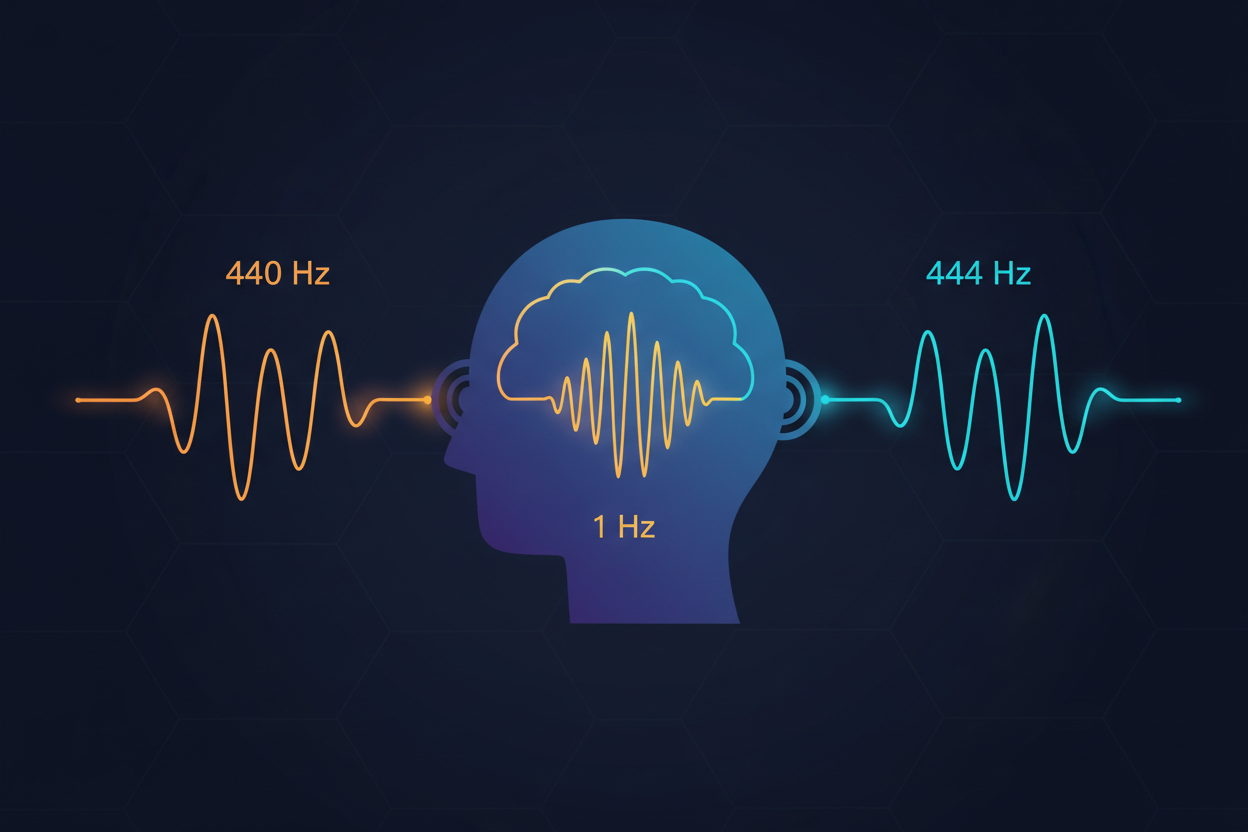
Binaural Beats: This popular technique involves listening to two slightly different frequencies in each ear through headphones. Your brain naturally creates a third “phantom” frequency that equals the difference between the two tones. For example, if you hear 440 Hz in one ear and 444 Hz in the other, your brain entrains to a 4 Hz frequency associated with deep relaxation.
Monaural Beats: Unlike binaural beats, monaural beats are created by combining two frequencies before they reach your ears, making them audible without headphones. This makes them more accessible for group sessions or when you can’t use headphones.
Isochronic Tones: These are evenly spaced pulses of sound that turn on and off rapidly. Many users find isochronic tones more effective than binaural beats because they don’t require headphones and tend to produce stronger entrainment responses.
Light and Sound Machines: These devices combine visual and auditory stimulation, using LED lights and synchronized audio to create powerful entrainment experiences. While more expensive, they often produce faster and more pronounced results.
How Brainwave Entrainment Helps Introverts Recharge
For introverts struggling with social energy depletion, brainwave entrainment offers several specific benefits that can dramatically improve your quality of life and social resilience.
Accelerated Recovery: Instead of needing hours or even days to fully recharge after social events, brainwave entrainment can help you achieve deep relaxation states in just 15-30 minutes. This means you can recover more quickly and return to your optimal energy levels faster.
Improved Sleep Quality: Social overstimulation often leads to racing thoughts and difficulty falling asleep. Delta wave entrainment can help quiet your mind and promote the deep, restorative sleep that introverts desperately need after draining social experiences.
Enhanced Focus and Clarity: Alpha wave entrainment can help clear the mental fog that often follows social exhaustion, allowing you to regain your focus and cognitive abilities more quickly.
Stress Reduction: Regular use of brainwave entrainment has been shown to reduce overall stress levels and improve emotional regulation, making future social interactions less draining and more manageable.
Increased Social Resilience: By improving your recovery efficiency, brainwave entrainment can help you build greater tolerance for social situations without compromising your well-being.
Practical Implementation: Getting Started with Brainwave Entrainment
Ready to incorporate brainwave entrainment into your energy management routine? Here’s how to get started effectively and safely.
Choose Your Method: Begin with binaural beats or isochronic tones, as they’re easily accessible through smartphone apps or online platforms. Popular apps include Brain.fm, Noisli, and MyNoise, while YouTube offers countless free options.
Start with Short Sessions: Begin with 10-15 minute sessions to allow your brain to adapt to the entrainment process. Some people experience mild headaches or dizziness when first starting, so it’s important to ease into the practice gradually.
Timing Matters: The most effective times for social energy recovery are immediately after draining social interactions and before bed. Consider keeping a pair of headphones at your office for post-meeting recovery sessions.
Create the Right Environment: Find a quiet, comfortable space where you won’t be interrupted. Dim lighting, comfortable seating, and minimal distractions will enhance the effectiveness of your sessions.
Track Your Progress: Keep a simple journal noting your energy levels before and after sessions, along with any observations about sleep quality, mood, or social performance. This will help you identify which frequencies and techniques work best for you.
Best Practices for Maximizing Results
To get the most out of brainwave entrainment for social energy management, consider these proven strategies and tips.
Consistency is Key: Like any wellness practice, regular use yields better results than sporadic sessions. Aim for daily 15-20 minute sessions, even on days when you don’t feel particularly drained.
Combine with Other Recovery Techniques: Brainwave entrainment works exceptionally well when combined with other introvert-friendly recovery methods like deep breathing, gentle stretching, or mindfulness meditation.
Experiment with Different Frequencies: Everyone’s brain responds differently to various frequencies. Try alpha waves (8-13 Hz) for general relaxation, theta waves (4-8 Hz) for deeper recovery, and delta waves (0.5-4 Hz) for sleep preparation.
Use Quality Audio Equipment: While expensive equipment isn’t necessary, decent headphones or speakers will provide clearer, more effective entrainment experiences. Noise-canceling headphones can be particularly beneficial in noisy environments.
Be Patient with Results: Some people notice immediate benefits, while others may need several weeks of consistent practice to experience significant changes. Trust the process and give your brain time to adapt.
Listen to Your Body: If you experience any discomfort, headaches, or unusual symptoms, reduce the volume, shorten your sessions, or take a break from the practice. Brainwave entrainment should feel relaxing, not stressful.
Conclusion
Social energy depletion doesn’t have to be an inevitable part of life as an introvert. Brainwave entrainment offers a scientifically-backed, accessible solution that can help you recover more efficiently, sleep better, and approach social situations with greater resilience and confidence.
By incorporating these techniques into your daily routine, you’re not just managing your energy – you’re optimizing your brain’s natural ability to restore and recharge. Whether you’re preparing for a challenging work presentation, recovering from a family gathering, or simply trying to maintain better energy balance in your daily life, brainwave entrainment can be a powerful tool in your introvert toolkit.
Remember, being an introvert isn’t a limitation – it’s a different way of processing the world that comes with unique strengths and needs. By honoring those needs and using tools like brainwave entrainment to support your well-being, you can thrive in both social and solitary environments while maintaining your authentic self.
Start small, be consistent, and give yourself permission to prioritize your energy management. Your future self will thank you for taking this proactive step toward better social resilience and overall well-being.
Frequently Asked Questions
Q: Is brainwave entrainment safe for daily use?
A: Yes, brainwave entrainment is generally considered safe for most people when used appropriately. However, individuals with epilepsy, seizure disorders, or certain psychiatric conditions should consult with a healthcare provider before use.
Q: How long does it take to see results from brainwave entrainment?
A: Some people notice immediate relaxation effects, while others may need 2-4 weeks of consistent use to experience significant benefits. Individual responses vary based on factors like stress levels, sleep quality, and overall health.
Q: Can I use brainwave entrainment while working or studying?
A: Certain frequencies, particularly alpha waves, can enhance focus and concentration during cognitive tasks. However, deeper frequencies like theta and delta are better suited for relaxation and recovery rather than active work.
Q: Do I need expensive equipment to practice brainwave entrainment?
A: Not at all. While specialized devices exist, you can start with free smartphone apps or YouTube videos using regular headphones. Quality matters more than cost – clear audio delivery is the most important factor.
Q: Can brainwave entrainment replace traditional therapy or medication?
A: Brainwave entrainment is a complementary wellness tool, not a replacement for professional mental health treatment. If you’re dealing with anxiety, depression, or other mental health concerns, consult with a qualified healthcare provider.
Q: What’s the difference between brainwave entrainment and meditation?
A: While both practices can promote relaxation and well-being, brainwave entrainment uses external stimuli to guide brain states, while traditional meditation relies on internal focus and awareness. Many people find entrainment easier to learn and practice consistently.