
Brainwave Entrainment for Empaths: Managing Emotional Overwhelm
Table of Contents
1. Introduction: The Empath’s Dilemma
2. Understanding Brainwave Entrainment
3. How Brainwave Entrainment Works for Emotional Regulation
4. Specific Brainwave Frequencies for Empaths
5. Practical Applications and Techniques
6. Creating Your Personal Brainwave Entrainment Practice
7. Combining Brainwave Entrainment with Other Empath Protection Methods
8. Scientific Evidence and Research
9. Common Challenges and Solutions
10. Conclusion: Finding Your Emotional Balance
11. Frequently Asked Questions
Introduction: The Empath’s Dilemma
If you’re reading this, chances are you’ve experienced that familiar feeling of walking into a room and instantly absorbing everyone else’s emotions like a sponge. As an empath, you possess the remarkable ability to sense and feel the emotions of others deeply, but this gift often comes with a challenging side effect: emotional overwhelm.
I remember sitting in a crowded coffee shop once, feeling perfectly fine until I suddenly became anxious, sad, and irritated all at once. It took me years to realize these weren’t my emotions at all – I was picking up on the emotional states of everyone around me. Sound familiar?
This is where brainwave entrainment enters the picture as a powerful tool for managing emotional overwhelm. By understanding how to influence your brainwave patterns, you can create a protective buffer against unwanted emotional absorption while maintaining your natural empathic abilities.
Understanding Brainwave Entrainment
Brainwave entrainment is a fascinating process that synchronizes your brainwaves to external rhythmic stimuli, such as sound frequencies, light pulses, or vibrations. Think of it as tuning your brain like a musical instrument – when you expose your brain to specific frequencies, it naturally begins to match those patterns.
Our brains operate on different frequency ranges throughout the day. When you’re alert and focused, you’re likely in a beta state (13-30 Hz). During deep meditation or sleep, you shift into theta (4-8 Hz) or delta (0.5-4 Hz) frequencies. Alpha waves (8-13 Hz) occur during relaxed awareness, while gamma waves (30-100 Hz) are associated with heightened consciousness and cognitive processing.
For empaths, learning to consciously shift between these states can be life-changing. Instead of being at the mercy of every emotional frequency around you, you can actively choose which brainwave state serves you best in any given situation.
How Brainwave Entrainment Works for Emotional Regulation
The connection between brainwave states and emotional regulation is profound. When your brain operates in specific frequency ranges, it influences your emotional processing, stress response, and overall mental state. This is particularly relevant for empaths who often struggle with emotional boundaries.
Research has shown that certain brainwave patterns are associated with increased emotional resilience and better stress management. By using brainwave entrainment techniques, empaths can train their brains to maintain more stable emotional states, even when surrounded by intense emotions from others.
The process works through a phenomenon called the “frequency following response.” When your brain is exposed to rhythmic stimuli at a specific frequency, your neurons begin to fire in sync with that rhythm. It’s similar to how multiple metronomes placed on the same surface will eventually synchronize their beats.
For emotional overwhelm, this means you can use specific frequencies to shift from an anxious, overstimulated state into one of calm awareness or focused attention. The key is consistency and finding the right frequencies that work for your unique nervous system.
Specific Brainwave Frequencies for Empaths
Different brainwave frequencies offer unique benefits for managing empathic overwhelm. Understanding these can help you choose the right approach for different situations.
Alpha waves (8-13 Hz) are particularly beneficial for empaths because they promote a state of relaxed awareness. In this state, you can maintain your sensitivity while feeling more centered and less reactive to external emotional stimuli. Many empaths find that regular alpha entrainment helps them stay grounded in social situations.
Theta frequencies (4-8 Hz) are excellent for deep emotional healing and processing. If you’ve absorbed difficult emotions from others, theta entrainment can help you release these energies and return to your natural emotional baseline. This frequency range is also associated with increased intuition and spiritual connection.
Beta waves (13-30 Hz) can be helpful when you need to maintain clear boundaries and focused attention. Lower beta frequencies promote calm focus, while avoiding the higher beta ranges that can increase anxiety and emotional reactivity.
Gamma waves (40 Hz and above) have shown promise for enhancing emotional regulation and cognitive flexibility. Some empaths find that brief gamma entrainment sessions help them process complex emotional information more effectively.
Practical Applications and Techniques
Implementing brainwave entrainment doesn’t require expensive equipment or complicated procedures. There are several accessible methods you can start using today.
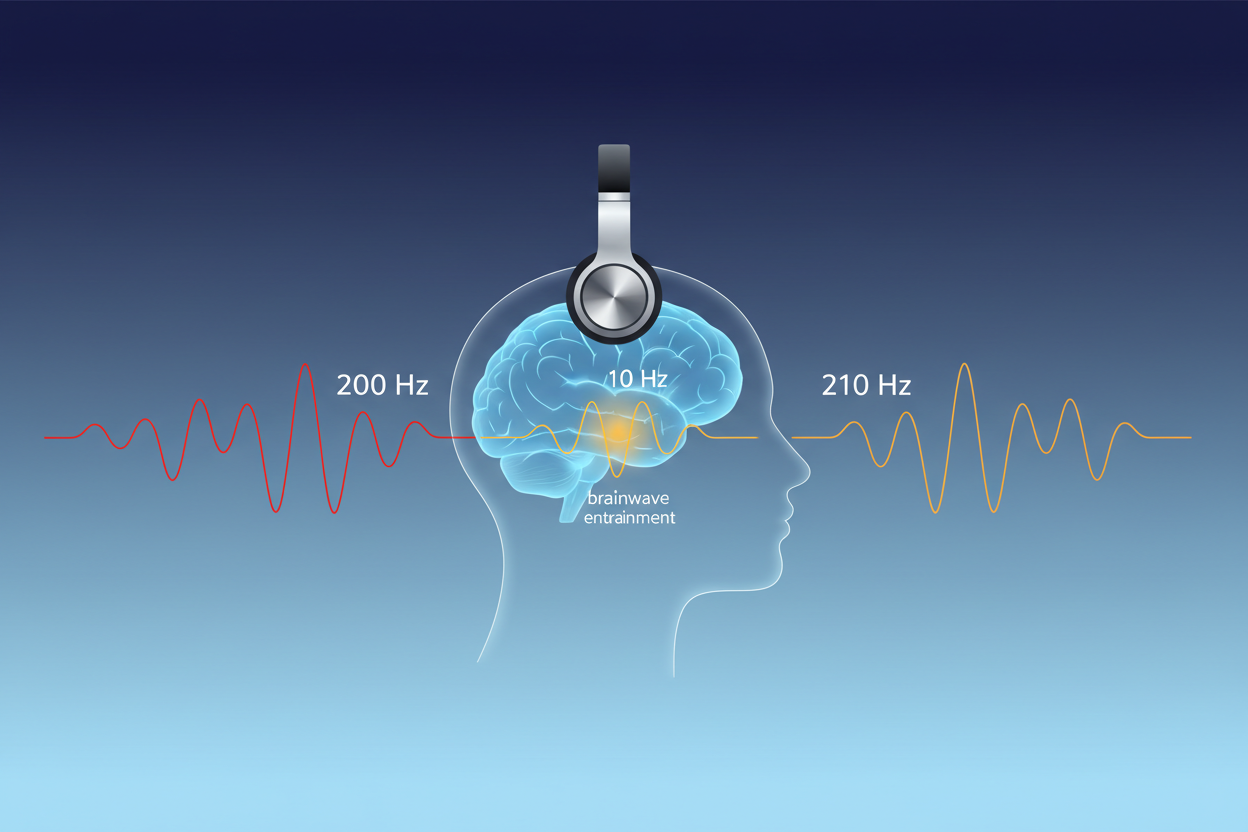
Binaural beats are one of the most popular approaches. By listening to slightly different frequencies in each ear through headphones, your brain creates a third frequency that matches the difference between the two tones. For example, if you hear 200 Hz in your left ear and 210 Hz in your right ear, your brain will entrain to 10 Hz (alpha frequency).
Isochronic tones offer another effective method. These are evenly spaced pulses of sound that don’t require headphones. Many empaths prefer isochronic tones because they can be played through speakers while engaging in other activities like reading or gentle movement.
Light-sound machines combine visual and auditory entrainment through special glasses that pulse light in sync with audio frequencies. While more expensive, these devices can be particularly effective for empaths who are visual processors.
Rhythmic breathing techniques can also create natural brainwave entrainment. By controlling your breath rhythm, you can influence your brainwave patterns without any external devices. A simple 4-7-8 breathing pattern (inhale for 4 counts, hold for 7, exhale for 8) naturally promotes alpha and theta states.
Creating Your Personal Brainwave Entrainment Practice
Developing an effective brainwave entrainment practice requires patience and experimentation. What works wonderfully for one empath might not resonate with another, so it’s important to find your unique approach.
Start by identifying your most challenging times for emotional overwhelm. Is it during your morning commute, after work social events, or before bed when processing the day’s emotional input? These are ideal times to implement targeted brainwave entrainment sessions.
Begin with short sessions of 10-15 minutes using alpha frequencies (around 10 Hz). This is generally well-tolerated and provides noticeable benefits for most empaths. Pay attention to how you feel during and after each session, noting any changes in your emotional state or stress levels.
Consistency is more important than duration. A daily 10-minute practice will yield better results than sporadic longer sessions. Many empaths find that incorporating brainwave entrainment into their existing meditation or self-care routines makes it easier to maintain consistency.
Consider creating different “playlists” for various situations. You might have energizing beta frequencies for morning focus, calming alpha tones for midday stress relief, and deeply relaxing theta frequencies for evening emotional processing.
Combining Brainwave Entrainment with Other Empath Protection Methods
While brainwave entrainment is powerful on its own, it becomes even more effective when combined with other empath protection techniques. Think of it as one tool in a comprehensive emotional wellness toolkit.
Grounding practices work synergistically with brainwave entrainment. After an entrainment session, spend a few minutes connecting with the earth – whether through visualization, walking barefoot, or simply sitting on natural ground. This helps anchor the balanced brainwave state you’ve created.
Energy protection visualizations can be enhanced during alpha or theta entrainment sessions. The relaxed yet aware state makes it easier to create and maintain protective energy boundaries around your emotional field.
Physical movement, such as gentle yoga or tai chi, can be performed while listening to isochronic tones. The combination of rhythmic movement and brainwave entrainment creates a powerful practice for emotional regulation and energy clearing.
Journaling after entrainment sessions can help you process any emotions that surface during the practice. The altered brainwave state often brings subconscious material to awareness, making it an excellent time for emotional release and insight.
Scientific Evidence and Research
The scientific community has shown increasing interest in brainwave entrainment research, with several studies demonstrating its effectiveness for emotional regulation and stress management.
A 2017 study published in the Journal of Neurotherapy found that participants who used brainwave entrainment showed significant improvements in anxiety levels and emotional stability. The researchers noted that the effects were particularly pronounced in individuals with high emotional sensitivity – a characteristic common among empaths.
Research on binaural beats has shown their ability to influence mood states and cognitive performance. A study in the International Journal of Nursing Studies demonstrated that healthcare workers (who often exhibit empathic traits) experienced reduced stress and improved emotional well-being after regular binaural beat sessions.
Neurofeedback research, which shares principles with brainwave entrainment, has consistently shown improvements in emotional regulation and stress resilience. These findings suggest that training the brain to maintain specific frequency patterns can have lasting benefits for emotional health.
While more research specifically focused on empaths is needed, the existing evidence strongly supports brainwave entrainment as a legitimate tool for emotional regulation and stress management.
Common Challenges and Solutions
Starting a brainwave entrainment practice isn’t always smooth sailing. Many empaths encounter specific challenges that can be easily addressed with the right approach.
Some people initially experience headaches or dizziness during entrainment sessions. This usually indicates that the frequency is too intense or the session too long for your current sensitivity level. Start with lower volumes and shorter durations, gradually building up your tolerance.
Emotional releases during sessions can feel overwhelming. Remember that this is often part of the healing process – your brain is processing and releasing stored emotional energy. Have tissues nearby and consider having a trusted friend available for support if needed.
Difficulty finding time for regular practice is common in our busy world. Consider integrating entrainment into activities you’re already doing – listening during your commute, while doing household tasks, or as background during gentle exercise.
Some empaths worry about becoming dependent on the technology. While brainwave entrainment is safe and non-addictive, the goal is to train your brain to access these states naturally. Over time, you’ll likely find that you can shift into balanced brainwave states without external assistance.
Conclusion: Finding Your Emotional Balance
Brainwave entrainment offers empaths a scientifically-backed method for managing emotional overwhelm while honoring their natural sensitivity. By learning to consciously influence your brainwave patterns, you can create a stable foundation from which to navigate the complex emotional landscape of daily life.
Remember that developing this skill takes time and patience. Your brain is learning new patterns, and like any learning process, it requires consistent practice and gentle persistence. Start small, be consistent, and pay attention to what works best for your unique nervous system.
The goal isn’t to shut down your empathic abilities – they’re a gift that the world needs. Instead, brainwave entrainment helps you develop the emotional regulation skills necessary to use your empathy consciously and sustainably. You can remain open-hearted and sensitive while maintaining your own emotional equilibrium.
As you embark on this journey, be patient with yourself and celebrate small victories. Each time you successfully shift from overwhelm to calm, you’re building neural pathways that will serve you for life. Your sensitivity is not a burden to manage but a superpower to be channeled wisely.
Frequently Asked Questions
How long does it take to see results from brainwave entrainment?
Many empaths notice immediate relaxation during their first session, but lasting changes typically develop over 2-4 weeks of consistent practice. Some people experience significant improvements within the first week, while others may need several weeks to notice substantial changes in their emotional regulation.
Is brainwave entrainment safe for everyone?
Brainwave entrainment is generally safe for most people. However, individuals with epilepsy, seizure disorders, or certain mental health conditions should consult with a healthcare provider before beginning any entrainment practice. Pregnant women should also seek medical advice before starting.
Can I use brainwave entrainment while doing other activities?
Yes, isochronic tones can be used as background while reading, gentle exercise, or household tasks. However, avoid using entrainment while driving or operating machinery, as it can affect your attention and reaction times.
What’s the difference between binaural beats and isochronic tones?
Binaural beats require headphones and work by playing slightly different frequencies in each ear. Isochronic tones are evenly spaced pulses that can be played through speakers. Many people find isochronic tones more effective and easier to use.
How often should I practice brainwave entrainment?
Daily practice of 10-20 minutes is ideal for most empaths. You can start with shorter sessions and gradually increase duration as you become more comfortable with the process. Consistency is more important than session length.
Can children use brainwave entrainment?
Children’s brains are more sensitive to entrainment, so shorter sessions (5-10 minutes) with lower volumes are recommended. Always supervise children during sessions and consult with a pediatrician if you have concerns about your child’s emotional sensitivity.