
Brainwave Entrainment for Creative Professionals: Unlocking Inspiration
Table of Contents
1. What is Brainwave Entrainment?
2. The Science Behind Creative Flow States
3. Types of Brainwave Entrainment for Creativity
4. Benefits for Creative Professionals
5. How to Get Started with Brainwave Entrainment
6. Best Practices and Safety Considerations
7. Real-World Applications for Different Creative Fields
8. Frequently Asked Questions
As a creative professional, you’ve probably experienced those frustrating moments when inspiration feels completely out of reach. You’re staring at a blank canvas, empty document, or silent recording studio, desperately waiting for that spark of genius to strike. What if I told you there’s a scientifically-backed method that could help you access those elusive creative flow states more consistently? Enter brainwave entrainment – a fascinating technique that’s revolutionizing how artists, writers, designers, and other creative minds approach their craft.
In our hyper-connected world, finding mental clarity and creative focus has become increasingly challenging. Between constant notifications, deadline pressures, and the general noise of modern life, our brains often struggle to reach the optimal states for creative thinking. This is where brainwave entrainment comes in, offering a pathway to unlock your creative potential through the power of synchronized neural oscillations.
What is Brainwave Entrainment?
Brainwave entrainment is a method of using rhythmic stimuli – typically audio tones, visual patterns, or electromagnetic fields – to synchronize your brainwaves with specific frequencies. Think of it as a gentle nudge that encourages your brain to adopt particular states of consciousness that are conducive to creativity, focus, or relaxation.
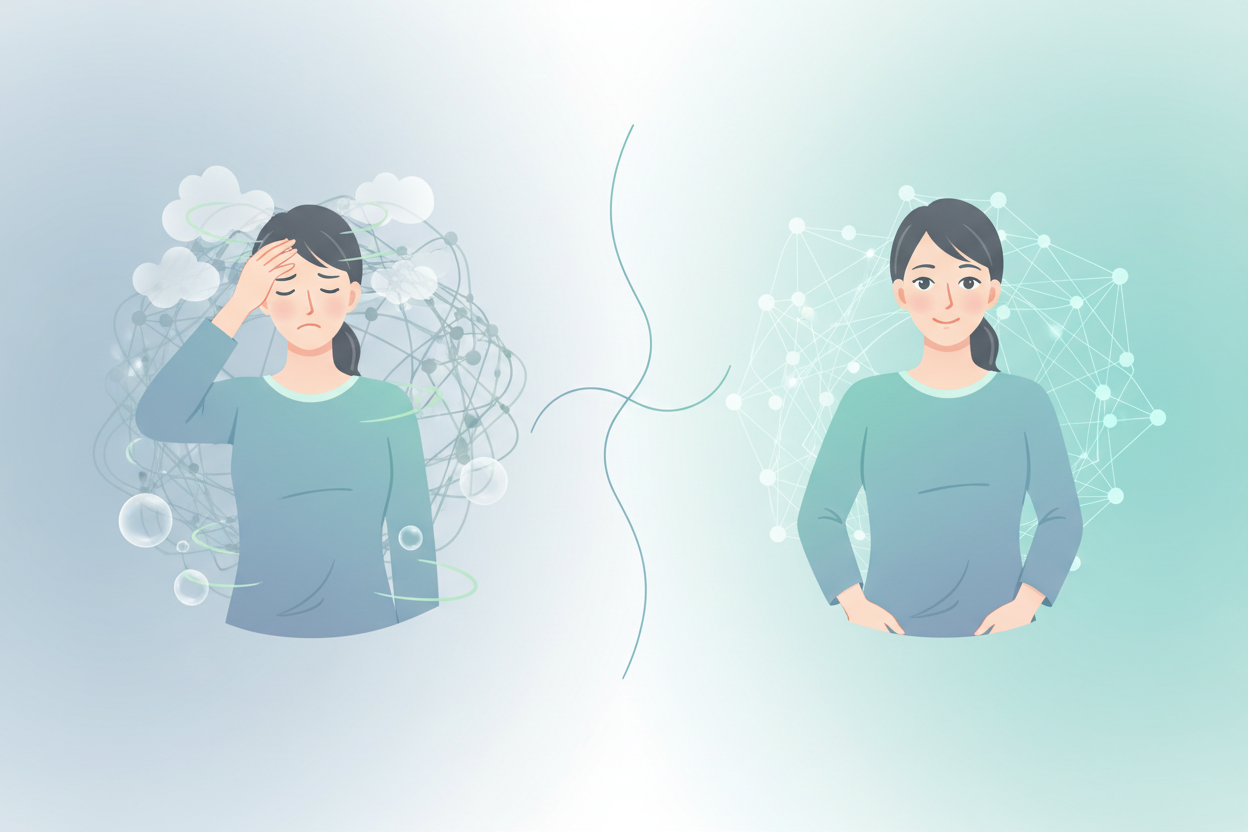
Your brain naturally produces electrical activity in the form of brainwaves, which oscillate at different frequencies depending on your mental state. When you’re deeply focused on creative work, your brain exhibits specific patterns that differ dramatically from when you’re stressed, distracted, or simply going through the motions.
The beauty of brainwave entrainment lies in its ability to guide your brain toward these optimal states without requiring years of meditation practice or expensive equipment. By listening to specially designed audio tracks or using light-based devices, you can essentially “train” your brain to access creative flow states more readily.
The Science Behind Creative Flow States
Research in neuroscience has revealed fascinating insights about what happens in our brains during peak creative performance. When we’re in a flow state – that magical zone where ideas seem to flow effortlessly – our brains show increased activity in the alpha and theta frequency ranges.
Alpha waves, oscillating between 8-13 Hz, are associated with relaxed awareness and creative thinking. They’re the bridge between conscious and subconscious processing, allowing for the kind of loose, associative thinking that leads to breakthrough ideas. Theta waves, ranging from 4-8 Hz, are linked to deep creativity, insight, and the ability to access memories and emotions that fuel artistic expression.
Interestingly, studies have shown that professional artists, musicians, and writers naturally spend more time in these brainwave states compared to the general population. However, even seasoned creatives can struggle to access these states consistently, especially when dealing with creative blocks, stress, or tight deadlines.
Dr. Arne Dietrich’s research on the neuroscience of creativity has shown that during creative insights, there’s a temporary decrease in activity in the prefrontal cortex – the brain region responsible for self-criticism and logical analysis. This phenomenon, called “transient hypofrontality,” allows for more fluid, unconventional thinking patterns that are essential for creative breakthroughs.
Types of Brainwave Entrainment for Creativity
Several different methods can be used to achieve brainwave entrainment, each with its own advantages and applications for creative work.
Binaural Beats are perhaps the most popular and accessible form of brainwave entrainment. This technique involves playing slightly different frequencies in each ear – for example, 200 Hz in the left ear and 210 Hz in the right ear. Your brain perceives the difference (10 Hz in this case) as a rhythmic beating pattern, gradually synchronizing to this frequency. For creativity, binaural beats in the alpha and theta ranges are most effective.
Isochronic Tones use evenly spaced pulses of sound to create entrainment effects. Unlike binaural beats, isochronic tones don’t require headphones and can be more effective for some individuals. These tones create a more pronounced rhythmic pattern that many find easier to synchronize with.
Monaural Beats combine two frequencies before they reach your ears, creating an audible beating pattern. This method is often considered more effective than binaural beats because the beating occurs in the audio itself rather than being processed by your brain.
Light-Based Entrainment uses flashing lights at specific frequencies to influence brainwave patterns. Some creative professionals find visual entrainment particularly effective, especially when combined with audio techniques.
Benefits for Creative Professionals
The advantages of incorporating brainwave entrainment into your creative practice extend far beyond simply accessing flow states. Regular use can lead to lasting improvements in your creative abilities and overall well-being.
Enhanced Focus and Concentration is one of the most immediate benefits you’ll notice. By training your brain to maintain specific frequency patterns, you develop greater control over your attention span. This is particularly valuable for creative professionals who need to maintain focus during long working sessions or when tackling complex projects.
Reduced Creative Blocks become possible as brainwave entrainment helps bypass the analytical mind that often creates barriers to creative expression. When your brain is operating in alpha and theta states, you’re more likely to make unexpected connections and generate novel ideas.
Improved Stress Management is another significant benefit. The creative industry is notoriously stressful, with irregular schedules, financial uncertainty, and constant pressure to innovate. Regular brainwave entrainment sessions can help regulate stress hormones and promote a more balanced nervous system response.
Better Sleep Quality often improves with consistent practice, as many entrainment techniques help regulate circadian rhythms. Better sleep directly translates to improved creativity, as REM sleep is crucial for memory consolidation and creative problem-solving.
Increased Emotional Intelligence can develop through theta wave entrainment, which enhances access to emotional memories and intuitive insights. This deeper emotional awareness often translates into more authentic and compelling creative work.
How to Get Started with Brainwave Entrainment
Beginning your brainwave entrainment journey doesn’t require significant investment or technical expertise. Start with these simple steps to integrate this powerful tool into your creative practice.
Choose Your Method based on your preferences and lifestyle. If you’re always on the go, smartphone apps with binaural beats might be ideal. For home studio work, dedicated entrainment devices or high-quality audio tracks might be more suitable.
Start Small with 10-15 minute sessions rather than jumping into hour-long experiences. Your brain needs time to adapt to entrainment frequencies, and shorter sessions are more sustainable for building a consistent practice.
Create the Right Environment by finding a quiet, comfortable space where you won’t be interrupted. Dim lighting can enhance the effects, and ensuring your phone is on silent mode prevents disruptions during crucial entrainment periods.
Use Quality Headphones if you’re working with binaural beats. The stereo separation is crucial for the technique to work effectively. However, don’t feel pressured to buy expensive equipment – many mid-range headphones work perfectly well.
Track Your Progress by keeping a simple journal of your creative output and subjective experiences. Note which frequencies work best for different types of creative work, and pay attention to how your overall creative capacity evolves over time.
Best Practices and Safety Considerations
While brainwave entrainment is generally safe for most people, following best practices ensures you get maximum benefits while avoiding potential issues.
Avoid Overuse by limiting sessions to 1-2 hours per day maximum. Your brain needs time to integrate the effects, and excessive use can lead to habituation where the techniques become less effective.
Stay Hydrated during and after sessions, as brainwave entrainment can be mentally taxing. Proper hydration supports optimal brain function and helps prevent headaches that some people experience when starting out.
Listen to Your Body and discontinue use if you experience persistent headaches, dizziness, or unusual emotional responses. While these side effects are rare, they indicate that you may need to adjust your approach or consult with a healthcare professional.
Avoid Driving or Operating Machinery immediately after entrainment sessions, especially those targeting theta frequencies. These sessions can leave you in a relaxed, dreamy state that’s perfect for creativity but not ideal for activities requiring sharp focus and quick reflexes.
Consult Healthcare Providers if you have epilepsy, seizure disorders, or are taking medications that affect brain chemistry. While serious adverse effects are extremely rare, it’s always better to err on the side of caution.
Real-World Applications for Different Creative Fields
The versatility of brainwave entrainment makes it valuable across various creative disciplines, though the optimal approaches may differ depending on your specific field.
Visual Artists and Designers often benefit most from alpha wave entrainment (8-13 Hz) during the conceptual phase of projects. This frequency range promotes the relaxed awareness that’s perfect for exploring color relationships, composition ideas, and visual metaphors. Many artists report that theta frequencies (4-8 Hz) are particularly effective during painting or drawing sessions where intuitive mark-making is desired.
Writers and Content Creators frequently find gamma waves (30-100 Hz) helpful during research and editing phases, while alpha and theta ranges work better for first drafts and creative writing. The key is matching the brainwave frequency to the specific writing task – analytical work benefits from higher frequencies, while stream-of-consciousness writing flows better with lower frequencies.
Musicians and Composers can use entrainment to enhance both technical practice and creative composition. Beta waves (13-30 Hz) support focused practice sessions, while theta waves often facilitate the kind of musical flow states where melodies and harmonies seem to emerge naturally.
Filmmakers and Video Editors report that alpha wave entrainment helps during storyboarding and pre-production planning, while beta frequencies can improve focus during the detailed work of editing and post-production.
The key is experimenting with different frequencies and timing to find what works best for your specific creative process and professional demands.
Conclusion
Brainwave entrainment represents a fascinating intersection of ancient wisdom and modern neuroscience, offering creative professionals a practical tool for enhancing their artistic abilities. While it’s not a magic bullet that will instantly transform your creative output, consistent practice can lead to noticeable improvements in focus, inspiration, and overall creative capacity.
The beauty of this approach lies in its accessibility – you don’t need expensive equipment or years of training to begin experiencing benefits. Start small, be consistent, and pay attention to how different frequencies affect your creative process. Remember that creativity is deeply personal, and what works for one artist may not work for another.
As our understanding of neuroscience continues to evolve, we’re likely to discover even more sophisticated ways to optimize our brains for creative work. For now, brainwave entrainment offers a scientifically-grounded method for accessing those elusive flow states that make the difference between struggling with creative blocks and experiencing the joy of effortless artistic expression.
Whether you’re a seasoned professional looking to break through creative plateaus or an emerging artist seeking to develop more consistent creative habits, brainwave entrainment deserves a place in your toolkit. The investment in time and experimentation required is minimal compared to the potential returns in creative satisfaction and professional success.
Frequently Asked Questions
Q: How long does it take to see results from brainwave entrainment?
A: Many people notice immediate effects during their first session, such as increased relaxation or enhanced focus. However, lasting changes in creative capacity typically develop over 2-4 weeks of consistent practice. The key is regularity rather than duration – 15 minutes daily is more effective than occasional longer sessions.
Q: Can I use brainwave entrainment while actually creating art or writing?
A: Absolutely! Many creative professionals find that playing entrainment tracks in the background during active creative work enhances their flow state. Start with lower volumes and alpha frequencies, as these are less likely to be distracting while still providing benefits.
Q: Are there any side effects I should be aware of?
A: Most people experience no side effects, but some may notice mild headaches, dizziness, or unusual dreams when starting out. These typically resolve within a few sessions as your brain adapts. If side effects persist, try reducing session length or frequency, and consult a healthcare provider if you have concerns.
Q: Do I need expensive equipment to get started?
A: Not at all! Many effective brainwave entrainment tracks are available as free apps or low-cost downloads. A decent pair of headphones is the only equipment you really need for binaural beats. You can always upgrade to specialized devices later if you find the practice beneficial.
Q: Which brainwave frequencies are best for creativity?
A: Alpha waves (8-13 Hz) and theta waves (4-8 Hz) are most commonly associated with creative states. Alpha promotes relaxed awareness and creative thinking, while theta facilitates deep creativity and intuitive insights. However, individual responses vary, so experimentation is key to finding your optimal frequencies.
Q: Can brainwave entrainment replace other creative practices like meditation or exercise?
A: Brainwave entrainment is best viewed as a complement to, rather than a replacement for, other wellness practices. It works synergistically with meditation, regular exercise, and good sleep habits to support overall creative health and mental well-being.