
Brainwave Entrainment for Caregivers: Managing Compassion Fatigue
Table of Contents
1. Introduction
2. Understanding Compassion Fatigue in Caregiving
3. What is Brainwave Entrainment?
4. The Science Behind Brainwave Entrainment for Stress Relief
5. How Brainwave Entrainment Helps Combat Compassion Fatigue
6. Types of Brainwave Entrainment for Caregivers
7. Getting Started with Brainwave Entrainment
8. Creating a Sustainable Self-Care Routine
9. Conclusion
10. Frequently Asked Questions
Introduction
If you’re a caregiver, you know that familiar feeling all too well. It starts as a gentle tug at your heartstrings when you first began caring for others, but over time, it transforms into something heavier. The emotional weight of constantly giving, supporting, and nurturing others can leave you feeling drained, overwhelmed, and emotionally numb. This isn’t a personal failing – it’s compassion fatigue, and it affects millions of caregivers worldwide.

Whether you’re a healthcare professional, family caregiver, social worker, or anyone who dedicates their life to helping others, compassion fatigue can creep up silently. The good news? There’s an innovative, science-backed approach that’s gaining recognition for its ability to help caregivers restore their emotional balance: brainwave entrainment.
In this comprehensive guide, we’ll explore how brainwave entrainment can become your secret weapon against compassion fatigue, offering you a practical path to emotional recovery and sustained well-being.
Understanding Compassion Fatigue in Caregiving
Compassion fatigue isn’t just being tired after a long day of caregiving. It’s a complex emotional and physical exhaustion that develops when your capacity for empathy becomes overwhelmed. Think of it as your emotional immune system becoming compromised from constant exposure to others’ pain and suffering.
The symptoms often mirror those of burnout but with a distinctly emotional flavor. You might find yourself feeling emotionally detached from the people you care for, experiencing intrusive thoughts about their situations, or feeling a sense of hopelessness about making a difference. Physical symptoms can include chronic fatigue, sleep disturbances, headaches, and a weakened immune system.
What makes compassion fatigue particularly challenging is that it often affects the most dedicated caregivers – those who care deeply and give generously of themselves. It’s not a sign of weakness; it’s actually evidence of your humanity and the depth of your caring nature.
The traditional approaches to managing compassion fatigue typically involve therapy, support groups, and lifestyle changes. While these remain valuable, many caregivers are discovering that brainwave entrainment offers a unique and accessible complement to these methods.
What is Brainwave Entrainment?
Brainwave entrainment might sound like science fiction, but it’s actually a well-researched phenomenon that’s been studied for decades. At its core, it’s based on the brain’s natural tendency to synchronize its electrical activity with external rhythmic stimuli – a process called the frequency-following response.
Your brain naturally produces electrical patterns called brainwaves, which correspond to different states of consciousness. When you’re alert and focused, your brain produces beta waves. During relaxation, it shifts to alpha waves. Deep meditation and restorative sleep are associated with theta and delta waves, respectively.
Brainwave entrainment uses specific audio frequencies, visual stimuli, or electromagnetic fields to gently guide your brain into desired states. It’s like having a tuning fork for your mind – the external rhythm gradually encourages your brainwaves to match that frequency, naturally shifting your mental state.
The beauty of this approach lies in its simplicity and accessibility. You don’t need years of meditation practice or specialized training. You simply listen to specially designed audio tracks or use light-based devices, and your brain does the rest.
The Science Behind Brainwave Entrainment for Stress Relief
The scientific foundation for brainwave entrainment’s effectiveness in stress management is robust and growing. Research has consistently shown that specific brainwave patterns are associated with reduced stress hormones, improved mood regulation, and enhanced emotional resilience.
Studies have demonstrated that alpha wave entrainment (8-12 Hz) can significantly reduce cortisol levels – the primary stress hormone that becomes chronically elevated in compassion fatigue. When your brain is guided into alpha states, it naturally promotes relaxation while maintaining alertness, creating an ideal condition for emotional recovery.
Theta wave entrainment (4-8 Hz) has shown particular promise for emotional healing and trauma recovery. This frequency range is associated with deep meditative states and enhanced neuroplasticity – your brain’s ability to form new neural connections and essentially rewire itself for better emotional regulation.
Recent neuroimaging studies have revealed that regular brainwave entrainment practice can lead to measurable changes in brain structure, particularly in areas responsible for emotional regulation and stress response. The prefrontal cortex, which governs executive function and emotional control, shows increased activity and connectivity after consistent entrainment practice.
How Brainwave Entrainment Helps Combat Compassion Fatigue
For caregivers experiencing compassion fatigue, brainwave entrainment offers several specific benefits that directly address the core symptoms and underlying causes of this condition.
First, it provides rapid access to restorative mental states. Unlike traditional meditation, which can take months or years to master, brainwave entrainment can guide you into deep relaxation within minutes. This is particularly valuable for busy caregivers who have limited time for self-care practices.
The practice also helps reset your nervous system’s stress response. Compassion fatigue often involves a chronically activated sympathetic nervous system – your body’s fight-or-flight response stuck in the “on” position. Brainwave entrainment can activate the parasympathetic nervous system, promoting the rest-and-digest response that allows for emotional and physical recovery.
Perhaps most importantly, regular entrainment practice can help rebuild your emotional resilience. By regularly accessing calm, centered brainwave states, you’re essentially training your brain to return to these states more easily during challenging caregiving situations. It’s like building emotional muscle memory.
Many caregivers report that brainwave entrainment helps them maintain healthy emotional boundaries – staying compassionate and caring while protecting themselves from absorbing others’ emotional pain. This balance is crucial for sustainable caregiving.
Types of Brainwave Entrainment for Caregivers
There are several types of brainwave entrainment, each with its own advantages and applications for managing compassion fatigue.
Binaural Beats are perhaps the most popular and accessible form. They work by playing slightly different frequencies in each ear, creating a third “phantom” frequency that your brain perceives. For example, playing 440 Hz in one ear and 450 Hz in the other creates a 10 Hz binaural beat, which can induce alpha wave states associated with relaxation and stress relief.
Isochronic Tones use regularly spaced pulses of sound to create the entrainment effect. Unlike binaural beats, they don’t require headphones and can be more effective for some people. They’re particularly useful for achieving deeper theta states that promote emotional healing.
Light and Sound Machines combine audio entrainment with synchronized light patterns, often delivered through special glasses. This dual-sensory approach can be more powerful than audio alone and is especially effective for achieving deep meditative states.
Neurofeedback Devices represent the cutting edge of brainwave entrainment technology. These devices monitor your actual brainwave activity in real-time and provide immediate feedback, allowing for more personalized and targeted entrainment sessions.
Getting Started with Brainwave Entrainment
Beginning your brainwave entrainment journey doesn’t require a significant investment or complex setup. Start simple and build from there.
Begin with free or low-cost binaural beat recordings available through various apps and online platforms. Look for tracks specifically designed for stress relief or relaxation, typically in the alpha range (8-12 Hz). Start with 10-15 minute sessions to allow your brain to adapt to the new experience.
Create a consistent routine by choosing a specific time each day for your practice. Many caregivers find that early morning sessions help set a calm tone for the day, while others prefer evening sessions to decompress after work. The key is consistency rather than duration.
Pay attention to your body’s response during and after sessions. You might experience tingling sensations, changes in breathing, or waves of relaxation – these are normal responses as your nervous system shifts into a more relaxed state. Some people initially feel slightly disoriented after sessions, which typically diminishes with regular practice.
Consider keeping a simple journal to track your experiences and any changes in your stress levels, sleep quality, or emotional resilience. This can help you identify which frequencies and session lengths work best for your unique needs.
Creating a Sustainable Self-Care Routine
While brainwave entrainment can be a powerful tool for managing compassion fatigue, it’s most effective when integrated into a comprehensive self-care routine. Think of it as one important piece of your emotional wellness puzzle.
Combine your entrainment practice with other stress-reduction techniques. Many caregivers find that starting with a few minutes of deep breathing before their entrainment session enhances the overall effect. Others prefer to follow their session with gentle stretching or journaling.
Consider the timing and environment of your practice. Choose a quiet space where you won’t be interrupted, and consider using the same location consistently to create a mental association between that space and relaxation. Dim lighting and comfortable seating can enhance the experience.
Remember that self-care isn’t selfish – it’s essential. Regular brainwave entrainment practice can actually make you a more effective caregiver by helping you maintain emotional balance and preventing burnout. You’re not just caring for yourself; you’re ensuring that you can continue to care for others sustainably.
Be patient with the process. While some people experience immediate benefits from brainwave entrainment, others may need several weeks of consistent practice to notice significant changes. Trust the process and focus on the cumulative benefits rather than expecting dramatic results from individual sessions.
Conclusion
Compassion fatigue is a real and challenging consequence of dedicating your life to caring for others. It’s not a character flaw or a sign that you’re not cut out for caregiving – it’s a natural human response to prolonged exposure to others’ suffering and pain.
Brainwave entrainment offers a scientifically-backed, accessible tool for managing and preventing compassion fatigue. By harnessing your brain’s natural ability to synchronize with external rhythms, you can guide yourself into restorative mental states that promote emotional healing and resilience.
The journey of caregiving is marathon, not a sprint. Incorporating brainwave entrainment into your self-care routine can help ensure that you not only survive this journey but thrive throughout it. Your future self – and all those you care for – will thank you for taking this proactive step toward emotional wellness.
Remember, seeking help and using tools like brainwave entrainment isn’t giving up or admitting defeat. It’s recognizing your worth and committing to sustainable caregiving practices that honor both your well-being and your calling to help others.
Frequently Asked Questions
Q: Is brainwave entrainment safe for everyone?
A: Brainwave entrainment is generally safe for most people. However, individuals with epilepsy, severe mental health conditions, or those who are pregnant should consult with a healthcare provider before starting any entrainment practice. People with hearing aids or pacemakers should also seek medical advice first.
Q: How long does it take to see results from brainwave entrainment?
A: Many people experience immediate relaxation during their first session, but lasting changes in stress management and emotional resilience typically develop over 2-4 weeks of consistent practice. Some individuals may notice improvements sooner, while others might need longer to experience significant benefits.
Q: Can I use brainwave entrainment while doing other activities?
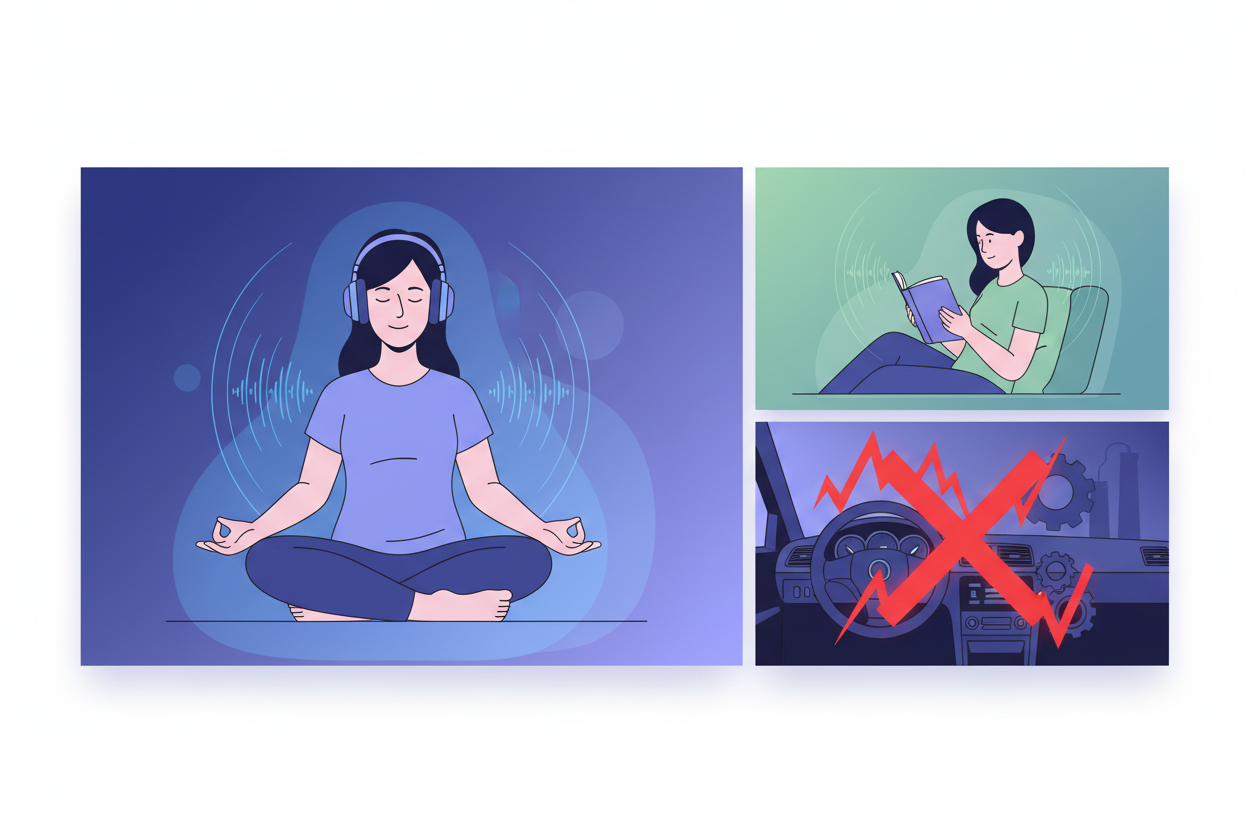
A: For maximum effectiveness, it’s best to use brainwave entrainment during dedicated quiet time when you can focus on the experience. However, some people do find benefit from using certain types of entrainment during light activities like reading or gentle stretching. Avoid using it while driving or operating machinery.
Q: What’s the difference between brainwave entrainment and meditation?
A: While both practices can promote relaxation and stress relief, brainwave entrainment uses external stimuli to guide your brain into specific states, while traditional meditation relies on mental techniques and practice. Entrainment can be easier for beginners and provides more immediate access to altered states of consciousness.
Q: Do I need expensive equipment to get started?
A: Not at all. You can begin with free smartphone apps or low-cost audio recordings. Basic headphones are helpful for binaural beats, but you don’t need specialized equipment. As you develop your practice, you might choose to invest in higher-quality recordings or devices, but they’re not necessary for experiencing benefits.
Q: Can brainwave entrainment replace professional treatment for severe compassion fatigue?
A: Brainwave entrainment is a valuable complementary tool but shouldn’t replace professional mental health treatment for severe compassion fatigue or related conditions. If you’re experiencing significant depression, anxiety, or other mental health symptoms, it’s important to work with qualified healthcare providers alongside any self-care practices.