
Brainwave Entrainment for Athletes: Enhancing Performance and Recovery
Table of Contents
1. Introduction to Brainwave Entrainment
2. Understanding Brainwaves and Athletic Performance
3. How Brainwave Entrainment Works for Athletes
4. Benefits of Brainwave Entrainment in Sports
5. Types of Brainwave Entrainment Techniques
6. Implementing Brainwave Entrainment in Training Routines
7. Real-World Applications and Success Stories
8. Safety Considerations and Best Practices
9. Frequently Asked Questions
10. Conclusion
Introduction to Brainwave Entrainment
Picture this: you’re standing at the starting line, heart pounding, muscles coiled like springs ready to unleash their power. Your mind races with anticipation, but what if I told you that the key to unlocking your peak performance lies not just in your physical training, but in the rhythmic patterns of your brain waves?
Brainwave entrainment has emerged as a fascinating frontier in sports science, offering athletes a cutting-edge tool to optimize both performance and recovery. This innovative technique harnesses the brain’s natural ability to synchronize with external stimuli, creating specific mental states that can dramatically enhance athletic capabilities.
As more professional athletes and sports teams discover the power of brainwave entrainment, it’s becoming clear that the future of athletic excellence isn’t just about training harder – it’s about training smarter, with your brain leading the charge.
Understanding Brainwaves and Athletic Performance
Before diving into the practical applications, let’s explore what brainwaves actually are. Your brain constantly generates electrical activity, creating different wave patterns that correspond to various mental states. These brainwaves are measured in hertz (Hz) and fall into distinct categories:
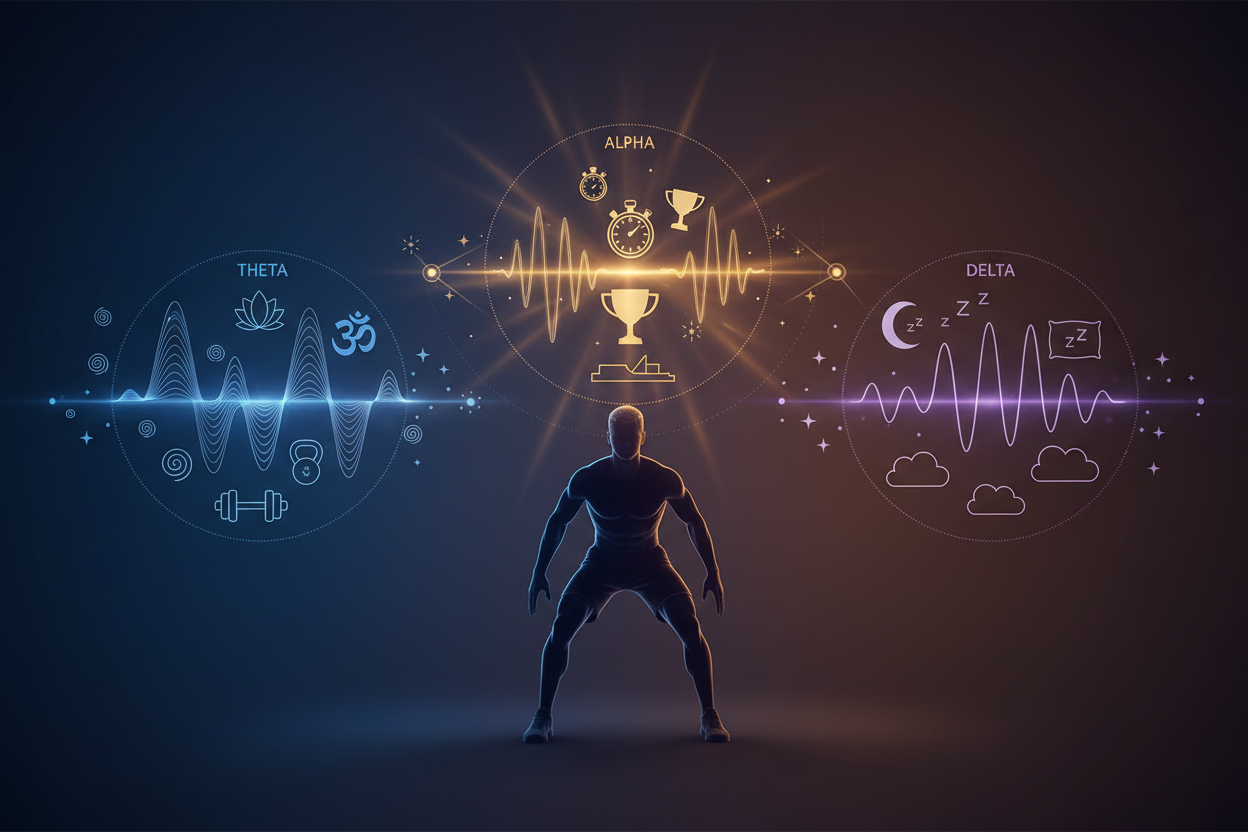
Delta waves (0.5-4 Hz) dominate during deep sleep and are crucial for physical recovery and growth hormone release. For athletes, optimizing delta wave activity can significantly improve recovery times and muscle repair.
Theta waves (4-8 Hz) are associated with deep meditation, creativity, and the flow state that athletes often describe as being “in the zone.” This frequency range can enhance visualization techniques and mental rehearsal.
Alpha waves (8-13 Hz) represent a relaxed yet alert state, perfect for learning new techniques and maintaining calm focus under pressure. Many successful athletes naturally produce strong alpha waves during competition.
Beta waves (13-30 Hz) correspond to normal waking consciousness and active thinking. While necessary for strategic planning, excessive beta activity can lead to overthinking and performance anxiety.
Gamma waves (30-100 Hz) are linked to heightened awareness and peak cognitive performance, potentially enhancing reaction times and decision-making speed during competition.
How Brainwave Entrainment Works for Athletes
Brainwave entrainment operates on a simple yet powerful principle: when exposed to rhythmic stimuli at specific frequencies, your brain naturally synchronizes its electrical activity to match those patterns. It’s like having a metronome for your mind, guiding your brain into optimal states for different athletic goals.
The process typically involves auditory, visual, or tactile stimulation delivered at precise frequencies. For instance, listening to binaural beats – where slightly different frequencies are played in each ear – can guide your brain into desired states within minutes.
What makes this particularly exciting for athletes is the ability to target specific mental states on demand. Need to enter a flow state for training? Theta entrainment can help. Want to enhance focus during competition? Alpha wave training might be your answer. Looking to optimize recovery sleep? Delta wave entrainment could be the key.
The beauty of brainwave entrainment lies in its accessibility and efficiency. Unlike traditional meditation or mental training that might take years to master, entrainment can produce measurable results in just a few sessions.
Benefits of Brainwave Entrainment in Sports
The applications of brainwave entrainment in athletics are as diverse as they are powerful. Let’s examine the key benefits that are transforming how athletes approach their mental game.
Enhanced focus and concentration represent perhaps the most immediate benefits. By training the brain to maintain specific wave patterns, athletes can develop laser-like focus that cuts through distractions and performance anxiety. This heightened concentration translates directly into improved technique execution and strategic decision-making.
Stress reduction and anxiety management become significantly more achievable through targeted brainwave training. Competition anxiety, which can derail even the most physically prepared athletes, often responds remarkably well to alpha and theta wave entrainment protocols.
Accelerated recovery is another game-changing benefit. By optimizing delta wave activity during sleep, athletes can enhance growth hormone production, improve cellular repair, and reduce inflammation more effectively than through passive recovery alone.
Pain management capabilities of brainwave entrainment offer athletes natural alternatives to pharmaceutical interventions. Specific frequencies can help modulate pain perception, allowing athletes to train through minor discomfort while remaining aware of potentially serious injuries.
Improved sleep quality naturally follows from brainwave optimization. Many athletes struggle with sleep disruption due to training stress, competition schedules, and travel. Entrainment can help normalize sleep cycles and improve sleep depth, leading to better overall recovery.
Types of Brainwave Entrainment Techniques
Athletes have several entrainment methods at their disposal, each with unique advantages and applications. Understanding these options helps in selecting the most appropriate technique for specific goals.
Binaural beats remain the most popular and accessible form of entrainment. By playing slightly different frequencies in each ear through headphones, the brain perceives a “beat” at the difference frequency. For example, playing 440 Hz in one ear and 450 Hz in the other creates a 10 Hz binaural beat, potentially inducing alpha wave activity.
Monaural beats present both frequencies to both ears simultaneously, creating an actual rhythmic beat rather than a perceived one. This technique doesn’t require headphones and can be effective for group training sessions.
Isochronic tones deliver single-frequency pulses at specific intervals, creating distinct on-off patterns that can be highly effective for entrainment. Many athletes find isochronic tones more noticeable and easier to follow than binaural beats.
Light and sound machines combine visual and auditory stimulation, often using LED glasses synchronized with audio frequencies. These devices can create powerful entrainment effects and are popular in professional sports settings.
Neurofeedback systems take entrainment to the next level by providing real-time feedback about brain activity, allowing athletes to learn conscious control over their brainwave patterns. While more complex and expensive, neurofeedback offers the most personalized and precise training possible.
Implementing Brainwave Entrainment in Training Routines
Successfully integrating brainwave entrainment into athletic training requires thoughtful planning and consistent application. The key lies in matching specific entrainment protocols to training goals and competition demands.
Pre-training preparation can benefit enormously from alpha wave entrainment, helping athletes achieve the optimal balance of relaxation and alertness needed for skill acquisition. A 10-15 minute alpha session before practice can enhance learning and reduce training anxiety.
During skill development phases, theta wave entrainment can facilitate the flow states that accelerate learning and improve technique refinement. Many athletes report breakthrough moments in skill acquisition following theta entrainment sessions.
Competition preparation often benefits from customized protocols that address individual athlete needs. Some performers thrive with energizing beta wave stimulation, while others perform better with calming alpha wave preparation.
Post-training recovery represents an ideal time for delta wave entrainment, particularly when combined with other recovery modalities like stretching or massage. This combination can significantly enhance the body’s natural repair processes.
Travel and jet lag management become more manageable with targeted entrainment protocols. Specific frequencies can help reset circadian rhythms and minimize the performance impact of travel fatigue.
Real-World Applications and Success Stories
The theoretical benefits of brainwave entrainment become truly compelling when we examine real-world applications and documented success stories from the athletic world.
Professional basketball teams have reported significant improvements in free-throw shooting accuracy following alpha wave training programs. The enhanced focus and reduced anxiety translate directly into better performance during high-pressure situations.
Olympic swimmers have utilized theta entrainment for visualization training, reporting more vivid and effective mental rehearsal sessions that improve race strategy and technique execution.
Endurance athletes, particularly marathon runners and cyclists, have found gamma wave entrainment helpful for maintaining peak cognitive function during extended competition periods when mental fatigue typically degrades performance.
Combat sports athletes have successfully used brainwave entrainment for both aggression management and tactical thinking enhancement, learning to switch between different mental states as competition demands change.
Recovery applications have shown particularly impressive results, with some athletes reporting 20-30% improvements in subjective recovery scores when using delta wave entrainment protocols consistently.
Safety Considerations and Best Practices
While brainwave entrainment is generally considered safe for healthy individuals, athletes should be aware of important safety considerations and best practices to maximize benefits while minimizing risks.
Individual sensitivity varies significantly, and what works well for one athlete may be less effective or even counterproductive for another. Starting with shorter sessions and lower intensities allows for gradual adaptation and helps identify optimal parameters.
Medical contraindications exist for certain populations. Athletes with epilepsy, seizure disorders, or other neurological conditions should consult healthcare providers before beginning entrainment programs. Pregnant athletes should also seek medical guidance.
Timing considerations are crucial for optimal results. Using stimulating frequencies too close to bedtime can disrupt sleep, while relaxing frequencies might impair performance if used immediately before competition.
Quality equipment matters significantly. Poor-quality audio equipment or improperly calibrated frequencies can reduce effectiveness and potentially cause discomfort or headaches.
Professional guidance, particularly when starting out, can help athletes avoid common mistakes and develop personalized protocols that align with their specific sport and performance goals.
Frequently Asked Questions
How long does it take to see results from brainwave entrainment?
Most athletes notice some immediate effects during their first session, such as relaxation or increased alertness. However, lasting performance improvements typically develop over 2-4 weeks of consistent practice. The brain needs time to adapt and strengthen new neural pathways.
Can brainwave entrainment replace traditional mental training methods?
Brainwave entrainment works best as a complement to, rather than replacement for, traditional sports psychology techniques. It can enhance the effectiveness of visualization, meditation, and other mental training methods by helping athletes achieve optimal brain states more quickly and consistently.
Is it safe to use brainwave entrainment every day?
For most healthy athletes, daily use of brainwave entrainment is safe when sessions are kept to reasonable durations (typically 15-30 minutes) and appropriate frequencies are used. However, it’s important to vary protocols and take occasional breaks to prevent habituation.
What equipment do I need to get started with brainwave entrainment?
Basic brainwave entrainment can be started with just good-quality headphones and access to binaural beat audio files or apps. More advanced options include dedicated light-sound machines or neurofeedback systems, but these aren’t necessary for beginners.
Can brainwave entrainment help with sports-related injuries?
While brainwave entrainment shouldn’t replace proper medical treatment, it may support recovery by promoting better sleep, reducing stress, and potentially helping with pain management. Always consult with healthcare providers for injury treatment.
How do I know which brainwave frequencies to use?
The choice of frequencies depends on your specific goals. Alpha waves (8-13 Hz) are good for general performance and relaxation, theta waves (4-8 Hz) for flow states and visualization, and delta waves (0.5-4 Hz) for recovery and sleep. Starting with alpha frequencies is often recommended for beginners.
Conclusion
Brainwave entrainment represents a revolutionary approach to athletic performance enhancement that’s both scientifically grounded and practically accessible. As we’ve explored throughout this post, the ability to consciously influence brain states offers athletes unprecedented control over their mental game.
The evidence continues to mount that peak athletic performance isn’t just about physical conditioning – it’s about optimizing the entire mind-body system. Brainwave entrainment provides a direct pathway to this optimization, offering benefits that range from enhanced focus and reduced anxiety to accelerated recovery and improved sleep quality.
What makes this technology particularly exciting is its democratizing effect on performance enhancement. Whether you’re a weekend warrior looking to improve your golf game or a professional athlete seeking that competitive edge, brainwave entrainment offers scalable solutions that can be tailored to individual needs and goals.
As research in this field continues to expand and technology becomes more sophisticated, we can expect even more targeted and effective applications. The future of athletic performance may well depend not just on how hard we train our bodies, but on how skillfully we can orchestrate our brainwaves.
For athletes ready to explore this frontier, the journey begins with a single session. Start simple, stay consistent, and prepare to discover new dimensions of your athletic potential. Your brain has been waiting for this invitation to join your training team – isn’t it time you extended it?