

The Role of Brainwaves in Muscle Memory and Motor Learning: How Your Brain Rewires Itself for Movement
Table of Contents
1. Introduction to Brainwaves and Motor Learning
2. Understanding Brainwave Patterns and Their Functions
3. The Science Behind Muscle Memory Formation
4. How Different Brainwaves Contribute to Motor Learning
5. The Neural Pathways of Movement Mastery
6. Optimizing Brainwave Activity for Better Motor Skills
7. Real-World Applications and Training Methods
8. The Future of Brainwave-Based Motor Learning
9. Conclusion
10. Frequently Asked Questions
Introduction to Brainwaves and Motor Learning
Have you ever wondered why some people seem to pick up new physical skills effortlessly while others struggle for months to master the same movements? The answer lies deep within our brains, in the rhythmic electrical patterns we call brainwaves. These neural oscillations play a crucial role in how we develop muscle memory and acquire motor skills, from learning to ride a bicycle to perfecting a tennis serve.
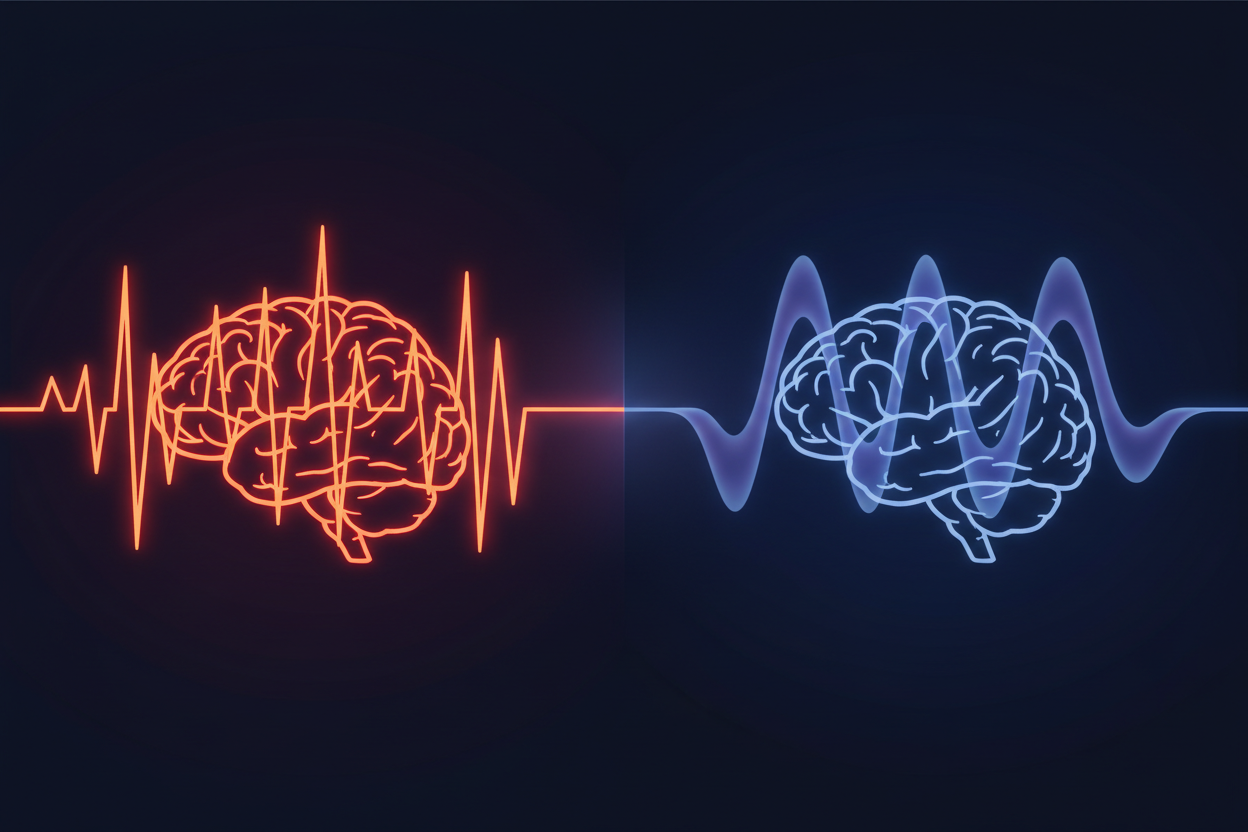
The relationship between brainwaves and motor learning represents one of neuroscience’s most fascinating frontiers. When we practice a new movement, our brains don’t just store information randomly – they create specific patterns of neural activity that become increasingly refined with repetition. Understanding this process can revolutionize how we approach skill acquisition, rehabilitation, and athletic performance.
This intricate dance between electrical brain activity and physical movement affects everyone, whether you’re a professional athlete fine-tuning your technique, a musician mastering a complex piece, or someone recovering from an injury. The more we understand about brainwave patterns and their influence on motor learning, the better we can optimize our training methods and accelerate skill development.
Understanding Brainwave Patterns and Their Functions
Brainwaves are essentially the electrical signatures of neural communication. These rhythmic patterns occur when groups of neurons fire in synchrony, creating measurable frequencies that scientists can detect using electroencephalography (EEG). Each brainwave frequency serves different cognitive and motor functions, and understanding these patterns helps us appreciate their role in movement learning.
The five primary brainwave categories each operate at different frequencies, measured in hertz (Hz). Delta waves (0.5-4 Hz) dominate during deep sleep and are associated with healing and regeneration. Theta waves (4-8 Hz) appear during light sleep, meditation, and creative states. Alpha waves (8-13 Hz) emerge during relaxed awareness and are particularly important for motor learning. Beta waves (13-30 Hz) characterize active, focused thinking, while gamma waves (30-100 Hz) represent high-level cognitive processing and consciousness.
What makes this particularly interesting for motor learning is that different types of physical practice and skill acquisition seem to favor different brainwave states. Research has shown that the brain’s ability to form new motor memories depends heavily on achieving the right balance of these neural oscillations during practice sessions.
The Science Behind Muscle Memory Formation
Muscle memory isn’t actually stored in our muscles – it’s a complex neurological process that occurs primarily in the brain and nervous system. When we repeatedly perform a movement, we create and strengthen neural pathways that make the action increasingly automatic. This process, known as motor learning consolidation, relies heavily on specific brainwave patterns to encode, store, and retrieve movement information.
The formation of muscle memory involves several brain regions working in concert. The motor cortex initiates voluntary movements, while the cerebellum fine-tunes coordination and timing. The basal ganglia help automate learned movements, and the hippocampus contributes to the initial learning and memory formation. Each of these regions exhibits distinct brainwave patterns during different phases of motor learning.
During the early stages of learning a new skill, the brain shows high levels of beta wave activity, indicating intense concentration and cognitive effort. As the skill becomes more automatic, this pattern shifts toward alpha and theta frequencies, suggesting that the movement has become more intuitive and less cognitively demanding. This transition represents the brain’s remarkable ability to optimize neural resources as skills become ingrained.
How Different Brainwaves Contribute to Motor Learning
Alpha waves play a particularly crucial role in motor skill acquisition. These 8-13 Hz oscillations create an optimal state for learning by reducing cortical interference and allowing for better information processing. When athletes or musicians achieve a “flow state” during practice, their brains typically show increased alpha wave activity, particularly in areas associated with motor control.
Theta waves contribute to motor learning through their role in memory consolidation and creative problem-solving. During sleep, theta oscillations help transfer motor memories from temporary storage in the hippocampus to long-term storage in the cortex. This is why getting adequate sleep after practice sessions is crucial for skill retention and improvement.
Beta waves, while sometimes associated with tension and overthinking, also serve important functions in motor learning. High-beta activity helps maintain focus during complex skill acquisition, though excessive beta can lead to muscle tension and impaired performance. The key lies in finding the right balance between focused attention and relaxed execution.
Gamma waves represent the brain’s ability to bind different sensory inputs into coherent motor programs. These high-frequency oscillations help integrate visual, proprioceptive, and auditory information necessary for precise movement execution. Elite athletes often show enhanced gamma wave activity during peak performance moments.
The Neural Pathways of Movement Mastery
The journey from clumsy beginner to skilled performer involves dramatic changes in neural pathway efficiency and brainwave coordination. Initially, learning a new motor skill requires conscious attention and results in widespread brain activation. Multiple regions must communicate extensively, creating complex patterns of neural oscillations across different frequency bands.
As proficiency increases, the brain develops more efficient neural networks. This process, called synaptic pruning, eliminates unnecessary connections while strengthening the most important pathways. The result is smoother, more coordinated brainwave patterns that require less overall neural energy to produce the same movements.
Advanced practitioners often develop what researchers call “neural efficiency.” Their brains show less overall activation during skill performance, but the remaining activity is highly synchronized and purposeful. This efficiency manifests as cleaner brainwave patterns with less interference between different frequency bands.
The development of automaticity in motor skills involves a gradual shift from conscious, controlled processing to unconscious, automatic execution. This transition is reflected in changing brainwave patterns, with decreased beta activity in areas associated with conscious control and increased alpha activity in regions responsible for smooth, coordinated movement.
Optimizing Brainwave Activity for Better Motor Skills
Understanding brainwave patterns opens up exciting possibilities for enhancing motor learning through targeted interventions. Neurofeedback training, for example, can teach individuals to consciously influence their brainwave states to optimize learning conditions. Athletes and musicians increasingly use these techniques to accelerate skill acquisition and improve performance consistency.
Meditation and mindfulness practices have shown remarkable effects on brainwave patterns relevant to motor learning. Regular meditation increases alpha wave production and improves the brain’s ability to switch between different frequency states as needed. This flexibility proves invaluable during motor skill acquisition, allowing practitioners to adapt their neural state to match the demands of different learning phases.
Environmental factors also significantly influence brainwave patterns during motor learning. Factors such as lighting, sound, temperature, and even the time of day can affect the brain’s electrical activity. Many successful coaches and trainers intuitively create optimal learning environments that promote beneficial brainwave states, though they may not realize the neurological mechanisms behind their methods.
Breathing techniques represent another powerful tool for brainwave optimization. Controlled breathing patterns can shift the brain toward alpha and theta states, creating ideal conditions for motor learning and memory consolidation. Many traditional martial arts and movement practices incorporate specific breathing patterns that modern neuroscience now recognizes as neurologically beneficial.
Real-World Applications and Training Methods
Professional sports teams are beginning to incorporate brainwave monitoring and training into their development programs. By understanding each athlete’s individual brainwave patterns, coaches can tailor training methods to optimize learning efficiency. Some athletes use real-time EEG feedback during practice to maintain optimal brain states for skill acquisition.
Rehabilitation medicine has embraced brainwave-based approaches for helping patients recover motor function after injury or illness. Stroke patients, for example, often show disrupted brainwave patterns in motor areas. Targeted interventions that restore healthy neural oscillations can significantly improve recovery outcomes and accelerate the relearning of basic motor skills.
Music education provides another compelling application area. Piano students who receive brainwave feedback during practice often show faster improvement in technical skills and musical expression. The ability to monitor and adjust brain states in real-time helps students find the optimal balance between focused attention and relaxed execution necessary for musical mastery.
Virtual reality training systems increasingly incorporate brainwave monitoring to create adaptive learning environments. These systems can adjust difficulty levels and provide feedback based on the learner’s current neural state, ensuring that practice sessions remain within the optimal zone for motor learning and skill consolidation.
The Future of Brainwave-Based Motor Learning
Emerging technologies promise to revolutionize how we understand and optimize motor learning through brainwave analysis. Advanced brain-computer interfaces may soon allow for direct neural feedback during skill practice, providing unprecedented insights into the learning process and enabling more precise interventions.
Artificial intelligence algorithms are becoming increasingly sophisticated at analyzing complex brainwave patterns and predicting optimal learning strategies for individual learners. These personalized approaches could dramatically improve the efficiency of motor skill acquisition across various domains, from sports and music to surgical training and rehabilitation.
Transcranial stimulation techniques, which use magnetic or electrical fields to influence brain activity, show promise for enhancing motor learning by promoting beneficial brainwave patterns. While still in experimental stages, these methods could eventually provide safe, non-invasive ways to accelerate skill acquisition and improve performance outcomes.
The integration of brainwave monitoring with other physiological measures, such as heart rate variability and muscle tension, will provide even more comprehensive understanding of the psychophysiological factors that influence motor learning. This holistic approach promises to unlock new levels of human performance potential.
Conclusion
The intricate relationship between brainwaves and motor learning reveals the remarkable sophistication of our nervous system’s approach to skill acquisition. From the initial conscious effort required to learn new movements to the eventual automaticity of well-practiced skills, brainwave patterns provide a window into the neural mechanisms that make human motor learning possible.
As our understanding of these processes continues to evolve, we’re discovering practical applications that can benefit everyone from elite athletes to individuals recovering from neurological injuries. The ability to monitor and optimize brainwave states during motor learning represents a significant advance in our capacity to enhance human performance and accelerate skill development.
The future holds exciting possibilities for leveraging brainwave research to create more effective training methods, rehabilitation protocols, and performance enhancement strategies. By working with our brain’s natural oscillatory patterns rather than against them, we can unlock new levels of motor learning efficiency and help people achieve their movement goals more effectively than ever before.
Frequently Asked Questions
Q: Can I measure my own brainwaves during motor skill practice?
A: Yes, consumer-grade EEG devices are now available that can provide basic brainwave feedback during practice sessions. While not as precise as research-grade equipment, these devices can give you insights into your neural states during skill learning.
Q: How long does it take for brainwave patterns to change with motor learning?
A: Brainwave changes can begin within a single practice session, but significant pattern modifications typically occur over weeks to months of consistent practice. The timeline varies greatly depending on the complexity of the skill and individual differences in learning ability.
Q: Do age-related changes in brainwaves affect motor learning ability?
A: Yes, brainwave patterns do change with age, and this can influence motor learning capacity. However, the brain maintains significant plasticity throughout life, and older adults can still achieve substantial improvements in motor skills with appropriate training methods.
Q: Are certain brainwave patterns better for learning different types of motor skills?
A: Research suggests that different skills may benefit from different brainwave states. Fine motor skills often benefit from alpha wave dominance, while gross motor skills may require different patterns. The optimal state also depends on the learning phase and individual characteristics.
Q: Can medication or supplements affect brainwaves and motor learning?
A: Yes, various substances can influence brainwave patterns and potentially affect motor learning. Caffeine, for example, increases beta wave activity, while some medications can alter neural oscillations. Always consult healthcare providers before using any substances to enhance learning.