

Brainwave Entrainment for Teachers: Managing Classroom Stress
Table of Contents
1. Introduction
2. Understanding Brainwave Entrainment
3. The Reality of Teacher Stress in Today’s Classrooms
4. How Brainwave Entrainment Works for Stress Management
5. Practical Applications for Teachers
6. Getting Started: Simple Techniques for Busy Educators
7. Real-World Success Stories
8. Integrating Brainwave Entrainment into Your Teaching Routine
9. Conclusion
10. Frequently Asked Questions
Introduction
Teaching has always been a demanding profession, but today’s educators face unprecedented challenges. From managing diverse learning needs to navigating technology integration, dealing with behavioral issues, and meeting ever-increasing administrative demands, the modern classroom can feel like a pressure cooker. If you’re a teacher struggling with stress, you’re certainly not alone – and there might be a surprisingly effective solution you haven’t considered yet.
Brainwave entrainment, a scientifically-backed technique that uses rhythmic stimuli to influence brain activity, is emerging as a powerful tool for stress management in educational settings. This natural, non-invasive approach can help teachers achieve greater calm, focus, and emotional resilience – qualities that not only benefit your well-being but also create a more positive learning environment for your students.
Understanding Brainwave Entrainment
Before diving into how brainwave entrainment can transform your teaching experience, let’s explore what it actually means. Your brain naturally produces electrical activity in the form of brainwaves, which operate at different frequencies depending on your mental state. When you’re alert and focused, your brain produces beta waves. During relaxation, alpha waves dominate. Deep meditation and sleep are characterized by theta and delta waves respectively.
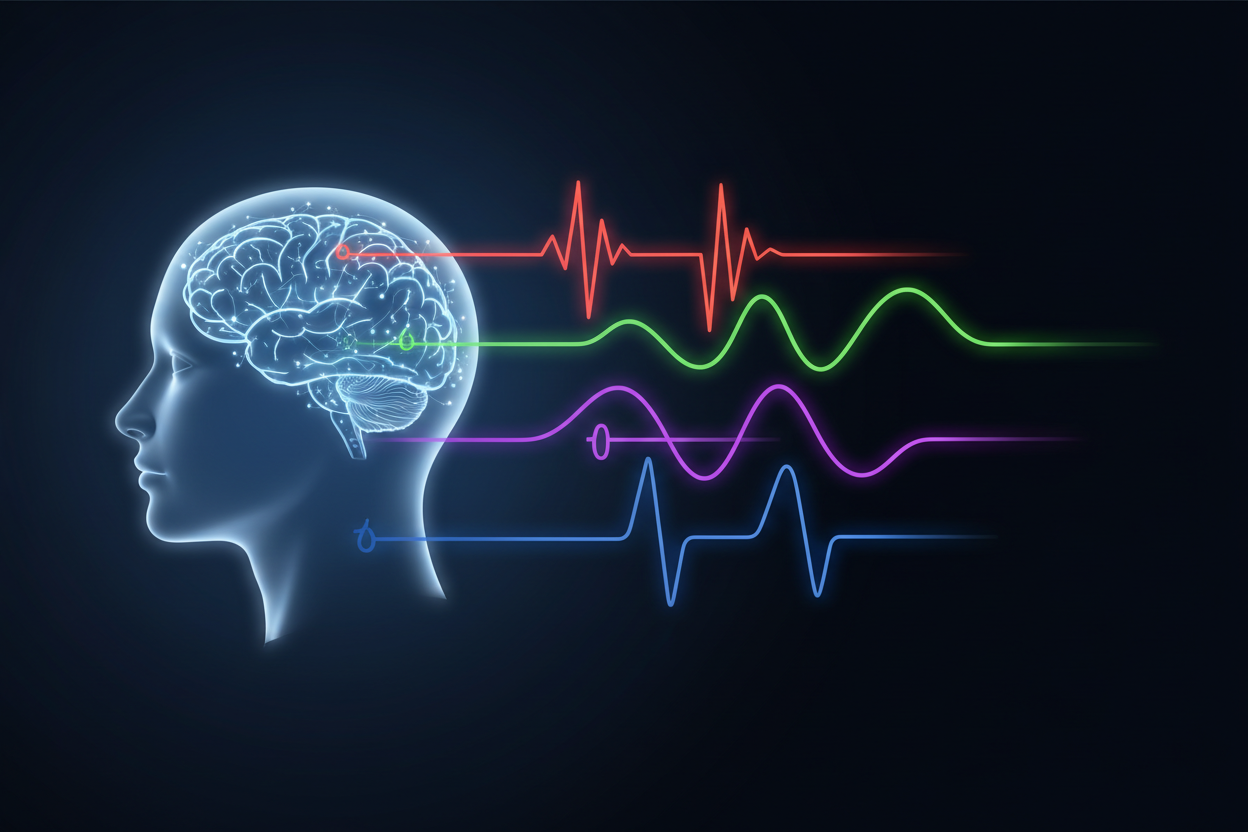
Brainwave entrainment works by exposing your brain to rhythmic stimuli – typically through sound, light, or electromagnetic pulses – that match the frequency of your desired brainwave state. Through a phenomenon called the “frequency following response,” your brain naturally synchronizes with these external rhythms, effectively guiding you into specific mental states.
Think of it like tuning a guitar. Just as a tuning fork can help bring a guitar string into the correct pitch, brainwave entrainment helps tune your brain to the optimal frequency for whatever you’re trying to achieve – whether that’s deep relaxation, enhanced focus, or stress relief.
The Reality of Teacher Stress in Today’s Classrooms
Recent studies paint a concerning picture of educator well-being. According to the National Education Association, nearly 55% of teachers are considering leaving the profession earlier than planned, with stress and burnout cited as primary factors. The demands are relentless: lesson planning, grading, parent conferences, professional development, and the emotional labor of supporting students through their own challenges.
Classroom stress manifests in numerous ways. You might recognize the physical symptoms – tension headaches, tight shoulders, disrupted sleep patterns, or that constant feeling of being “on edge.” The mental toll is equally significant: difficulty concentrating, decision fatigue, irritability, and the gradual erosion of the passion that brought you to teaching in the first place.
What makes teacher stress particularly challenging is that it doesn’t stay contained to school hours. You carry it home, where it affects your relationships, your health, and your ability to recharge for the next day. This chronic stress state not only impacts your quality of life but also your effectiveness in the classroom, creating a cycle that can feel impossible to break.
How Brainwave Entrainment Works for Stress Management
The beauty of brainwave entrainment lies in its ability to interrupt the stress cycle at a neurological level. When you’re stressed, your brain tends to get stuck in high-frequency beta waves – the same pattern associated with anxiety and overthinking. Brainwave entrainment can gently guide your brain into calmer alpha or theta states, where stress hormones decrease and relaxation responses activate.
Research has shown that regular brainwave entrainment practice can lead to measurable changes in stress markers. Cortisol levels decrease, heart rate variability improves, and the nervous system shifts from the fight-or-flight sympathetic state to the rest-and-digest parasympathetic state. These aren’t just temporary effects – with consistent practice, your brain actually becomes better at accessing these calmer states naturally.
For teachers, this translates to improved emotional regulation in challenging moments. Instead of feeling overwhelmed when a lesson plan falls apart or a student acts out, you develop the neurological flexibility to respond rather than react. Your stress recovery time shortens, and you build resilience that carries over into all aspects of your life.
Practical Applications for Teachers
The versatility of brainwave entrainment makes it particularly suited to the unpredictable nature of teaching. Here are several ways you can incorporate this technique into your professional life:
Morning Preparation: Start your day with a 10-15 minute alpha wave session to promote calm alertness. This can help you approach your classroom with greater equanimity and mental clarity.
Lunch Break Reset: Use a brief theta wave session during lunch to decompress from the morning’s challenges and recharge for the afternoon. Even five minutes can make a significant difference in your energy levels.
Transition Periods: Between classes or during prep periods, a quick alpha wave session can help you shift mental gears and approach each new group of students with fresh energy.
Post-School Decompression: After a demanding day, brainwave entrainment can help you transition from teacher mode to personal time, preventing work stress from bleeding into your evening hours.
Weekend Recovery: Longer sessions during weekends can provide deep restoration, helping you process the week’s accumulated stress and prepare mentally for the challenges ahead.
Getting Started: Simple Techniques for Busy Educators
One of the most appealing aspects of brainwave entrainment is its accessibility. You don’t need expensive equipment or extensive training to begin experiencing benefits. Here’s how to start:
Binaural Beats: These are perhaps the most accessible form of brainwave entrainment. By playing slightly different frequencies in each ear through headphones, your brain perceives a third “beat” frequency that corresponds to your desired brainwave state. Numerous apps and online platforms offer binaural beats specifically designed for stress relief and relaxation.
Isochronic Tones: These don’t require headphones and involve rhythmic pulses of sound that directly stimulate brainwave entrainment. They’re particularly effective for beginners and can be played through regular speakers.
Light-Sound Devices: While more of an investment, these specialized devices combine rhythmic light patterns with sound for enhanced entrainment effects. Many teachers find them particularly effective for deeper relaxation sessions.
Start with just five minutes daily. Consistency matters more than duration, and even brief sessions can begin rewiring your stress response patterns. Choose a time that works with your schedule – whether that’s before school, during lunch, or after students leave.
Real-World Success Stories
Sarah, a third-grade teacher from Michigan, discovered brainwave entrainment during a particularly challenging semester. “I was dealing with a difficult class dynamic and felt like I was losing my patience daily,” she shares. “After just two weeks of using alpha wave sessions during my lunch break, I noticed I wasn’t getting as triggered by disruptions. My voice stayed calmer, and somehow that seemed to calm my students too.”
Mark, a high school science teacher, uses brainwave entrainment differently. “I do a quick session in my car before school starts. It’s like hitting a reset button – I walk into the building feeling centered instead of already stressed about the day ahead. My students have even commented that I seem more relaxed this year.”
These experiences highlight an important secondary benefit: when teachers manage their stress more effectively, it creates a positive ripple effect throughout the classroom. Students are remarkably sensitive to their teacher’s emotional state, and your increased calm can contribute to a more positive learning environment for everyone.
Integrating Brainwave Entrainment into Your Teaching Routine
Success with brainwave entrainment comes from making it a sustainable part of your routine rather than another item on your already overwhelming to-do list. Consider these integration strategies:
Stack the Habit: Pair brainwave entrainment with something you already do regularly. For instance, listen to binaural beats while reviewing lesson plans or during your morning coffee.
Use Technology Wisely: Set phone reminders for brief sessions, or use apps that can run in the background while you handle administrative tasks that don’t require intense concentration.
Create Classroom Calm: Some teachers play subtle background entrainment audio during independent work time, benefiting both themselves and their students.
Professional Development: Consider sharing this technique with colleagues or proposing a wellness workshop for your school. Many educators are searching for effective stress management tools, and brainwave entrainment could benefit your entire teaching community.
Remember that building any new habit takes time. Be patient with yourself as you experiment with different types of entrainment and timing. What works for one teacher might not work for another, so give yourself permission to adjust and personalize your approach.
Conclusion
Teaching will always involve challenges – that’s part of what makes it such meaningful work. However, chronic stress doesn’t have to be an inevitable part of your professional life. Brainwave entrainment offers a scientifically-supported, practical tool for managing the neurological impact of classroom stress.
By taking just a few minutes each day to guide your brain into calmer states, you’re not only investing in your own well-being but also in your effectiveness as an educator. The ripple effects extend beyond your personal stress levels to influence your classroom environment, your relationships with students and colleagues, and your longevity in the profession you chose because you wanted to make a difference.
The techniques are simple, the time investment is minimal, and the potential benefits are substantial. In a profession where you give so much of yourself to others, brainwave entrainment offers a way to replenish your mental and emotional resources. Your students deserve a teacher who feels calm, centered, and resilient – and you deserve to experience the joy and satisfaction that drew you to teaching in the first place.
Frequently Asked Questions
Is brainwave entrainment safe for daily use?
Yes, brainwave entrainment is considered safe for most people when used appropriately. However, individuals with epilepsy, seizure disorders, or certain psychiatric conditions should consult with a healthcare provider before beginning any entrainment practice.
How quickly can I expect to see results?
Many people notice immediate relaxation effects during their first session, but lasting stress management benefits typically develop over 2-4 weeks of regular practice. Consistency is more important than session length for building long-term resilience.
Do I need expensive equipment to get started?
Not at all. You can begin with free binaural beat apps and regular headphones. While specialized devices can enhance the experience, they’re not necessary for effective stress management.
Can I use brainwave entrainment while working?
Alpha wave entrainment can actually enhance focus and productivity, making it suitable for certain work tasks. However, deeper theta or delta sessions are better reserved for dedicated relaxation time when you won’t be interrupted.
Will this interfere with any medications I’m taking?
Brainwave entrainment doesn’t interact with medications, but if you’re taking medication for anxiety, depression, or other conditions affecting brain chemistry, it’s wise to discuss this complementary approach with your healthcare provider.
How long should each session be?
Beginners can start with 5-10 minute sessions and gradually increase to 20-30 minutes as desired. Even brief 3-5 minute sessions during busy school days can provide meaningful stress relief.