

The Science Behind Crystal Singing Bowls and Brainwave Resonance
Table of Contents
1. Introduction
2. Understanding Crystal Singing Bowls
3. The Science of Brainwave Frequencies
4. How Sound Waves Affect the Brain
5. Crystal Singing Bowls and Brainwave Entrainment
6. Research Evidence and Scientific Studies
7. Practical Benefits of Crystal Bowl Meditation
8. Choosing the Right Crystal Singing Bowl
9. Conclusion
10. Frequently Asked Questions
Introduction
Have you ever wondered why the ethereal tones of crystal singing bowls seem to transport you to a state of deep relaxation almost instantly? There’s actually fascinating science behind this phenomenon that goes far beyond simple relaxation techniques. The relationship between crystal singing bowls and brainwave resonance represents a compelling intersection of ancient wisdom and modern neuroscience.

Crystal singing bowls have been captivating practitioners of meditation and sound healing for decades, but only recently have we begun to understand the neurological mechanisms that make them so effective. When these pristine quartz instruments produce their pure, sustained tones, they’re not just creating beautiful sounds – they’re actively influencing your brain’s electrical activity in measurable ways.
In this comprehensive exploration, we’ll dive deep into the scientific principles that explain how crystal singing bowls can synchronize with your brainwaves, potentially inducing states of deep meditation, enhanced creativity, and profound healing. Whether you’re a skeptical scientist or a curious wellness enthusiast, prepare to discover the remarkable ways sound can literally change your mind.
Understanding Crystal Singing Bowls
Crystal singing bowls are precision-crafted instruments made from pure quartz crystal, typically 99.9% silica. Unlike their metallic Tibetan counterparts, these bowls produce incredibly pure tones with minimal harmonic distortion. The manufacturing process involves heating silica sand to extremely high temperatures – around 4,000 degrees Fahrenheit – then molding it into bowl shapes using specialized techniques.
What makes these instruments scientifically fascinating is their piezoelectric properties. Quartz crystal naturally converts mechanical stress into electrical energy and vice versa. When you strike or rim a crystal bowl, you’re creating vibrations that generate subtle electrical fields. This same piezoelectric effect is why quartz is used in electronic devices like watches and computers.
The purity of the quartz means crystal singing bowls produce what acousticians call “sine wave” tones – nearly perfect single frequencies with minimal overtones. This acoustic purity is crucial for brainwave entrainment, as the brain responds most effectively to clean, consistent frequency patterns rather than complex harmonic structures.
The Science of Brainwave Frequencies
Your brain is constantly generating electrical activity through the synchronized firing of neurons. These electrical patterns, measured in cycles per second (Hertz), are what we call brainwaves. Neuroscientists have identified five primary brainwave states, each associated with different levels of consciousness and mental activity.
Gamma waves (30-100 Hz) represent peak mental performance and heightened awareness. Beta waves (13-30 Hz) dominate during normal waking consciousness and active thinking. Alpha waves (8-13 Hz) emerge during relaxed awareness and light meditation. Theta waves (4-8 Hz) are associated with deep meditation, creativity, and REM sleep. Delta waves (0.5-4 Hz) occur during the deepest stages of sleep and profound meditative states.
What’s remarkable is that these brainwave frequencies aren’t fixed – they’re constantly shifting based on your mental state, environment, and external stimuli. This neuroplasticity means your brain can be influenced to shift from one dominant frequency to another through various techniques, including sound therapy.
How Sound Waves Affect the Brain
Sound doesn’t just enter through your ears and stop there – it creates ripple effects throughout your entire nervous system. When sound waves reach your auditory cortex, they trigger a cascade of neurological responses that can influence everything from hormone production to brainwave patterns.
The auditory pathway connects directly to the limbic system, your brain’s emotional processing center. This explains why certain sounds can instantly evoke powerful emotional responses or memories. Additionally, sound vibrations travel through bone conduction, meaning your entire skull acts as a resonating chamber that can amplify certain frequencies.
Research has shown that specific sound frequencies can stimulate the release of neurotransmitters like serotonin and dopamine, while simultaneously reducing stress hormones like cortisol. This neurochemical response creates the foundation for sound-induced healing and consciousness alteration.
The phenomenon becomes even more interesting when we consider that sound waves don’t just affect your brain – they influence every cell in your body. Since human bodies are approximately 60% water, and water is an excellent conductor of sound vibrations, the resonant frequencies from crystal singing bowls can create subtle but measurable changes throughout your entire system.
Crystal Singing Bowls and Brainwave Entrainment
Brainwave entrainment is the scientific term for the brain’s tendency to synchronize its electrical activity with external rhythmic stimuli. This isn’t mystical thinking – it’s a well-documented neurological phenomenon that occurs naturally in response to repetitive sensory input.
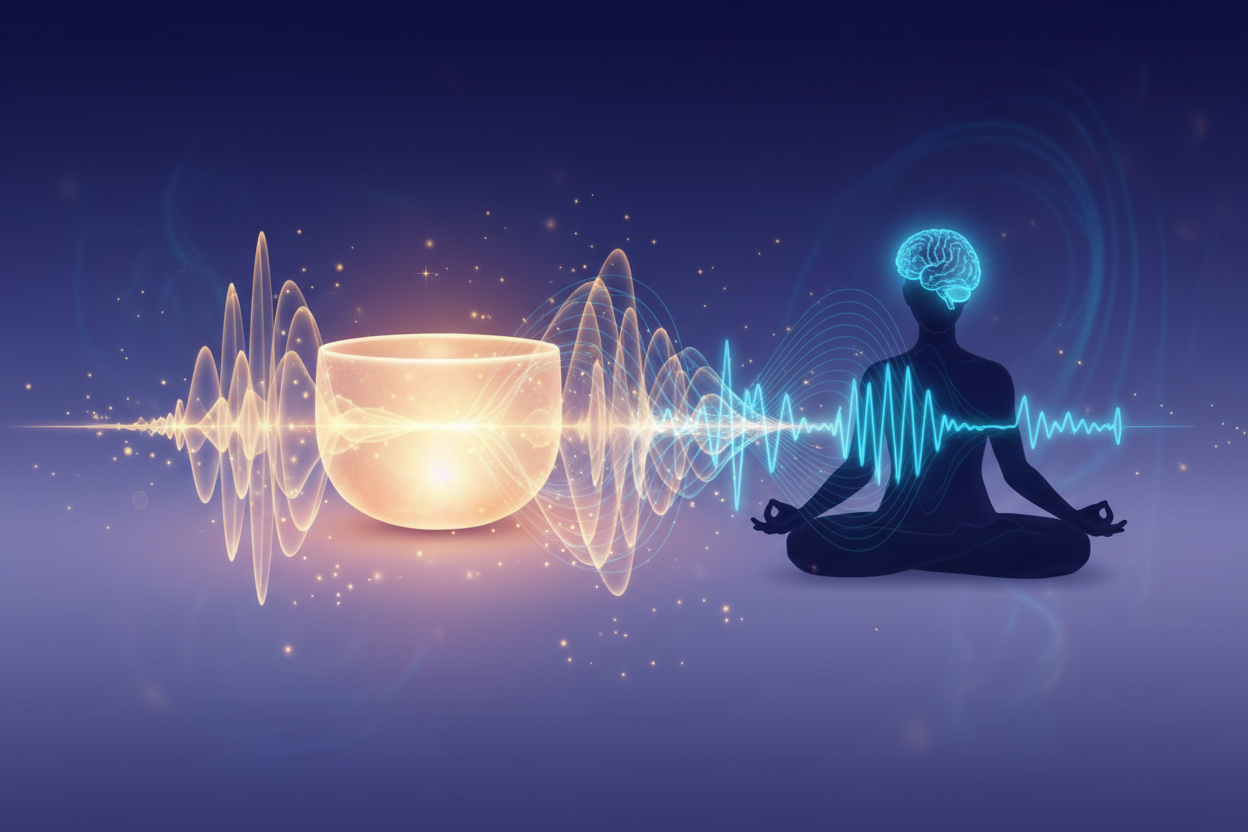
Crystal singing bowls excel at brainwave entrainment because they produce sustained, stable frequencies that your brain can easily lock onto. When you listen to a bowl tuned to 8 Hz, for example, your brain begins to generate more alpha waves at that same frequency. This synchronization typically occurs within 6-8 minutes of consistent exposure.
The process works through what neuroscientists call “frequency following response.” Your brain’s electrical activity naturally wants to match the dominant frequency in your environment. This is the same principle that explains why groups of women living together often synchronize their menstrual cycles, or why pendulum clocks in the same room will eventually swing in unison.
Different crystal bowls can induce different brainwave states depending on their fundamental frequency. Bowls tuned to theta frequencies (4-8 Hz) can promote deep meditative states and enhanced creativity. Alpha frequency bowls (8-13 Hz) encourage relaxed awareness and stress reduction. Some practitioners even use multiple bowls simultaneously to create complex frequency patterns that guide the brain through various states of consciousness.
Research Evidence and Scientific Studies
While research specifically on crystal singing bowls is still emerging, numerous studies have validated the broader principles of sound therapy and brainwave entrainment. A 2016 study published in the Journal of Evidence-Based Complementary and Alternative Medicine found that sound meditation using Tibetan singing bowls significantly reduced tension, anger, fatigue, and depressed mood while increasing spiritual well-being.
EEG studies have demonstrated that exposure to specific sound frequencies can reliably alter brainwave patterns. Research conducted at Stanford University showed that binaural beats – slightly different frequencies played in each ear – could induce measurable changes in brainwave activity within minutes.
A groundbreaking 2020 study published in Scientific Reports used advanced neuroimaging to show how sound therapy affects brain connectivity. Researchers found that participants exposed to specific frequencies showed increased coherence between different brain regions, suggesting improved neural communication and integration.
Perhaps most compelling is research from the University of California San Diego, which demonstrated that sound vibrations can influence cellular behavior at the molecular level. Their findings suggest that the healing effects of sound therapy may extend beyond psychological benefits to actual physiological changes in tissue repair and inflammation reduction.
Practical Benefits of Crystal Bowl Meditation
The scientific understanding of crystal singing bowls translates into numerous practical benefits for mental and physical well-being. Regular practitioners report improved sleep quality, reduced anxiety, enhanced creativity, and deeper meditative states. These subjective reports align closely with what we’d expect based on the neurological effects of brainwave entrainment.
Stress reduction is perhaps the most immediate and measurable benefit. When crystal bowls help shift your brain from beta to alpha or theta states, you’re literally changing your nervous system from sympathetic (fight-or-flight) to parasympathetic (rest-and-digest) dominance. This shift triggers the release of relaxation hormones and reduces inflammatory markers throughout your body.
Many people find that crystal bowl sessions enhance their creativity and problem-solving abilities. This makes sense from a neuroscience perspective – theta brainwaves are associated with the kind of non-linear thinking that leads to creative insights and innovative solutions. Artists, writers, and entrepreneurs often report breakthrough moments during or immediately after sound therapy sessions.
The pain-relieving properties of crystal singing bowls may be explained by their ability to stimulate endorphin production while simultaneously reducing the brain’s perception of pain signals. Some hospitals and pain clinics are now incorporating sound therapy into their treatment protocols with measurable success.
Choosing the Right Crystal Singing Bowl
Understanding the science behind crystal singing bowls can help you make more informed choices when selecting an instrument. The fundamental frequency of the bowl is crucial – different frequencies will produce different neurological effects. If you’re seeking deep relaxation and stress relief, look for bowls tuned to alpha or theta frequencies.
Size matters too, but not in the way you might expect. Larger bowls don’t necessarily produce “better” effects – they simply sustain their tones longer and generate more powerful vibrations. For personal meditation practice, a medium-sized bowl (8-12 inches) often provides the best balance of portability and acoustic power.
The quality of the quartz is essential for achieving the pure tones necessary for effective brainwave entrainment. High-quality crystal bowls will produce clear, sustained tones with minimal harmonic distortion. You should be able to hear the fundamental frequency clearly without competing overtones that might confuse your brain’s frequency following response.
Consider starting with a single bowl tuned to a frequency that matches your primary wellness goals, then expanding your collection over time. Many practitioners eventually acquire multiple bowls to create complex soundscapes that can guide their consciousness through different states during extended meditation sessions.
Conclusion
The science behind crystal singing bowls and brainwave resonance reveals a fascinating intersection where ancient wisdom meets modern neuroscience. These remarkable instruments aren’t just producing beautiful sounds – they’re creating measurable changes in brain activity through well-understood neurological mechanisms.
From the piezoelectric properties of quartz crystal to the frequency following response of human brainwaves, every aspect of crystal bowl therapy has a scientific foundation. As research continues to validate what practitioners have known intuitively for years, we’re gaining deeper appreciation for the sophisticated ways sound can influence consciousness and promote healing.
Whether you’re drawn to crystal singing bowls for stress relief, creative enhancement, or spiritual exploration, you can approach your practice with confidence knowing that science supports the profound effects you’re likely to experience. The resonance between crystal and consciousness isn’t mystical – it’s measurable, repeatable, and increasingly well-understood.
As we continue to unravel the mysteries of consciousness and develop more sophisticated ways to measure the effects of sound therapy, crystal singing bowls will likely play an increasingly important role in both wellness practices and clinical applications. The future of sound healing is bright, and it’s grounded in solid science.
Frequently Asked Questions
How long does it take for crystal singing bowls to affect brainwaves?
Most people begin to experience brainwave entrainment within 6-8 minutes of consistent exposure to crystal bowl tones. However, some individuals may notice effects within 2-3 minutes, while others might require 10-15 minutes to achieve significant synchronization.
Are there any scientific contraindications for using crystal singing bowls?
While generally safe, people with certain conditions should consult healthcare providers before using crystal singing bowls. This includes individuals with epilepsy, severe mental health conditions, or those using pacemakers, as sound frequencies can potentially interfere with electronic medical devices.
Can crystal singing bowls replace traditional meditation practices?
Crystal singing bowls can enhance meditation but shouldn’t necessarily replace established practices. They’re best viewed as tools that can help achieve meditative states more easily, particularly for beginners or those struggling with traditional silent meditation techniques.
Do different crystal bowl materials produce different brainwave effects?
Pure quartz crystal bowls are most effective for brainwave entrainment due to their acoustic purity. Bowls made from other materials or with added minerals may produce different harmonic structures that could be less effective for frequency following response.
How often should I use crystal singing bowls for optimal benefits?
Research suggests that regular, consistent practice yields the best results. Many practitioners benefit from daily 15-20 minute sessions, though even 2-3 sessions per week can produce measurable improvements in stress levels and sleep quality.