

The Role of Brainwaves in Pet-Human Bonding and Stress Reduction
Table of Contents
1. Introduction
2. Understanding Brainwaves: The Science Behind Our Mental States
3. How Pet Interactions Influence Human Brainwave Patterns
4. The Neuroscience of Pet-Human Bonding
5. Stress Reduction Through Pet Companionship
6. Practical Applications and Real-World Benefits
7. Maximizing the Brainwave Benefits of Pet Ownership
8. Conclusion
9. Frequently Asked Questions
Introduction
Have you ever noticed how your mind seems to quiet down when you’re petting your dog or listening to your cat purr? That sense of calm isn’t just in your imagination. Recent neuroscientific research has revealed fascinating insights into how our brains respond to pet interactions, showing measurable changes in brainwave patterns that promote relaxation and strengthen the human-animal bond.
The relationship between pets and human mental health has been studied for decades, but only recently have we begun to understand the intricate neurological mechanisms at play. When we interact with our beloved companions, our brains undergo specific changes that can be measured through electroencephalography (EEG) technology. These changes in brainwave activity help explain why pet ownership has such profound effects on stress reduction, emotional regulation, and overall well-being.
This exploration into the neuroscience of pet-human bonding reveals how our furry, feathered, or scaled friends literally change our minds for the better. Understanding these mechanisms can help us maximize the therapeutic benefits of pet companionship and appreciate the deep biological basis of the bonds we share with our animal friends.
Understanding Brainwaves: The Science Behind Our Mental States
Before diving into how pets affect our neural activity, it’s essential to understand what brainwaves are and how they influence our mental states. Brainwaves are electrical impulses produced by synchronized neural activity in the brain. These rhythmic patterns can be measured and categorized into different frequency ranges, each associated with specific mental states and cognitive functions.
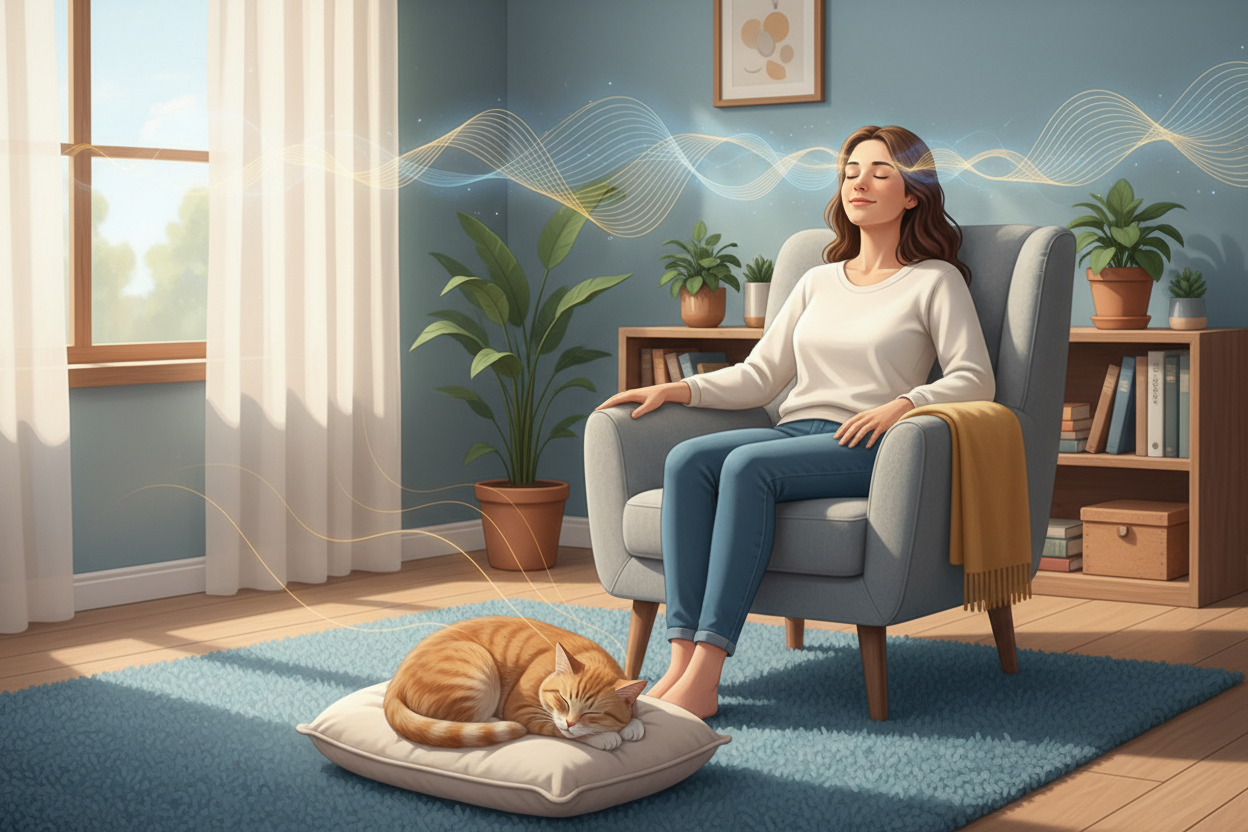
The five primary brainwave categories include delta waves (0.5-4 Hz), associated with deep sleep and healing; theta waves (4-8 Hz), linked to creativity and deep meditation; alpha waves (8-12 Hz), present during relaxed awareness; beta waves (12-30 Hz), dominant during active thinking and problem-solving; and gamma waves (30-100 Hz), associated with heightened awareness and cognitive processing.
When we’re stressed or anxious, our brains typically produce more high-frequency beta waves, creating a state of mental agitation. Conversely, relaxation and calm states are characterized by increased alpha and theta wave activity. This understanding forms the foundation for appreciating how pet interactions can literally shift our brainwave patterns toward more beneficial states.
Modern neuroscience has shown that these brainwave patterns aren’t fixed. They can be influenced by various activities, environments, and interactions. This neuroplasticity means that regular positive experiences, such as spending time with pets, can create lasting changes in our brain’s default patterns, promoting better mental health and stress resilience over time.
How Pet Interactions Influence Human Brainwave Patterns
Research using EEG technology has documented remarkable changes in human brainwave activity during pet interactions. When people engage in activities like petting dogs or cats, their brains show increased alpha wave production, indicating a shift toward relaxed awareness. This neurological response occurs remarkably quickly, often within minutes of beginning the interaction.
The rhythmic nature of petting motions appears to synchronize with optimal brainwave frequencies for relaxation. Studies have found that the 8-12 Hz frequency range of gentle petting closely matches the alpha wave frequency associated with meditative states. This synchronization creates a form of natural biofeedback, where the physical action of caring for a pet directly influences beneficial brainwave production.
Interestingly, different types of pet interactions produce varying brainwave responses. Gentle activities like brushing a cat or watching fish swim tend to increase alpha and theta waves, promoting deep relaxation. More active interactions, such as playing fetch with a dog, can produce balanced brainwave patterns that combine alertness with positive emotional states.
The visual and auditory aspects of pet companionship also contribute to brainwave changes. The sight of a sleeping pet or the sound of purring can trigger alpha wave production even without direct physical contact. This suggests that the mere presence of a beloved animal companion can induce beneficial neurological states, explaining why pet owners often report feeling calmer simply by being near their animals.
The Neuroscience of Pet-Human Bonding
The formation of strong emotional bonds between humans and pets involves complex neurochemical processes that are reflected in brainwave activity. When we interact with our pets, our brains release oxytocin, often called the “love hormone,” which promotes feelings of attachment and trust. This neurochemical release coincides with specific brainwave patterns that reinforce the bonding experience.
Mirror neurons play a crucial role in pet-human bonding, allowing us to empathically connect with our animal companions. These specialized brain cells fire both when we perform an action and when we observe others performing the same action. Research suggests that mirror neuron activation during pet interactions correlates with increased alpha wave activity, creating a neurological foundation for emotional synchronization between species.
The bonding process also involves the brain’s reward system, which produces dopamine in response to positive pet interactions. This neurochemical reward creates lasting neural pathways that associate pet companionship with positive emotional states. Over time, these pathways become strengthened, leading to more pronounced brainwave changes and deeper bonds with our animal friends.
Longitudinal studies have shown that people who maintain strong bonds with their pets develop more stable baseline brainwave patterns associated with emotional regulation. This suggests that the pet-human bond creates lasting neurological benefits that extend beyond immediate interaction periods, contributing to improved mental health and stress resilience over time.
Stress Reduction Through Pet Companionship
One of the most significant benefits of pet-induced brainwave changes is their impact on stress reduction. When we’re stressed, our brains produce excess beta waves and stress hormones like cortisol. Pet interactions help counteract this stress response by promoting alpha and theta wave production, which naturally inhibits the stress hormone cascade.
The calming effect of pets on brainwave activity has been documented in various stressful situations. Hospital patients who receive visits from therapy animals show measurable improvements in brainwave patterns, shifting from stress-associated beta dominance to more balanced patterns that include increased alpha waves. These changes correlate with reduced blood pressure, lower heart rate, and decreased cortisol levels.
Pet ownership provides ongoing stress buffering effects through consistent brainwave regulation. Daily interactions with pets help maintain more balanced baseline brainwave patterns, making individuals more resilient to stress when it occurs. This protective effect is particularly pronounced in people who have strong emotional bonds with their pets and engage in regular caregiving activities.
The stress-reducing effects of pet companionship extend to various populations and situations. Children with anxiety disorders show improved brainwave patterns after spending time with therapy animals. Veterans with PTSD experience reduced hypervigilance and better sleep quality, reflected in more normalized brainwave activity during rest periods. These findings highlight the universal nature of pet-induced neurological benefits.
Practical Applications and Real-World Benefits
Understanding the brainwave mechanisms behind pet-human bonding has led to innovative therapeutic applications. Animal-assisted therapy programs now incorporate EEG monitoring to optimize treatment protocols and measure progress. Therapists can observe real-time brainwave changes during pet interactions, allowing them to tailor sessions for maximum neurological benefit.
In educational settings, the presence of therapy animals has been shown to improve students’ brainwave patterns associated with learning and attention. Classrooms with resident pets often see improved focus and reduced anxiety among students, as measured by EEG studies. These findings support the integration of animal-assisted programs in schools and universities.
Workplace wellness programs increasingly recognize the value of pet-friendly policies based on brainwave research. Employees who bring pets to work or have access to office therapy animals show improved stress markers and more balanced brainwave patterns throughout the workday. This translates to better productivity, reduced sick days, and improved job satisfaction.
Healthcare facilities are implementing pet therapy programs with greater precision, using brainwave monitoring to identify which patients benefit most from animal interactions. This personalized approach ensures that limited therapy animal resources are used most effectively, maximizing the neurological benefits for patients who show the strongest brainwave responses to pet companionship.
Maximizing the Brainwave Benefits of Pet Ownership
To optimize the neurological benefits of pet companionship, it’s important to understand which activities produce the most beneficial brainwave changes. Regular, gentle physical contact with pets, such as petting or brushing, consistently produces the strongest alpha wave responses. Setting aside dedicated time for these activities can help establish beneficial brainwave patterns as a daily routine.
Creating calm environments for pet interactions enhances their neurological impact. Quiet spaces with minimal distractions allow for deeper brainwave changes and stronger bonding experiences. Many pet owners find that establishing regular relaxation routines with their animals, such as evening cuddle sessions or morning meditation time, produces the most significant and lasting brainwave benefits.
Mindful pet interactions amplify positive brainwave changes. When we focus our attention fully on our pets, being present in the moment without distractions, our brains show enhanced alpha and theta wave production. This mindful approach to pet companionship creates deeper neurological benefits than passive or distracted interactions.
Different pets may produce varying brainwave responses in different individuals. Some people show stronger neurological responses to dogs, while others benefit more from cat companionship or interaction with smaller animals like rabbits or birds. Paying attention to your personal responses and choosing pets that naturally induce calm, positive brainwave states can maximize the therapeutic benefits of animal companionship.
Conclusion
The science of brainwaves reveals the profound neurological basis for the special bond between humans and their animal companions. When we interact with our pets, measurable changes occur in our brain activity that promote relaxation, reduce stress, and strengthen emotional connections. These aren’t simply subjective feelings of comfort – they’re objective, quantifiable changes in neural function that contribute to better mental and physical health.
Understanding these mechanisms helps us appreciate why pet ownership has such consistent positive effects on human well-being. The ability of animals to literally change our brainwave patterns provides a scientific foundation for animal-assisted therapy programs and supports the integration of pets into various therapeutic and educational settings.
As research in this field continues to evolve, we’re likely to discover even more sophisticated ways to harness the neurological benefits of pet companionship. For now, pet owners can take comfort in knowing that their daily interactions with their beloved animals are creating positive changes in their brains that extend far beyond the immediate moments of connection.
The next time you feel your stress melting away while petting your dog or listening to your cat purr, remember that you’re experiencing a real, measurable shift in your brain’s electrical activity. This neurological transformation represents millions of years of evolutionary connection between humans and animals, now validated by modern neuroscience and available to enhance our daily lives through the simple act of loving and caring for our animal companions.
Frequently Asked Questions
Q: How quickly do brainwave changes occur during pet interactions?
A: Research shows that beneficial brainwave changes can begin within 2-5 minutes of starting pet interactions. Alpha wave increases are typically detectable within the first few minutes of petting or gentle contact with animals.
Q: Do all types of pets produce the same brainwave effects?
A: While most pets can induce positive brainwave changes, the intensity and type of response may vary. Dogs and cats typically produce the strongest responses, but birds, rabbits, and even fish can also generate beneficial brainwave patterns in their owners.
Q: Can watching pet videos online produce similar brainwave benefits?
A: While watching pet videos can produce some positive brainwave changes, they’re generally less pronounced than those from direct physical interaction with real animals. The tactile component of pet interaction appears crucial for optimal neurological benefits.
Q: Are the brainwave benefits of pet ownership permanent?
A: Regular pet interactions can create lasting changes in baseline brainwave patterns, but the benefits are most pronounced during and shortly after pet interactions. Consistent, long-term pet ownership tends to produce more stable improvements in overall brainwave balance.
Q: Do therapy animals receive special training to maximize brainwave benefits?
A: Yes, many therapy animals are trained to engage in specific behaviors that research has shown to be most effective for promoting beneficial brainwave changes, such as remaining calm, accepting gentle touch, and providing consistent, predictable interactions.