
The Role of Brainwaves in Seasonal Migration Patterns and Human Behavior
Table of Contents
1. Introduction to Brainwaves and Migration
2. Understanding Brainwave Frequencies
3. The Science Behind Seasonal Migration in Animals
4. How Brainwaves Influence Animal Migration Patterns
5. The Connection Between Human Brainwaves and Seasonal Changes
6. Seasonal Affective Patterns and Neural Activity
7. Modern Research and Technological Advances
8. Practical Applications and Future Implications
9. Conclusion
10. Frequently Asked Questions
Introduction to Brainwaves and Migration
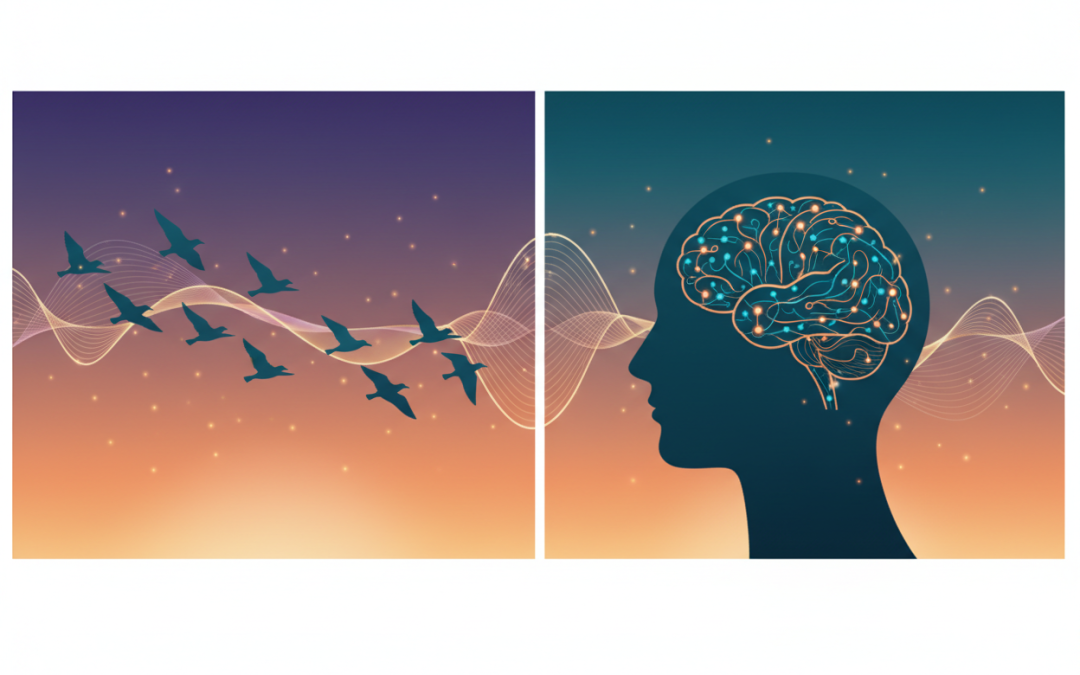
Have you ever wondered why birds know exactly when to fly south for winter, or why you feel more energetic during certain seasons? The answer might lie in the fascinating world of brainwaves and their profound influence on both animal migration patterns and human behavior. This intricate relationship between neural oscillations and seasonal changes represents one of nature’s most remarkable phenomena.
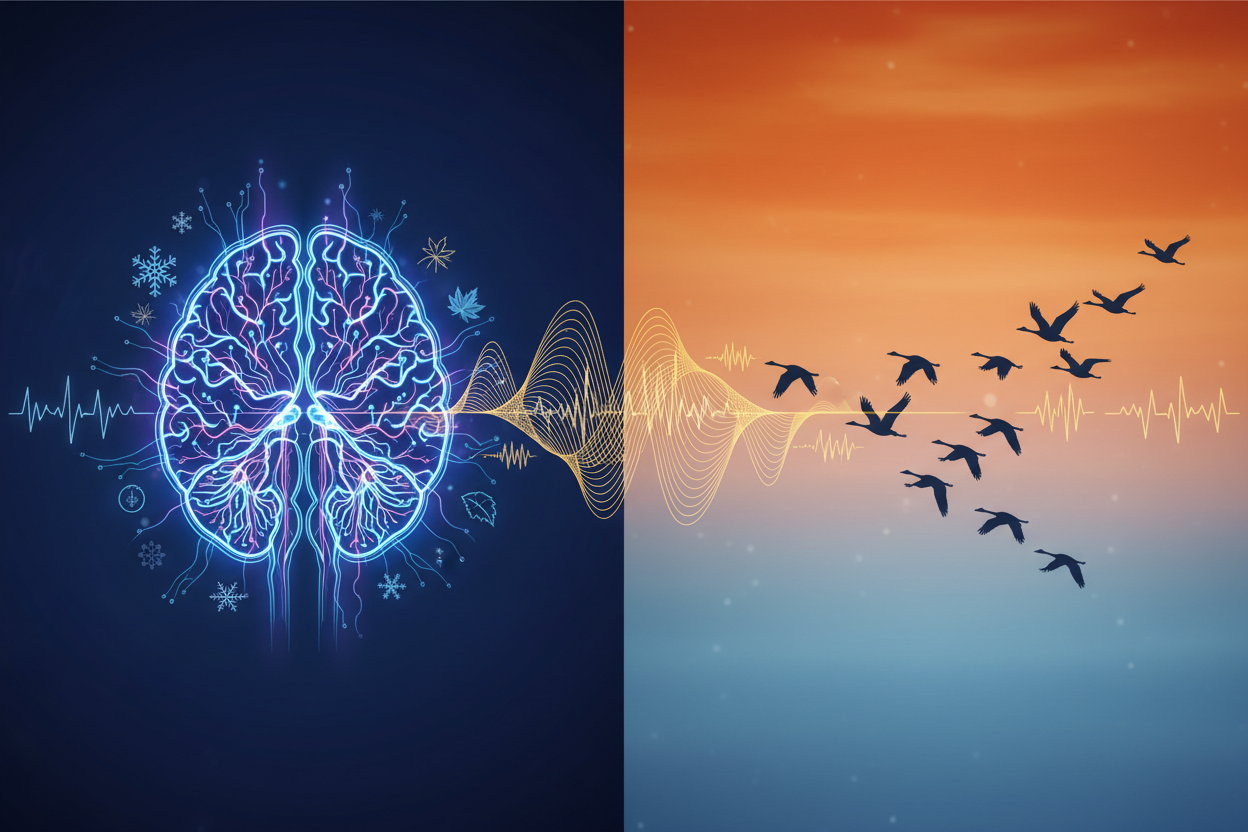
Brainwaves, the electrical patterns generated by our neurons, don’t just control our thoughts and emotions – they appear to play a crucial role in how living beings respond to seasonal transitions. From the Arctic tern’s incredible 44,000-mile journey to the subtle shifts in human mood and energy levels throughout the year, brainwave activity serves as an internal compass guiding behavior across species.
Recent scientific discoveries have revealed that these neural patterns are far more sophisticated than previously imagined, acting as biological timekeepers that synchronize with environmental cues. Understanding this connection opens up exciting possibilities for treating seasonal disorders, improving mental health, and even predicting migration patterns with greater accuracy.
Understanding Brainwave Frequencies
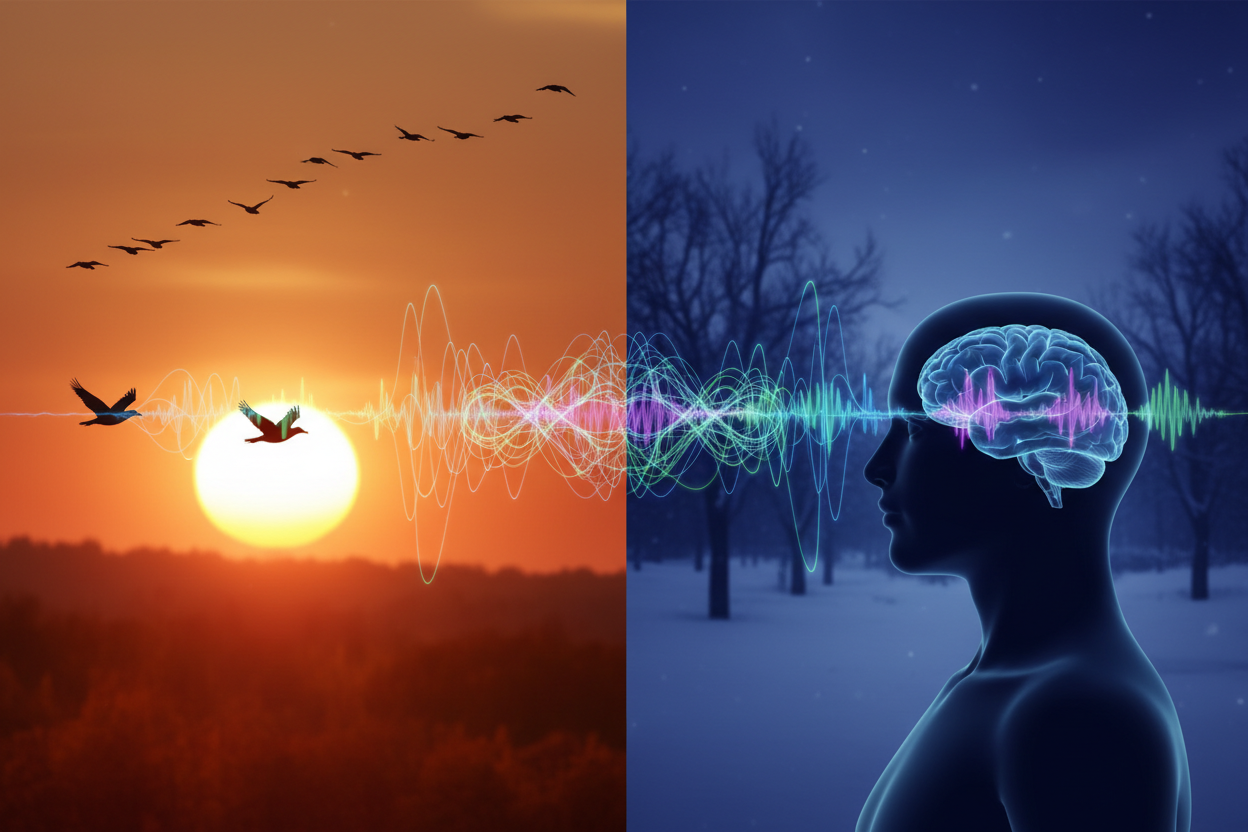
Before diving into migration patterns, it’s essential to understand what brainwaves actually are. Think of your brain as a complex orchestra, with billions of neurons firing in synchronized patterns that create measurable electrical activity. These patterns, or brainwaves, occur at different frequencies and are associated with various states of consciousness and behavior.
The five primary brainwave frequencies each serve distinct functions. Delta waves (0.5-4 Hz) dominate during deep sleep and healing processes. Theta waves (4-8 Hz) are prominent during meditation, creativity, and REM sleep. Alpha waves (8-13 Hz) appear during relaxed, wakeful states. Beta waves (13-30 Hz) are associated with active thinking and problem-solving. Finally, gamma waves (30-100 Hz) occur during heightened awareness and cognitive processing.
What makes this particularly interesting is how these frequencies shift throughout the day and across seasons. Research has shown that seasonal changes in daylight exposure directly influence brainwave patterns, creating a neurological foundation for both migration behaviors in animals and seasonal mood changes in humans.
The Science Behind Seasonal Migration in Animals
Animal migration represents one of nature’s most impressive feats of navigation and timing. Every year, billions of creatures embark on journeys that can span continents, guided by an internal biological clock that scientists are only beginning to fully understand. The precision of these migrations suggests a sophisticated neural mechanism at work.
The key lies in what researchers call the circannual rhythm – an internal biological clock that operates on a yearly cycle. This rhythm is controlled by specific brain regions, particularly the suprachiasmatic nucleus, which acts as the body’s master clock. When seasonal environmental cues like changing daylight hours trigger this system, it initiates cascading changes in hormone production and neural activity.
Temperature fluctuations, magnetic field variations, and photoperiod changes all contribute to activating migration behaviors. However, the underlying mechanism appears to be rooted in how these environmental factors influence brainwave patterns. Animals seem to possess an innate ability to interpret these neural signals as directional and temporal cues for migration.
How Brainwaves Influence Animal Migration Patterns
The relationship between brainwaves and migration becomes clearer when we examine specific species. Migratory birds, for instance, show distinct changes in their neural oscillations weeks before beginning their journeys. These changes aren’t random – they follow predictable patterns that correlate with seasonal environmental shifts.
Studies using advanced EEG technology on various migratory species have revealed fascinating insights. Birds preparing for migration show increased gamma wave activity in brain regions associated with spatial navigation and memory. This heightened neural activity appears to enhance their ability to process magnetic field information and celestial navigation cues.
Marine animals like whales and sea turtles demonstrate similar patterns. Their brainwave activity shifts significantly before migration periods, particularly in frequencies associated with echolocation and spatial awareness. These neural changes seem to fine-tune their sensory systems for the challenging journey ahead.
Perhaps most remarkably, researchers have discovered that these brainwave changes can be triggered artificially. When scientists exposed non-migratory animals to specific electromagnetic frequencies that mimic natural seasonal patterns, many exhibited migration-like behaviors and neural activity patterns similar to their migratory cousins.
The Connection Between Human Brainwaves and Seasonal Changes
Humans, despite our modern lifestyle, haven’t escaped the influence of seasonal brainwave changes. We may not migrate thousands of miles like birds, but our neural patterns still respond to seasonal transitions in measurable ways. This connection explains why many people experience predictable mood and energy changes throughout the year.
During winter months, particularly in higher latitudes with limited daylight, human brainwave patterns shift toward lower frequencies. Alpha and theta wave activity increases, while beta wave activity decreases. This shift corresponds with feelings of lethargy, increased sleep needs, and sometimes depression – symptoms collectively known as Seasonal Affective Disorder (SAD).
Conversely, spring and summer months typically see increased beta and gamma wave activity. People often report feeling more energetic, creative, and socially active during these periods. This isn’t just psychological – it’s a measurable neurological response to seasonal environmental changes.
The mechanism behind these changes involves the same biological systems that drive animal migration. Light exposure affects melatonin and serotonin production, which in turn influences brainwave patterns. The pineal gland, often called the “third eye,” plays a crucial role in translating seasonal light changes into neural signals.
Seasonal Affective Patterns and Neural Activity
Seasonal Affective Disorder provides a compelling case study for understanding how brainwaves influence human seasonal behavior. People with SAD show distinct brainwave abnormalities that become more pronounced during darker months. These patterns closely mirror the neural changes observed in animals preparing for or during migration.
Brain imaging studies reveal that individuals with SAD have altered activity in the hypothalamus, the same brain region that controls circadian and circannual rhythms in migratory animals. Their brainwave patterns show excessive theta activity and reduced gamma activity during winter months, creating a neural environment associated with depression and low energy.
Treatment approaches for SAD often work by directly influencing brainwave patterns. Light therapy, the most common treatment, essentially “resets” the brain’s seasonal clock by exposing patients to bright light that mimics summer daylight conditions. This exposure shifts brainwave patterns back toward healthier frequencies, alleviating symptoms.
Interestingly, some researchers have found that people with SAD show heightened sensitivity to electromagnetic fields and atmospheric pressure changes – the same environmental cues that trigger migration in animals. This suggests that humans retain more of our ancestral seasonal sensitivity than previously thought.
Modern Research and Technological Advances
Recent technological advances have revolutionized our understanding of brainwaves and seasonal behavior. High-resolution EEG equipment can now detect minute changes in neural activity, while GPS tracking allows researchers to correlate brainwave patterns with actual migration behaviors in real-time.
One groundbreaking study used miniaturized EEG devices attached to migratory songbirds, recording their brainwave activity throughout their entire migration journey. The data revealed that specific brainwave frequencies spike during navigation decisions, suggesting that neural oscillations actively guide migration choices rather than simply responding to environmental cues.
Artificial intelligence and machine learning algorithms are now being used to analyze vast datasets of brainwave recordings, identifying subtle patterns that human researchers might miss. These technologies have uncovered previously unknown connections between specific frequency bands and migration behaviors.
Researchers are also exploring the potential of using controlled electromagnetic fields to influence seasonal behaviors. Early experiments suggest that carefully calibrated frequency exposure might help treat seasonal depression more effectively than traditional light therapy, though this research is still in its infancy.
Practical Applications and Future Implications
Understanding the role of brainwaves in seasonal behavior opens up numerous practical applications. In healthcare, this knowledge is leading to more targeted treatments for seasonal depression and other mood disorders. Neurofeedback therapy, which trains people to consciously influence their brainwave patterns, shows promise for helping individuals better adapt to seasonal changes.
Conservation efforts are also benefiting from this research. By understanding how environmental factors influence animal brainwaves and migration patterns, conservationists can better predict how climate change might affect wildlife populations. This information is crucial for developing effective protection strategies for migratory species.
The technology sector is exploring applications in everything from seasonal lighting systems that automatically adjust to support healthy brainwave patterns, to wearable devices that monitor neural activity and provide personalized recommendations for managing seasonal mood changes.
Future research directions include investigating whether humans might have latent migration-like neural capabilities that could be activated under certain conditions. Some scientists speculate that our ancestors possessed stronger seasonal behavioral patterns that became suppressed through evolution and modern lifestyle factors.
Conclusion
The relationship between brainwaves and seasonal migration patterns reveals the profound interconnectedness of neural activity, environmental cues, and behavior across species. From the Arctic tern’s epic journey to a person’s winter blues, the same fundamental mechanisms appear to be at work – neural oscillations responding to and guiding seasonal adaptations.
This understanding not only satisfies our curiosity about one of nature’s most remarkable phenomena but also provides practical insights for improving human health and wildlife conservation. As we continue to unravel the complexities of brainwave patterns and seasonal behavior, we’re likely to discover even more surprising connections between our neural activity and the natural world around us.
The implications extend far beyond academic interest. In an era of climate change and increasing seasonal disruption, understanding how brainwaves mediate our response to seasonal changes becomes crucial for maintaining both human well-being and ecosystem health. By respecting and working with these ancient neural patterns rather than against them, we might find more effective ways to thrive in harmony with our planet’s seasonal rhythms.
Frequently Asked Questions
Q: Can humans develop migration-like behaviors based on brainwave patterns?
A: While humans don’t migrate like animals, we do show seasonal behavioral changes driven by similar brainwave mechanisms. Some people experience strong urges to travel or relocate during certain seasons, which may be influenced by these ancient neural patterns.
Q: How do artificial lights affect our seasonal brainwave patterns?
A: Artificial lighting, especially blue light from screens, can disrupt natural seasonal brainwave patterns by interfering with melatonin production and circadian rhythms. This disruption may contribute to seasonal mood disorders and sleep problems.
Q: Are some people more sensitive to seasonal brainwave changes than others?
A: Yes, individuals vary significantly in their sensitivity to seasonal changes. Factors like genetics, geographic origin, and personal history all influence how strongly someone’s brainwaves respond to seasonal environmental cues.
Q: Can meditation or mindfulness practices help regulate seasonal brainwave patterns?
A: Research suggests that regular meditation can help stabilize brainwave patterns and reduce the severity of seasonal mood changes. Mindfulness practices may help people become more aware of and better manage their seasonal neural fluctuations.
Q: Do animals living in captivity still show seasonal brainwave changes?
A: Many captive animals retain seasonal brainwave patterns even without environmental migration cues, suggesting these rhythms are deeply ingrained. However, the patterns may be less pronounced or altered compared to wild counterparts.