

Brainwave Entrainment for New Parents: Managing Sleep Deprivation Stress
Table of Contents
1. Introduction: The Reality of New Parent Sleep Struggles
2. Understanding Brainwave Entrainment: Science Made Simple
3. How Sleep Deprivation Affects New Parents
4. The Science Behind Brainwave Entrainment and Sleep
5. Types of Brainwave Entrainment for Sleep Recovery
6. Practical Ways to Use Brainwave Entrainment as a New Parent
7. Safety Considerations and Best Practices
8. Real-World Success Stories and Research
9. Frequently Asked Questions
10. Conclusion: Your Path to Better Sleep and Reduced Stress
Introduction: The Reality of New Parent Sleep Struggles
If you’re reading this at 3 AM while your little one finally sleeps, you’re not alone. The transition to parenthood brings immeasurable joy, but it also introduces a level of sleep deprivation that can feel overwhelming. Those precious few hours of rest become fragmented, leaving you exhausted, stressed, and wondering if you’ll ever feel human again.
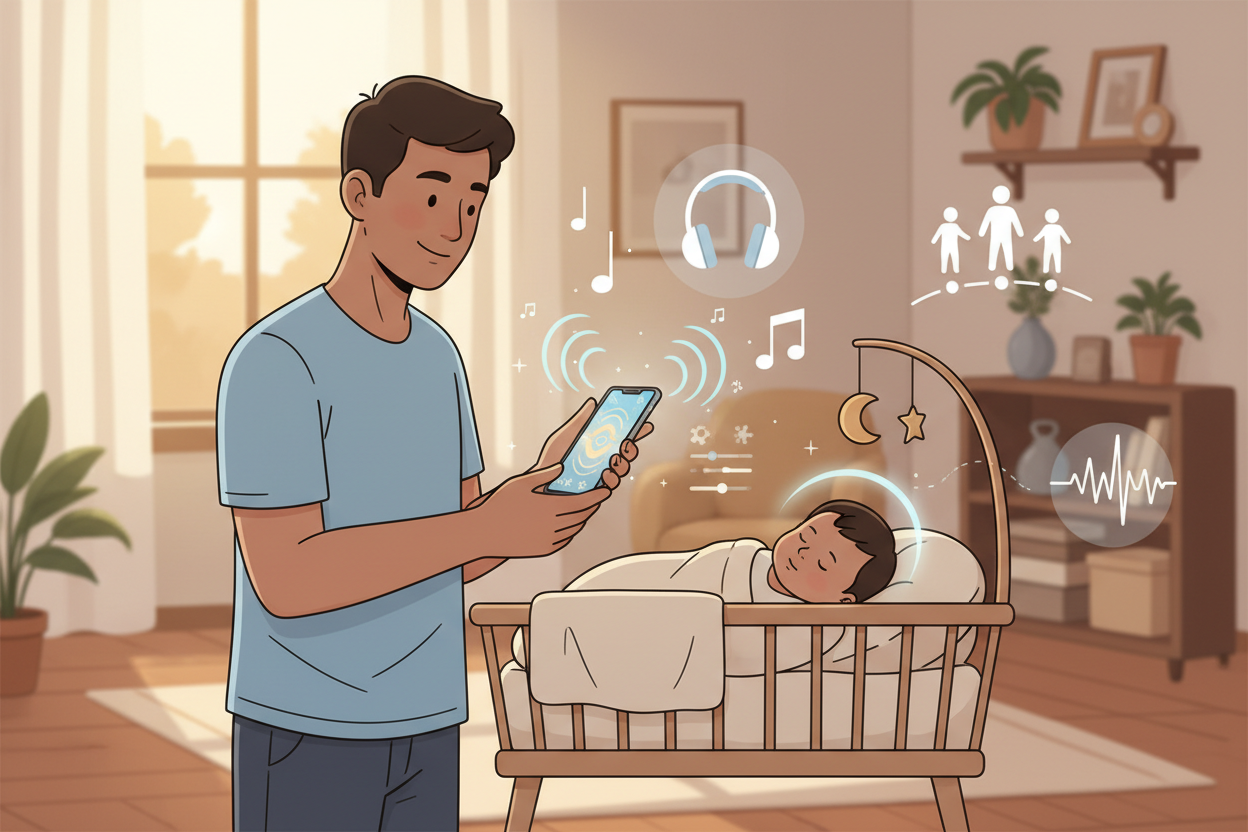
Enter brainwave entrainment – a scientifically-backed technique that’s helping countless new parents optimize their limited sleep time and manage the stress that comes with chronic fatigue. This isn’t about replacing those lost hours of sleep, but rather maximizing the quality of rest you can get, even when it’s just a 20-minute power nap between feedings.
Whether you’re a first-time parent stumbling through those early weeks or a seasoned parent adding another little one to the mix, understanding how brainwave entrainment works can be a game-changer for your mental health and overall well-being during this challenging yet beautiful phase of life.
Understanding Brainwave Entrainment: Science Made Simple
Brainwave entrainment might sound like something out of a science fiction movie, but it’s actually a well-researched phenomenon that occurs naturally in our brains every day. Simply put, it’s the brain’s tendency to synchronize its electrical activity with external rhythmic stimuli, such as sound or light pulses.
Think about how your foot naturally starts tapping when you hear a catchy beat, or how you might find yourself breathing in sync with ocean waves. Your brain works similarly, adjusting its wave patterns to match consistent external rhythms. This natural response has been harnessed through audio technologies like binaural beats, isochronic tones, and monaural beats to help induce specific mental states.

For sleep-deprived parents, this technology offers a way to guide the brain into deeper, more restorative sleep states more quickly than would occur naturally. Instead of lying awake for precious minutes trying to fall asleep, brainwave entrainment can help you drop into deep sleep within minutes, making every moment of rest count.
How Sleep Deprivation Affects New Parents
The impact of sleep loss on new parents extends far beyond feeling tired. Chronic sleep deprivation affects virtually every aspect of your physical and mental health, creating a cascade of challenges that can make parenting feel even more overwhelming.
Cognitively, sleep loss impairs your ability to concentrate, make decisions, and process emotions effectively. You might find yourself forgetting simple tasks, feeling irritable over minor issues, or struggling to think clearly during important moments. This brain fog isn’t just inconvenient – it can affect your ability to respond appropriately to your baby’s needs and maintain relationships with your partner and other children.
Physically, sleep deprivation weakens your immune system, making you more susceptible to illnesses just when you need to stay healthy for your family. It also disrupts hormone regulation, affecting everything from appetite control to mood stability. Many new parents report feeling like they’re constantly fighting off colds or experiencing unexplained aches and pains.
The stress response system becomes hyperactive when you’re chronically sleep-deprived, keeping your body in a state of high alert even when you should be resting. This creates a vicious cycle where stress makes it harder to fall asleep during those brief opportunities, further perpetuating the problem.
The Science Behind Brainwave Entrainment and Sleep
Your brain operates on different frequencies throughout the day, each associated with specific states of consciousness. During deep sleep, your brain predominantly produces delta waves, which range from 0.5 to 4 Hz. These slow, high-amplitude waves are crucial for physical restoration, memory consolidation, and stress hormone regulation.
Research published in the Journal of Sleep Research has shown that brainwave entrainment can effectively increase the amount of time spent in deep sleep stages, even when total sleep time is limited. This is particularly valuable for new parents who might only have 2-3 hour sleep windows but need to maximize the restorative benefits of that time.
The process works by presenting the brain with audio frequencies that gradually slow down, encouraging brainwave activity to follow suit. Studies using EEG monitoring have demonstrated that participants using delta wave entrainment show increased slow-wave sleep activity within 10-15 minutes of exposure, compared to 30-45 minutes for natural sleep onset.
Additionally, brainwave entrainment has been shown to reduce cortisol levels – the primary stress hormone that often keeps exhausted parents wired and unable to sleep even when the opportunity arises. By helping to regulate this stress response, entrainment creates more favorable conditions for both falling asleep and staying asleep.
Types of Brainwave Entrainment for Sleep Recovery
Several forms of brainwave entrainment can benefit sleep-deprived parents, each with unique characteristics and applications. Understanding these options helps you choose the most effective approach for your specific situation and preferences.
Binaural beats involve playing slightly different frequencies in each ear, creating a perceived third frequency that your brain synchronizes with. For sleep enhancement, delta binaural beats typically use base frequencies around 100-200 Hz with a difference of 1-4 Hz between ears. These require headphones to be effective and work well for longer sleep periods when you can commit to wearing them throughout the night.
Isochronic tones use evenly spaced pulses of sound to create entrainment without requiring headphones, making them ideal for quick power naps or when sharing a bed with a partner. The rhythmic pulses directly stimulate the brain’s frequency-following response, often producing faster entrainment than binaural beats.
Monaural beats combine two frequencies before they reach your ears, creating a single pulsing tone that can be played through speakers. This makes them practical for parents who need to remain somewhat alert to their baby’s sounds while still benefiting from relaxation and stress reduction.
Many modern applications combine these techniques with nature sounds, white noise, or gentle music to create more pleasant and effective sleep induction experiences. The key is finding what works best for your personal preferences and sleeping environment.
Practical Ways to Use Brainwave Entrainment as a New Parent
Implementing brainwave entrainment into your routine as a new parent requires strategic thinking about when and how to use these tools most effectively. The goal isn’t perfection – it’s optimization of whatever sleep opportunities you have available.
For nighttime sleep, start your entrainment session about 15-20 minutes before you plan to sleep. This gives your brain time to begin synchronizing with the desired frequencies before you need to be fully asleep. Many parents find success using a gradual progression from alpha waves (8-12 Hz) for relaxation, through theta waves (4-8 Hz) for drowsiness, and finally to delta waves (0.5-4 Hz) for deep sleep.
Power naps become incredibly valuable when you’re sleep-deprived, and brainwave entrainment can help you maximize these brief rest periods. A 20-minute theta wave session can provide significant restoration without the grogginess that often comes with longer naps. Set a gentle alarm and use this technique whenever your baby naps during the day.
Stress management sessions using alpha or theta waves can be beneficial even when you can’t actually sleep. These frequencies promote relaxation and can help reset your nervous system during particularly challenging days. Even 10 minutes of guided relaxation with appropriate brainwave entrainment can reduce cortisol levels and improve your ability to cope with parenting stress.
Consider creating a bedtime routine that incorporates brainwave entrainment alongside other sleep hygiene practices. Dim the lights, put away electronic devices, and begin your audio session as you prepare for bed. This signals to your brain that it’s time to wind down and can help establish better sleep patterns over time.
Safety Considerations and Best Practices
While brainwave entrainment is generally considered safe for most people, new parents should be aware of certain considerations to ensure they’re using these techniques appropriately and safely.
Volume levels should always be kept at comfortable, moderate levels. Your ears may be more sensitive when you’re sleep-deprived, and excessive volume can actually increase stress rather than reduce it. Most experts recommend keeping audio at or below normal conversation levels, around 60-70 decibels.
If you have a history of seizures, epilepsy, or other neurological conditions, consult with your healthcare provider before using brainwave entrainment, particularly techniques involving flashing lights or rapid audio pulses. While rare, some individuals may be sensitive to rhythmic stimuli.
Avoid using brainwave entrainment while driving, operating machinery, or in situations where you need to remain fully alert. The relaxing effects can impair your reaction time and judgment, which could be dangerous in certain circumstances.
Start with shorter sessions of 10-15 minutes to gauge your individual response before progressing to longer periods. Some people are more sensitive to entrainment effects and may find that shorter sessions are more effective than extended ones.
Remember that brainwave entrainment is a tool to supplement, not replace, good sleep hygiene practices. Continue to prioritize a comfortable sleep environment, limit caffeine intake, and maintain consistent sleep schedules as much as possible with a new baby.
Real-World Success Stories and Research
Clinical research on brainwave entrainment for sleep improvement has shown promising results that translate well to the challenges faced by new parents. A study published in the International Journal of Neuroscience found that participants using delta wave entrainment experienced a 25% increase in deep sleep time and reported feeling more refreshed after shorter sleep periods.
Dr. Sarah Chen, a sleep researcher at Stanford University, has been studying the effects of brainwave entrainment on sleep-deprived healthcare workers – a population that faces similar challenges to new parents. Her preliminary findings suggest that even brief 15-minute entrainment sessions can significantly improve cognitive function and emotional regulation in chronically sleep-deprived individuals.
Many parents report practical benefits beyond just better sleep. Jessica, a mother of twins from Portland, shares: “I was skeptical at first, but using theta wave recordings during my 20-minute afternoon naps made such a difference. I actually felt refreshed instead of more tired, and I had more patience with the babies in the evening.”
Mark, a new father who works night shifts, found that alpha wave entrainment helped him transition between his work schedule and baby care: “I couldn’t always sleep when the baby slept, but I could at least relax and reset my stress levels. It made the whole experience more manageable.”
Research from the University of Montreal demonstrated that new mothers using guided relaxation with alpha wave entrainment showed lower cortisol levels and reported less anxiety about their parenting abilities compared to control groups. These psychological benefits often translate into improved bonding experiences and greater confidence in handling parenting challenges.
Frequently Asked Questions
How quickly does brainwave entrainment work for sleep?
Most people begin to experience relaxation effects within 5-10 minutes of starting an entrainment session. For sleep induction, you may notice drowsiness within 10-15 minutes, though individual responses vary. The key is consistency – regular use tends to improve effectiveness over time.
Can I use brainwave entrainment while breastfeeding or pumping?
Yes, gentle alpha or theta wave entrainment can be beneficial during feeding times, helping you relax and potentially improving milk production through stress reduction. Avoid delta waves during these times as they’re designed to induce sleep.
Will brainwave entrainment prevent me from hearing my baby cry?
When used at appropriate volumes, brainwave entrainment shouldn’t mask important sounds like crying. Many parents use bone conduction headphones or keep one ear free to maintain awareness of their baby’s needs.
Is it safe to use brainwave entrainment every day?
Daily use is generally safe for most people and can actually enhance the benefits as your brain becomes more responsive to the entrainment frequencies. Start with shorter sessions and gradually increase as you become more comfortable with the technique.
Can my partner and I use brainwave entrainment together?
Absolutely! Using speakers instead of headphones allows both partners to benefit simultaneously. This can be particularly helpful for maintaining sleep synchronization and reducing relationship stress during the challenging early parenting period.
What’s the difference between brainwave entrainment and meditation apps?
While meditation apps focus on mindfulness and breathing techniques, brainwave entrainment uses specific audio frequencies to directly influence brain activity. Both can be beneficial, and many people find combining them enhances the overall effect.
Conclusion: Your Path to Better Sleep and Reduced Stress
Navigating the sleep challenges of new parenthood doesn’t have to feel like an impossible task. Brainwave entrainment offers a scientifically-supported tool that can help you make the most of whatever rest opportunities you have, whether it’s a full night’s sleep or a quick 15-minute power nap.
The beauty of this approach lies in its flexibility and accessibility. You don’t need expensive equipment or extensive training – just a smartphone or audio device and a willingness to experiment with what works best for your unique situation. As you become more familiar with different types of entrainment and how your brain responds, you can customize your approach to match your changing needs as your baby grows.
Remember that this is just one tool in your parenting toolkit. Combine brainwave entrainment with other stress management strategies, maintain realistic expectations, and don’t hesitate to seek support from healthcare providers, family, and friends when you need it. The early months of parenting are challenging for everyone, and using every available resource to support your well-being benefits both you and your baby.
Your sleep patterns will eventually normalize, but in the meantime, brainwave entrainment can help you feel more rested, less stressed, and better equipped to handle the beautiful chaos of new parenthood. Sweet dreams, and remember – you’re doing better than you think you are.