
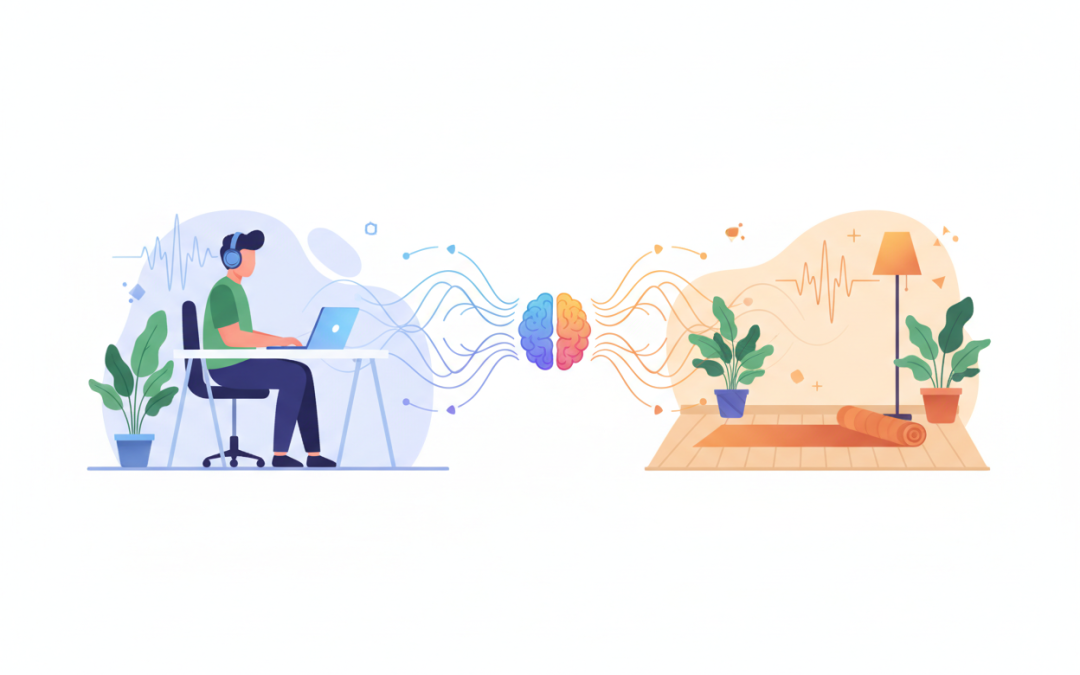
Brainwave Entrainment for Remote Workers: Maintaining Work-Life Balance
Table of Contents
1. Introduction to Brainwave Entrainment
2. Understanding the Remote Work Challenge
3. How Brainwave Entrainment Works
4. Types of Brainwave Frequencies for Work-Life Balance
5. Practical Applications for Remote Workers
6. Creating Your Brainwave Entrainment Routine
7. Tools and Technologies Available
8. Measuring Success and Adjusting Your Approach
9. Frequently Asked Questions
10. Conclusion
Introduction to Brainwave Entrainment
Working from home has become the new normal for millions of professionals worldwide, but with this freedom comes a unique set of challenges. The boundaries between work and personal life often blur, leaving many remote workers feeling overwhelmed, stressed, and unable to truly disconnect from their professional responsibilities. If you’ve ever found yourself checking emails at midnight or struggling to focus during important video calls, you’re not alone.

Enter brainwave entrainment – a fascinating neuroscience technique that’s gaining traction among remote workers seeking better work-life balance. This innovative approach uses rhythmic stimuli to influence your brain’s electrical activity, helping you achieve specific mental states on command. Whether you need laser-sharp focus for a complex project or deep relaxation after a demanding day, brainwave entrainment might be the game-changer you’ve been searching for.
In this comprehensive guide, we’ll explore how remote workers can harness the power of brainwave entrainment to create clear boundaries between work and personal time, enhance productivity, and achieve the elusive work-life balance that seems increasingly difficult to maintain in our always-connected world.
Understanding the Remote Work Challenge
Remote work brings incredible flexibility, but it also presents unique psychological and physiological challenges that traditional office environments naturally address through physical separation and structured routines. When your bedroom doubles as your boardroom, your brain struggles to differentiate between work mode and relaxation mode.
The absence of a commute – once viewed as wasted time – actually served an important psychological function. That drive or train ride provided a natural transition period, allowing your mind to shift gears between professional and personal mindsets. Without this buffer, many remote workers report feeling “always on,” leading to increased stress levels, decreased productivity, and eventual burnout.
Research from Stanford University shows that remote workers often experience difficulty with attention regulation, time management, and stress reduction. The constant presence of household distractions, combined with the pressure to prove productivity while working from home, creates a perfect storm for mental fatigue and work-life imbalance.
This is where brainwave entrainment becomes particularly valuable. By consciously training your brain to enter specific states associated with focused work or deep relaxation, you can recreate the natural transitions that physical workspace changes once provided.
How Brainwave Entrainment Works
Brainwave entrainment operates on a fundamental principle of neuroscience called the frequency following response. Your brain naturally synchronizes its electrical activity with rhythmic external stimuli, much like how your heart rate might sync with music during exercise.
When exposed to consistent rhythmic patterns – whether through sound, light, or electromagnetic pulses – your brain’s neurons begin firing in harmony with these external frequencies. This synchronization allows you to guide your brain into specific states of consciousness associated with different types of mental performance.
The process isn’t mystical or pseudoscientific; it’s based on decades of neuroscience research and EEG studies. Your brain produces measurable electrical waves that correspond to different mental states, and these can be influenced through carefully designed audio or visual stimulation.
For remote workers, this means you can essentially “program” your brain to enter productive work states when needed and relaxing recovery states when it’s time to disconnect. Think of it as having a mental switch that helps you transition between professional focus and personal downtime with greater ease and reliability.
Types of Brainwave Frequencies for Work-Life Balance
Understanding the different brainwave frequencies and their associated mental states is crucial for effectively implementing brainwave entrainment in your remote work routine. Each frequency range serves specific purposes in achieving optimal work-life balance.
Beta Waves (13-30 Hz): Peak Performance Mode
Beta frequencies are your brain’s go-to state for active concentration, problem-solving, and analytical thinking. When you need to tackle complex projects, participate in challenging meetings, or engage in creative brainstorming, beta entrainment can help sharpen your mental edge. However, too much beta activity can lead to anxiety and overthinking, which is why balance is essential.
Alpha Waves (8-13 Hz): Relaxed Focus
Alpha states represent the sweet spot between alertness and relaxation. This frequency range is perfect for routine tasks, creative work, and maintaining steady productivity without mental strain. Many remote workers find alpha entrainment helpful during administrative tasks or when they need sustained attention without the intensity of beta states.
Theta Waves (4-8 Hz): Deep Creativity and Recovery
Theta frequencies are associated with deep meditation, creativity, and emotional processing. For remote workers, theta entrainment can be invaluable during break periods, helping process the day’s stress and preparing the mind for either renewed focus or transition to personal time.
Delta Waves (0.5-4 Hz): Restorative Sleep
Delta waves dominate during deep, restorative sleep. Using delta entrainment before bedtime can help remote workers achieve better sleep quality, which is often compromised when work stress follows you into the bedroom.
Practical Applications for Remote Workers
Implementing brainwave entrainment in your remote work routine doesn’t require expensive equipment or extensive training. The key is understanding when and how to use different frequencies to support your professional goals and personal well-being.
Morning Activation Routine
Start your workday with 10-15 minutes of beta or high-alpha entrainment to activate your cognitive functions. This creates a clear “work begins now” signal for your brain, replacing the natural alertness boost that commuting once provided. Many remote workers report improved focus and motivation when they establish this morning ritual.
Focused Work Sessions
During demanding tasks requiring intense concentration, beta entrainment can help maintain peak cognitive performance. Use these sessions strategically for your most challenging work, typically when your energy levels are naturally highest.
Transition Periods
One of the most powerful applications of brainwave entrainment for remote workers is creating artificial transition periods. Use alpha or theta frequencies for 5-10 minutes between work tasks and personal activities. This helps your brain recognize the shift from professional to personal mode.
End-of-Workday Ritual
Establish a clear “work is done” signal using theta or low-alpha entrainment. This practice helps prevent work thoughts from intruding into personal time and creates psychological closure for your workday.
Creating Your Brainwave Entrainment Routine
Developing an effective brainwave entrainment routine requires experimentation and personalization. What works for one remote worker may not be optimal for another, so approach this process with curiosity and patience.
Begin by identifying your specific challenges. Are you struggling with morning motivation? Difficulty focusing during afternoon slumps? Trouble disconnecting at the end of the day? Different problems require different entrainment approaches.
Start small with 5-10 minute sessions and gradually increase duration as you become more comfortable with the practice. Consistency matters more than session length – daily short sessions are more effective than occasional long ones.
Track your responses to different frequencies and timing. Keep a simple log noting which entrainment sessions correlate with improved focus, better mood, or enhanced relaxation. This data will help you refine your approach over time.
Consider your work schedule and natural energy rhythms. If you’re a morning person, use activating frequencies early in the day. Night owls might benefit from energizing entrainment later in the morning and relaxing frequencies earlier in the evening.
Tools and Technologies Available
The accessibility of brainwave entrainment has improved dramatically in recent years, with options ranging from free smartphone apps to professional-grade devices.
Binaural Beats Apps
Numerous smartphone applications offer binaural beats for different brainwave frequencies. These work by playing slightly different frequencies in each ear, creating a perceived beat that entrains your brainwaves. Popular options include Brain.fm, Noisli, and various meditation apps with focus features.
Light-Sound Devices
Specialized devices combine rhythmic light pulses with audio frequencies for more intensive entrainment. These are particularly effective for users who respond well to visual stimulation or want more powerful entrainment effects.
Neurofeedback Systems
Advanced users might consider EEG-based neurofeedback systems that monitor your actual brainwave activity and provide real-time feedback. While more expensive, these offer personalized entrainment based on your individual brain patterns.
Environmental Integration
Smart home systems can integrate entrainment into your physical workspace through automated lighting, sound systems, and even aromatherapy diffusers that activate based on your work schedule.
Measuring Success and Adjusting Your Approach
Successful brainwave entrainment implementation requires ongoing assessment and refinement. The effects can be subtle initially, so developing awareness of your mental states and productivity patterns is crucial.
Monitor objective metrics like task completion rates, error frequencies, and time-to-completion for routine activities. Many remote workers notice improved efficiency within the first few weeks of consistent practice.
Pay attention to subjective measures as well: energy levels throughout the day, ease of transitioning between work and personal time, sleep quality, and overall stress levels. These qualitative improvements often appear before quantitative changes become apparent.
Be prepared to adjust your approach based on results. If morning beta entrainment leaves you feeling anxious, try alpha frequencies instead. If evening theta sessions make you too drowsy for family time, experiment with timing or duration.
Remember that brainwave entrainment is most effective as part of a comprehensive approach to work-life balance. Combine it with other healthy remote work practices like regular breaks, physical exercise, and clear workspace boundaries.
Frequently Asked Questions
Q: Is brainwave entrainment safe for daily use?
A: Yes, brainwave entrainment is generally considered safe for healthy individuals when used appropriately. However, people with epilepsy, seizure disorders, or certain psychiatric conditions should consult healthcare providers before use. Start with short sessions and discontinue if you experience headaches, dizziness, or unusual symptoms.
Q: How long does it take to see results from brainwave entrainment?
A: Many users notice immediate effects during sessions, such as increased relaxation or improved focus. However, lasting changes in work-life balance typically develop over 2-4 weeks of consistent practice. Individual responses vary based on sensitivity to audio frequencies and consistency of use.
Q: Can I use brainwave entrainment while working on tasks?
A: Yes, many people successfully use background entrainment during work activities. Start with subtle alpha frequencies during routine tasks and avoid complex audio patterns during activities requiring intense concentration. Some prefer using entrainment during breaks rather than active work periods.
Q: Do I need expensive equipment to try brainwave entrainment?
A: No, you can begin with free smartphone apps and basic headphones. While specialized devices may offer enhanced effects, simple binaural beats applications provide an excellent introduction to entrainment techniques without financial investment.
Q: What’s the difference between brainwave entrainment and meditation?
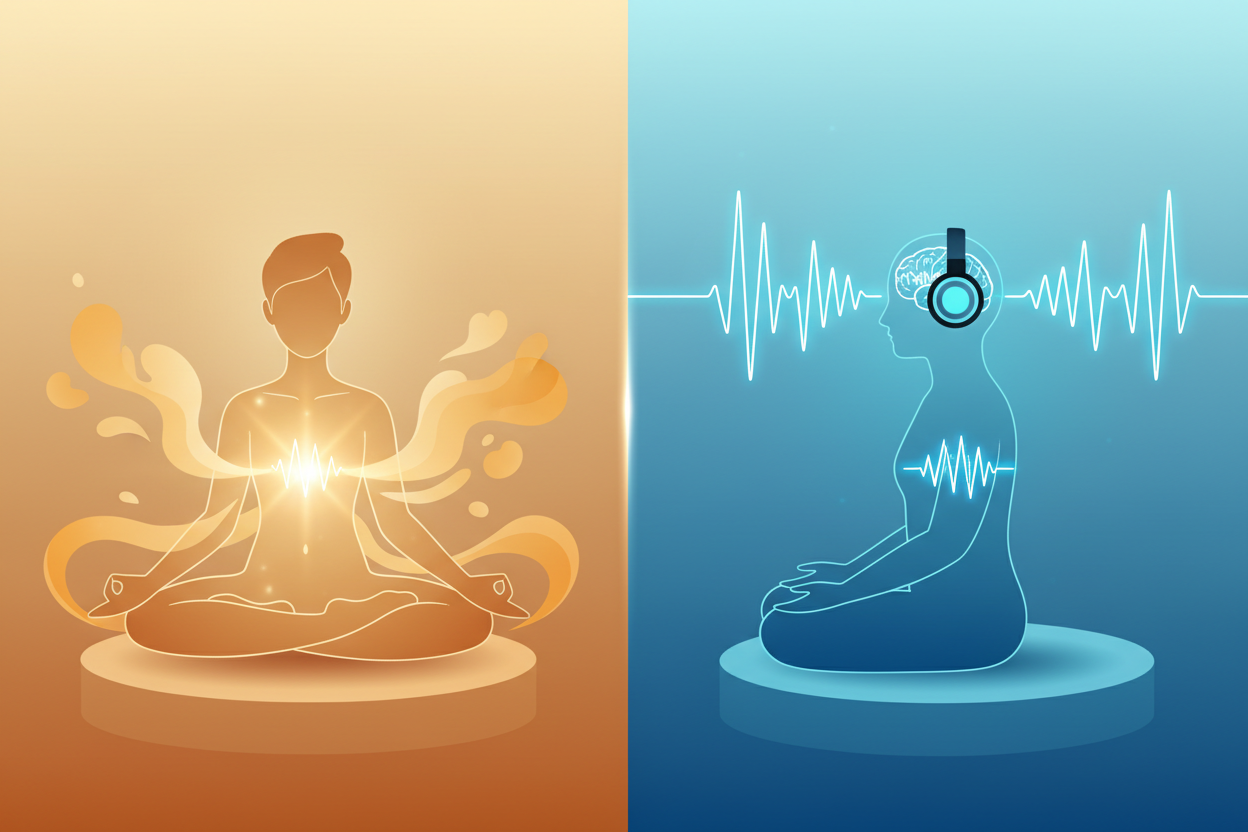
A: While both practices can promote relaxation and focus, brainwave entrainment uses external stimuli to guide brain activity toward specific frequencies, whereas traditional meditation relies on internal awareness and breathing techniques. Many people find entrainment easier to learn and more immediately effective for achieving target mental states.
Conclusion
Brainwave entrainment offers remote workers a scientifically-backed tool for addressing one of the most persistent challenges of working from home: maintaining clear boundaries between professional and personal life. By consciously guiding your brain into appropriate states for focused work and genuine relaxation, you can recreate the natural transitions that traditional office environments once provided.
The beauty of this approach lies in its accessibility and adaptability. Whether you’re struggling with morning motivation, afternoon focus, or evening disconnection, brainwave entrainment techniques can be customized to address your specific challenges. The key is consistent practice and willingness to experiment with different frequencies and timing until you find what works best for your unique situation.
As remote work continues to evolve, tools like brainwave entrainment will likely become increasingly important for maintaining mental health and productivity. By starting with simple techniques and gradually building your practice, you can develop a powerful skill set for managing your cognitive states and achieving the work-life balance that makes remote work truly sustainable and enjoyable.
Remember that achieving work-life balance is a journey, not a destination. Brainwave entrainment is one valuable tool in your toolkit, but it works best when combined with other healthy remote work practices. Be patient with yourself as you develop these new skills, and celebrate the small improvements that accumulate into significant positive changes over time.