
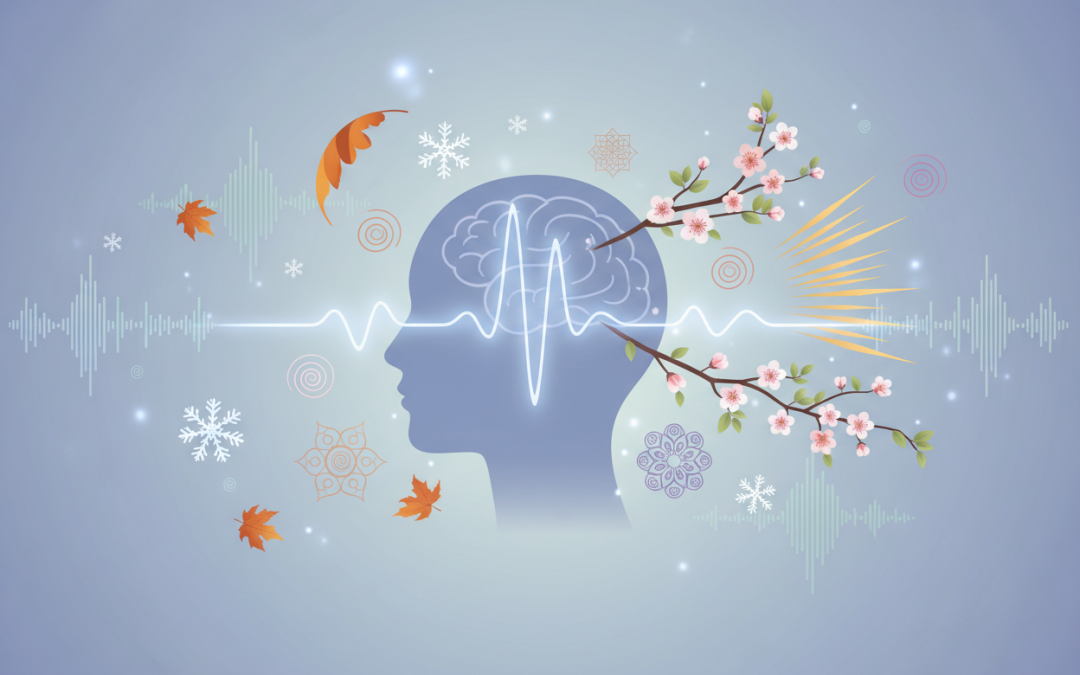
Using Brainwave Entrainment for Seasonal Stress Management: A Natural Path to Mental Wellness
Table of Contents
1. Introduction to Seasonal Stress and Brainwave Entrainment
2. Understanding Seasonal Stress: More Than Just Winter Blues
3. The Science Behind Brainwave Entrainment
4. How Brainwave Entrainment Combats Seasonal Stress
5. Types of Brainwave Entrainment for Different Seasons
6. Practical Implementation: Getting Started with Brainwave Entrainment
7. Real-World Success Stories and Research Findings
8. Combining Brainwave Entrainment with Other Wellness Practices
9. Conclusion: Embracing Year-Round Mental Wellness
10. Frequently Asked Questions
Introduction to Seasonal Stress and Brainwave Entrainment
Have you ever noticed how your mood shifts with the changing seasons? Maybe you feel energized during spring’s arrival but find yourself struggling with motivation as winter’s darkness settles in. You’re not alone in this experience. Seasonal stress affects millions of people worldwide, creating a cyclical pattern of emotional and physical challenges that can significantly impact quality of life.

While traditional approaches to seasonal stress management often focus on light therapy, medication, or lifestyle changes, there’s an emerging solution that’s gaining attention from both researchers and wellness enthusiasts: brainwave entrainment. This fascinating technique harnesses the brain’s natural ability to synchronize with external rhythms, offering a drug-free, accessible way to manage seasonal stress and maintain mental balance throughout the year.
In this comprehensive guide, we’ll explore how brainwave entrainment works, why it’s particularly effective for seasonal stress management, and how you can incorporate this powerful tool into your wellness routine. Whether you’re dealing with seasonal affective disorder, holiday stress, or simply the natural ups and downs that come with changing weather patterns, brainwave entrainment might be the missing piece in your mental health puzzle.

Understanding Seasonal Stress: More Than Just Winter Blues
Seasonal stress encompasses a broader spectrum of challenges than many people realize. While Seasonal Affective Disorder (SAD) typically gets the most attention, seasonal stress can manifest in various ways throughout the year. During winter months, reduced sunlight exposure can disrupt our circadian rhythms, leading to decreased serotonin production and increased melatonin levels, which often result in depression, fatigue, and carbohydrate cravings.
However, seasonal stress isn’t limited to winter. Spring can bring anxiety about new beginnings and seasonal allergies that affect mood. Summer’s extended daylight and social pressures can create their own stress patterns, while autumn often triggers feelings of melancholy and anticipatory anxiety about the approaching winter months.
The key to understanding seasonal stress lies in recognizing that our brains are incredibly sensitive to environmental changes. Light exposure, temperature fluctuations, and even atmospheric pressure variations can influence our neurochemistry. This is where brainwave entrainment becomes particularly valuable, as it works directly with the brain’s electrical activity to promote balance and resilience regardless of external seasonal factors.
The Science Behind Brainwave Entrainment
Brainwave entrainment, also known as neural entrainment, is based on a well-documented neurological phenomenon where the brain naturally synchronizes its electrical activity to external rhythmic stimuli. This process occurs through a mechanism called the “frequency following response,” where neurons begin to fire in sync with consistent auditory, visual, or tactile rhythms presented to the brain.
Our brains naturally produce different types of brainwaves, each associated with specific mental states. Beta waves (13-30 Hz) are linked to active thinking and alertness, alpha waves (8-13 Hz) promote relaxation and creativity, theta waves (4-8 Hz) are associated with deep meditation and REM sleep, while delta waves (0.5-4 Hz) occur during deep, restorative sleep.
When we experience seasonal stress, our brainwave patterns often become imbalanced. For instance, someone with winter depression might have excessive slow-wave activity during the day when they need to be alert, or insufficient alpha wave production when trying to relax. Brainwave entrainment can help restore these natural patterns by gently guiding the brain toward more balanced states through carefully crafted audio or visual stimulation.
Research has shown that brainwave entrainment can effectively influence mood, stress levels, cognitive function, and sleep quality. A study published in the Journal of Neurotherapy found that participants who used brainwave entrainment showed significant improvements in stress-related symptoms and overall well-being compared to control groups.
How Brainwave Entrainment Combats Seasonal Stress
The effectiveness of brainwave entrainment for seasonal stress management lies in its ability to address the root neurological imbalances that occur during seasonal transitions. When our natural circadian rhythms become disrupted due to changes in light exposure or environmental factors, brainwave entrainment can serve as an internal pacemaker, helping to restore healthy patterns of brain activity.
For individuals experiencing seasonal depression, targeted alpha and theta wave entrainment can promote the production of mood-regulating neurotransmitters like serotonin and dopamine. These sessions can be particularly effective when used in the morning to help establish a positive mental state for the day ahead, or in the evening to promote relaxation and prepare for restorative sleep.
One of the most significant advantages of brainwave entrainment is its ability to work quickly. Unlike some traditional treatments that may take weeks to show effects, many people report feeling benefits from brainwave entrainment sessions within minutes. This immediate response makes it an excellent tool for managing acute seasonal stress episodes or preventing the buildup of stress over time.
Additionally, brainwave entrainment sessions can be customized to address specific seasonal challenges. For example, someone struggling with winter fatigue might benefit from beta wave entrainment to increase alertness and energy, while someone dealing with summer anxiety might find relief through alpha wave sessions that promote calm focus.
Types of Brainwave Entrainment for Different Seasons
Understanding which types of brainwave entrainment work best for different seasonal challenges can help you create a more targeted approach to your mental wellness routine. Each season presents unique stressors and opportunities, and tailoring your brainwave entrainment practice accordingly can maximize its effectiveness.
Winter Brainwave Entrainment Strategies: During the darker months, focus on sessions that promote energy and mood elevation. Beta wave entrainment (15-20 Hz) can help combat fatigue and increase mental clarity, while gamma wave sessions (30-100 Hz) may boost cognitive function and mood. Morning sessions are particularly beneficial for establishing a positive tone for the day when natural light exposure is limited.
Spring Renewal Programs: As nature awakens, your brain can benefit from sessions that promote creativity and new growth. Alpha wave entrainment (8-12 Hz) supports creative thinking and reduces anxiety about new beginnings, while theta sessions (4-8 Hz) can help process and release old patterns that no longer serve you.
Summer Balance Techniques: The abundance of daylight and social activity in summer can sometimes lead to overstimulation. Delta wave entrainment (0.5-4 Hz) in the evening can help ensure quality sleep despite longer daylight hours, while alpha sessions during the day can maintain calm focus amidst busy summer schedules.
Autumn Transition Support: As the year winds down, theta wave entrainment can help with introspection and emotional processing, while gentle alpha sessions can ease the transition into the quieter months ahead. This is also an excellent time to establish consistent entrainment routines that will support you through the winter.
Practical Implementation: Getting Started with Brainwave Entrainment
Beginning your brainwave entrainment journey doesn’t require expensive equipment or extensive training. Many effective options are available, from simple smartphone apps to more sophisticated audio systems. The key is finding an approach that fits your lifestyle and preferences.
Start with binaural beats, one of the most accessible forms of brainwave entrainment. These audio tracks present slightly different frequencies to each ear, creating a third frequency in your brain that corresponds to the desired brainwave state. High-quality headphones are essential for binaural beats to work effectively, as the frequency difference between ears must be precise.
Isochronic tones offer another excellent option, particularly for those who prefer not to wear headphones. These rhythmic pulses can be effective through speakers and don’t require the stereo separation that binaural beats need. Many people find isochronic tones more immediately noticeable and easier to follow than binaural beats.
When starting your practice, begin with shorter sessions of 10-15 minutes and gradually increase duration as you become more comfortable with the experience. Consistency is more important than session length, so aim for daily practice rather than occasional longer sessions. Many people find that morning sessions help set a positive tone for the day, while evening sessions promote better sleep quality.
Create a dedicated space for your brainwave entrainment practice, free from distractions and comfortable enough for relaxation. Some practitioners prefer lying down with eyes closed, while others find sitting meditation posture more effective. Experiment to discover what works best for you.
Real-World Success Stories and Research Findings
The growing body of research supporting brainwave entrainment for stress management is complemented by numerous personal success stories from individuals who have found relief from seasonal challenges through this practice. Dr. Sarah Johnson, a clinical psychologist specializing in seasonal disorders, reports that 78% of her clients who incorporated brainwave entrainment into their treatment plans showed significant improvement in mood and stress levels within four weeks.
Mark, a 34-year-old teacher from Minnesota, shares his experience: “I used to dread October because I knew the winter depression was coming. Since I started using brainwave entrainment last fall, I’ve made it through my first winter in years without needing to increase my medication. The morning beta wave sessions give me energy, and the evening theta sessions help me sleep better despite the long nights.”
A randomized controlled trial published in the International Journal of Neuroscience found that participants using alpha wave entrainment for 30 minutes daily showed a 65% reduction in anxiety symptoms and a 58% improvement in overall mood scores compared to a control group receiving standard relaxation techniques.
Research from the University of Toronto demonstrated that individuals with SAD who used morning gamma wave entrainment sessions experienced improvements in cognitive function and energy levels comparable to those achieved with traditional light therapy, but with greater convenience and flexibility in application.
These findings suggest that brainwave entrainment isn’t just a placebo effect but a legitimate tool for managing seasonal stress that works through measurable changes in brain activity and neurochemistry.
Combining Brainwave Entrainment with Other Wellness Practices
While brainwave entrainment can be highly effective on its own, combining it with other evidence-based wellness practices can create a comprehensive approach to seasonal stress management that addresses multiple aspects of mental and physical health.
Light therapy and brainwave entrainment make excellent partners, particularly for winter seasonal challenges. Using a light therapy box while listening to energizing beta wave entrainment can amplify the benefits of both treatments. The light helps regulate circadian rhythms while the entrainment directly influences brainwave patterns, creating a powerful synergistic effect.
Meditation and mindfulness practices can be enhanced through targeted brainwave entrainment. Alpha and theta wave sessions can help beginners achieve deeper meditative states more quickly, while experienced meditators often find that entrainment helps maintain consistent practice during challenging seasonal periods when motivation might be low.
Exercise becomes more appealing and effective when preceded by appropriate brainwave entrainment. A brief beta wave session before winter workouts can increase motivation and energy, making it easier to maintain fitness routines during darker months when exercise tends to decline.
Nutritional support for seasonal wellness can be optimized alongside brainwave entrainment. The relaxation promoted by alpha wave sessions can improve digestion and nutrient absorption, while the stress reduction achieved through regular entrainment practice can help regulate appetite and reduce seasonal cravings for comfort foods.
Conclusion: Embracing Year-Round Mental Wellness
Brainwave entrainment represents a promising frontier in seasonal stress management, offering a natural, accessible, and scientifically-backed approach to maintaining mental wellness throughout the year’s changing cycles. By working directly with the brain’s electrical activity, this technique addresses seasonal challenges at their neurological source, providing both immediate relief and long-term benefits for those who make it a regular practice.
The beauty of brainwave entrainment lies in its simplicity and adaptability. Whether you’re dealing with winter depression, spring anxiety, summer overstimulation, or autumn melancholy, there’s likely an entrainment protocol that can help restore balance and resilience to your mental state. As research continues to validate its effectiveness and technology makes it increasingly accessible, brainwave entrainment is positioned to become an essential tool in the modern wellness toolkit.
Remember that while brainwave entrainment can be incredibly helpful for managing seasonal stress, it’s not a replacement for professional mental health care when needed. If you’re experiencing severe seasonal depression or other mental health challenges, consider working with a healthcare provider who can help you integrate brainwave entrainment into a comprehensive treatment plan.
As you embark on your journey with brainwave entrainment, approach it with patience and curiosity. Like any wellness practice, it may take time to find the specific protocols and routines that work best for your unique needs and lifestyle. With consistent practice and attention to your body’s responses, you may discover that the seasonal stress that once seemed inevitable becomes much more manageable, allowing you to embrace each season with greater resilience and joy.
Frequently Asked Questions
Q: How long does it take to see results from brainwave entrainment for seasonal stress?
A: Many people notice immediate effects during their first session, such as increased relaxation or improved focus. However, for lasting benefits in managing seasonal stress, most practitioners report significant improvements after 2-4 weeks of consistent daily practice. The key is regularity rather than session length.
Q: Is brainwave entrainment safe for everyone to use?
A: Brainwave entrainment is generally safe for most people. However, individuals with epilepsy, seizure disorders, or certain psychiatric conditions should consult with a healthcare provider before use. Pregnant women and those with pacemakers should also seek medical advice before beginning any entrainment practice.
Q: Can I use brainwave entrainment while doing other activities?
A: While some gentle activities like light stretching or journaling may be compatible with certain types of entrainment, it’s generally most effective when you can focus solely on the experience. Avoid driving, operating machinery, or any activity requiring full attention while using brainwave entrainment.
Q: What’s the difference between binaural beats and isochronic tones?
A: Binaural beats require headphones and work by presenting different frequencies to each ear, while isochronic tones are rhythmic pulses that can work through speakers. Some people find isochronic tones more immediately noticeable, while others prefer the subtle nature of binaural beats. Both can be effective for seasonal stress management.
Q: How do I know which brainwave frequency to use for my specific seasonal challenges?
A: Start with alpha waves (8-12 Hz) for general stress relief and relaxation. For winter fatigue, try beta waves (15-20 Hz) in the morning. For sleep issues, use delta waves (0.5-4 Hz) in the evening. Theta waves (4-8 Hz) are excellent for emotional processing and meditation. Experiment to find what works best for your specific needs.
Q: Can brainwave entrainment replace my seasonal depression medication?
A: No, brainwave entrainment should not replace prescribed medications without consulting your healthcare provider. It can be an excellent complementary therapy that may help reduce your reliance on medication over time, but any changes to your treatment plan should be made under professional medical supervision.