
How to Gradually Introduce Brainwave Entrainment to Your Routine
Table of Contents
1. What is Brainwave Entrainment?
2. Understanding the Science Behind Brainwave Entrainment
3. Benefits of Regular Brainwave Entrainment Practice
4. Starting Your Brainwave Entrainment Journey: Week 1-2
5. Building Consistency: Week 3-4
6. Expanding Your Practice: Week 5-8
7. Advanced Integration: Month 2 and Beyond
8. Common Mistakes to Avoid
9. Choosing the Right Tools and Technology
10. Frequently Asked Questions
Have you ever wondered if there’s a way to naturally enhance your focus, reduce stress, or improve your sleep quality without relying on medications or expensive treatments? The answer might lie in an fascinating field called brainwave entrainment. This scientifically-backed practice has been helping people optimize their mental states for decades, yet many are still unaware of its potential benefits.
Brainwave entrainment isn’t just another wellness trend – it’s a legitimate technique that uses specific audio frequencies to guide your brain into desired states of consciousness. Whether you’re looking to boost creativity, achieve deeper meditation, or simply find better work-life balance, introducing brainwave entrainment to your daily routine could be the game-changer you’ve been seeking.
In this comprehensive guide, we’ll walk you through a step-by-step approach to gradually incorporating brainwave entrainment into your life. From understanding the basics to mastering advanced techniques, you’ll learn how to harness this powerful tool safely and effectively.
What is Brainwave Entrainment?
Brainwave entrainment is a method of using rhythmic stimuli, typically audio tones, to synchronize your brainwaves with specific frequencies. Think of it as a gentle nudge that encourages your brain to operate at particular frequencies associated with different mental states.
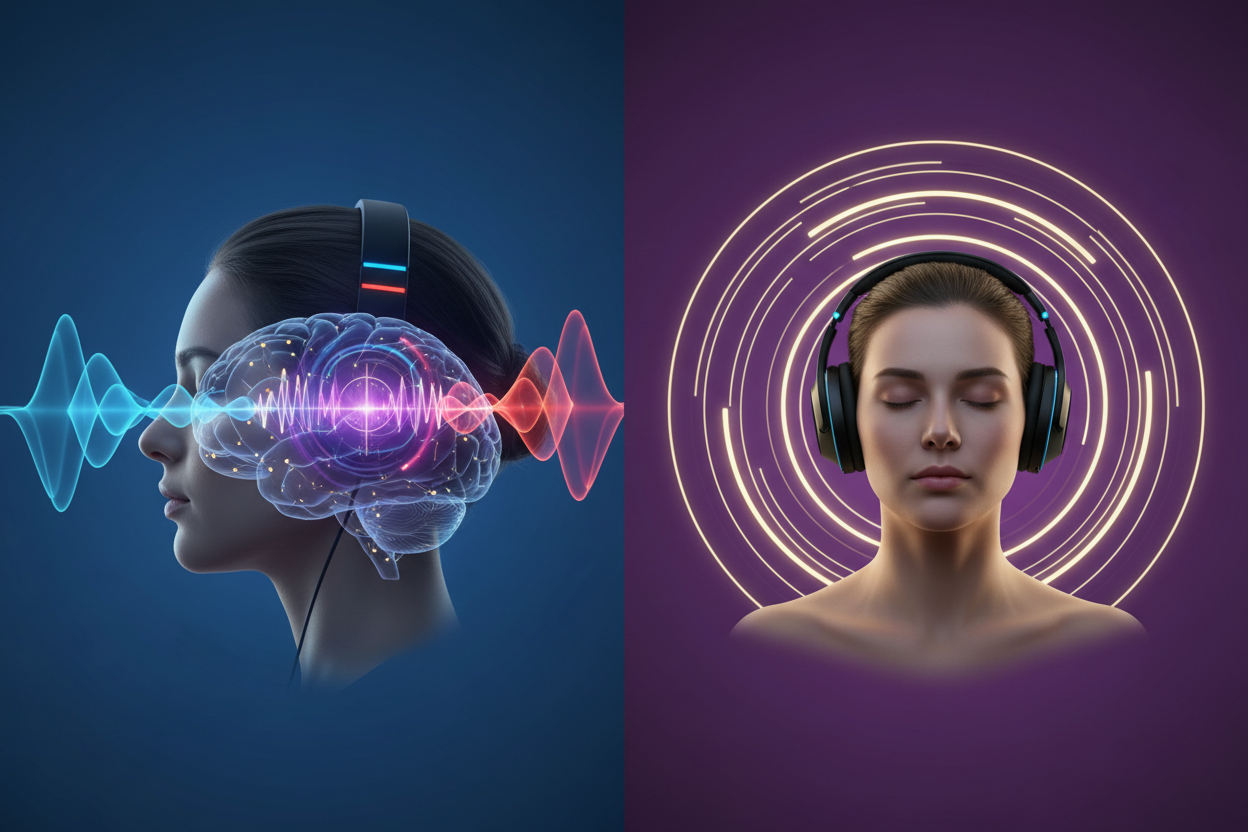
Your brain naturally produces electrical activity that can be measured in waves. These brainwaves correspond to different states of consciousness – from deep sleep to high alertness. By exposing your brain to specific frequencies through techniques like binaural beats, isochronic tones, or monaural beats, you can potentially influence your mental state.
The beauty of brainwave entrainment lies in its simplicity. You don’t need years of meditation practice or special skills – just a pair of headphones and the right audio tracks. However, like any wellness practice, the key to success lies in consistent, gradual implementation rather than diving in headfirst.
Understanding the Science Behind Brainwave Entrainment
The scientific foundation of brainwave entrainment rests on a phenomenon called the “frequency following response.” This natural tendency of the brain to synchronize with external rhythmic stimuli has been documented in numerous research studies.
Your brain operates at different frequencies throughout the day. Delta waves (0.5-4 Hz) dominate during deep sleep, while theta waves (4-8 Hz) are associated with deep meditation and creativity. Alpha waves (8-13 Hz) appear during relaxed awareness, and beta waves (13-30 Hz) are present during normal waking consciousness and focused attention.
When you listen to brainwave entrainment audio, your brain gradually begins to match the frequency of the stimulus. This process isn’t immediate – it typically takes 15-20 minutes for your brainwaves to fully synchronize with the target frequency. This is why patience and consistency are crucial when starting your brainwave entrainment practice.
Benefits of Regular Brainwave Entrainment Practice
Regular practitioners of brainwave entrainment report a wide range of benefits that extend far beyond the listening sessions themselves. Many users experience improved sleep quality, with some finding it easier to fall asleep and stay asleep throughout the night.
Stress reduction is another commonly reported benefit. By regularly exposing your brain to alpha and theta frequencies, you may find yourself naturally more relaxed and better equipped to handle daily challenges. Some people discover that their anxiety levels decrease over time, though individual results vary significantly.
Enhanced focus and concentration are perhaps the most immediately noticeable benefits for many users. Beta frequency entrainment can help sharpen mental clarity during work or study sessions. Creative professionals often gravitate toward theta frequencies to unlock innovative thinking and problem-solving abilities.
It’s important to note that while many people report these benefits, brainwave entrainment isn’t a magic solution. The effects are often subtle and develop gradually over weeks or months of consistent practice.
Starting Your Brainwave Entrainment Journey: Week 1-2
Your first two weeks should focus on establishing a foundation rather than achieving dramatic results. Start with just 10-15 minutes per day, preferably at the same time each day to build a habit loop.
Begin with alpha frequency sessions (8-13 Hz) as these are generally the most comfortable for beginners. Alpha states promote relaxation while maintaining awareness, making them ideal for newcomers who might feel uncertain about deeper altered states.
Choose a quiet, comfortable space where you won’t be interrupted. Dim lighting can enhance the experience, but complete darkness isn’t necessary. Use comfortable headphones or earbuds – the quality doesn’t need to be audiophile-level, but they should provide clear sound without distortion.
During these initial sessions, don’t worry about “doing it right.” Simply lie down or sit comfortably, close your eyes, and listen to the audio. Some people feel effects immediately, while others notice changes only after several sessions. Both experiences are completely normal.
Keep a simple journal noting how you feel before and after each session. This will help you track subtle changes that might not be immediately obvious.
Building Consistency: Week 3-4
By week three, you should start extending your sessions to 20-25 minutes. This duration allows your brainwaves more time to fully synchronize with the target frequency and can deepen the overall experience.
This is also an excellent time to experiment with different times of day. Morning sessions might energize you for the day ahead, while evening sessions could help you unwind. Pay attention to how timing affects your experience and adjust accordingly.
Consider introducing theta frequencies (4-8 Hz) once or twice per week. Theta sessions are often used for deep meditation, creativity, and emotional processing. Some people find theta states profoundly relaxing, while others may experience vivid imagery or emotional releases.
Consistency becomes crucial during this phase. Even if you’re not feeling dramatic effects, your brain is gradually adapting to the practice. Missing sessions occasionally won’t derail your progress, but try to maintain at least 5-6 sessions per week.
Expanding Your Practice: Week 5-8
After a month of consistent practice, you’re ready to explore more diverse frequencies and longer sessions. Consider extending some sessions to 30-45 minutes, particularly on weekends when you have more time.
This is an ideal time to introduce beta frequencies (13-30 Hz) for focus and concentration. Try a beta session before important work tasks or study sessions to see if it enhances your mental clarity. Some people find gamma frequencies (30-100 Hz) helpful for peak cognitive performance, though these should be used sparingly.
Experiment with different types of brainwave entrainment. If you’ve been using binaural beats, try isochronic tones or monaural beats. Each method has slightly different characteristics, and you might find one more effective than others.
Begin incorporating delta frequencies (0.5-4 Hz) for deep relaxation or sleep enhancement. Delta sessions are best used in the evening or right before bed, as they can promote drowsiness.
Advanced Integration: Month 2 and Beyond
After two months of consistent practice, you can begin treating brainwave entrainment as a versatile tool for different situations. Create a “toolkit” of sessions for various purposes: energizing morning sessions, focus-enhancing work sessions, creative theta sessions, and deeply relaxing evening sessions.
Consider combining brainwave entrainment with other practices. Many people find it enhances meditation, yoga, or breathing exercises. Some use it during light stretching routines or while practicing mindfulness techniques.
Advanced practitioners often experiment with longer sessions (60-90 minutes) or multiple sessions per day. However, more isn’t always better – pay attention to how your body and mind respond, and adjust accordingly.
Start paying attention to how the effects carry over into your daily life. Many long-term practitioners report improved stress resilience, better emotional regulation, and enhanced overall well-being even when not actively listening to entrainment audio.
Common Mistakes to Avoid
One of the most common mistakes beginners make is expecting immediate, dramatic results. Brainwave entrainment is a gradual process that works through repetition and consistency rather than single powerful sessions.
Another frequent error is using volumes that are too loud. The audio should be comfortable – you shouldn’t strain to hear it, but it shouldn’t be so loud that it’s distracting or potentially harmful to your hearing.
Many people make the mistake of trying too many different frequencies too quickly. It’s better to master one or two frequency ranges before expanding your practice. This allows you to develop sensitivity to the effects and understand how different frequencies affect you personally.
Don’t use brainwave entrainment while driving, operating machinery, or during any activity requiring full attention. Some frequencies can induce drowsiness or altered states that could be dangerous in certain situations.
Choosing the Right Tools and Technology
The market offers numerous brainwave entrainment apps, devices, and audio programs. While expensive equipment isn’t necessary, quality does matter to some extent. Look for programs that clearly specify the frequencies used and offer good customer support.
Free apps can be a great starting point, but be cautious of programs that make unrealistic claims or promise overnight transformations. Reputable sources will acknowledge that results vary and develop gradually over time.
Consider investing in comfortable, good-quality headphones if you plan to make brainwave entrainment a regular practice. Over-ear headphones are often more comfortable for longer sessions than earbuds.
Some people prefer dedicated brainwave entrainment devices, while others are satisfied with smartphone apps. The most important factor is finding something you’ll actually use consistently.
Frequently Asked Questions
How long does it take to see results from brainwave entrainment?
Results vary significantly between individuals. Some people notice subtle effects within a few sessions, while others may not perceive changes for several weeks. Most practitioners report noticeable benefits after 4-6 weeks of consistent practice.
Is brainwave entrainment safe for everyone?
Brainwave entrainment is generally considered safe for healthy adults. However, people with epilepsy, seizure disorders, or certain mental health conditions should consult with a healthcare provider before starting. Pregnant women should also seek medical advice before beginning any new wellness practice.
Can I use brainwave entrainment instead of sleep medication?
While many people find brainwave entrainment helpful for relaxation and sleep, it should not be used as a replacement for prescribed medications without consulting your doctor. It can be a complementary practice alongside other treatments.
What’s the difference between binaural beats and isochronic tones?
Binaural beats require headphones and work by playing slightly different frequencies in each ear, creating a perceived beat frequency in your brain. Isochronic tones are evenly spaced pulses that don’t require headphones and are often considered more effective by some practitioners.
How often should I practice brainwave entrainment?
For best results, aim for daily sessions of 15-30 minutes. Consistency is more important than duration, so it’s better to do shorter sessions regularly than longer sessions sporadically.
Can children use brainwave entrainment?
While some practitioners use brainwave entrainment with children, it’s essential to consult with a pediatrician first. Children’s brains are still developing, and what works for adults may not be appropriate for younger users.
Introducing brainwave entrainment to your routine doesn’t have to be overwhelming or complicated. By starting slowly, building consistency, and gradually expanding your practice, you can explore this fascinating field safely and effectively. Remember that everyone’s journey is unique – what works wonderfully for one person might need adjustment for another.
The key to success lies in patience, consistency, and realistic expectations. Brainwave entrainment isn’t a quick fix, but rather a tool that can support your overall wellness journey when used thoughtfully and regularly. As you develop your practice over the coming weeks and months, you may discover benefits that extend far beyond your listening sessions, potentially enhancing your daily life in subtle but meaningful ways.
Whether you’re seeking better focus, deeper relaxation, enhanced creativity, or simply a new tool for personal development, brainwave entrainment offers a scientifically-grounded approach worth exploring. Start small, stay consistent, and allow yourself the time to discover how this remarkable practice might benefit your unique lifestyle and goals.