
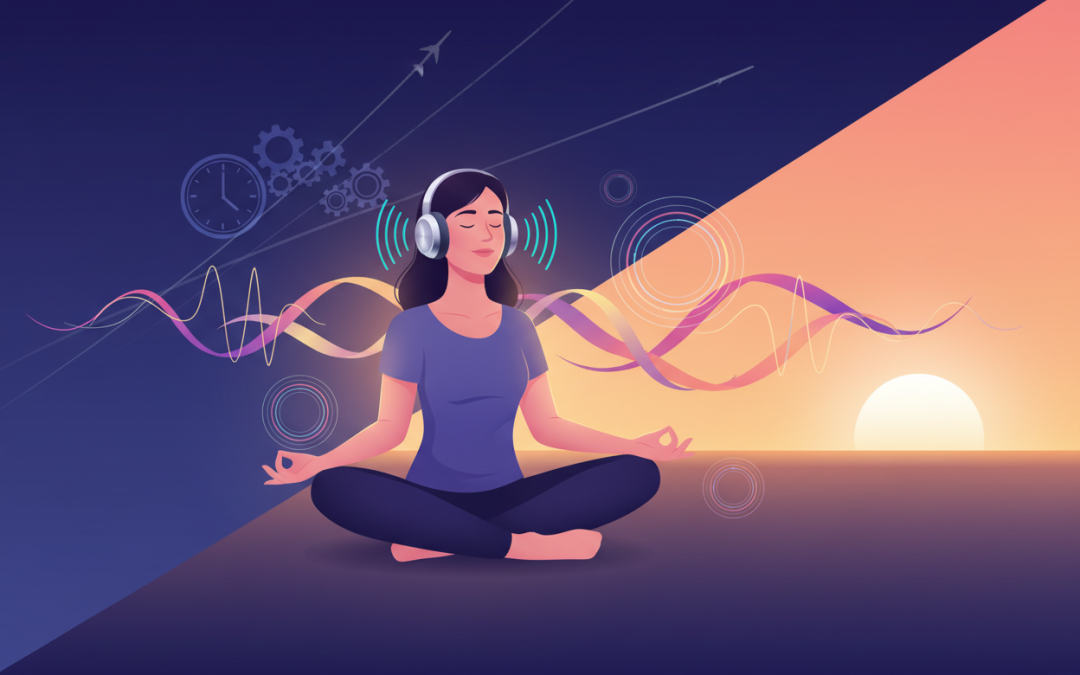
Using Brainwave Entrainment to Overcome Jet Lag: A Natural Solution for Better Travel Recovery
Table of Contents
1. Introduction to Jet Lag and Modern Solutions
2. Understanding Brainwave Entrainment
3. The Science Behind Jet Lag and Circadian Rhythms
4. How Brainwave Entrainment Helps Reset Your Internal Clock
5. Types of Brainwave Entrainment for Jet Lag Relief
6. Practical Implementation: Using Brainwave Entrainment While Traveling
7. Best Practices and Safety Considerations
8. Combining Brainwave Entrainment with Other Jet Lag Remedies
9. Real-World Success Stories and Research
10. Frequently Asked Questions
11. Conclusion
Introduction to Jet Lag and Modern Solutions
Anyone who’s crossed multiple time zones knows the struggle. That groggy, disoriented feeling when your body insists it’s 3 AM while the local clock cheerfully displays noon. Jet lag isn’t just an inconvenience – it’s a legitimate disruption to your body’s natural rhythms that can affect everything from your mood to your immune system.
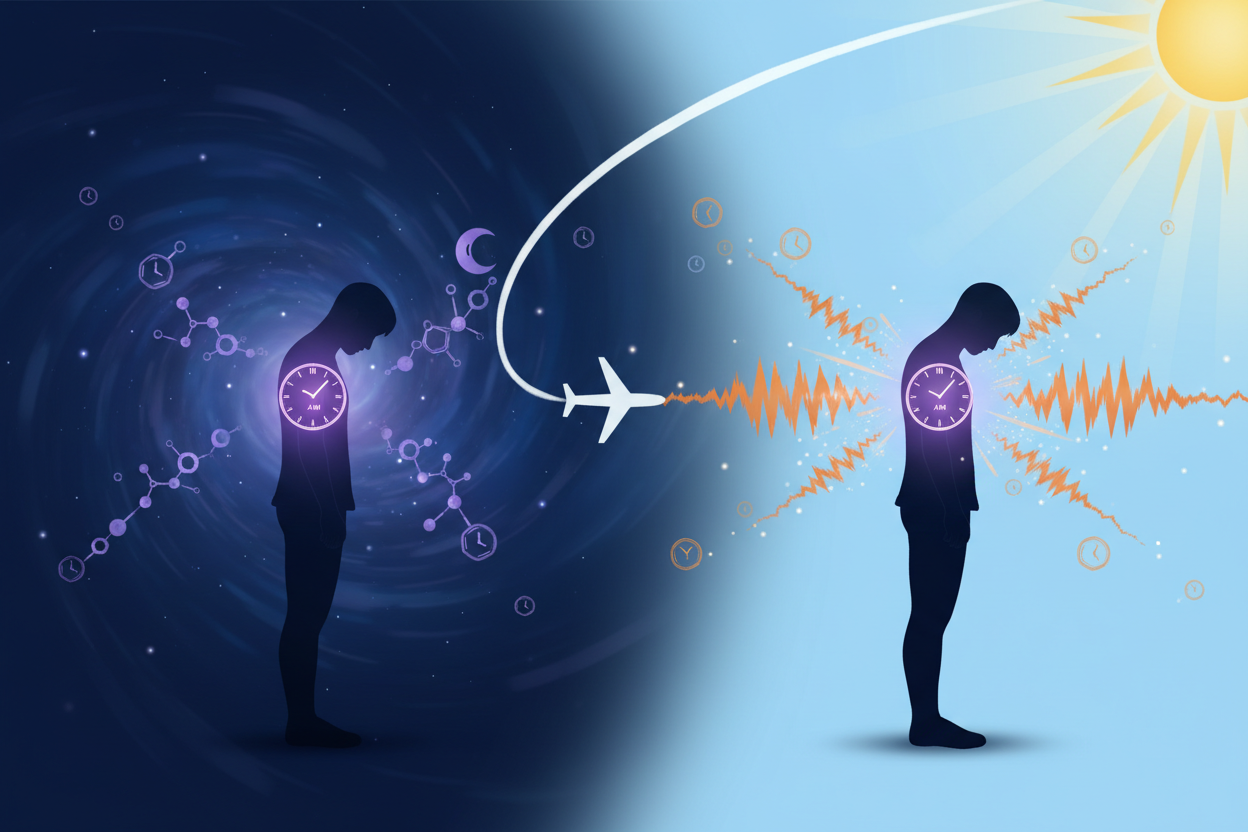
Traditional remedies like melatonin supplements and light therapy have their place, but there’s an emerging solution that’s gaining attention among frequent travelers and sleep researchers alike: brainwave entrainment. This fascinating technique uses audio frequencies to naturally guide your brain into specific states, potentially offering a drug-free way to reset your internal clock and minimize jet lag symptoms.
In this comprehensive guide, we’ll explore how brainwave entrainment works, the science behind its effectiveness for jet lag recovery, and practical ways to incorporate this technology into your travel routine. Whether you’re a business traveler crossing continents weekly or planning that once-in-a-lifetime vacation, understanding this natural approach could transform how you experience travel.
Understanding Brainwave Entrainment
Brainwave entrainment might sound like science fiction, but it’s actually a well-documented phenomenon rooted in neuroscience. At its core, it’s the brain’s natural tendency to synchronize its electrical activity with external rhythmic stimuli. Think of it as your brain’s way of “tuning in” to patterns in your environment.
Your brain naturally produces electrical impulses at different frequencies throughout the day. When you’re alert and focused, you’re generating beta waves (13-30 Hz). During relaxation, alpha waves (8-13 Hz) dominate. Deep sleep is characterized by delta waves (0.5-4 Hz), while the dreamy REM stage produces theta waves (4-8 Hz).
Brainwave entrainment uses specific audio frequencies – typically through binaural beats, isochronic tones, or monaural beats – to encourage your brain to shift into desired states. It’s like having a gentle, natural remote control for your consciousness, helping you achieve the mental state you need when you need it most.
The Science Behind Jet Lag and Circadian Rhythms
To understand how brainwave entrainment can help with jet lag, we first need to grasp what’s happening in your body when you travel across time zones. Your circadian rhythm – often called your internal body clock – is a complex biological system that regulates sleep-wake cycles, hormone production, body temperature, and numerous other physiological processes.
This internal clock is primarily controlled by a small region in your brain called the suprachiasmatic nucleus (SCN), which responds to light cues from your environment. Under normal circumstances, this system works beautifully, keeping you alert during the day and sleepy at night. However, rapid travel across multiple time zones throws this delicate system into chaos.
When you arrive in a new time zone, your internal clock is still operating on your departure location’s schedule. Your body might be producing melatonin (the sleep hormone) at 2 PM local time, or flooding your system with cortisol (the alertness hormone) at midnight. This mismatch between your internal clock and external environment creates the constellation of symptoms we know as jet lag: fatigue, insomnia, difficulty concentrating, digestive issues, and mood changes.
How Brainwave Entrainment Helps Reset Your Internal Clock
Here’s where brainwave entrainment becomes particularly interesting for travelers. Research suggests that specific brainwave frequencies can influence the production of key hormones involved in sleep-wake cycles, particularly melatonin and cortisol. By using targeted audio frequencies, you can potentially guide your brain toward the appropriate state for your new time zone.
The process works through a phenomenon called frequency following response. When your brain is exposed to rhythmic stimuli at specific frequencies, your neural oscillations gradually begin to match that rhythm. It’s similar to how multiple metronomes placed on the same surface will eventually synchronize their beats.
For jet lag recovery, this means you can use brainwave entrainment to encourage sleep-promoting delta and theta waves when it’s nighttime in your destination, or stimulate alertness-supporting beta waves when you need to be awake. Rather than waiting days or weeks for your natural circadian rhythm to adjust, you’re actively participating in the reset process.
Types of Brainwave Entrainment for Jet Lag Relief
Not all brainwave entrainment is created equal, and different techniques offer various advantages for combating jet lag. Understanding these options helps you choose the most effective approach for your travel needs.
Binaural beats are perhaps the most well-known form of brainwave entrainment. This technique involves playing slightly different frequencies in each ear – for example, 100 Hz in the left ear and 110 Hz in the right ear. Your brain perceives the mathematical difference (10 Hz in this case) as a rhythmic beating pattern, which can encourage brainwave entrainment at that frequency. For jet lag, you might use alpha frequency binaural beats (8-13 Hz) for relaxation or delta frequencies (0.5-4 Hz) to promote deep sleep.
Isochronic tones represent a more direct approach, using evenly spaced pulses of sound that turn on and off rapidly. These don’t require headphones and can be more effective for some people, as they provide a clearer, more defined rhythmic stimulus. Many travelers find isochronic tones particularly useful because they can be played through regular speakers, making them more practical in hotel rooms or during long flights.
Monaural beats combine two frequencies before they reach your ears, creating an actual beating sound rather than a perceived one. This approach can be effective and doesn’t require the precise stereo separation needed for binaural beats, making it another practical option for travel use.
Practical Implementation: Using Brainwave Entrainment While Traveling
The key to successfully using brainwave entrainment for jet lag lies in strategic timing and proper implementation. Start by identifying your destination’s time zone and planning your entrainment sessions accordingly. If you’re traveling eastward (which typically causes more severe jet lag), begin adjusting your sleep schedule a few days before departure.
During your flight, use brainwave entrainment strategically. If you’re arriving in the morning at your destination, use alertness-promoting beta wave entrainment during the latter part of your flight. If you’re arriving in the evening, delta or theta wave entrainment can help you prepare for sleep upon arrival.
Quality headphones are essential for binaural beats, but they don’t need to be expensive. Comfortable, noise-isolating earphones work well and are practical for travel. Many smartphones and tablets can play brainwave entrainment tracks, making this technology highly accessible.
Create a consistent routine around your entrainment sessions. Find a comfortable position, minimize distractions, and allow at least 20-30 minutes for the entrainment effect to develop. Some people experience results immediately, while others need several sessions to notice significant changes.
Best Practices and Safety Considerations
While brainwave entrainment is generally considered safe for healthy adults, there are important considerations to keep in mind. People with epilepsy, seizure disorders, or certain psychiatric conditions should consult healthcare providers before using brainwave entrainment, as rhythmic stimuli can potentially trigger seizures in susceptible individuals.
Start with shorter sessions (15-20 minutes) and gradually increase duration as you become comfortable with the technique. Some people experience mild side effects like headaches or dizziness when first using brainwave entrainment, particularly at higher frequencies or volumes.
Volume is crucial – the audio should be clearly audible but comfortable. Excessive volume can cause hearing damage and may actually interfere with the entrainment process. Many experts recommend keeping the volume at a level where you can still hear ambient sounds around you.
Don’t expect miracles overnight. Like any natural remedy, brainwave entrainment works best as part of a comprehensive approach to managing jet lag. Individual responses vary significantly, and what works wonderfully for one person might be less effective for another.
Combining Brainwave Entrainment with Other Jet Lag Remedies
The most effective approach to jet lag recovery often involves combining multiple strategies. Brainwave entrainment works particularly well alongside other evidence-based remedies, creating a synergistic effect that can dramatically improve your travel experience.
Light therapy remains one of the most powerful tools for resetting circadian rhythms. Combine morning light exposure (either natural sunlight or a light therapy device) with alpha or beta wave entrainment to reinforce alertness signals. Similarly, avoid bright light in the evening while using delta wave entrainment to promote sleep.
Strategic meal timing can also support your circadian reset. Eating according to your destination’s schedule, combined with appropriate brainwave entrainment, helps multiple body systems adjust simultaneously. Some travelers find that fasting during travel and breaking their fast with the first meal in their destination time zone, while using brainwave entrainment, accelerates adjustment.
Hydration plays a crucial role in how well your body adapts to new time zones. Dehydration can worsen jet lag symptoms and may interfere with the effectiveness of brainwave entrainment. Maintain proper hydration throughout your journey while avoiding excessive caffeine or alcohol, which can disrupt both sleep patterns and the entrainment process.
Real-World Success Stories and Research
While research specifically on brainwave entrainment for jet lag is still emerging, studies on circadian rhythm disruption and audio-based interventions show promising results. A growing number of frequent travelers report significant improvements in their jet lag recovery when incorporating brainwave entrainment into their travel routines.
Business travelers who cross multiple time zones regularly often become inadvertent experts in jet lag management. Many report that consistent use of brainwave entrainment, particularly when combined with strategic light exposure and meal timing, reduces their adjustment period from several days to just 24-48 hours.
Research into shift work sleep disorder – a condition with similarities to jet lag – has shown that audio-based interventions can help regulate sleep-wake cycles. While more specific research is needed, the underlying mechanisms suggest significant potential for jet lag applications.
Flight crews, who deal with constant schedule changes, represent another group experimenting with brainwave entrainment. Preliminary reports suggest that pilots and flight attendants using these techniques experience less fatigue and better sleep quality during layovers, though formal studies are still needed to confirm these anecdotal reports.
Frequently Asked Questions
How long does it take for brainwave entrainment to work for jet lag?
Individual responses vary significantly, but many people notice some effects within 20-30 minutes of starting a session. For jet lag specifically, you might see improvements in sleep quality or daytime alertness within 1-2 days of consistent use, though complete circadian adjustment typically takes several days regardless of the method used.
Can I use brainwave entrainment during flights?
Yes, brainwave entrainment can be used during flights and may actually be beneficial for preparing your brain for your destination’s time zone. Use headphones and keep the volume at a comfortable level. Some airlines’ entertainment systems may interfere with the precise frequencies needed for binaural beats, so downloaded tracks on your personal device are often more reliable.
Is brainwave entrainment safe for children and elderly travelers?
While generally considered safe, children and elderly individuals may be more sensitive to audio stimulation. Consult with a healthcare provider before using brainwave entrainment with children under 12 or adults over 65, particularly if there are any existing neurological conditions.
What’s the difference between brainwave entrainment and meditation apps?
While some meditation apps include brainwave entrainment features, traditional meditation apps typically focus on guided instruction or ambient sounds rather than specific frequencies designed to influence brainwave patterns. Dedicated brainwave entrainment uses precisely calibrated audio frequencies based on neuroscience research.
Can I use brainwave entrainment if I have tinnitus?
People with tinnitus should use caution with brainwave entrainment, as certain frequencies might exacerbate symptoms. Start with very low volumes and shorter sessions, and discontinue use if you notice any worsening of tinnitus symptoms. Isochronic tones might be better tolerated than binaural beats for some individuals with tinnitus.
How often should I use brainwave entrainment for jet lag?
For jet lag recovery, daily use aligned with your destination’s sleep schedule typically works best. You might use alertness-promoting frequencies in the morning and sleep-promoting frequencies in the evening until your circadian rhythm adjusts, usually 3-7 days depending on the number of time zones crossed.
Conclusion
Brainwave entrainment represents an exciting frontier in natural jet lag management, offering a drug-free approach that works with your brain’s natural rhythms rather than against them. While it’s not a magic solution that will eliminate jet lag entirely, the growing body of evidence and user experiences suggests it can be a valuable tool in your travel wellness arsenal.
The beauty of brainwave entrainment lies in its simplicity and accessibility. With just a smartphone, headphones, and the right audio tracks, you can begin experimenting with this technique on your next trip. Start with realistic expectations, be consistent in your approach, and remember that the most effective strategy often involves combining brainwave entrainment with other proven jet lag remedies.
As our understanding of neuroscience and circadian biology continues to evolve, techniques like brainwave entrainment will likely become more refined and targeted. For now, frequent travelers have an opportunity to be early adopters of this promising technology, potentially transforming their travel experiences from jet-lagged ordeals into smooth transitions.
Whether you’re crossing oceans for business or pleasure, consider giving brainwave entrainment a try. Your future well-rested self might thank you for discovering this natural approach to conquering one of travel’s most persistent challenges. Safe travels, and may your next time zone transition be your smoothest yet.