
The Best Times of Day to Use Different Brainwave Frequencies: Your Complete Guide to Optimal Mental Performance
Table of Contents
1. Introduction to Brainwave Frequencies and Timing
2. Understanding Your Natural Circadian Rhythm
3. Morning Hours: Alpha and Beta Frequencies (6 AM – 12 PM)
4. Afternoon Peak: Beta and Gamma Waves (12 PM – 6 PM)
5. Evening Wind-Down: Alpha and Theta Frequencies (6 PM – 10 PM)
6. Nighttime Recovery: Delta and Theta Waves (10 PM – 6 AM)
7. Personal Factors That Influence Optimal Timing
8. Creating Your Personalized Brainwave Schedule
9. Frequently Asked Questions
10. Conclusion
Introduction to Brainwave Frequencies and Timing
Have you ever wondered why some people seem naturally sharp in the morning while others hit their stride late at night? The answer lies partly in understanding how our brainwave frequencies naturally fluctuate throughout the day and how we can work with these rhythms rather than against them.
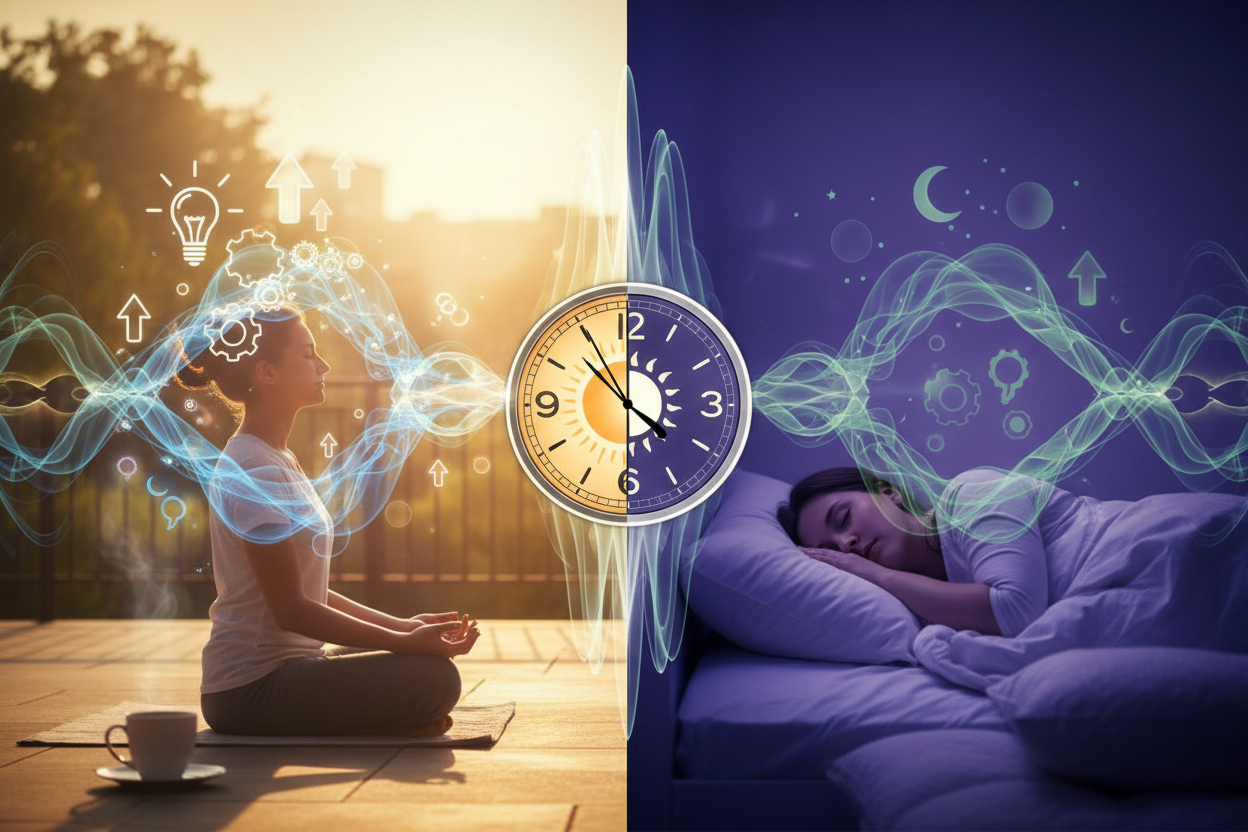
Brainwave entrainment has gained significant attention in recent years as more people discover its potential for enhancing focus, creativity, relaxation, and sleep. However, what many don’t realize is that timing plays a crucial role in maximizing the effectiveness of different brainwave frequencies. Just as you wouldn’t drink a strong cup of coffee right before bed, using certain brainwave frequencies at the wrong time can work against your natural biological rhythms.
In this comprehensive guide, we’ll explore the optimal times to use different brainwave frequencies throughout your day, helping you create a personalized schedule that aligns with your natural circadian rhythm and lifestyle demands.
Understanding Your Natural Circadian Rhythm
Before diving into specific timing recommendations, it’s essential to understand how your brain naturally operates throughout a 24-hour cycle. Your circadian rhythm is like an internal clock that regulates various physiological processes, including brainwave activity, hormone production, and body temperature.
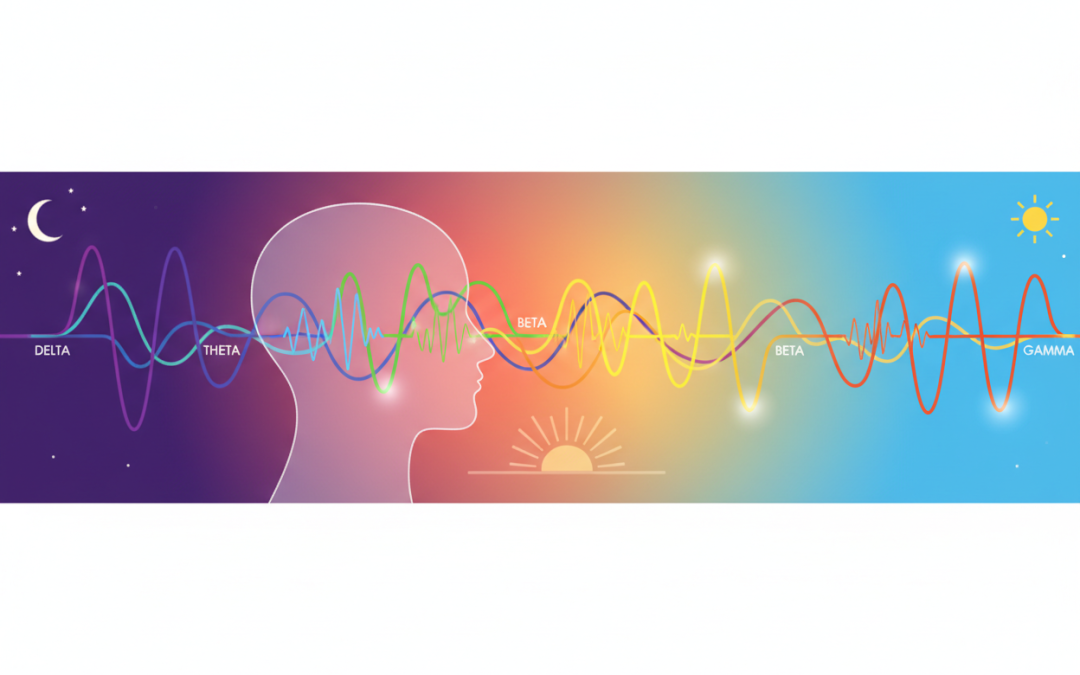
Research shows that our brainwave patterns naturally shift throughout the day in predictable ways. During the early morning hours, your brain gradually transitions from the slower delta waves of deep sleep to the more alert beta waves needed for daily activities. This natural progression provides us with a roadmap for when different brainwave frequencies will be most effective.
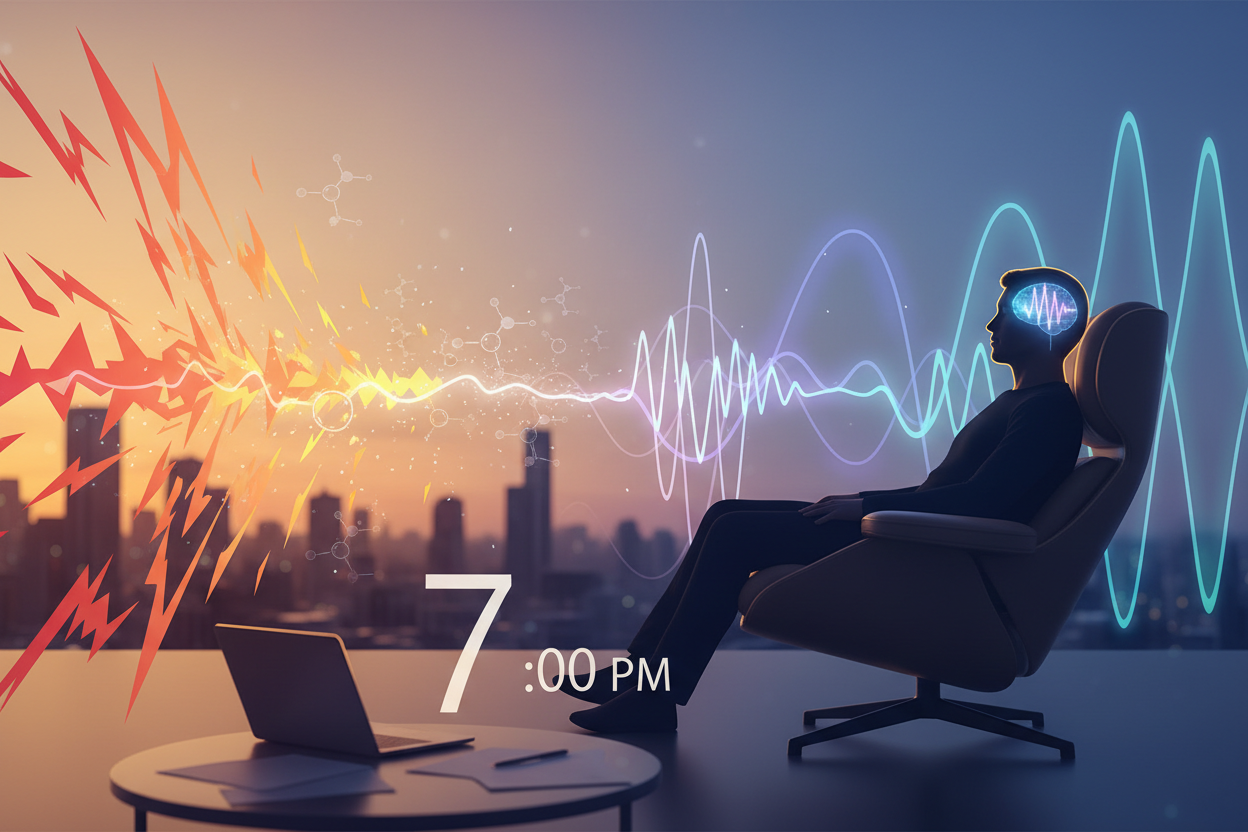
Your individual chronotype also plays a significant role in determining your optimal timing. Whether you’re a natural early bird or night owl affects when your brain is most receptive to different frequencies. Understanding this personal variation is key to creating an effective brainwave routine.
Morning Hours: Alpha and Beta Frequencies (6 AM – 12 PM)
The morning hours present a unique opportunity to set the tone for your entire day. As your brain naturally transitions from sleep to wakefulness, it’s the perfect time to use specific frequencies that support this awakening process.
Alpha Frequencies (8-12 Hz) for Morning Meditation
Between 6 AM and 8 AM, your mind is naturally calm yet alert, making it an ideal time for alpha wave entrainment. This frequency range promotes a relaxed but focused state that’s perfect for morning meditation, gentle exercise, or setting daily intentions. Many people find that starting their day with 15-20 minutes of alpha wave listening helps them feel more centered and prepared for the challenges ahead.
Beta Frequencies (13-30 Hz) for Mental Preparation
As you move into the 8 AM to 12 PM window, your brain naturally increases beta wave production. This is when beta frequency entrainment becomes most effective for enhancing focus, analytical thinking, and problem-solving abilities. It’s an excellent time for tackling complex work tasks, studying new material, or engaging in activities that require sustained attention.
I’ve personally found that using beta frequencies during my morning work sessions significantly improves my productivity and mental clarity. The key is to start gradually and avoid overuse, as excessive beta stimulation can lead to anxiety or mental fatigue.
Afternoon Peak: Beta and Gamma Waves (12 PM – 6 PM)
The afternoon hours typically represent your peak performance window, when your brain is naturally primed for high-level cognitive tasks and creative problem-solving.
High Beta Frequencies (16-30 Hz) for Peak Performance
Between 12 PM and 3 PM, most people experience their highest levels of alertness and cognitive function. This is the optimal time for using higher beta frequencies to enhance concentration, boost analytical thinking, and tackle your most challenging mental tasks. Whether you’re preparing for an important presentation, solving complex problems, or engaging in detailed analytical work, this frequency range can provide the mental edge you need.
Gamma Frequencies (30-100 Hz) for Creative Breakthroughs
The 2 PM to 5 PM window often coincides with a natural dip in energy for many people, but it’s also when gamma wave entrainment can be particularly effective. Gamma frequencies are associated with heightened awareness, creative insights, and the ability to process complex information rapidly. This makes the mid-afternoon period ideal for brainstorming sessions, creative projects, or any work requiring innovative thinking.
Research suggests that gamma waves play a crucial role in binding different pieces of information together, which explains why many people experience their best creative insights during this time when combined with appropriate frequency entrainment.
Evening Wind-Down: Alpha and Theta Frequencies (6 PM – 10 PM)
As evening approaches, your brain begins its natural transition toward rest and recovery. This period offers excellent opportunities for using frequencies that support relaxation, reflection, and preparation for sleep.
Alpha Frequencies for Stress Relief
The early evening hours, roughly 6 PM to 8 PM, are perfect for using alpha frequencies to decompress from the day’s activities. This is when many people naturally experience increased stress hormones from accumulated daily pressures. Alpha wave entrainment during this time can help reduce cortisol levels, promote relaxation, and create a smooth transition from work mode to personal time.
Consider incorporating alpha frequency sessions into your evening routine while engaging in relaxing activities like gentle stretching, reading, or spending time with family. The combination of relaxing activities with alpha entrainment creates a powerful synergy for stress reduction.
Theta Frequencies for Deep Relaxation
Between 8 PM and 10 PM, as your natural melatonin production begins to increase, theta frequencies (4-8 Hz) become increasingly effective. This frequency range promotes deep relaxation, enhanced creativity, and access to subconscious insights. It’s an excellent time for meditation, journaling, or any practice focused on self-reflection and emotional processing.
Many people find that theta entrainment during this period helps them process the day’s experiences and prepare mentally for restful sleep. It’s also a powerful time for visualization exercises or working with affirmations, as the theta state enhances suggestibility and subconscious programming.
Nighttime Recovery: Delta and Theta Waves (10 PM – 6 AM)
The nighttime hours are crucial for physical and mental recovery, making them ideal for frequencies that support deep rest and regeneration.
Theta to Delta Transition (10 PM – 12 AM)
As you prepare for sleep, the transition from theta to delta frequencies mirrors your brain’s natural progression into deeper states of rest. Using theta frequencies between 10 PM and midnight can help facilitate this transition, making it easier to fall asleep and enter the deeper stages of the sleep cycle.
This is particularly beneficial for people who struggle with racing thoughts or difficulty winding down at bedtime. The slower theta frequencies help quiet mental chatter and promote the relaxed state necessary for quality sleep.
Delta Frequencies for Deep Sleep (12 AM – 6 AM)
Delta waves (0.5-4 Hz) dominate during the deepest stages of sleep, when your body focuses on physical repair, immune system strengthening, and memory consolidation. While you’re naturally producing delta waves during deep sleep, some people benefit from delta frequency entrainment to enhance sleep quality or address sleep disorders.
Delta entrainment is particularly useful for people who experience frequent wake-ups during the night or who struggle to reach the deeper, more restorative stages of sleep. However, it’s important to use these frequencies carefully and preferably under guidance, as improper use can sometimes disrupt natural sleep patterns.
Personal Factors That Influence Optimal Timing
While the general guidelines above work well for most people, several personal factors can influence your optimal timing for different brainwave frequencies.
Chronotype Variations
Your natural chronotype significantly affects when different frequencies will be most effective. Extreme morning larks might benefit from shifting all recommendations 1-2 hours earlier, while night owls may need to delay their schedule accordingly. Pay attention to your natural energy patterns and adjust timing recommendations to match your individual rhythm.
Work Schedule Considerations
Shift workers, freelancers, and others with non-traditional schedules need to adapt these recommendations to their unique situations. The key is maintaining the relative relationships between different frequency uses rather than adhering to specific clock times. Focus on aligning frequencies with your personal wake-up time, peak performance periods, and wind-down phases.
Lifestyle and Health Factors
Factors such as caffeine consumption, exercise timing, meal schedules, and overall health status can all influence how your brain responds to different frequencies at various times. For example, if you exercise intensely in the evening, you might need to extend your wind-down period and delay the use of relaxing frequencies.
Creating Your Personalized Brainwave Schedule
Developing an effective personal brainwave schedule requires experimentation and careful attention to your body’s responses. Start by implementing one or two frequency sessions per day and gradually build your routine as you become more familiar with how different frequencies affect you.
Week 1-2: Baseline Establishment
Begin with simple alpha frequency sessions in the morning and evening. This helps establish a foundation and allows you to observe how your brain responds to entrainment at different times. Keep a simple log of your energy levels, mood, and sleep quality.
Week 3-4: Adding Complexity
Introduce beta frequencies during your natural peak performance hours. Experiment with timing to find when these frequencies feel most beneficial and least disruptive to your natural rhythm.
Week 5+: Fine-Tuning
Add theta and potentially gamma frequencies as appropriate for your goals. Continue monitoring your responses and adjusting timing based on your observations. Remember that optimal timing may shift with seasonal changes, life circumstances, or health variations.
Frequently Asked Questions
Q: Can I use brainwave frequencies at the “wrong” time of day?
A: While it’s generally best to align frequency use with natural rhythms, occasional off-timing use isn’t harmful. However, using stimulating frequencies like beta or gamma late at night may interfere with sleep, while using delta frequencies during the day might cause drowsiness.
Q: How long should each brainwave session last?
A: Most effective sessions range from 15-45 minutes, depending on the frequency and your experience level. Beginners should start with shorter sessions (10-20 minutes) and gradually increase duration as they become more accustomed to the effects.
Q: What happens if I’m a shift worker with an irregular schedule?
A: Focus on relative timing rather than absolute clock times. Align your frequency use with your personal wake-up time, peak alertness periods, and sleep preparation phases, regardless of when these occur during the 24-hour cycle.
Q: Can I combine different frequencies in one session?
A: Yes, many effective programs gradually transition between frequencies. For example, starting with alpha and moving to beta for morning preparation, or transitioning from alpha to theta to delta for sleep preparation.
Q: How quickly will I notice effects from properly timed brainwave entrainment?
A: Some people notice immediate effects, while others require several days or weeks of consistent practice. Acute effects (during and immediately after sessions) typically appear first, followed by cumulative benefits with regular practice.
Q: Are there any times when I should avoid brainwave entrainment?
A: Avoid stimulating frequencies (beta/gamma) if you’re overtired or stressed, as this can increase anxiety. Also, don’t use any brainwave entrainment while driving or operating machinery, as it can alter your state of consciousness.
Conclusion
Understanding the optimal timing for different brainwave frequencies can dramatically enhance their effectiveness and help you achieve your mental performance goals more efficiently. By aligning your frequency use with your natural circadian rhythm, you’re working with your brain’s inherent patterns rather than against them.
Remember that these recommendations serve as starting points rather than rigid rules. Your individual response to different frequencies at various times may vary based on your unique physiology, lifestyle, and goals. The key to success lies in consistent experimentation, careful observation of your responses, and gradual refinement of your personal schedule.
Start slowly, be patient with the process, and don’t hesitate to adjust timing based on your experiences. With time and practice, you’ll develop an intuitive understanding of when your brain is most receptive to different frequencies, allowing you to harness the full potential of brainwave entrainment for enhanced cognitive performance, creativity, and well-being.
Whether you’re seeking improved focus for work, enhanced creativity for artistic pursuits, or simply better sleep quality, proper timing of brainwave frequencies can be a powerful tool in your mental wellness toolkit. Begin implementing these strategies today, and discover how aligning with your brain’s natural rhythms can unlock new levels of mental performance and life satisfaction.