
Creating the Perfect Brainwave Entrainment Routine for Busy Professionals
Table of Contents
1. Understanding Brainwave Entrainment for Professional Success
2. The Science Behind Brainwave Patterns and Productivity
3. Essential Tools and Technologies for Brainwave Entrainment
4. Building Your Morning Brainwave Routine
5. Midday Mental Reset Techniques
6. Evening Wind-Down Protocols
7. Maximizing Results with Consistency and Tracking
8. Common Mistakes to Avoid
9. Frequently Asked Questions
Understanding Brainwave Entrainment for Professional Success
In today’s fast-paced corporate environment, maintaining peak mental performance while managing stress has become increasingly challenging. As a busy professional, you’re constantly juggling deadlines, meetings, and complex decisions that demand your full cognitive capacity. This is where brainwave entrainment emerges as a powerful tool for optimizing your mental state and enhancing productivity.
Brainwave entrainment is a scientifically-backed method that uses rhythmic stimuli to synchronize your brain’s electrical activity with specific frequencies. Think of it as tuning your brain like a musical instrument, allowing you to access different states of consciousness that support various professional activities. Whether you need laser-sharp focus for strategic planning or deep relaxation after a stressful presentation, brainwave entrainment can help you achieve these states more efficiently than traditional methods alone.
The beauty of incorporating brainwave entrainment into your professional routine lies in its flexibility and time efficiency. Unlike lengthy meditation sessions or complex wellness programs, effective brainwave entrainment sessions can be as short as 10-15 minutes, making them perfectly suited for even the most demanding schedules.
The Science Behind Brainwave Patterns and Productivity
Your brain naturally produces electrical impulses at different frequencies throughout the day, and each frequency range corresponds to specific mental states and capabilities. Understanding these patterns is crucial for creating an effective brainwave entrainment routine that aligns with your professional needs.
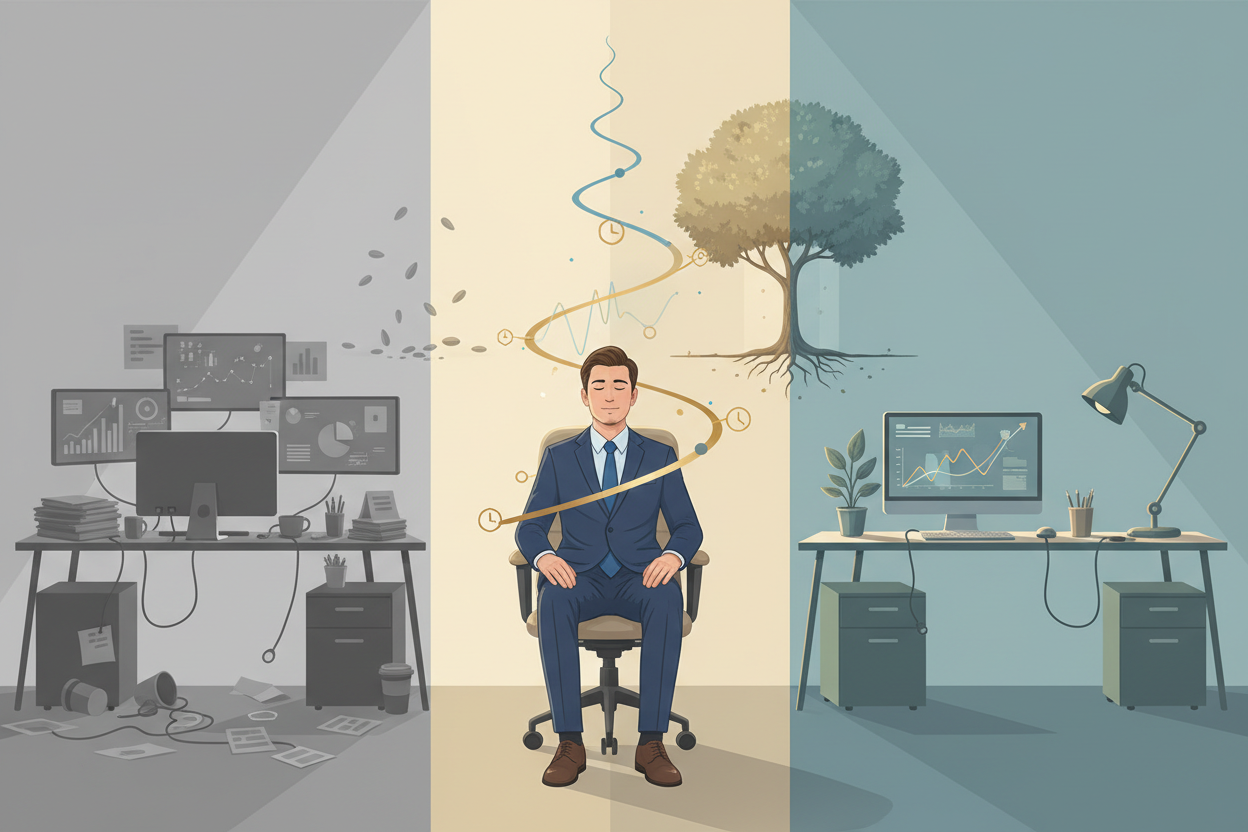
Beta waves, ranging from 13-30 Hz, dominate during active thinking and problem-solving activities. When you’re analyzing quarterly reports or leading a team meeting, your brain operates primarily in beta frequencies. However, excessive beta activity can lead to anxiety and mental fatigue, which is why many professionals feel drained after intensive work sessions.
Alpha waves, occurring between 8-13 Hz, represent a state of relaxed awareness that’s ideal for creative thinking and learning new information. This frequency range is particularly valuable when you need to approach problems from fresh perspectives or absorb complex material during training sessions.
Theta waves, at 4-8 Hz, facilitate deep relaxation and enhanced intuition. While this might seem counterproductive in a business setting, theta states can be incredibly valuable for strategic thinking and accessing innovative solutions that aren’t immediately apparent through logical analysis.
Delta waves, the slowest at 0.5-4 Hz, are associated with deep sleep and physical recovery. For busy professionals dealing with chronic stress and sleep deprivation, targeted delta entrainment can significantly improve rest quality and overall resilience.
Essential Tools and Technologies for Brainwave Entrainment
Creating an effective brainwave entrainment routine requires the right tools, but you don’t need to invest in expensive equipment to get started. The most accessible and widely-used method is binaural beats, which can be experienced through any quality pair of headphones and readily available audio tracks.
Binaural beats work by playing slightly different frequencies in each ear, causing your brain to perceive a third frequency that matches the mathematical difference between the two. For example, playing 440 Hz in your left ear and 450 Hz in your right ear creates a perceived 10 Hz beat, which corresponds to alpha brainwave activity.
High-quality noise-canceling headphones are essential for maximizing the effectiveness of your sessions, especially in busy office environments. Look for headphones that provide clear sound reproduction across all frequency ranges and comfortable fit for extended wear during longer sessions.
Smartphone apps and dedicated audio platforms offer convenient access to professionally-produced brainwave entrainment tracks. Many of these platforms provide sessions specifically designed for professional applications, including focus enhancement, stress reduction, and energy boosting.
For professionals seeking more advanced options, light and sound machines combine visual and auditory stimulation to create more immersive entrainment experiences. These devices use LED glasses that pulse in sync with audio frequencies, potentially enhancing the entrainment effect through multiple sensory channels.
Building Your Morning Brainwave Routine
Starting your day with intentional brainwave entrainment sets a powerful foundation for sustained professional performance. Your morning routine should focus on transitioning from the natural grogginess of waking up to an optimal state for tackling your most important tasks.
Begin with a 10-minute alpha wave session while you’re still in bed or during your morning coffee routine. Alpha frequencies help bridge the gap between sleep and full wakefulness while promoting a calm, focused mindset that’s ideal for planning your day. This gentle transition prevents the jarring shift that often occurs when you immediately dive into emails or urgent tasks upon waking.
Follow your alpha session with 5-10 minutes of beta wave entrainment to activate your analytical thinking and problem-solving capabilities. This is particularly effective if you have challenging projects or important decisions waiting for you at the office. The beta stimulation helps ensure your cognitive resources are fully engaged and ready for complex mental work.
Consider incorporating your brainwave routine with existing morning habits to ensure consistency. Many professionals find success listening to entrainment tracks during their commute, exercise routine, or while reviewing their daily priorities. The key is finding a time slot that feels natural and sustainable within your existing schedule.
Midday Mental Reset Techniques
The afternoon energy crash is a common challenge for busy professionals, often occurring between 1-3 PM when natural circadian rhythms create a dip in alertness. Strategic brainwave entrainment during this period can help you maintain peak performance throughout the entire workday.
A 15-minute alpha wave session during lunch break serves as an effective mental reset, clearing accumulated stress and mental fatigue from morning activities. This practice is particularly valuable after intensive meetings or challenging problem-solving sessions that have depleted your cognitive resources.
For professionals who can’t take extended breaks, even a 5-minute theta wave session can provide significant benefits. Theta frequencies promote deep relaxation and can help reset your nervous system, reducing the cumulative stress that builds throughout a busy workday. Many executives use brief theta sessions between back-to-back meetings to maintain composure and clarity.
If you’re dealing with a particularly stressful period or facing afternoon deadlines, consider using gamma wave entrainment (30-100 Hz) for enhanced focus and cognitive processing speed. Gamma frequencies are associated with heightened awareness and peak mental performance, making them ideal for tackling urgent projects or complex analytical tasks.
Evening Wind-Down Protocols
Your evening brainwave routine plays a crucial role in transitioning from work mode to rest and recovery, directly impacting your sleep quality and next-day performance. The goal is to systematically downshift your nervous system from the high-beta activity of professional work to the slower frequencies that promote relaxation and restoration.
Start your wind-down process with 15-20 minutes of alpha wave entrainment approximately 2-3 hours before bedtime. This helps your brain begin releasing the day’s stress and mental tension while maintaining enough alertness for evening activities like family time or personal interests.
Transition to theta frequencies 60-90 minutes before sleep to promote deeper relaxation and mental processing of the day’s experiences. Theta states facilitate the integration of new learning and experiences, which can be particularly valuable for professionals who are constantly acquiring new information and skills.
Conclude your routine with delta wave entrainment during the final 30 minutes before sleep. Delta frequencies directly support the transition into deep sleep stages, helping ensure you get the restorative rest necessary for optimal cognitive function and stress resilience the following day.
Maximizing Results with Consistency and Tracking
Like any wellness practice, brainwave entrainment delivers the most significant benefits when applied consistently over time. Your brain’s neuroplasticity allows it to become more responsive to entrainment frequencies with regular practice, essentially training your nervous system to access desired states more easily and quickly.
Establish a realistic schedule that you can maintain even during your busiest periods. It’s better to commit to 10 minutes daily than to plan elaborate 45-minute sessions that you’ll abandon when work pressures increase. Many successful professionals start with just 5-10 minutes per day and gradually expand their practice as they experience the benefits.
Track your subjective experiences and objective performance metrics to gauge the effectiveness of your routine. Keep notes about your energy levels, focus quality, stress levels, and sleep quality before and after implementing brainwave entrainment. Many professionals also track productivity metrics like task completion rates and decision-making efficiency to quantify the impact on their professional performance.
Adjust your routine based on your observations and changing professional demands. You might need more stress-reduction sessions during quarterly reporting periods or additional focus enhancement during strategic planning phases. The flexibility to modify your approach ensures your brainwave routine remains relevant and beneficial throughout different career challenges.
Common Mistakes to Avoid
While brainwave entrainment is generally safe and accessible, several common mistakes can limit its effectiveness or create unnecessary frustration for busy professionals just starting their practice.
Avoid expecting immediate dramatic results after just one or two sessions. While some people experience benefits quickly, most professionals notice significant improvements after 2-4 weeks of consistent practice. Setting realistic expectations helps maintain motivation during the initial adaptation period.
Don’t attempt to use brainwave entrainment as a substitute for adequate sleep, proper nutrition, or stress management. These tools work best as part of a comprehensive approach to professional wellness, enhancing rather than replacing fundamental health practices.
Resist the temptation to use high-intensity frequencies or extended session lengths thinking they’ll produce faster results. Your brain needs time to adapt to entrainment frequencies, and overstimulation can actually decrease effectiveness or cause headaches and fatigue.
Avoid using brainwave entrainment while driving, operating machinery, or during activities requiring full attention to safety. Always use these tools in safe, comfortable environments where you can fully relax and benefit from the experience.
Conclusion
Creating the perfect brainwave entrainment routine for your professional life is an investment in your long-term career success and personal well-being. By understanding the science behind different brainwave frequencies and strategically incorporating entrainment sessions into your daily schedule, you can enhance your cognitive performance, manage stress more effectively, and maintain peak mental energy throughout demanding workdays.
Remember that the most effective routine is one you’ll actually maintain consistently. Start small, track your progress, and adjust your approach based on your unique professional demands and personal responses. With patience and consistency, brainwave entrainment can become a powerful tool for optimizing your professional performance while supporting your overall health and resilience.
The key to success lies in viewing brainwave entrainment not as another task on your busy schedule, but as a strategic investment in your cognitive capital. Just as you wouldn’t neglect maintaining your computer or smartphone, your brain deserves the same level of intentional care and optimization to support your professional ambitions and personal fulfillment.
Frequently Asked Questions
How long does it take to see results from brainwave entrainment?
Most professionals begin noticing subtle improvements in focus and relaxation within the first week of consistent practice. Significant changes in stress management, sleep quality, and cognitive performance typically become apparent after 2-4 weeks of regular use.
Can I use brainwave entrainment if I have hearing problems or wear hearing aids?
Individuals with hearing impairments should consult with their healthcare provider before using audio-based brainwave entrainment. Alternative methods like light-based entrainment devices may be more suitable for those with significant hearing limitations.
Is it safe to use brainwave entrainment every day?
Yes, daily brainwave entrainment is generally safe for healthy individuals when used appropriately. However, people with epilepsy, seizure disorders, or other neurological conditions should consult their physician before beginning any brainwave entrainment practice.
What’s the ideal session length for busy professionals?
Sessions ranging from 10-20 minutes provide excellent benefits while fitting easily into professional schedules. Even 5-minute sessions can be effective for quick mental resets between meetings or during brief breaks.
Do I need expensive equipment to get started?
No, you can begin with quality headphones and free or low-cost binaural beat applications. While advanced equipment can enhance the experience, it’s not necessary for achieving significant benefits from brainwave entrainment practice.