
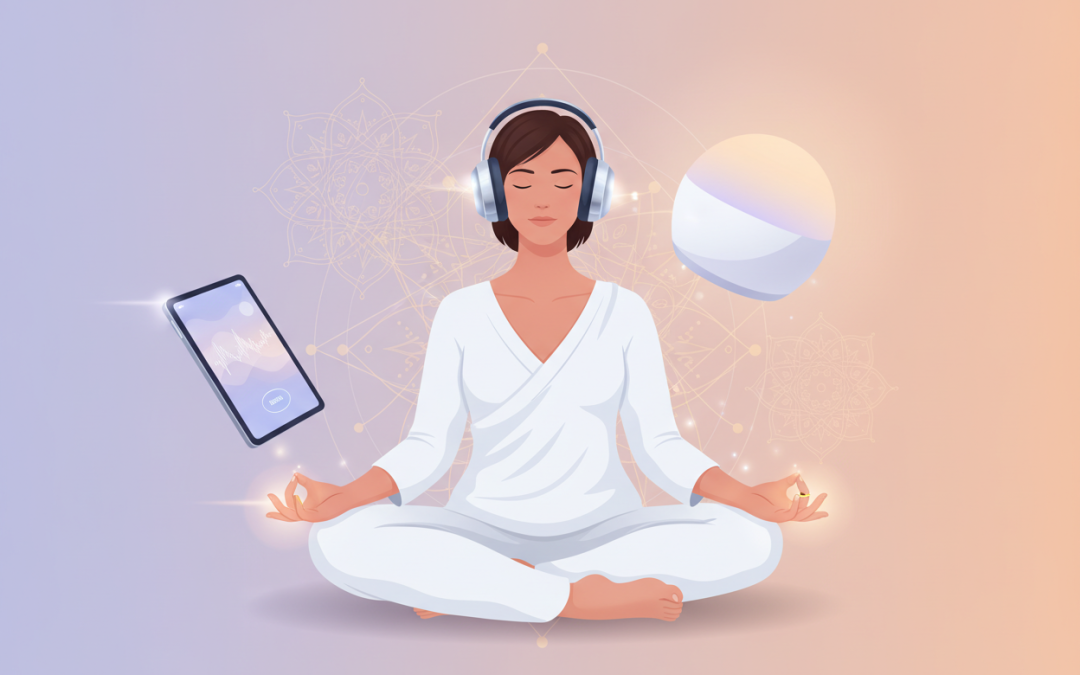
How to Use Meditation Devices for Enhanced Mindfulness Practices ????
Table of Contents
• Introduction to Meditation Technology
• Understanding Different Types of Meditation Devices
• Top Meditation Devices for Beginners and Advanced Practitioners
• How to Choose the Right Meditation Device for Your Needs
• Setting Up Your Meditation Space with Technology
• Integrating Devices into Your Daily Practice
• Common Mistakes to Avoid
• Conclusion
• Frequently Asked Questions
In our fast-paced digital world, finding moments of peace and mindfulness can feel like searching for a needle in a haystack. I remember when I first started meditating five years ago – sitting in silence felt impossible, and my mind would wander to my endless to-do list within seconds. That’s when I discovered meditation devices, and honestly, they transformed my entire practice. ?
Meditation technology has evolved dramatically, offering tools that can guide beginners through their first sessions while helping seasoned practitioners deepen their mindfulness journey. Whether you’re struggling with focus, seeking better sleep, or wanting to track your progress, there’s likely a meditation device designed specifically for your needs.
Understanding Different Types of Meditation Devices
The world of meditation technology is surprisingly diverse, with each type of device serving unique purposes in your mindfulness journey. Let me walk you through the main categories that have gained popularity among practitioners worldwide.
Biofeedback Devices represent perhaps the most scientifically advanced category. These sophisticated tools monitor your physiological responses – heart rate variability, brainwaves, or breathing patterns – and provide real-time feedback. I’ve found that seeing my stress levels decrease in real-time creates a powerful motivation to continue practicing.
Audio-Based Meditation Tools include everything from simple meditation apps to specialized headphones designed for immersive experiences. These devices often feature guided meditations, nature sounds, or binaural beats that can help synchronize your brainwaves for deeper relaxation.
Breathing Regulation Devices focus specifically on pranayama and breath work. These tools provide visual or tactile cues to help you maintain consistent breathing patterns, which is fundamental to most meditation practices.
Environmental Enhancement Devices create the perfect atmosphere for meditation through controlled lighting, aromatherapy, or sound therapy. Think of smart diffusers that automatically adjust scent intensity or lighting systems that gradually dim as your session progresses.
Top Meditation Devices for Beginners and Advanced Practitioners
After testing numerous devices over the years, I’ve compiled a list of standout options that cater to different experience levels and preferences.
For Beginners: Muse Headband ?
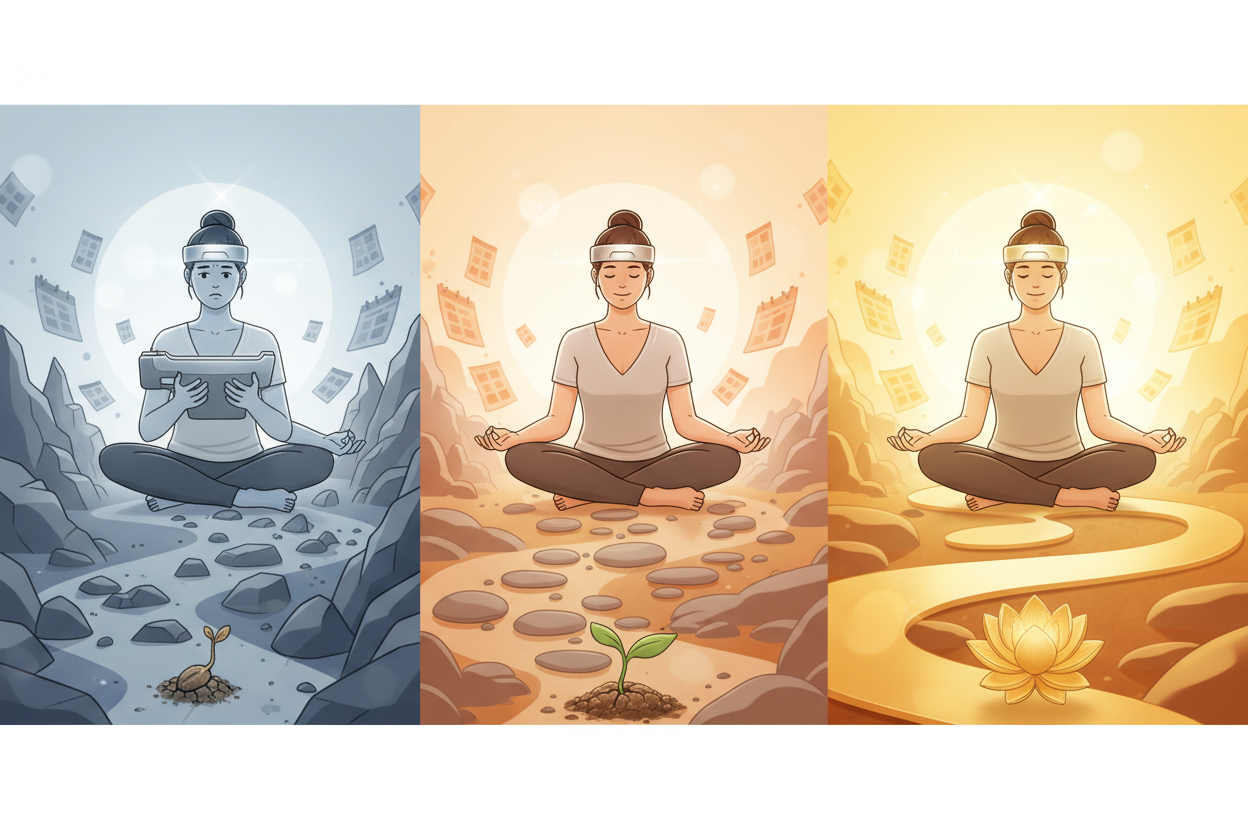
The Muse headband deserves special mention for newcomers to meditation. This EEG-powered device reads your brainwaves and translates them into weather sounds – when your mind is calm, you hear peaceful weather, but when thoughts arise, storms begin. It’s like having a meditation teacher who never judges but always guides you back to stillness.
For Sleep Enhancement: Dodow Sleep Aid
If you’re someone who struggles with racing thoughts at bedtime, the Dodow device projects a soft blue light onto your ceiling. You simply breathe in sync with the expanding and contracting light, which gradually slows down to guide you into sleep. I’ve recommended this to countless friends dealing with insomnia.
For Advanced Practitioners: HeartMath Inner Balance
This heart rate variability monitor clips to your ear and connects to your smartphone, providing detailed insights into your coherence levels. Advanced meditators often appreciate the precise feedback it offers for fine-tuning their practice.
For Breathing Focus: Breathwrk App with Apple Watch
While not a standalone device, the combination of the Breathwrk app with an Apple Watch creates a powerful breathing meditation system. The watch’s haptic feedback gently taps your wrist to guide your breathing rhythm, making it perfect for discrete meditation sessions during busy days.
How to Choose the Right Meditation Device for Your Needs
Selecting the perfect meditation device isn’t about finding the most expensive or technologically advanced option – it’s about matching the tool to your specific goals and lifestyle. Here’s how I recommend approaching this decision.
Assess Your Meditation Goals ?
Start by honestly evaluating what you want to achieve. Are you seeking stress reduction, better sleep, improved focus, or spiritual growth? Different devices excel in different areas. For instance, if anxiety relief is your primary goal, biofeedback devices that show real-time stress reduction might be most beneficial.
Consider Your Experience Level
Beginners often benefit from devices that provide clear, immediate feedback, while experienced meditators might prefer subtle guidance that doesn’t interrupt their natural flow. I’ve seen newcomers become frustrated with advanced devices that assume prior knowledge, just as I’ve watched seasoned practitioners feel constrained by overly simplistic tools.
Evaluate Your Budget and Commitment
Meditation devices range from free apps to thousand-dollar biofeedback systems. Start with your budget, but also consider how committed you are to developing a regular practice. Sometimes investing in a quality device creates the motivation needed to maintain consistency.
Think About Portability and Convenience
Do you travel frequently? Prefer meditating outdoors? Need something discrete for office use? These practical considerations often determine whether a device becomes a helpful tool or an expensive paperweight.
Setting Up Your Meditation Space with Technology
Creating a harmonious blend of technology and tranquility requires thoughtful planning. Your meditation space should feel sacred, not like a tech laboratory, even when incorporating multiple devices.
Minimize Visual Clutter ?
I’ve learned that having too many devices visible can be distracting. Store devices in a beautiful box or drawer when not in use, and only bring out what you need for each session. This maintains the peaceful atmosphere essential for deep practice.
Create Charging Stations
Nothing disrupts a meditation session quite like a dead battery. Establish a dedicated charging area near your meditation space, and make checking device batteries part of your pre-meditation routine.
Test Integration Before Sessions
Always test your devices before beginning meditation. Fumbling with technology during practice breaks the meditative state and can create frustration. I spend a few minutes each morning ensuring everything works properly before my session begins.
Establish Tech-Free Backup Plans
Technology sometimes fails, and having a backup plan prevents missed sessions. Keep a simple meditation timer or even use your breath counting as alternatives when devices aren’t working properly.
Integrating Devices into Your Daily Practice
The key to successful device integration lies in making technology feel natural rather than intrusive. After years of experimentation, I’ve developed strategies that enhance rather than complicate my practice.
Start Gradually ?
Don’t overwhelm yourself by using multiple devices simultaneously from day one. Introduce one device at a time, allowing yourself to become comfortable with each tool before adding others. I typically recommend spending at least two weeks with a new device before evaluating its effectiveness.
Maintain Device-Free Sessions
Even as someone who advocates for meditation technology, I believe in maintaining some purely traditional sessions. This prevents over-dependence on devices and ensures you can meditate anywhere, anytime, regardless of technology availability.
Track Progress Mindfully
Many devices offer detailed analytics about your meditation sessions. While this data can be motivating, avoid becoming obsessed with metrics. Remember that meditation quality isn’t always measurable by devices – sometimes the most profound sessions show the least “perfect” readings.
Customize Settings for Your Needs
Most devices offer extensive customization options. Take time to adjust settings like sensitivity levels, feedback intensity, and session lengths to match your preferences. What works for others might not work for you, and that’s perfectly normal.
Common Mistakes to Avoid When Using Meditation Devices
Having witnessed many practitioners struggle with meditation technology, I’ve identified several common pitfalls that can hinder rather than help your practice.
Over-Reliance on Technology ??
Perhaps the biggest mistake I see is becoming completely dependent on devices. While these tools are incredibly helpful, the goal should always be developing your own internal awareness and ability to meditate independently.
Chasing Perfect Scores
Many devices provide scores or ratings for your sessions. I’ve watched practitioners become frustrated when their scores don’t improve or when they have “bad” sessions according to their device. Remember that meditation isn’t a competition, and some of the most transformative sessions might not register as “successful” on your device.
Ignoring Your Body’s Wisdom
Devices provide valuable feedback, but they shouldn’t override your own intuition and bodily awareness. If a device suggests you’re not relaxed but you feel deeply peaceful, trust your experience over the technology.
Neglecting Basic Meditation Principles
Technology should support, not replace, fundamental meditation principles like consistent practice, proper posture, and mindful awareness. Don’t let the excitement of new gadgets distract you from these essential foundations.
Conclusion
Meditation devices have genuinely revolutionized how we approach mindfulness practice, offering unprecedented insights into our mental states and providing guidance that was once only available through years of intensive training. From my personal journey and observations of countless other practitioners, I can confidently say that when used thoughtfully, these tools can accelerate progress and deepen understanding in remarkable ways. ?
However, the most important lesson I’ve learned is that devices are just that – tools. They’re incredibly sophisticated and helpful tools, but they’re not magic solutions that will instantly transform your mental state or replace the fundamental work of developing awareness and presence.
The future of meditation lies not in choosing between traditional and technological approaches, but in skillfully blending both. Use devices to gain insights, track progress, and overcome specific challenges, but remember that the ultimate goal is developing an unshakeable inner peace that doesn’t depend on any external technology.
Whether you’re just beginning your meditation journey or looking to enhance an established practice, approach meditation devices with curiosity, patience, and realistic expectations. Start small, experiment mindfully, and always remember that the most powerful meditation tool you possess is your own awareness – everything else is simply there to help you access it more easily.
Frequently Asked Questions
Q: Do I need expensive meditation devices to have an effective practice?
A: Absolutely not! While devices can be helpful, many people develop profound meditation practices using nothing more than their breath and a simple timer. Start with free apps or basic tools, and only invest in more expensive devices if you find them genuinely beneficial to your practice.
Q: How long should I use a meditation device before deciding if it’s right for me?
A: I recommend giving any new device at least two to three weeks of consistent use before making a judgment. It takes time to learn how to use the device effectively and to understand how it fits into your practice. Some devices may feel awkward initially but become invaluable with time.
Q: Can meditation devices replace traditional meditation instruction?
A: While devices provide excellent guidance and feedback, they can’t replace the personalized instruction and wisdom that comes from experienced teachers. Consider devices as supplements to, not replacements for, traditional learning methods like classes, workshops, or books.
Q: Are meditation devices safe for everyone to use?
A: Most meditation devices are safe for general use, but people with certain medical conditions (like epilepsy, heart conditions, or those using pacemakers) should consult healthcare providers before using biofeedback or electronic devices. Always read manufacturer guidelines and safety warnings.
Q: What should I do if my meditation device gives inconsistent readings?
A: Inconsistent readings often result from improper device placement, environmental interference, or the natural variability in your physiological state. Check the device setup, ensure you’re in a suitable environment, and remember that some variation in readings is normal and doesn’t necessarily indicate device malfunction or meditation failure.
Roshiwave Meditation Mind Machine
Add CTA sections description.