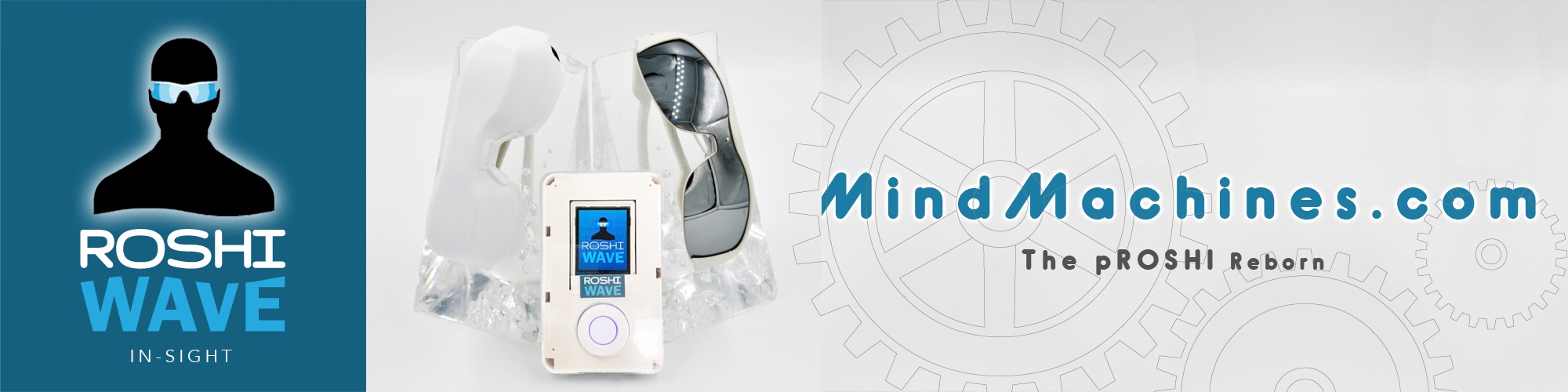
ROSHIwave IN-SIGHT Mind Machine
GPS for the Brain
Designed to Normalize Brainwaves and Lead You To a Deep Meditation Experience
ROSHIwave is the Digital Compass for your brain that gently normalizes brainwaves guiding your mind to a sublime meditative state beyond the perception of time without conscious effort.
THE ENTIRE pROSHI UNIVERSE IN THE PALM OF YOUR HAND FOR THE FRACTION OF THE COST OF EVEN A SINGLE CLASSIC pROSHI DEVICE!
THE MINDMACHINE WHERE YOU FEEL PROFOUND RESULTS IN 15 MINUTES
ROSHIwave IN-SIGHT, Your personal master of Zen, is here…
ROSHIwave mind machine is your personal master of Zen waiting to take you to the “no-time” and “no thought” meditative mind state EFFORTLESSLY.
Put on your ROSHIwave IN-SIGHT Glasses and enter an inner world of clarity and peace as ROSHIwave takes your mind by the hand and leads it to a place only the most experienced lifelong mediators have been.
Beyond thought, beyond time – to the center of the mind.
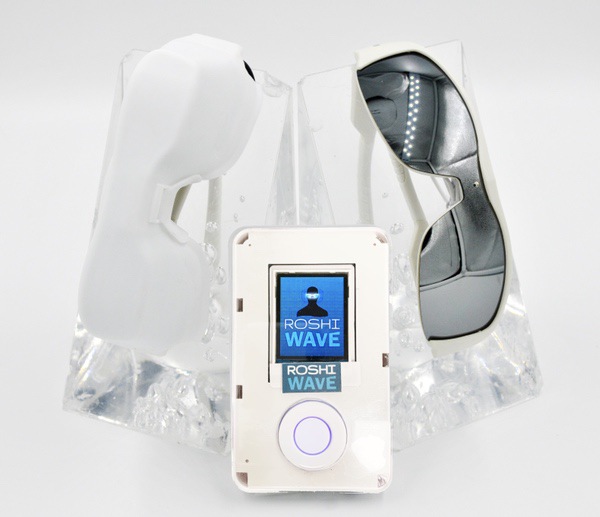
“ROSHIwave IN-SIGHT”, the third and final ROSHIwave revision is now available!
ROSHIwave IN-SIGHT is the Best Mind Machine for Meditation
The Error-Correction System for the Brain
Why entrain brainwaves when you can normalize them?
HOW ROSHI IN-SIGHT GLASSES HELP
Brainwave DisEntrainment through Photostimulation. By sending specially calibrated flickering light through the eyes and into the brain, ROSHI In-Sight Glasses help “DisEntrain” the mind, freeing it from its unhealthy cyclical patterns. The brain attain a meditative “normalized” state in which it becomes totally at rest …yet attentive at the same time—similar to the brain of a Zen Master. This helps put you “In the Zone”—whether you are an Athlete, Businessperson, Doctor, Bricklayer or simply a human being trying to cope with the pains and stresses of life.
The longer technical term for the above process is Vector Equilibrium Error DisEntrainment Photostimulation (VEEDP). Here’s how it works: The lights in ROSHI In-Sight glasses create an LED flicker, driven by a Dynamic Vector Equilibruim algorithm, contained within the NeuroDynamic Activator®. This presents the brain with a complex set of phase instructions that it must accurately follow, in order to correct its own internal phase vector errors—true linear to non-linear transformation, in real-time. It is with this unique method that the brain performs its own neurofeedback duties, without any outside human intervention.
A decrease in dynamic phase error is the result. And that is exactly the outcome we seek. It is in these “quieter” EEG moments that the brain “corrects” itself. This Dynamic Self Organization (DSO) is the hallmark of NeuroFeedback systems, and will be at the vanguard of self-healing in future.
ROSHIwave is not a medical device, but it is designed to help individuals to increase their peak performance.
 The ROSHIwave Complex NeuroStimulation System doesn’t use the EEG, for its pickup. Its complex flicker is programmed to provide the brain with a sublime mind state of a brain totally at rest and attentive similar to the brain of a Zen monk, digitally. ROSHIwave induces the brain towards its “listening”, rather than its “talking”, state.
When the brain is encouraged to “act natural”, it will become natural, given the proper operating conditions. ROSHIwave ‘biases’ the brain, towards its native operating conditions, to which other neurofeedback trainings can be added, contemporaneously, along the way.
Your brain, upon seeing this ‘neurodata’, will do its best to clear up its internal errors and hangups, to duplicate it. One can use their own neurofeedback system, to monitor and verify it. The ROSHIwave data does not bleed thru, to “contaminate” the real EEG output.
ACHIEVE PEAK PERFORMANCE
Through the revolutionary process of “Dynamic Neuro-Activation” ROSHIwave dis-entrains abnormal brainwave frequencies in the brain and quiets the mind. Inner chatter is silenced, the world falls away and a profound state of peace, relaxation and clarity is reached. Unlike normal meditation practices akin to tediously climbing a tall mountain, the complex ROSHIwave signals serve as a “Digital Compass” leading the user to the top of meditation mountain like a high-tech ski lift. The ROSHIwave device contains all of the well-researched classic ROSHI-style protocols plus new multiplexed versions. Change your mind with the click of a button with ROSHIwave.
ROSHIwave and ROSHI technology featured in Psychology Today (opens new window)
ROSHIwave = pROSHI Virtualized!
Roshiwave contains precise virtualized emulations of the original pROSHI Neurodynamic Activator devices designed by the legendary Chuck Davis. The ROSHIwave uses simple, click wheel navigation to browse the ROSHI stimulation algorithm choices.
Within ROSHIwave you will find:
- the pROSHI BB
- the pROSHI 2
- the pROSHI 2+
- the pROSHI 2++ (Chuck’s final pROSHI revision made months before his passing.) *NEW IN ROSHIwave IN-SIGHT!
- all of the original pROSHI glasses emulations including the 4 channel “3D” glasses
- several heretofore impossible combinations of the original pROSHI algorithms and glasses colors.
See the whole: ROSHIWAVE IN-SIGHT MODE/PROOCOL LIST
Experience Improved Mental Emotional and Physical Wellbeing
These brainwave entrainment devices are also known as brain machines, dream machine or psychowalkman, AVS device or brainwave frequency generators. Optimize your peak performance and event-related potential (evoked potential via human enhancement). It is now possible with audio visual stimulation (AVS) mind machine brainwave entrainment. We have the best mind machine available: RoshiWave. Now you can experience altered states of consciousness and ganzeld effects for inner peace, personal wellness, accelerated learning, meditation, behavior modification and deep, restful sleep.
Do you miss the pROSHI ?
Light Sound Mind Machine Brainwave Entrainment That Allows You To Experience Improved Wellness, Learning & Performance
Unleash your mental power with advanced brainwave entrainment technologies from mindmachines.com. Relaxation, meditation, sleep, accelerated learning, peak sports performance, motivation, stress relief, behavior modification, freedom from anxiety and more are possible with the push of a button with this powerful mind entrainment technology. By altering brainwave your brainwave frequencies using frequency controlled patterns of light and sound these and many more brainwave states can be achieved in just minutes. Why spend years learning to meditate when you can do instantly with a mind machine?
Also Known as Brain Machines
Expand your natural alpha brainwaves and theta brainwaves using light sound AVS brainwave entrainment therapy and binaural beats stimulation for creative imagery and meditation. Beta brainwave stimulation is best for heightened athletic performance. Delta brainwaves are for deep, restive sleep. Your neural oscillations and induced activity, in conjunction with ongoing brain activity can be measured via electroencephalography biofeedback and eeg neurofeedback instruments.
Imagine Automatic Mind-Yoga at the touch of a button! With The Brain Entrainment Light Sound Mind Machine with binaural beats… It is now possible!
MindMachines.com specializes in providing theraputic tools for relaxation, enhanced learning, mind power, biofeedback, neurofeedback, high tech meditation and personal achievement. We have been in continuous operation since 1990, with satisfied customers in over 100 countries. We understand brainwave technology and know how to help you get the best results using light and sound therapy using our personal and professional light sound machines and brainwave entrainment technology instruments. By combining competitive pricing and customer-friendly service Mind Machines will be your personal relaxation superstore. We only carry the finest selection of light and sound machines
Using a mind machine for brainwave entrainment
Frequency Following Response (FFR).
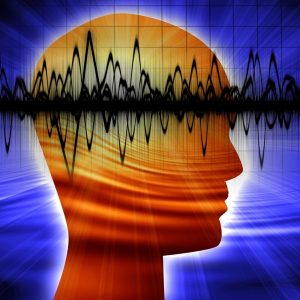 “A light sound machine is a brainwave entrainment tool. Using sound (headphones) & light (strobe light goggles) stimulation, listeners are gently guided into specific brainwave states. Each audio beat and pulse is a specific frequency. Our minds ‘think’ in terms of frequency. Brainwaves change frequencies based on neural activity within the brain. Hearing and vision are considered the favorable senses for affecting brainwaves safely. By presenting beats and pulses to the brain, the brain begins to mimic or follow the same frequencies. This process is referred to as entrainment. In essence, these instruments speak to the mind in it’s own language – the language of frequency.”
– Excerpt from “Mind States / An Introduction to Light Sound Technology” by Michael Landgraf, Publisher of the AVS Journal.
We have the lowest prices in the industry on the best in mind technology. From light sound AVS devices to internet software based brainwave entrainment programs and binaural beats mind power entrainment MP3 audio files we have it all.
Mind machines are not shamanic devices but produce visuals often compared to a psychedelic drug. As mind machines are not FDA approved, those with photo-epilepsy should not use strobe light goggles due to seizure risk.
If you have any questions about our mind machines, light sound devices or brainwave entrainment technology please contact us!
We sell brainwave entrainment devices, If you are looking for a radionics machine use this link.